Multiplication practice Math Worksheets for Ages 4-9 - Page 4
78 filtered results
-
From - To
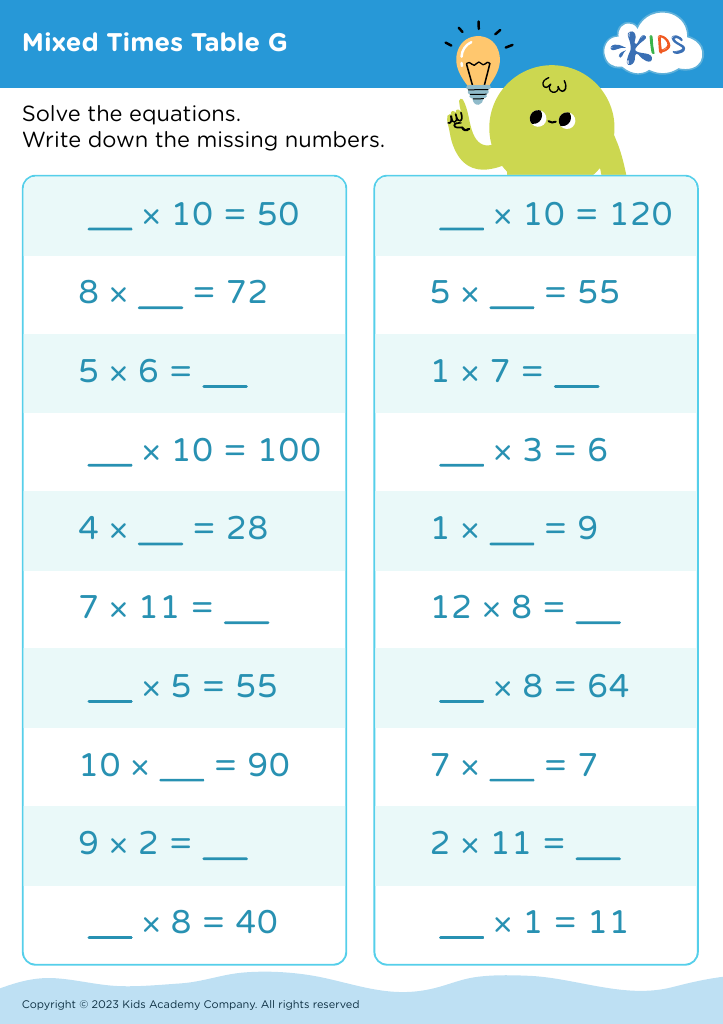
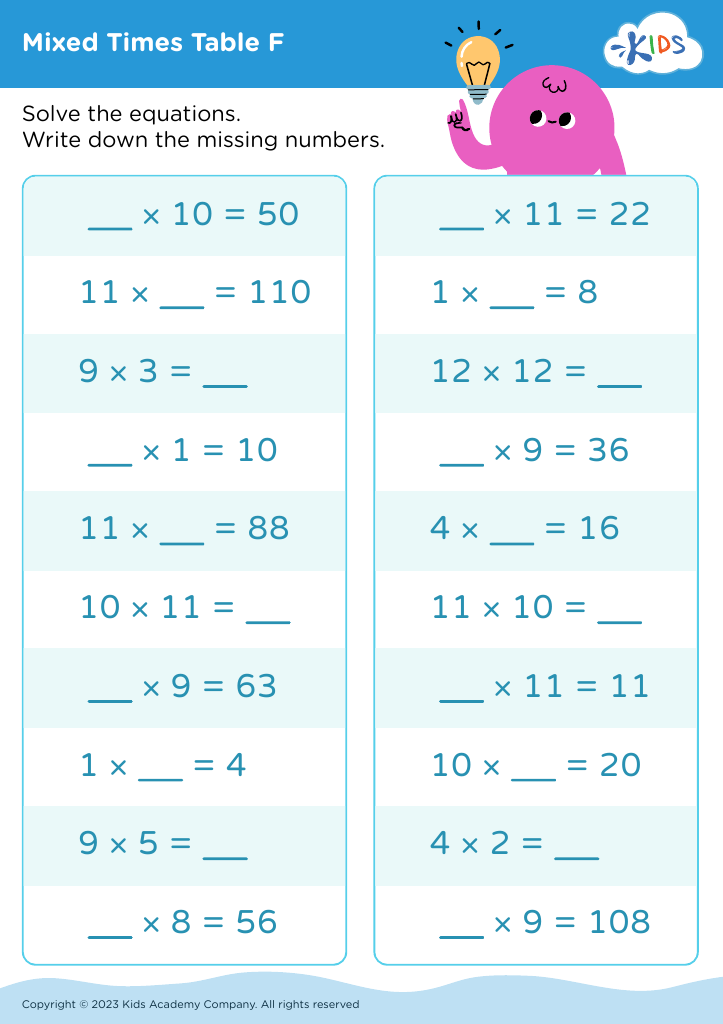
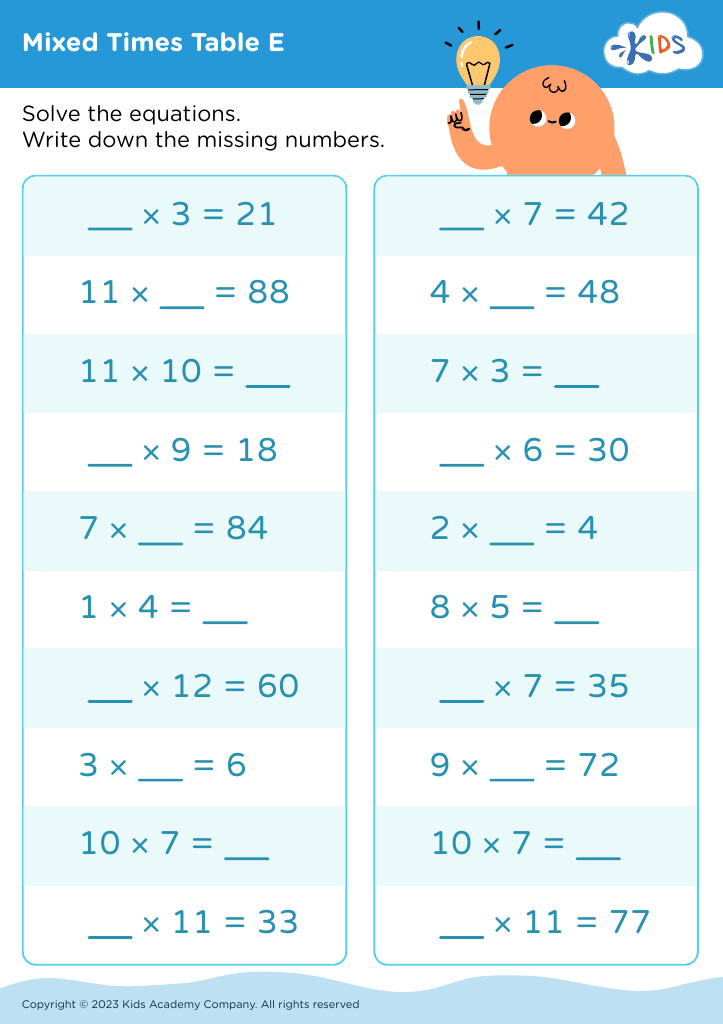
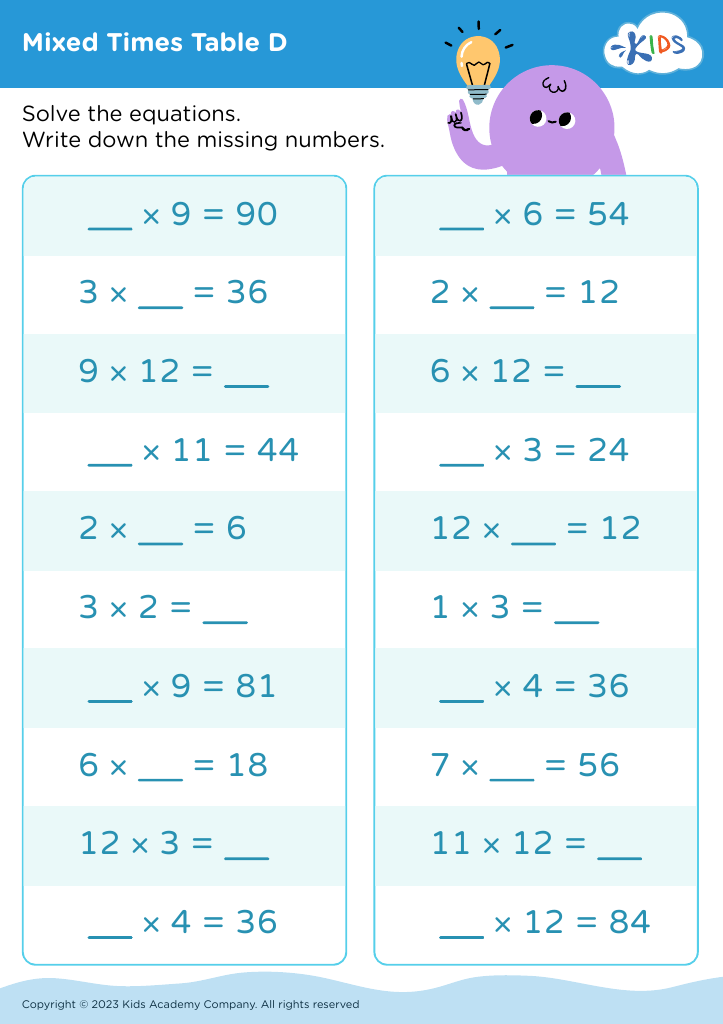
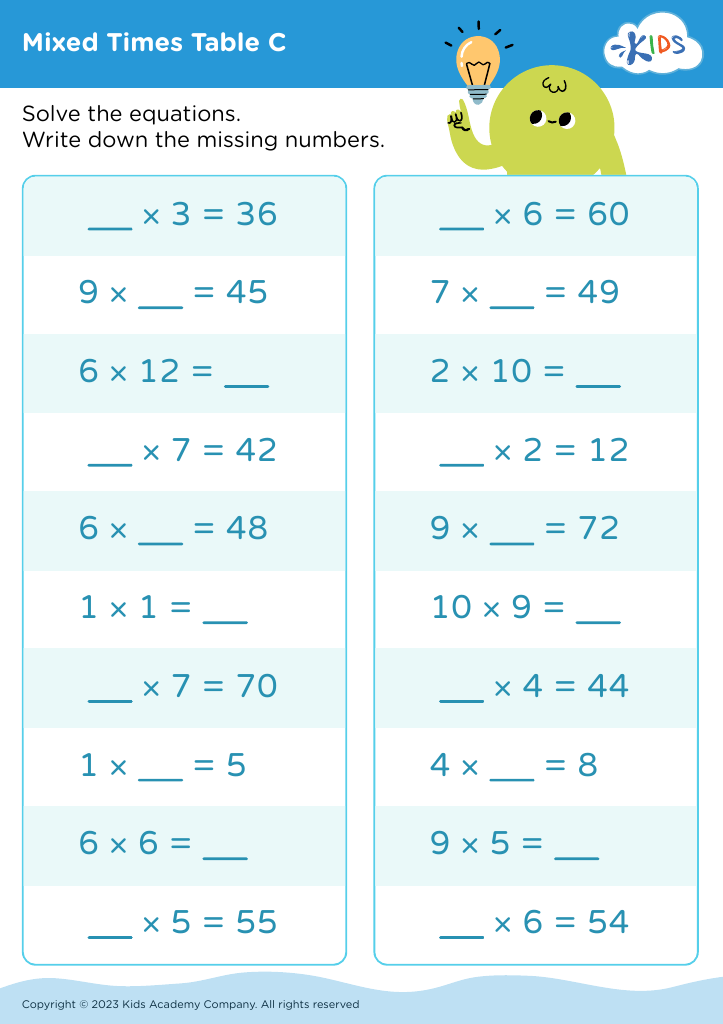
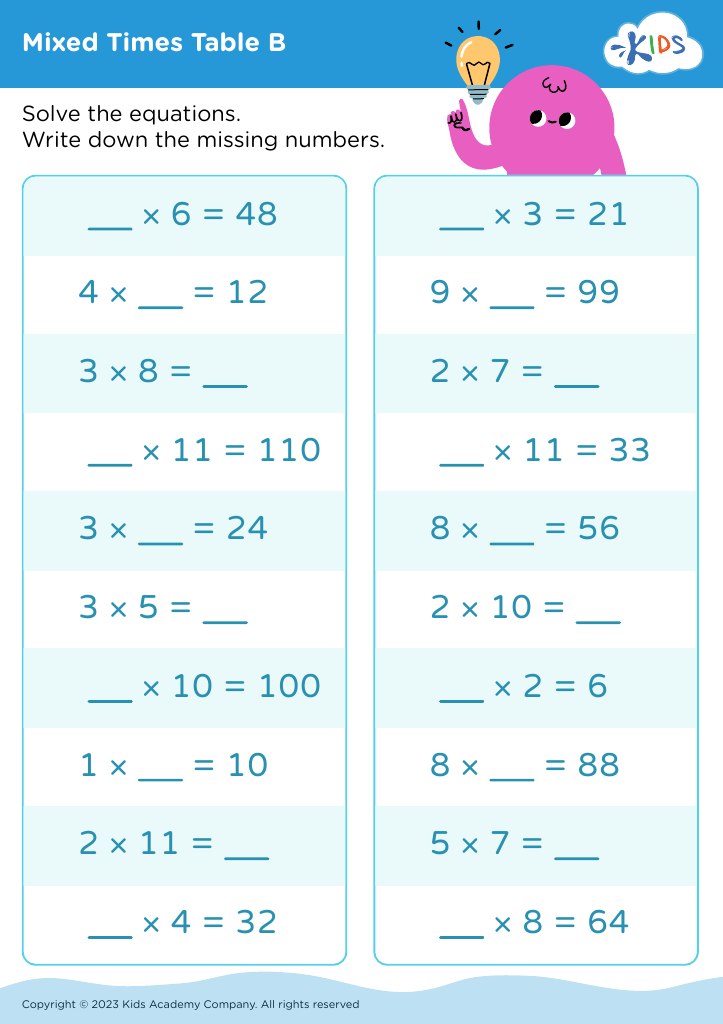








Multiplication practice is crucial for children aged 4-9 as it lays the foundation for their future mathematical skills. At this developmental stage, students are beginning to grasp basic arithmetic concepts, and multiplication is a critical building block in their understanding of mathematics. Engaging in multiplication helps enhance their memory, problem-solving abilities, and cognitive skills.
Fostering early multiplication skills can prevent learning gaps and enhance overall academic performance. Research shows that the earlier children engage with multiplication, the more confident they become in handling more complex mathematical concepts later on, such as division, fractions, and algebra.
Moreover, multiplication practice can make math more accessible and enjoyable. By incorporating fun activities, games, and interactive exercises, parents and teachers can create a positive learning environment that promotes enthusiasm for mathematics.
Additionally, proficiency in multiplication is beneficial not just academically, but also in real-life situations. It equips children with essential skills for everyday tasks, such as budgeting, cooking, and measuring. By investing time in multiplication practice, parents and teachers significantly contribute to a child’s overall development, enhancing their ability to succeed in math and beyond.








