Numerical recognition Math Worksheets for Ages 4-9
3 filtered results
-
From - To
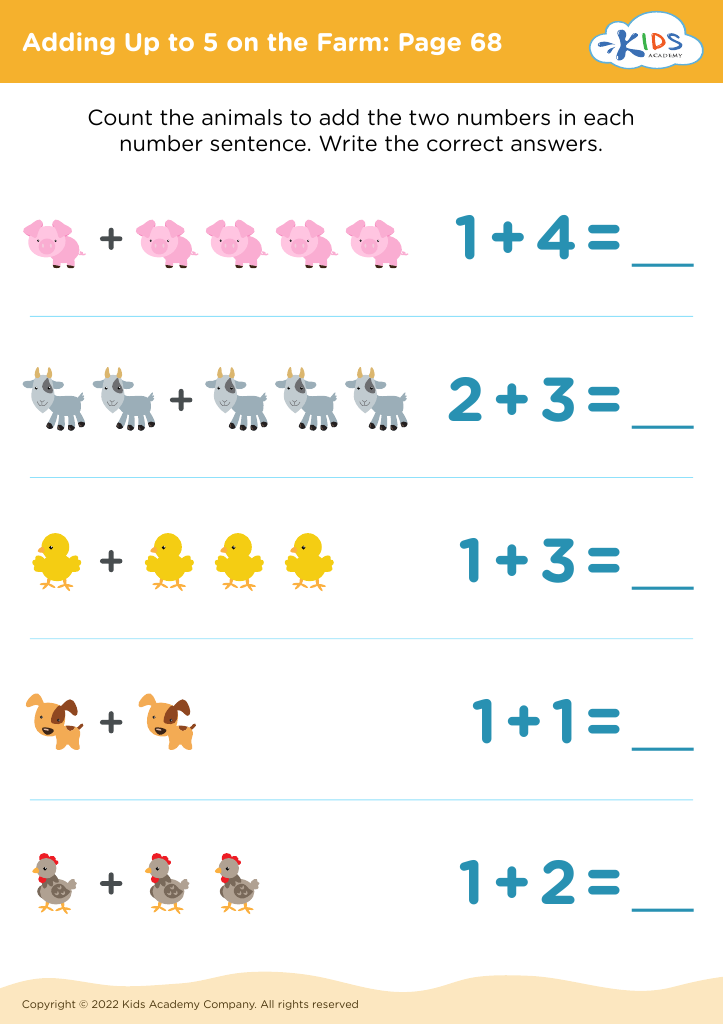
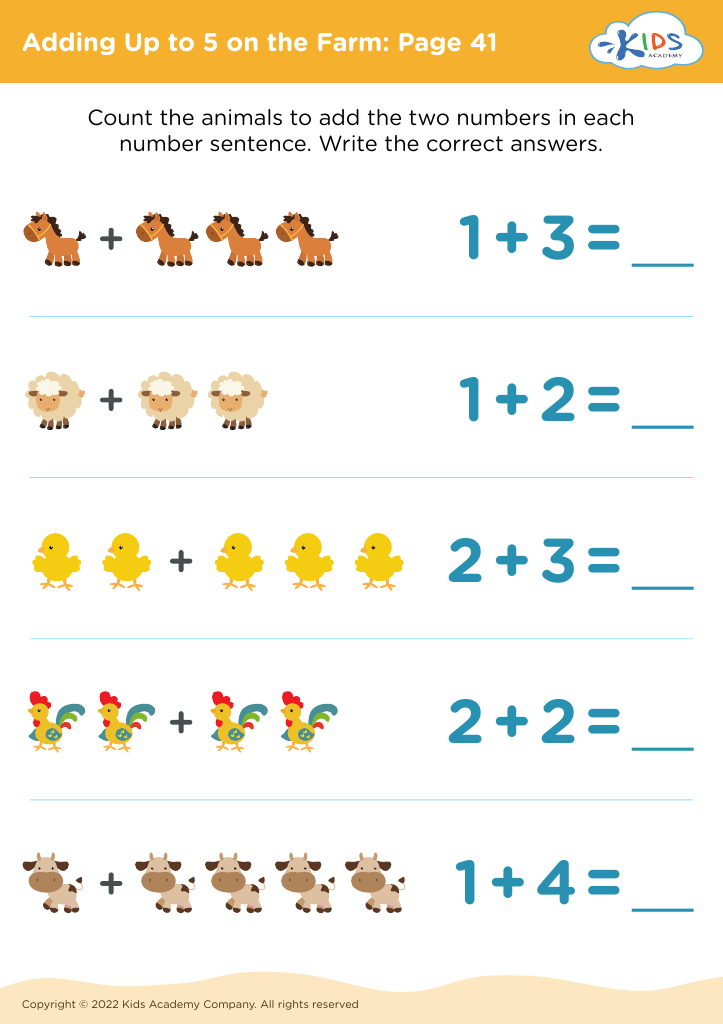
Discover our engaging Numerical Recognition Math Worksheets designed for children ages 4-9! Perfect for early learners, these worksheets help strengthen essential math skills by providing fun and interactive activities that promote number identification, counting, and comparison. Each worksheet is tailored to foster a love for math while building confidence in young learners. Parents and educators can easily print and use these resources to support children's learning at home or in the classroom. Help your child master numerical recognition and lay a strong foundation for future math success with our colorful and captivating worksheets! Start exploring today!
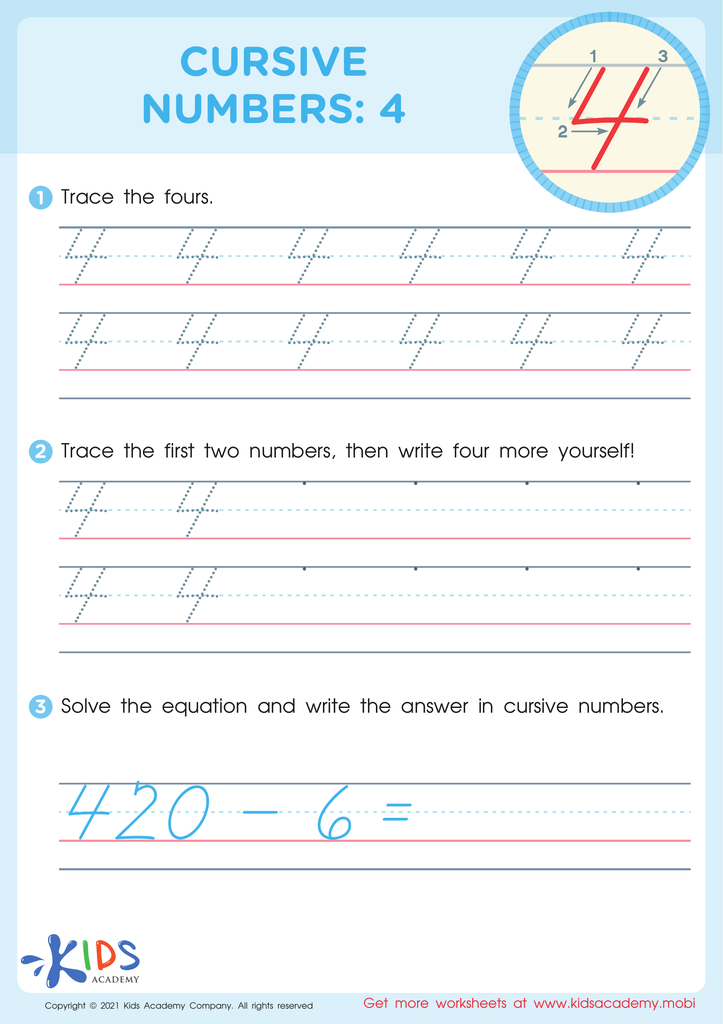
Cursive Numbers: 4 Worksheet








Numerical recognition is a foundational math skill that develops critical cognitive abilities in children aged 4 to 9. At this stage, learners begin to understand numbers, their relationships, and how they apply in everyday life. It is essential for parents and teachers to prioritize numerical recognition because it sets the groundwork for more advanced mathematical concepts, such as addition, subtraction, and even problem-solving skills.
When children can recognize and understand numbers, they gain confidence in their abilities to tackle math-related tasks. This confidence fosters a positive attitude toward learning, mitigates math anxiety, and encourages a growth mindset. Moreover, numerical recognition is tied to other important skills, such as pattern recognition and spatial awareness, which contribute to overall cognitive development.
Understanding numbers also equips children with the ability to navigate their world—whether it’s counting objects, understanding time, or managing money. By fostering a strong foundation in numerical recognition, parents and teachers can empower children to excel academically and develop essential life skills. Collaborative learning, games, and engaging activities can make this learning process enjoyable, ensuring that children develop a love for math that lasts well beyond their early years. Encouraging numerical recognition, therefore, is a vital step in shaping a child’s educational journey.








