Practicing addition Math Worksheets for Ages 4-9
7 filtered results
-
From - To
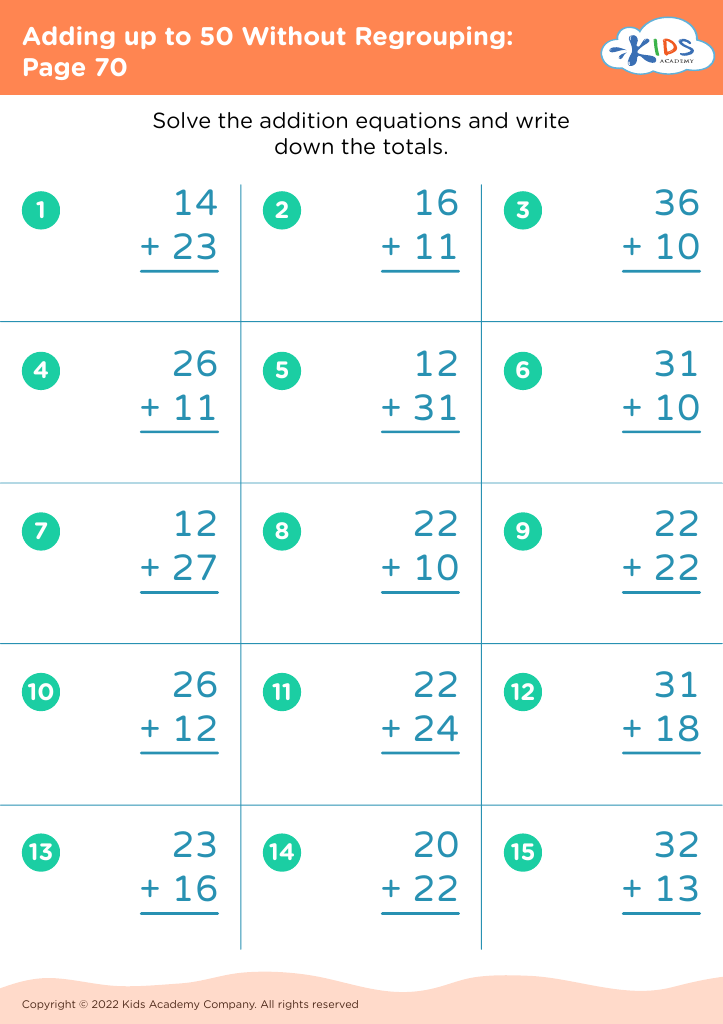
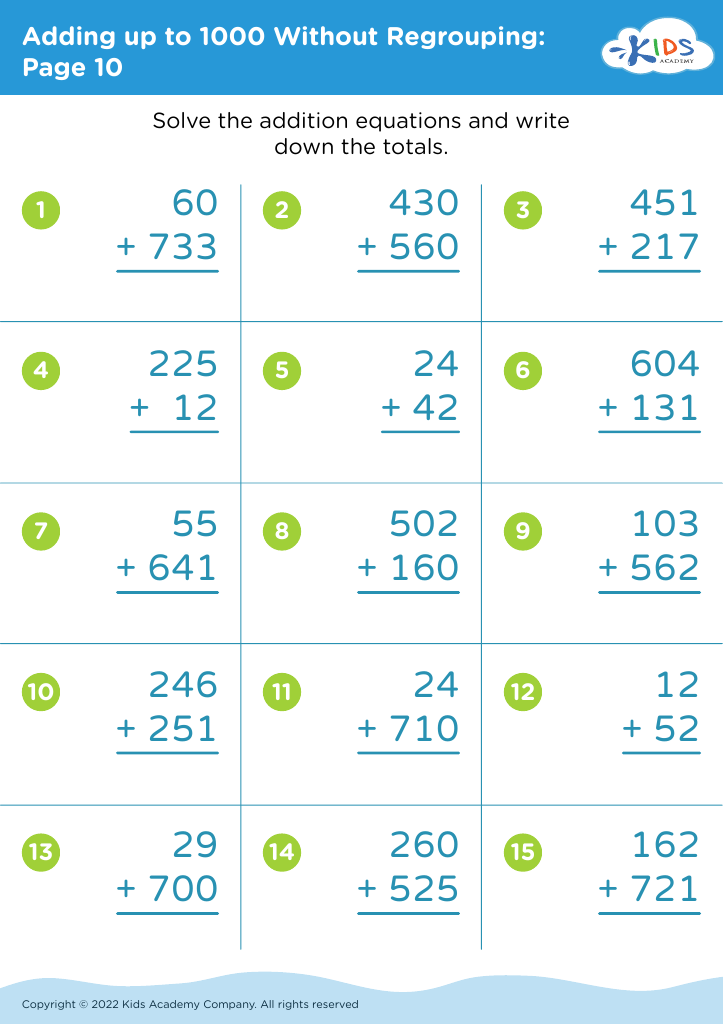
Enhance your child's arithmetic skills with our "Practicing Addition Math Worksheets" designed for ages 4-9. Each worksheet offers engaging activities to make learning addition fun and effective. By combining colorful visuals with age-appropriate challenges, our exercises help young learners master basic math concepts while boosting confidence and interest in numbers. Ideal for classroom use or home practice, these worksheets accommodate a range of abilities and learning paces, ensuring every child can progress at their comfort level. Start nurturing your child's mathematical foundation today with our expertly crafted addition resources, tailored to support and inspire budding mathematicians.
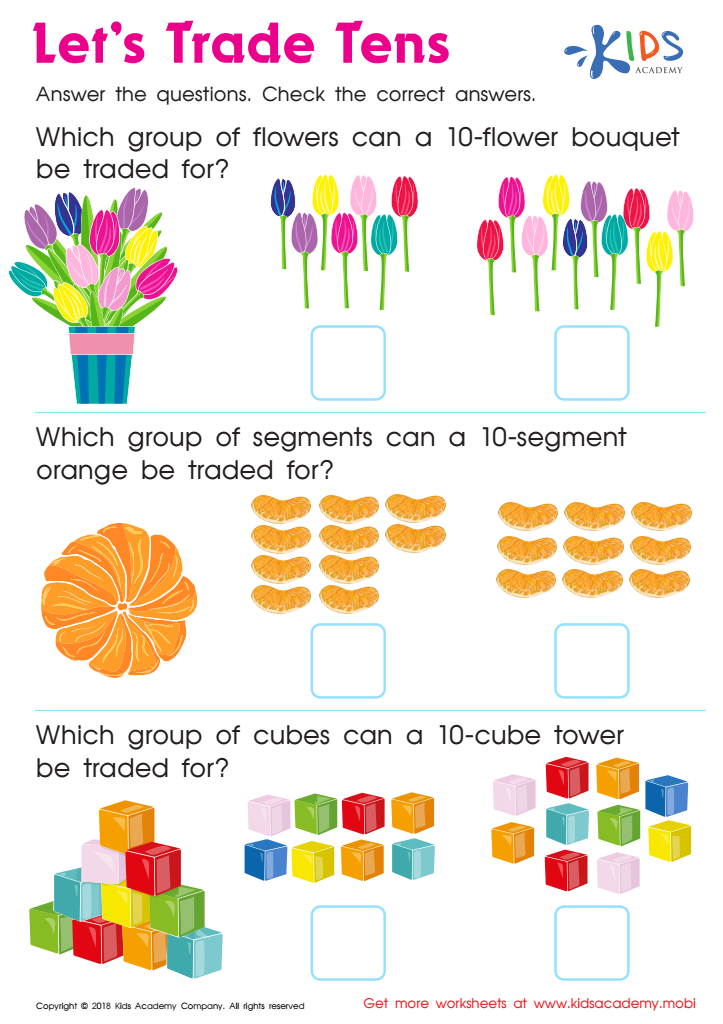
Lets Trade Tens Worksheet
 Assign to My Students
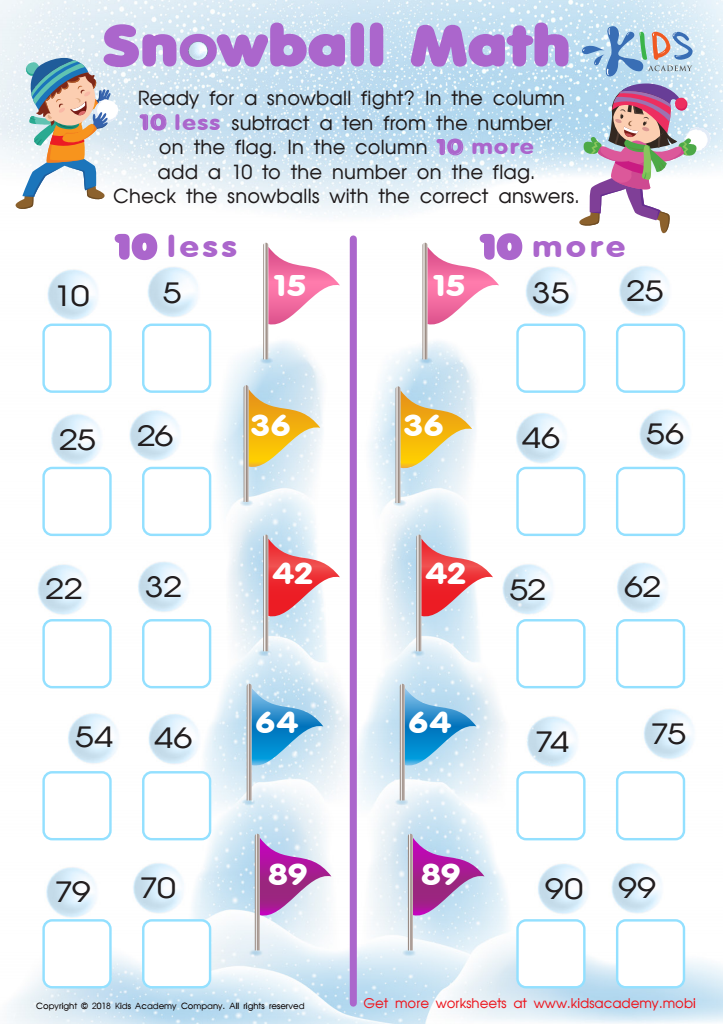
Snowball Math Worksheet
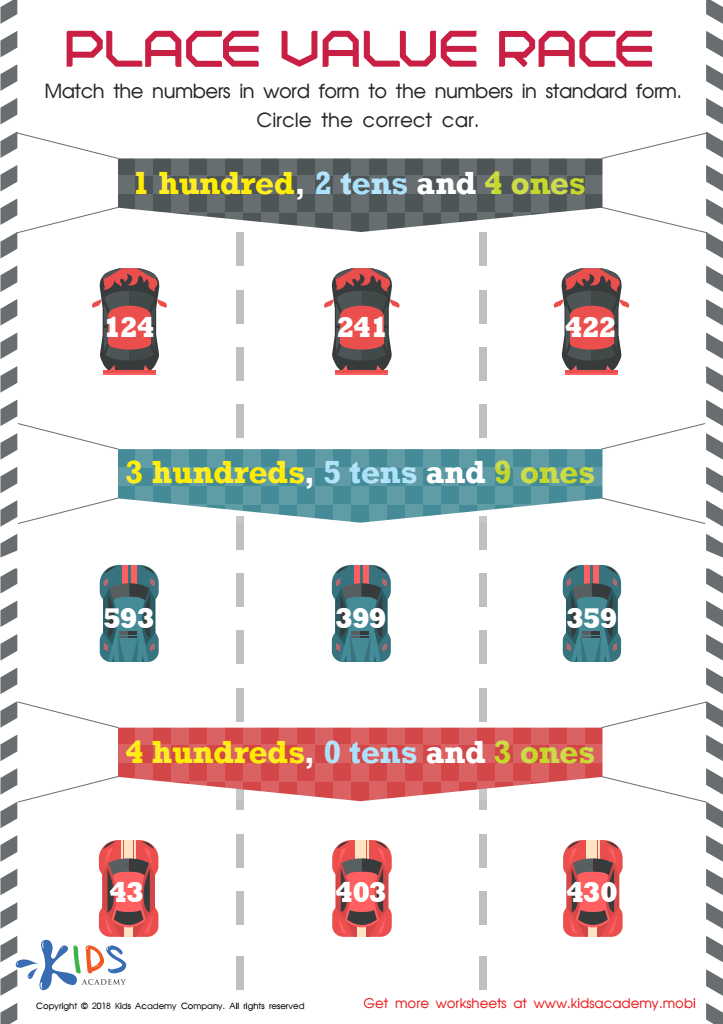
Place Value Race Worksheet
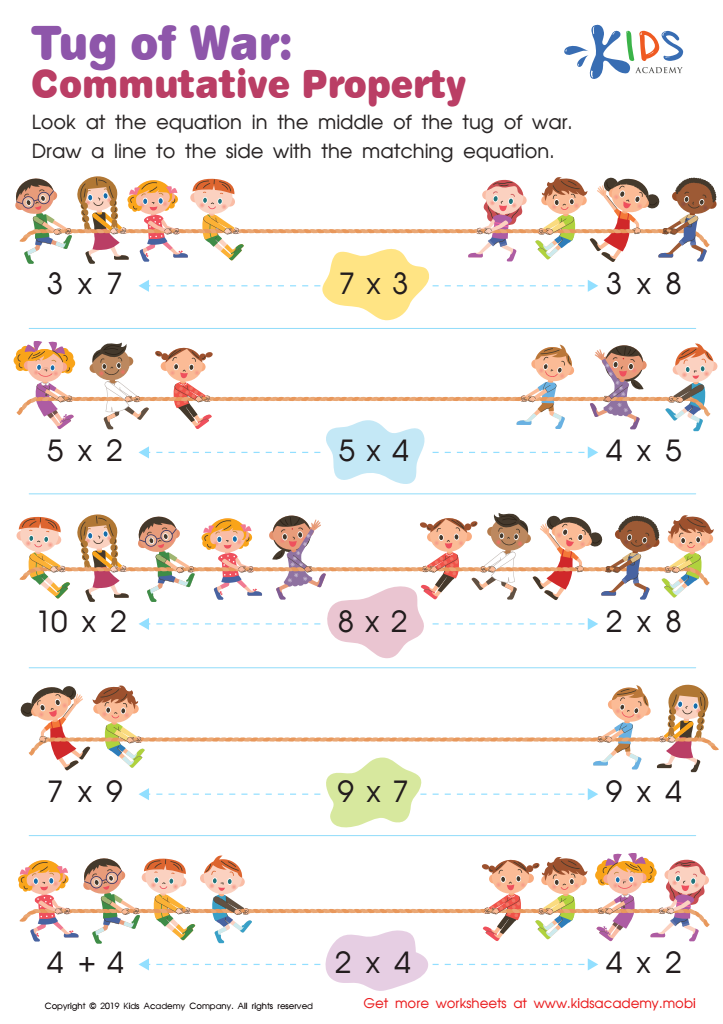
Tug of War: Commutative Property Worksheet
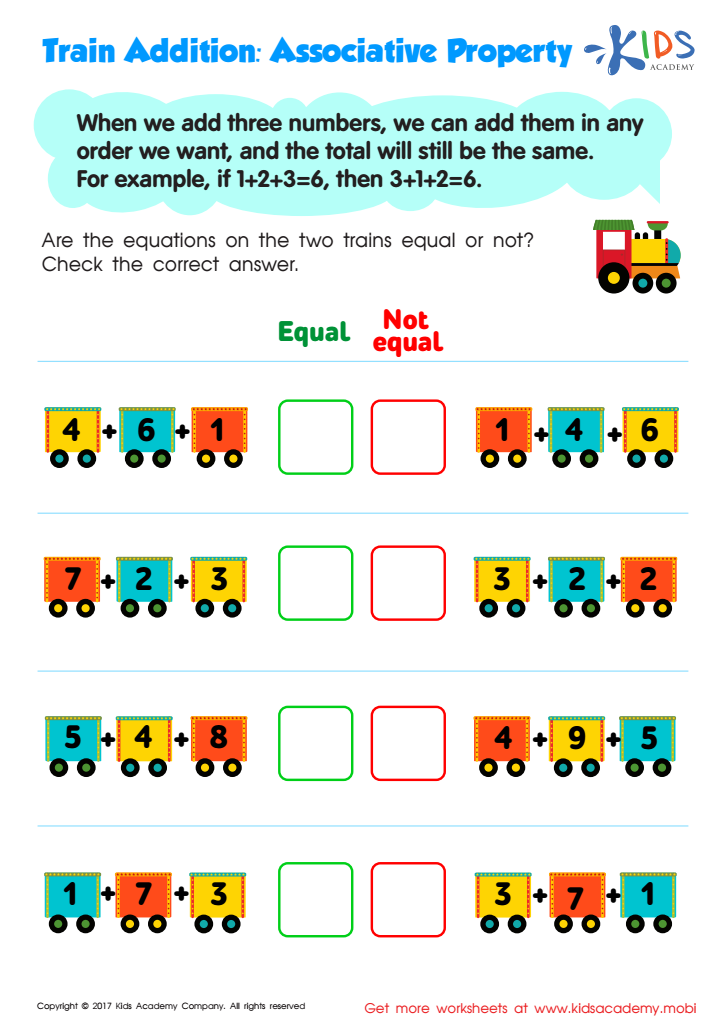
Train Addition: Associative Property Worksheet







Practicing addition is crucial for children aged 4-9 as it forms the foundation for all future mathematics learning. During these early years, children's brains are exceptionally receptive to new information, making it an ideal time to instill fundamental math skills. Mastery of basic addition not only prepares them for more complex arithmetic, but also enhances cognitive functions. As children learn to add numbers, they develop critical thinking and problem-solving skills, which are essential for academic success and everyday life.
For parents and teachers, committing to regular math practice can significantly boost a child’s confidence in their mathematical abilities. Recognizing patterns, comprehending sums, and applying logical reasoning are all skills honed through addition practice. These abilities translate to better performance in school, fostering a positive attitude towards learning and education in general. Moreover, early proficiency in math contributes to higher academic achievements and opens up opportunities in various fields of expertise in the future.
Incorporating playful, engaging arithmetic activities can make learning enjoyable and less intimidating for young minds. Games, flashcards, interactive apps, and real-life applications can transform practice into a fun experience, laying a solid groundwork for lifelong numeracy skills. Investing in early math skills today creates confident, capable learners tomorrow.








