Spatial awareness development Math Worksheets for Ages 4-9
3 filtered results
-
From - To
Develop your child’s crucial spatial awareness skills with our expertly crafted math worksheets designed for ages 4-9. These printable activities from Kids Academy enhance geometric understanding, visual perception, and problem-solving abilities in a fun, engaging manner. Tailored to various skill levels, our worksheets provide a solid foundation in spatial concepts through interactive exercises involving shapes, patterns, and spatial relations. Foster confidence and cognitive development in your young learner as they master essential math skills. Perfect for both home and classroom use, our resources make learning enjoyable and effective. Visit Kids Academy for high-quality educational materials!
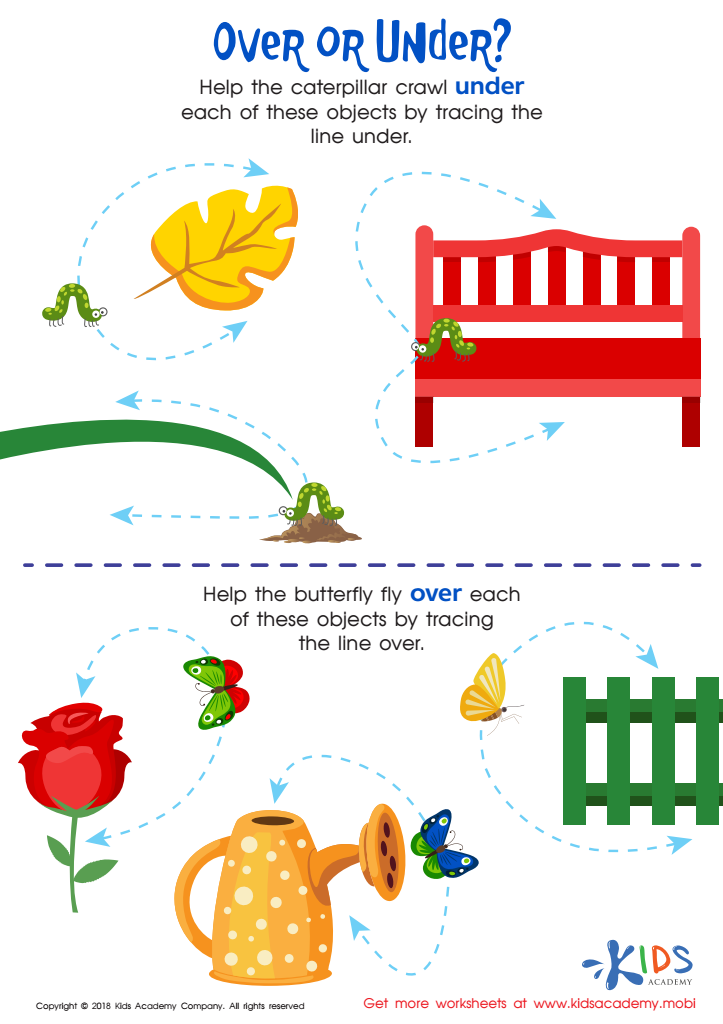
Over or Under? Worksheet
 Assign to My Students
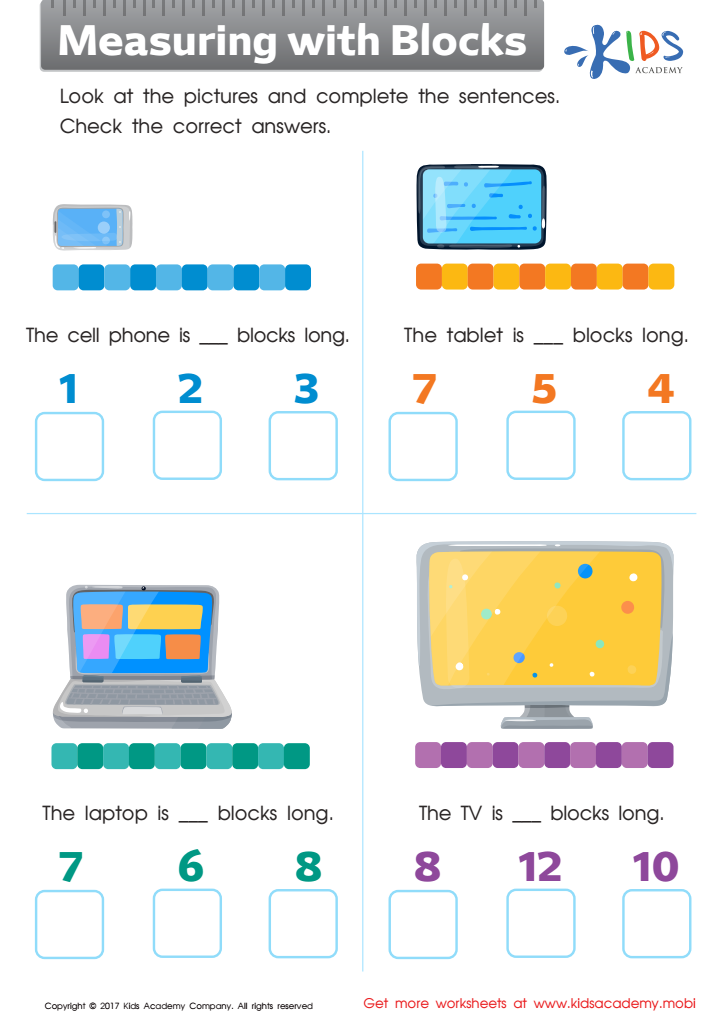
Measuring with Blocks Worksheet
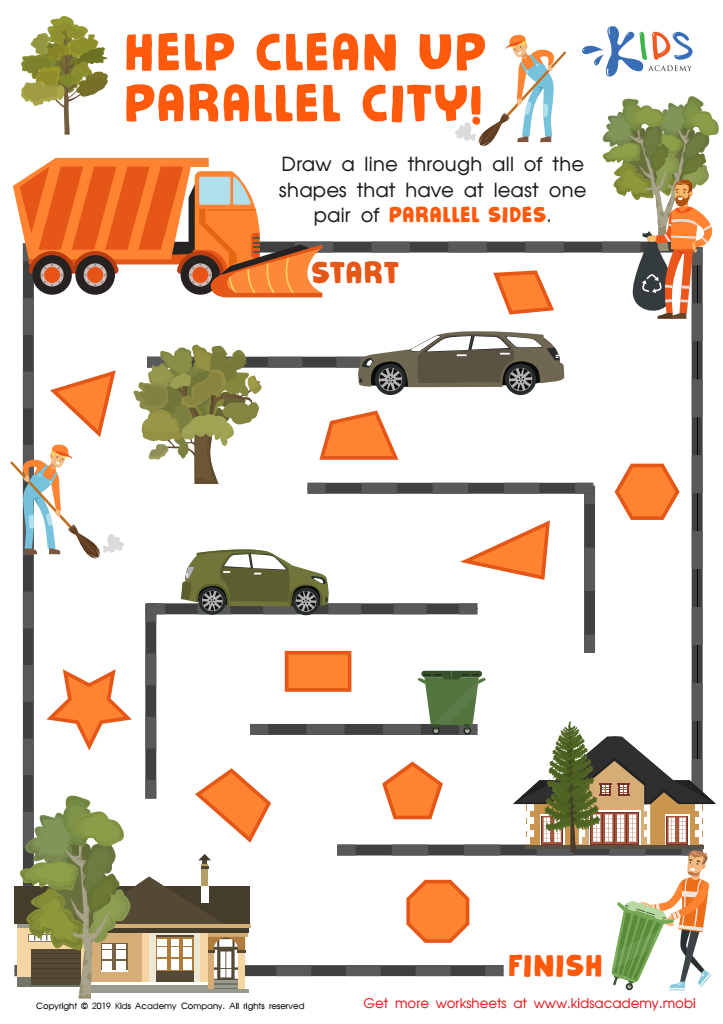
Help Clean Up Parallel City Worksheet








Spatial awareness is a critical skill that refers to an individual's ability to understand and interact with the environment around them. For children aged 4-9, developing strong spatial awareness is foundational for success in math and other academic areas. Here's why parents and teachers should prioritize this aspect of development:
First, spatial awareness enhances problem-solving abilities. Tasks that involve puzzles, building blocks, and drawing shapes cultivate a child's ability to visualize and manipulate objects, which is essential for solving math problems that require an understanding of geometry and spatial relationships.
Second, proficiency in spatial skills is linked to better performance in STEM subjects (Science, Technology, Engineering, Mathematics). Spatially aware children are more apt to grasp complex concepts such as symmetry, measurement, and volume, giving them a strong foothold in these fields as they advance in their education.
Moreover, spatial skills aid in everyday tasks and physical activities, improving hand-eye coordination and navigation skills. Examples include catching a ball, placing puzzle pieces correctly, or even navigating through a crowded playground, all of which build confidence and competence.
Lastly, early development of spatial awareness fosters cognitive resilience. Children learn to approach problems from multiple angles, enhancing creativity and flexibility in thinking.
Therefore, investing time in activities that promote spatial awareness can yield long-term educational and practical benefits, setting a solid foundation for a child's future academic and life success.








