Telling time Math Worksheets for Ages 4-9
4 filtered results
-
From - To
Discover our engaging "Telling Time Math Worksheets" designed for children aged 4-9! These printable resources help young learners grasp the concept of time through fun, interactive exercises. Our worksheets feature colorful visuals and relatable scenarios that make learning to read clocks exciting and easier. Kids will practice identifying hours, half-hours, and increments of five, aiding in their understanding of digital and analog time. Perfect for home or classroom use, these worksheets cater to various skill levels, ensuring that every child can enjoy mastering time-telling skills through play-based learning. Start your child's journey towards time management excellence today!
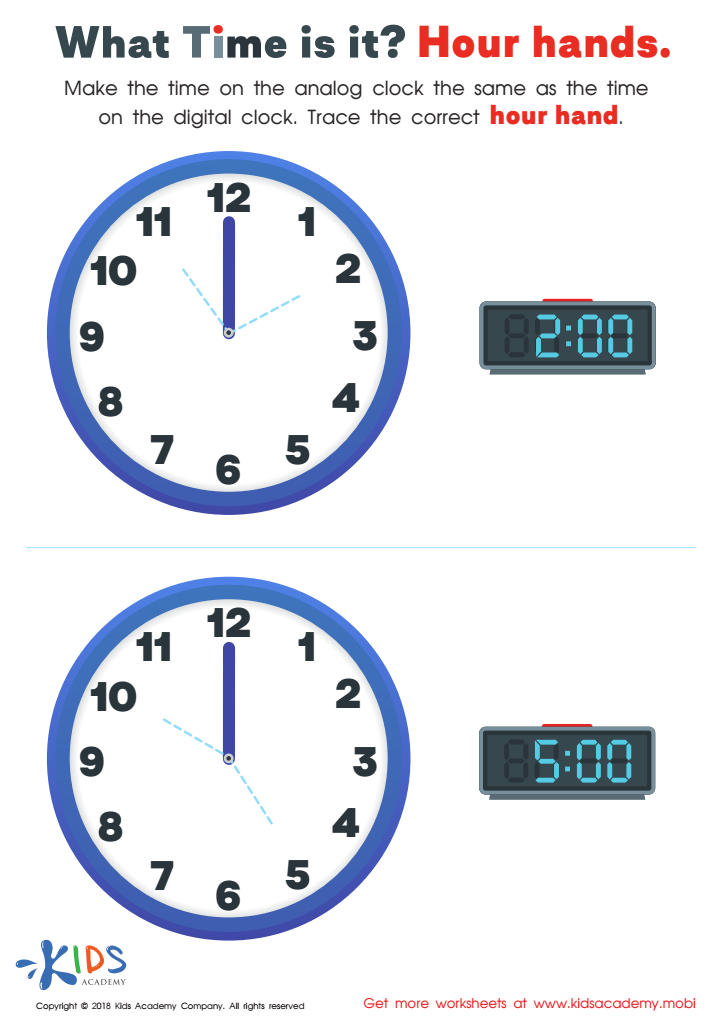
What Time Is it? Hour Hands Worksheet
 Assign to My Students








Teaching children how to tell time is crucial for their overall development for several reasons. First, the concept of time helps children understand sequencing and the structure of their day, fostering a sense of responsibility and independence. When children can identify hours and minutes, they learn to manage their time, which is a vital skill as they transition to school and eventually adulthood.
Moreover, telling time enhances children's mathematical abilities. It integrates various skills such as counting, understanding fractions, and recognizing patterns, all of which are foundational for future math concepts. The interplay between numbers and their real-world application solidifies their understanding of mathematical principles.
Additionally, understanding time helps children develop critical cognitive skills. They learn to listen and comprehend instructions tied to time, improving their focus and listening abilities.
For parents and teachers, emphasizing time-telling skills is not merely about adhering to a curriculum; it's about empowering children with essential life skills that will serve them well beyond the classroom. By making time-telling relatable and engaging through interactive activities and resources, adults can spark curiosity and a love for learning, ultimately fostering well-rounded development in young learners.








