
Understand sequences Math Worksheets for Ages 4-9
5 filtered results
Difficulty Level
Grade
Age
-
From - To
Subject
Activity
Standards
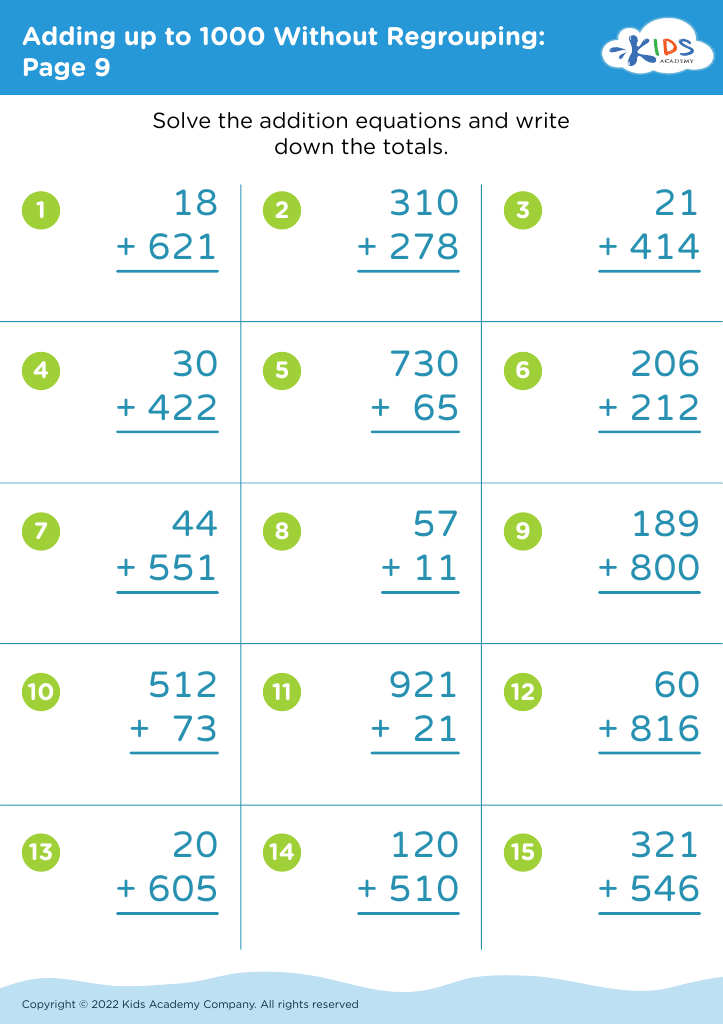
Unlock the world of learning with our "Understand Sequences" math worksheets designed specifically for children aged 4-9. These engaging and interactive worksheets help young learners grasp the fundamental concept of sequences through fun activities and colorful illustrations. Each worksheet promotes critical thinking and enhances problem-solving skills as kids learn to recognize patterns and order. Perfect for home or school use, our resources cater to various learning styles, ensuring every child can master this essential math concept. Dive into the exciting journey of understanding sequences and watch your child's confidence and love for math blossom!
Favorites
With answer key
Interactive
Join Kids Academy for Free
Who is primarily going to use this learning content?







Understanding sequences is a fundamental mathematical skill that plays a crucial role in a child's cognitive development, particularly for ages 4-9. This age group is in a vital stage of learning where foundational concepts set the stage for future academic success. Sequences help children recognize patterns and relationships, which are essential for critical thinking and problem-solving.
For parents and teachers, fostering an understanding of sequences can enhance children's number sense and support more complex mathematical concepts, such as addition, subtraction, and even multiplication later on. By grasping sequences, children develop the ability to predict, organize information, and approach problems methodically, skills that are not just vital in math but across all subjects.
Furthermore, this understanding promotes logical reasoning—children learn to think ahead and make connections between concepts. Engaging young learners through games, music, and storytelling that incorporate sequences makes learning enjoyable and effective. Overall, nurturing sequence recognition is an investment in children's lifelong learning skills, equipping them with the tools they need to navigate both academic challenges and daily life effectively. Parents and teachers play a crucial role in creating environments that encourage exploration of these foundational mathematical principles.








