Understanding graphs Math Worksheets for Ages 4-9
6 filtered results
-
From - To
Explore our "Understanding Graphs Math Worksheets" designed for kids ages 4-9! These engaging printable worksheets introduce young learners to the essentials of graph comprehension, helping them visualize data through colorful charts and simple diagrams. Our resources include a variety of activities that promote critical thinking, such as interpreting bar graphs, pie charts, and line plots. Perfect for home or classroom use, these worksheets support early math skills while making learning fun and interactive. Boost your child's confidence in understanding graphs and encourage their analytical abilities with our thoughtfully crafted activities. Start their journey to math mastery today!
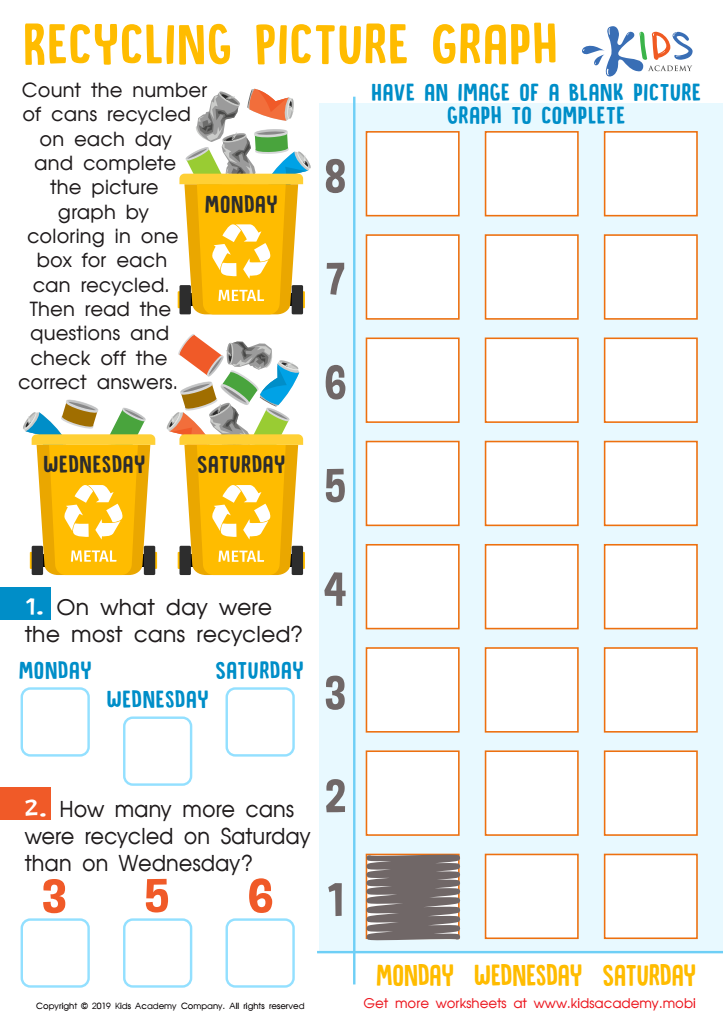
Recycling Picture Graph Worksheet
 Assign to My Students
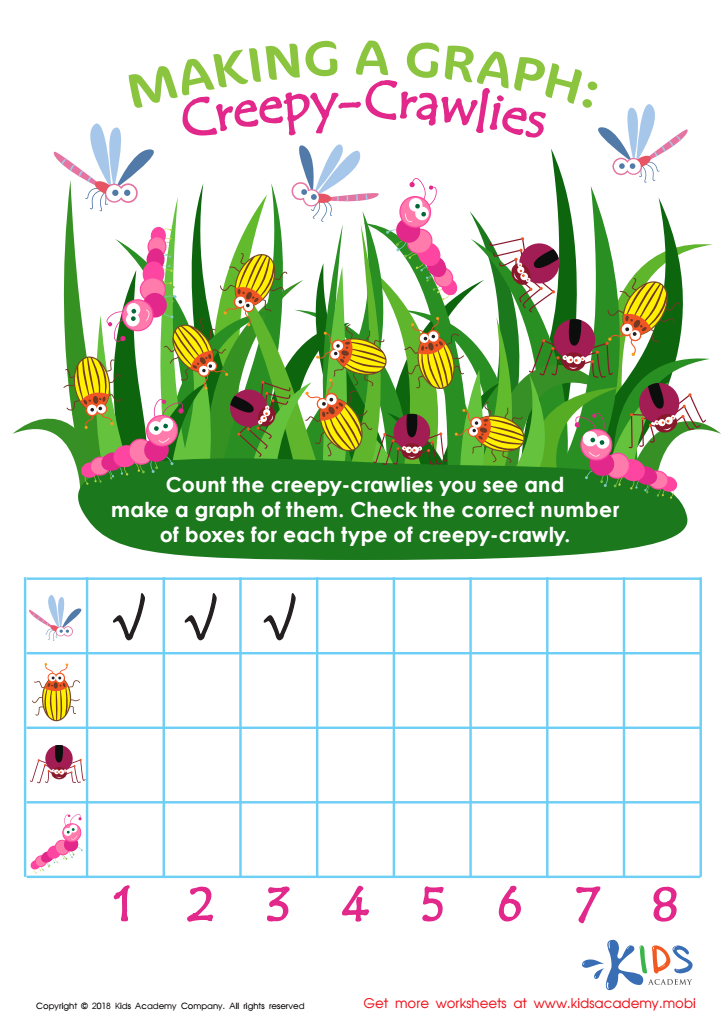
Making a Graph: Creepy Crawlies Worksheet
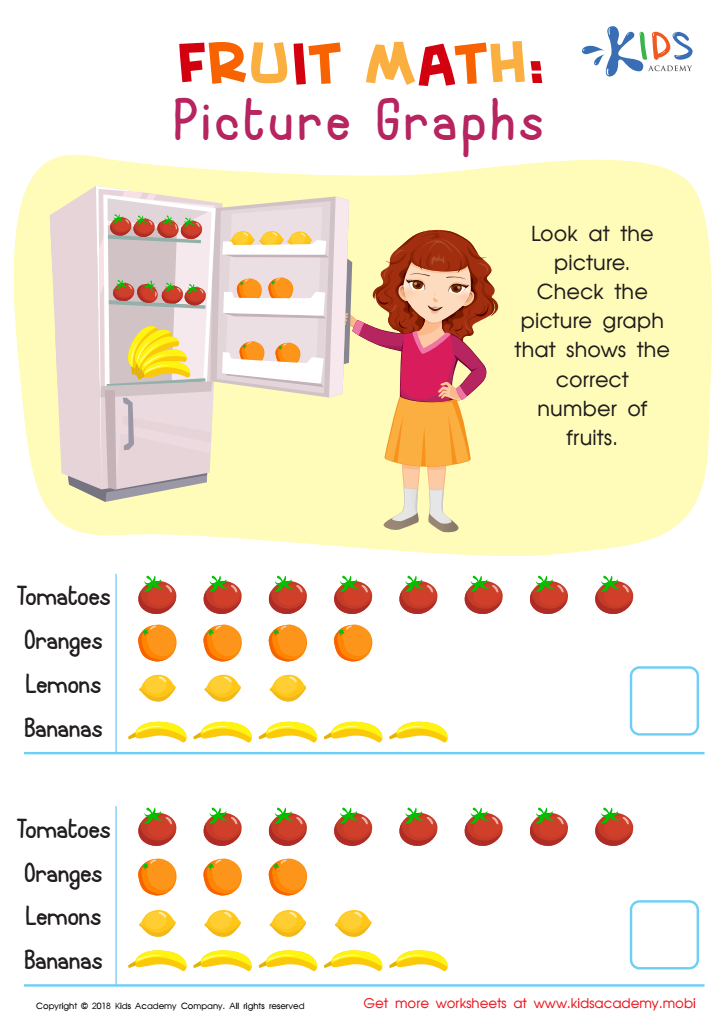
Fruit Math: Picture Graphs Worksheet
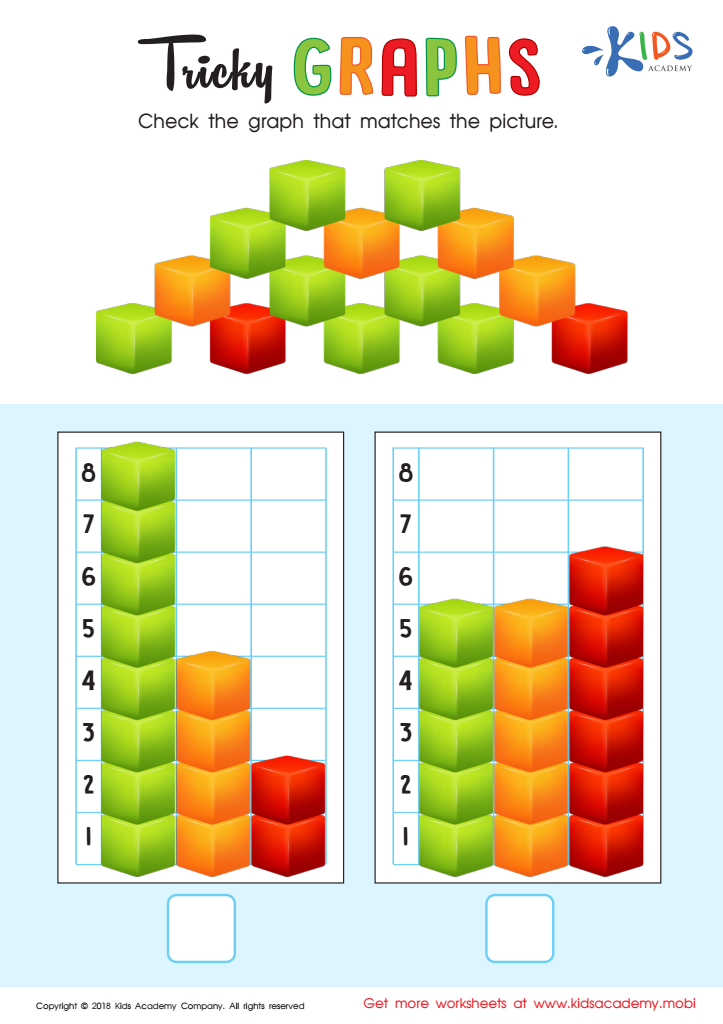
Tricky Graphs Worksheet
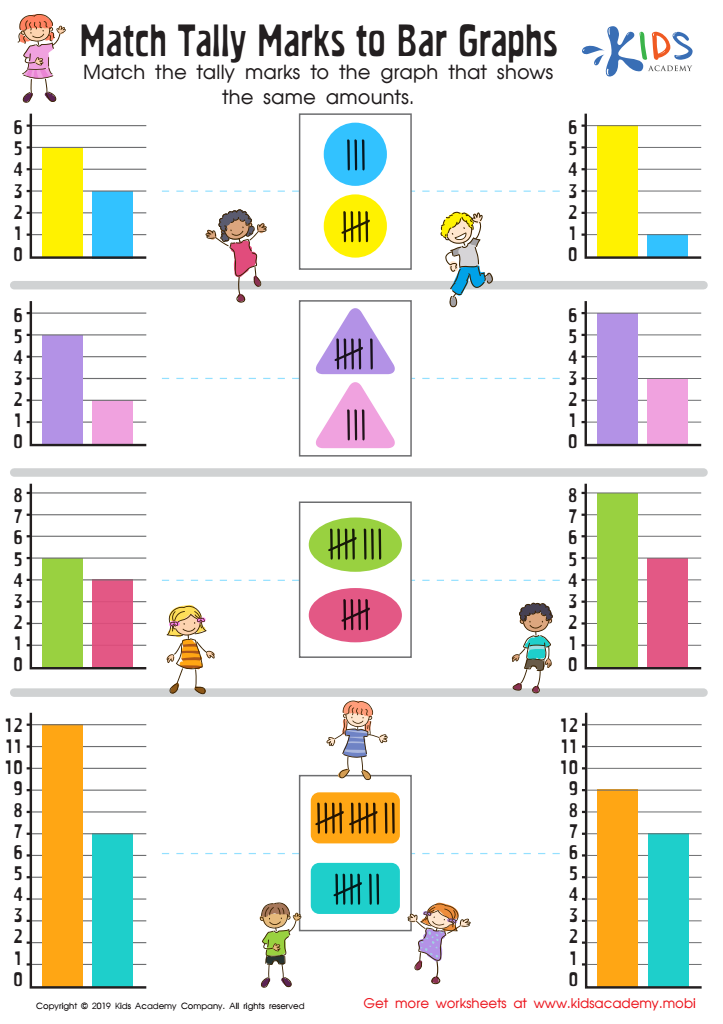
Match Tally Marks to Bar Graphs Worksheet

Aircraft Carrier Picture Graphs Worksheet







Understanding graphs is a foundational skill that serves a critical purpose in mathematical development, particularly for children aged 4-9. At this age, learners are in a prime stage for developing analytical skills, and graphs provide an engaging way to visualize data.
Firstly, graphs help children make sense of information by transforming abstract numbers into tangible representations. This visualization fosters comprehension and can lead to better decision-making skills. For instance, when children interpret pictographs or bar graphs showing their favorite fruits, they not only learn to read data but also engage in discussions that develop their critical thinking.
Moreover, mastering graphs enhances a child's ability to communicate mathematical concepts. Through discussions around graphs, children learn vocabulary specific to data interpretation, an essential aspect of the curriculum that builds foundational literacy in STEM fields.
Parents and teachers should also recognize that graphing activities can promote collaboration and social skills. When children work together to create or interpret graphs, they develop teamwork and communication skills that are crucial for their overall development.
In summary, understanding graphs is a vital skill that offers practical applications, promotes critical and analytical thinking, and fosters social interaction—thereby making it a key focus for educators and parents in nurturing young learners.








