Understanding measurement units Math Worksheets for Ages 4-9
3 filtered results
-
From - To
Discover our comprehensive "Understanding Measurement Units" math worksheets designed specifically for children aged 4 to 9. These engaging resources aim to help young learners grasp essential measurement concepts through fun and interactive activities. With a variety of exercises focusing on length, weight, volume, and more, your child will build a strong foundation in understanding different measurement units. Our worksheets cater to various learning styles, ensuring that every child can thrive. Perfect for home schooling, supplementary practice, or classroom use, these worksheets are a valuable tool for fostering confidence in math skills. Start your child's measurement journey today!
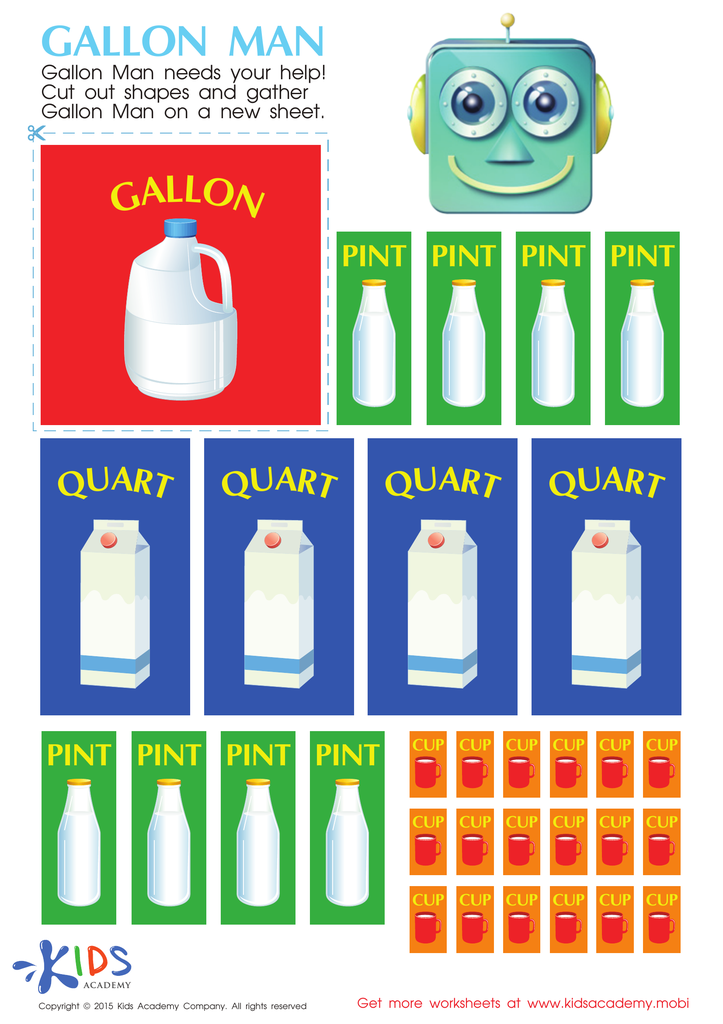
Cups, Pints and Quarts With Gallon Man Worksheet
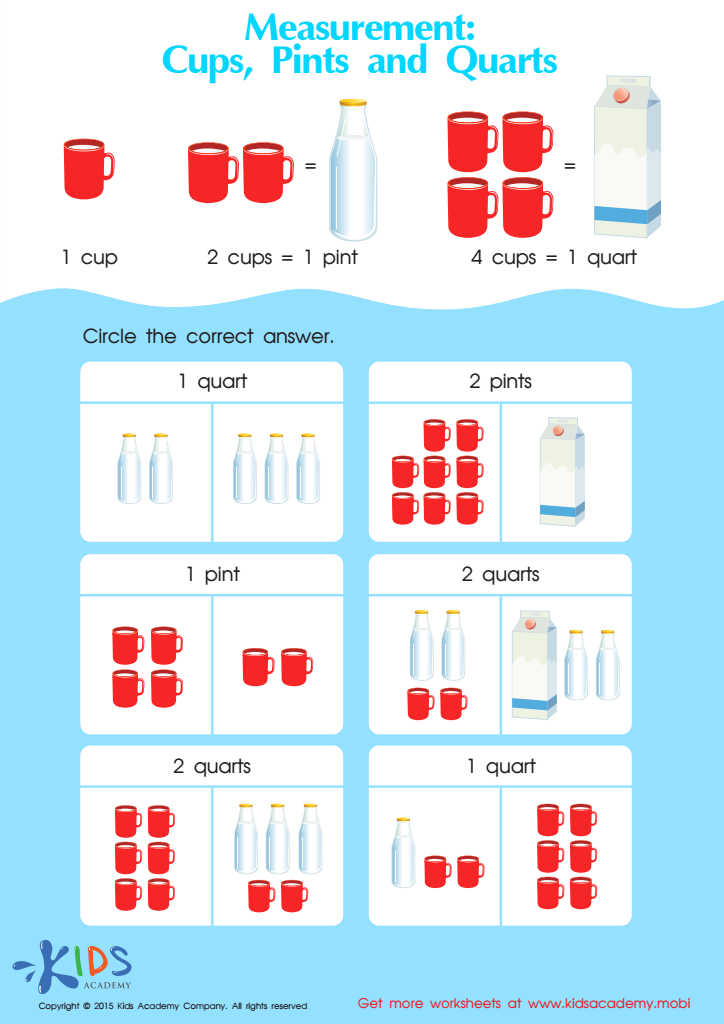
Cups, Pints and Quarts Worksheet
 Assign to My Students
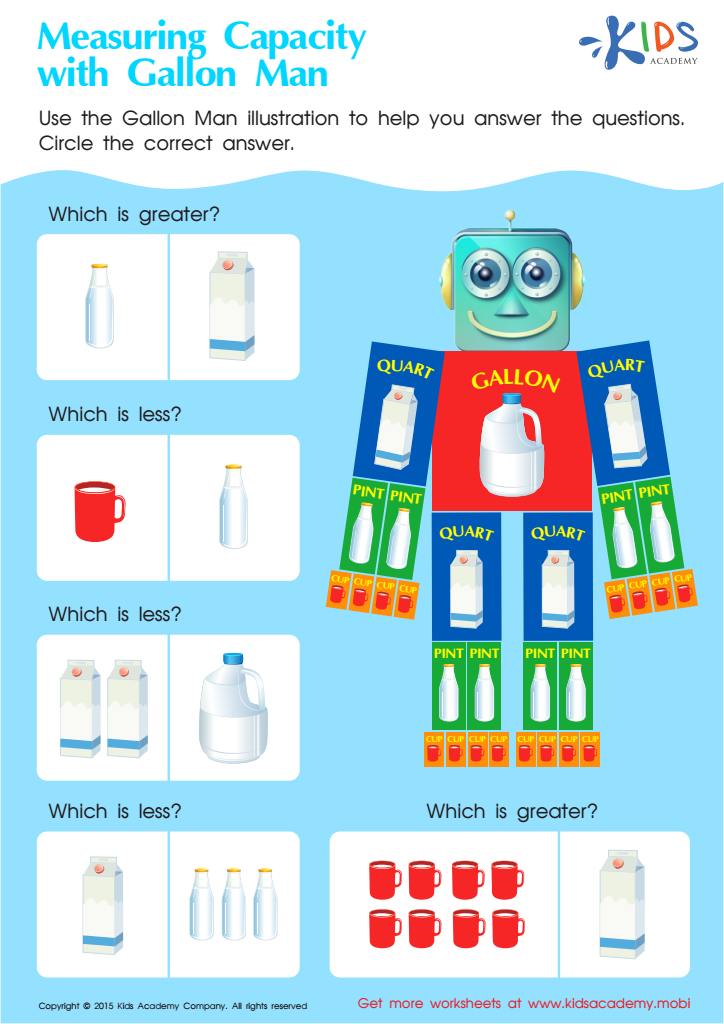
Measurement: Measuring Capacity with Gallon Man Worksheet






Understanding measurement units is essential for children ages 4-9 as it lays the foundation for critical thinking and problem-solving skills. At this age, children are naturally curious and eager to explore the world around them. By grasping different measurement units—such as length, weight, volume, and time—they learn to quantify and describe their experiences, fostering a deeper engagement with their environment.
For parents and teachers, emphasizing measurement units promotes numeracy skills that go beyond rote memorization. When children compare heights, measure ingredients for a recipe, or track time during activities, they actively apply mathematical concepts in practical scenarios, enhancing their comprehension and retention. This real-world connection also cultivates a sense of achievement, boosting their confidence in using math.
Furthermore, understanding measurement units supports interdisciplinary learning. For example, integrating measurement with science experiments or creative projects can enhance curiosity and learning outcomes. By prioritizing measurement in early education, we equip children with essential life skills and prepare them for advanced mathematical concepts in later grades. Thus, understanding measurement not only strengthens basic mathematical foundations but also supports overall cognitive development, making it a vital area of focus for parents and educators alike.








