Understanding more/less concept Math Worksheets for Ages 4-9
3 filtered results
-
From - To
Discover fun and engaging "Understanding More/Less Concept" math worksheets designed for children ages 4-9. These printable resources help young learners grasp the basics of comparative thinking through colorful illustrations and interactive activities. Each worksheet encourages kids to identify which objects have more or less quantity, laying a solid foundation for future math skills. With various exercises tailored to different skill levels, your child will enjoy hands-on practice that promotes critical thinking and problem-solving. Perfect for use at home or in the classroom, these worksheets make learning math enjoyable and effective. Empower your child’s mathematical journey today!
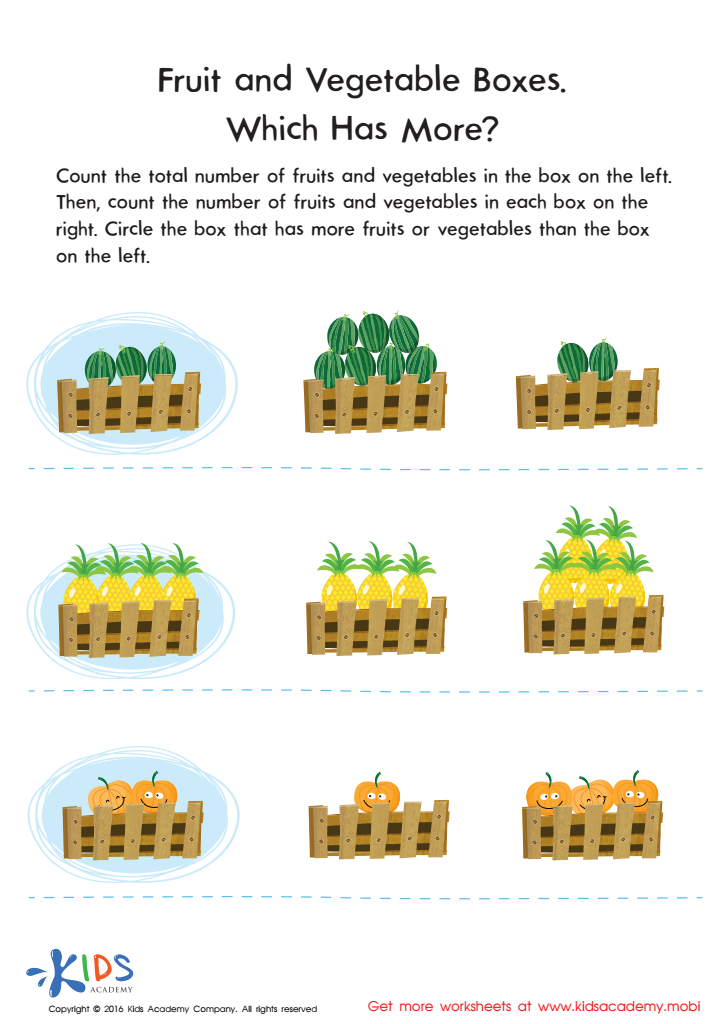
Which Has More? Size Worksheet
 Assign to My Students
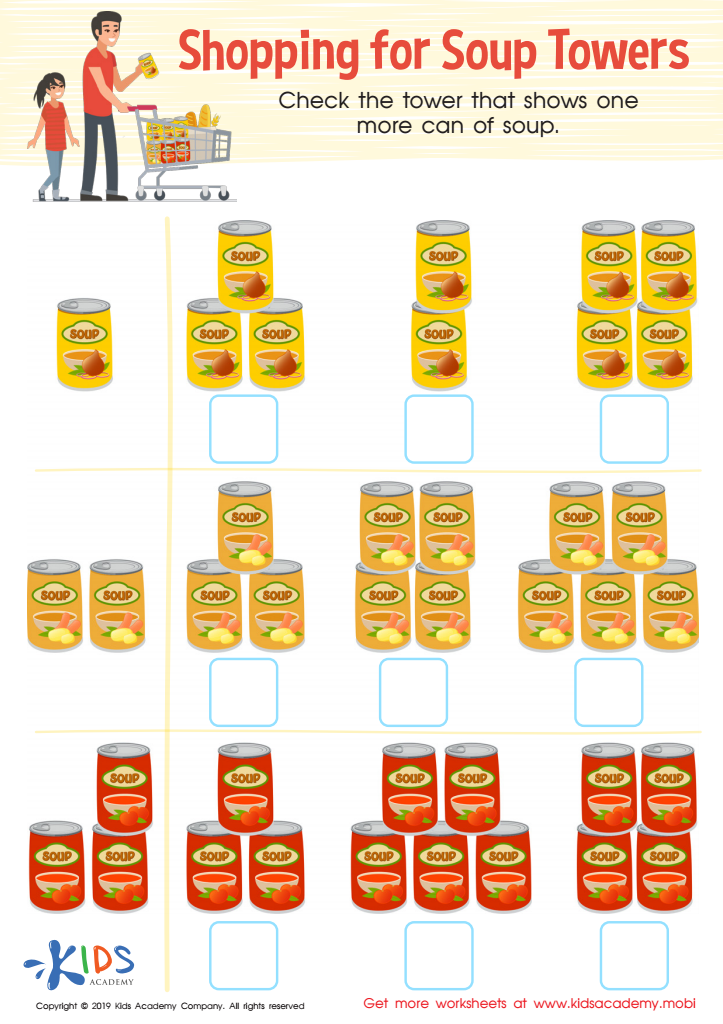
Soup Towers Worksheet
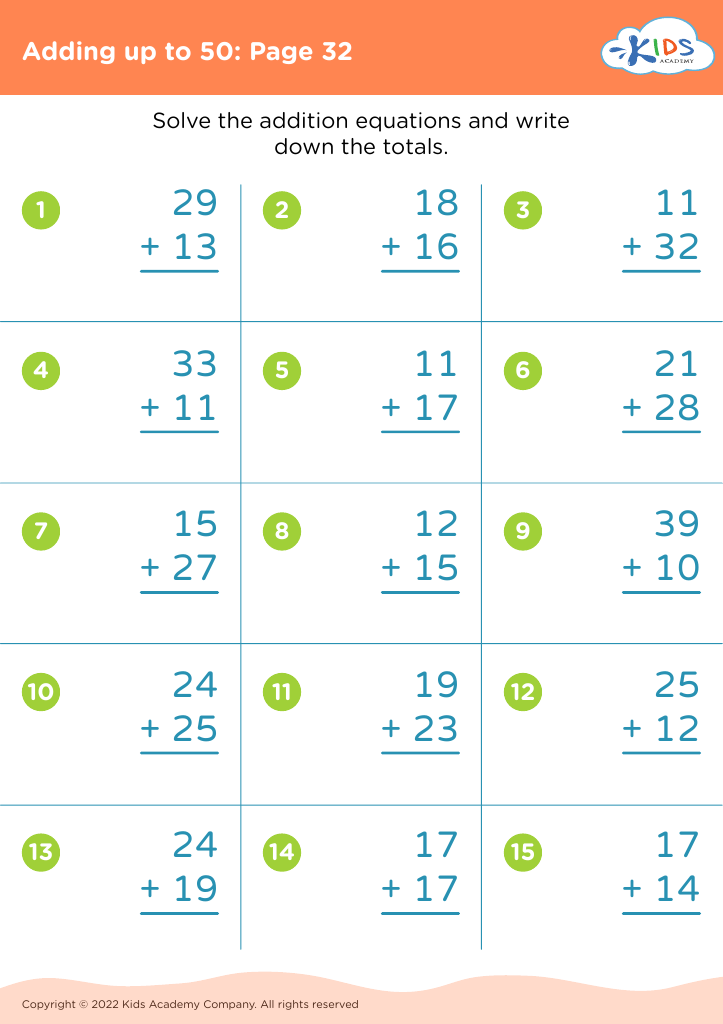


.jpg)
.jpg)




Understanding the concepts of "more" and "less" is essential for children aged 4-9 as it lays the foundation for their mathematical development and critical thinking skills. These early concepts help young learners develop number sense, which is vital for more complex mathematical operations such as addition and subtraction. By grasping the idea of quantity differences, children can engage in basic comparative reasoning—providing the groundwork for understanding greater numbers and basic arithmetic later on.
Furthermore, these concepts are often intertwined with daily life experiences. For example, distinguishing between more apples and fewer oranges helps children apply math to real scenarios, enhancing both cognitive and language development through practical engagement. Moreover, they foster valuable social skills, as children learn to quantify and discuss their observations and needs.
For parents and teachers, emphasizing "more" and "less" during everyday activities cultivates a supportive learning environment. It promotes interactive discussions that deepen comprehension and encourage curiosity. Early mastery of these concepts also builds confidence in young learners, motivating them to explore and enjoy math. Ultimately, prioritizing an understanding of "more" and "less" can create a strong mathematical foundation that influences children's academic success and overall confidence in the subject.








