
Understanding Quantities Math Worksheets for Ages 4-9
50 filtered results
Difficulty Level
Grade
Age
-
From - To
Subject
Activity
Standards
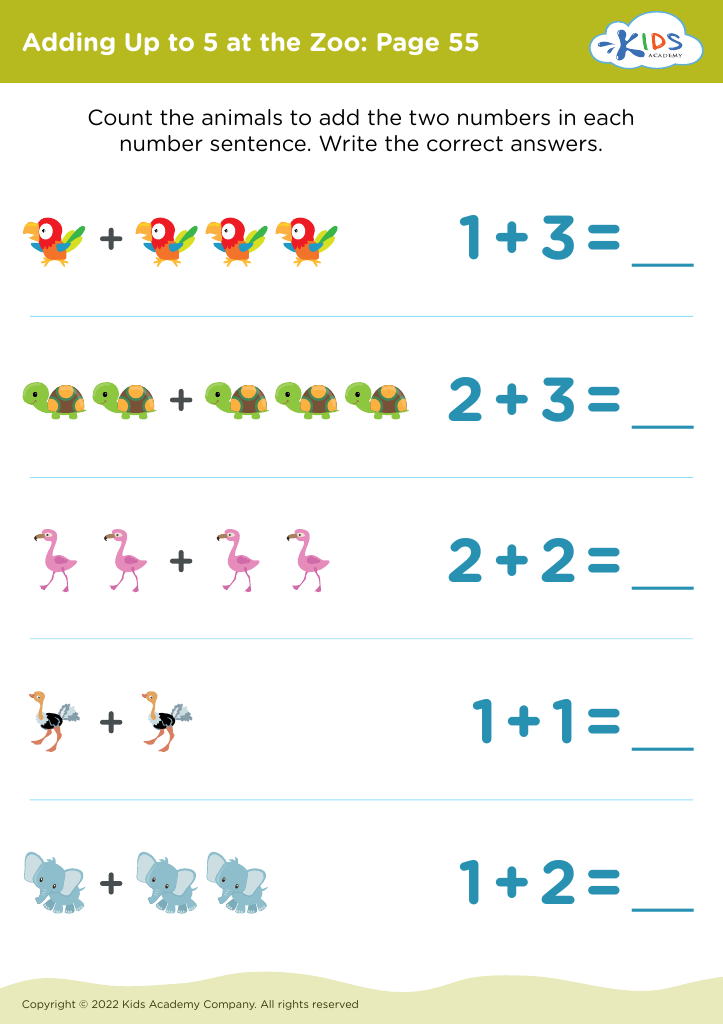
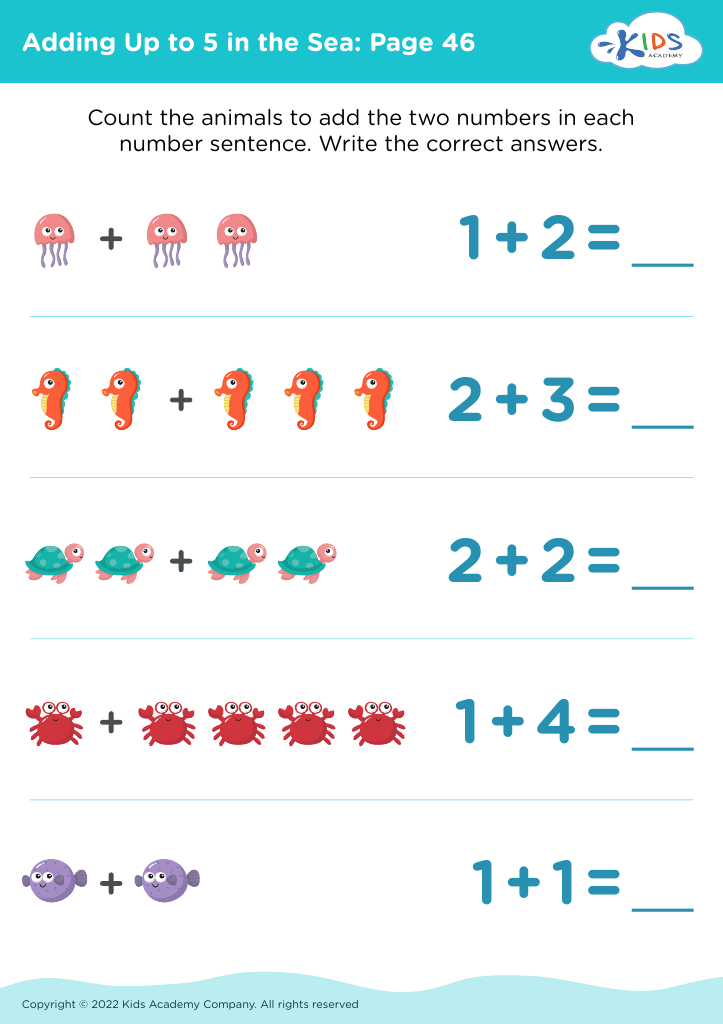
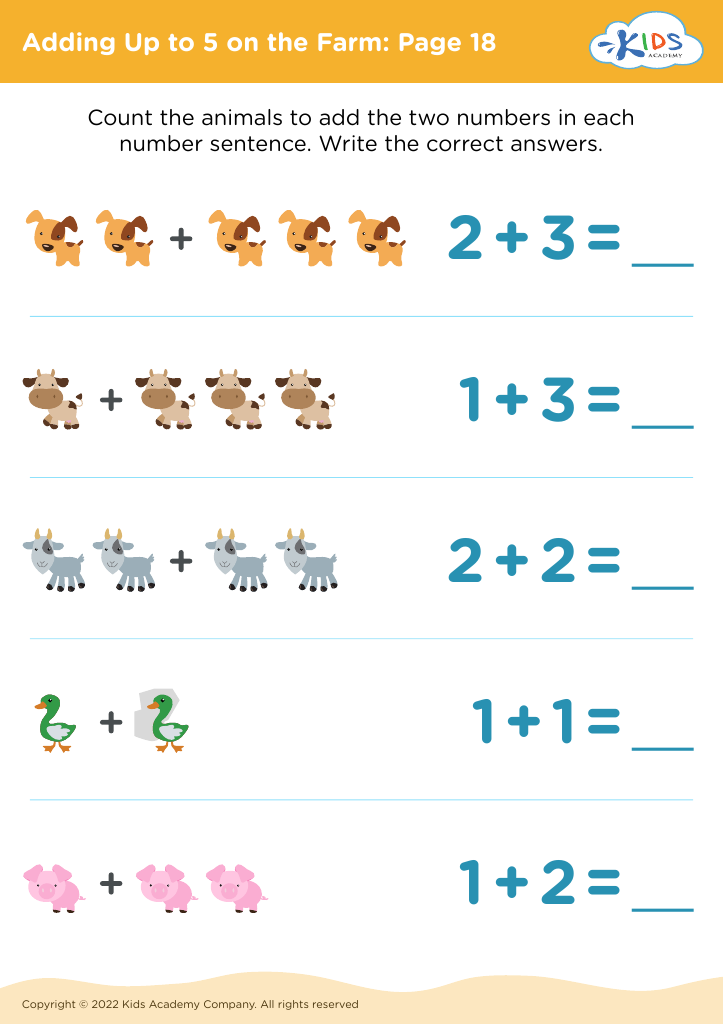
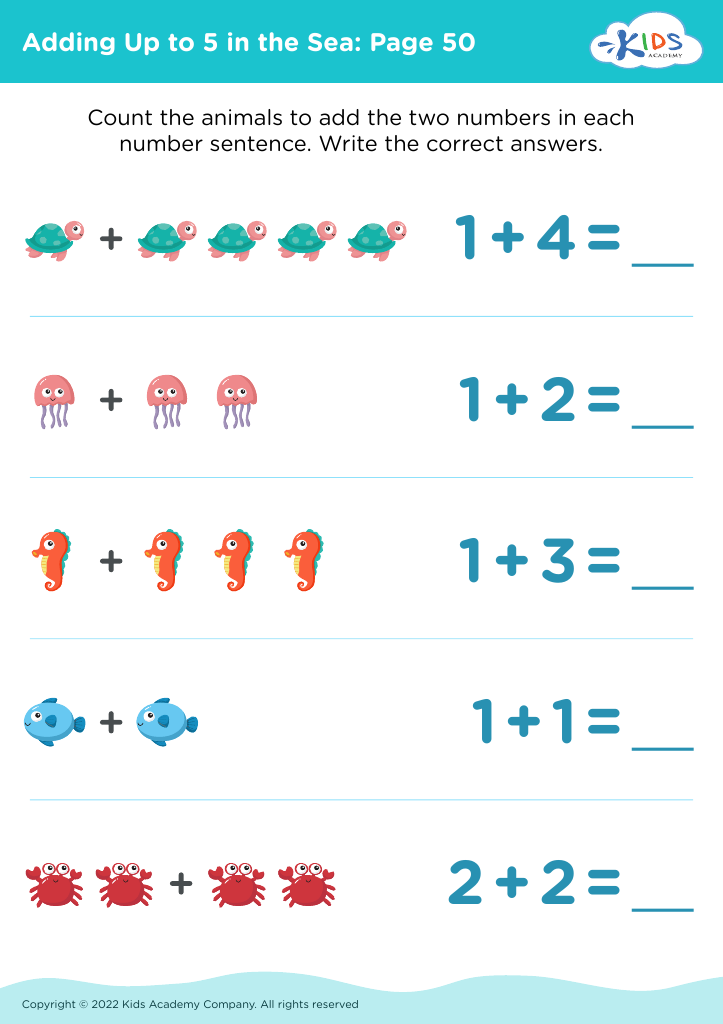
Explore our "Understanding Quantities Math Worksheets" designed for children ages 4-9! These engaging worksheets provide young learners with a solid foundation in quantity recognition, comparison, and basic arithmetic. Each activity is tailored to enhance counting skills, foster number sense, and develop critical thinking. Through colorful visuals and interactive exercises, children will gain confidence as they practice identifying and working with different quantities. Ideal for homeschooling or supplemental classroom activities, these worksheets cater to diverse learning styles and encourage a love for mathematics at an early age. Start your child’s math journey today and watch their skills soar! Download now!
Favorites
With answer key
Interactive
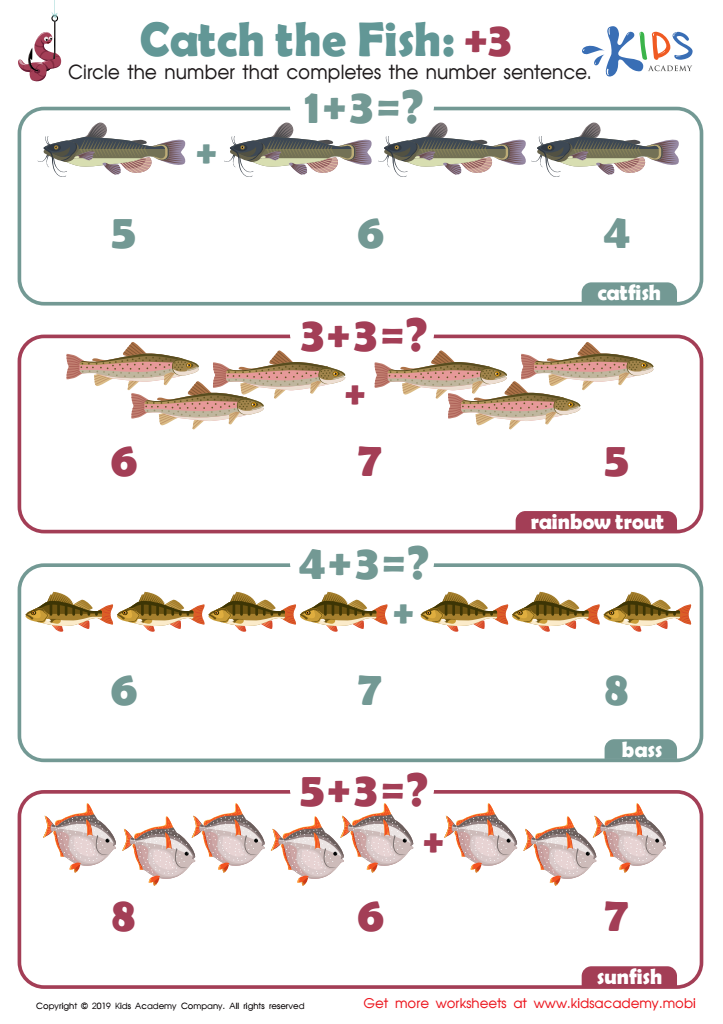
Catch the Fish: +3 Worksheet
Math may be tricky for your child, with all the numbers and calculations. This worksheet can help them brush up. Ask them to identify the objects in the picture, then count them and help them circle the right number to complete the sentence. It's a simple and effective way to improve math skills.
 Assign to My Students
Catch the Fish: +3 Worksheet
Worksheet
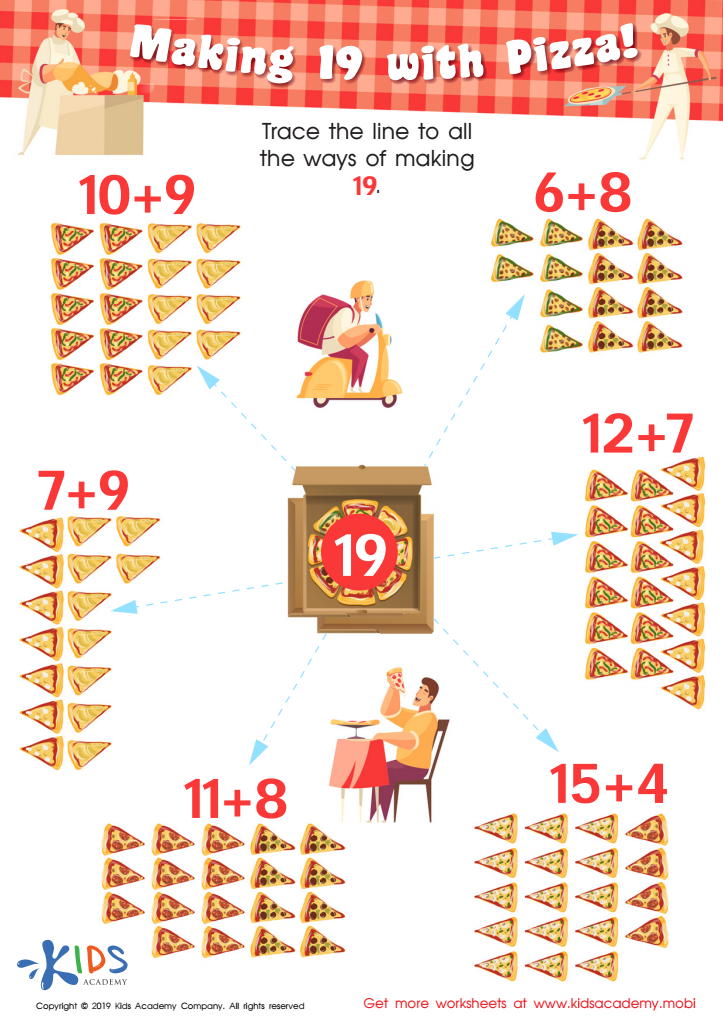
Making 19 with Pizza! Worksheet
Who loves pizza? Your kids do! Next time you need to teach them math, make it fun by combining it with something they enjoy. This worksheet uses a pizza-themed problem to help them practice solving equations. Have them trace the line to figure out how to make 19. It's a great way to make learning math fun!
Making 19 with Pizza! Worksheet
Worksheet
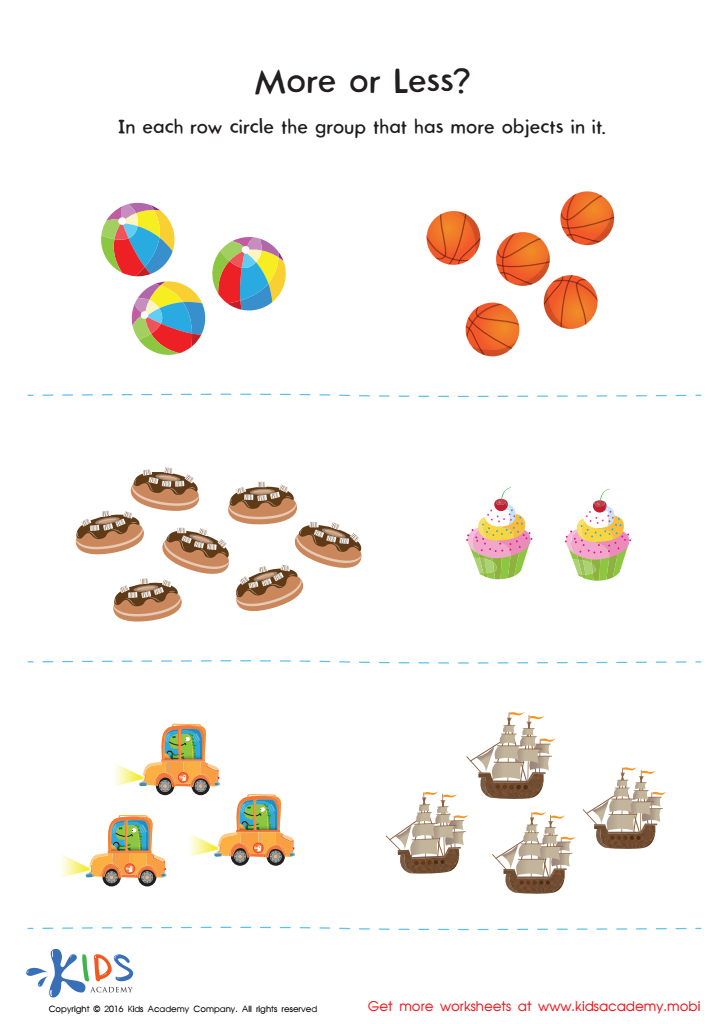
More or Less Size Worksheet
Worksheet
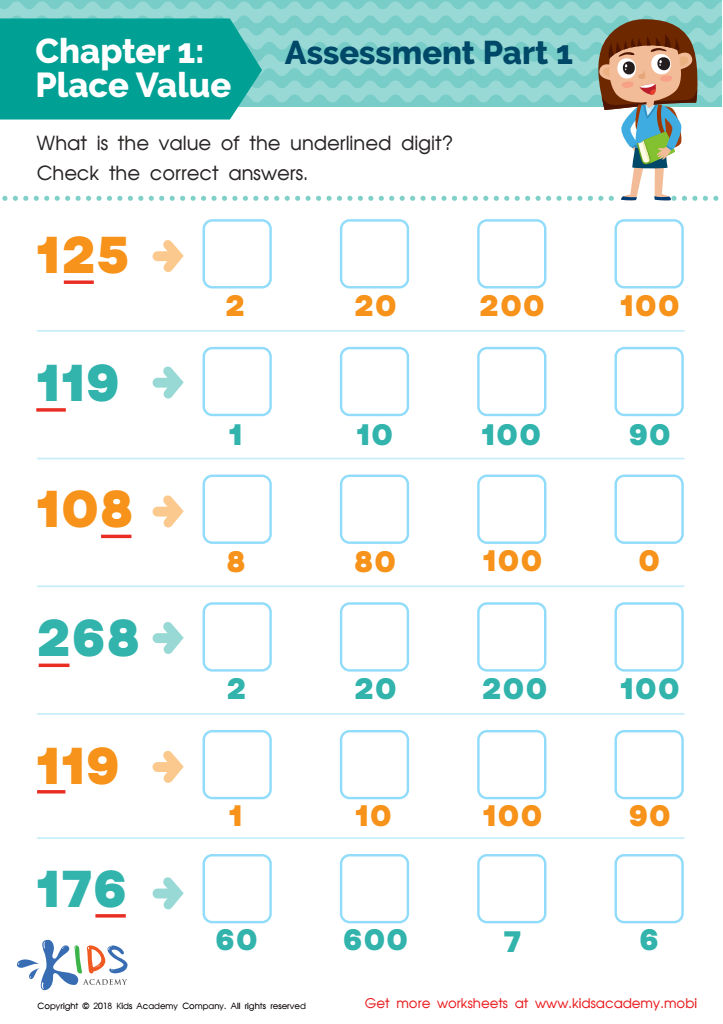
Place Value: Chapter 1 Worksheet
Check your kid's place value understanding with this assessment worksheet. It features 6 questions with one digit underlined for your child to determine the correct value of. Get the download and see if they can correctly choose the answer from the options given. It's a great way to test progress and keep their minds sharp!
Place Value: Chapter 1 Worksheet
Worksheet
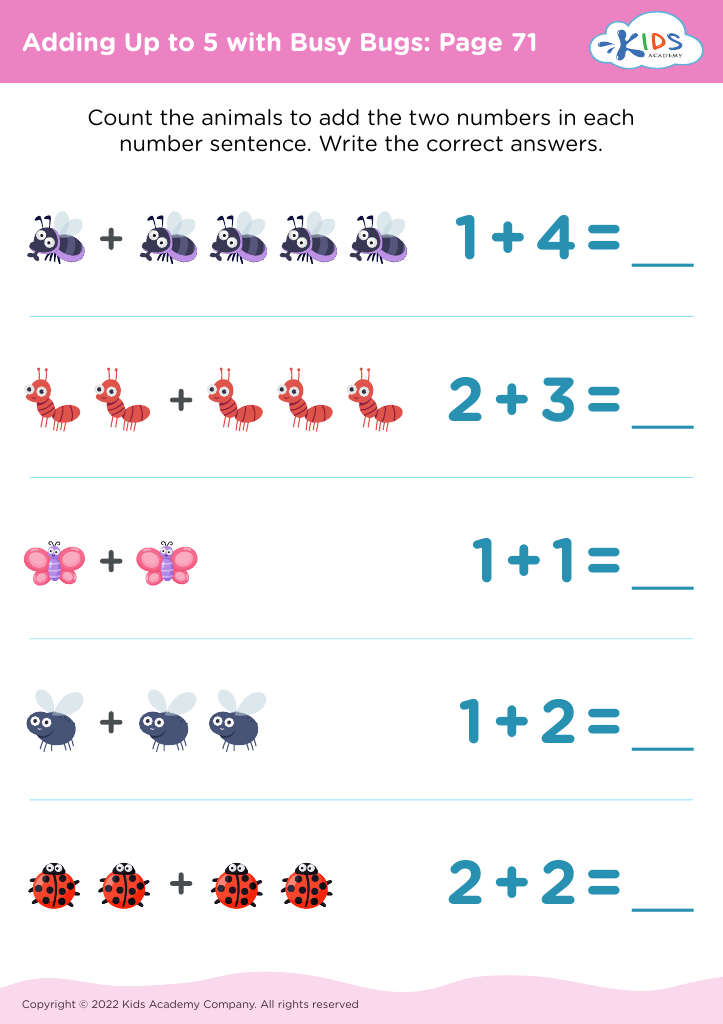
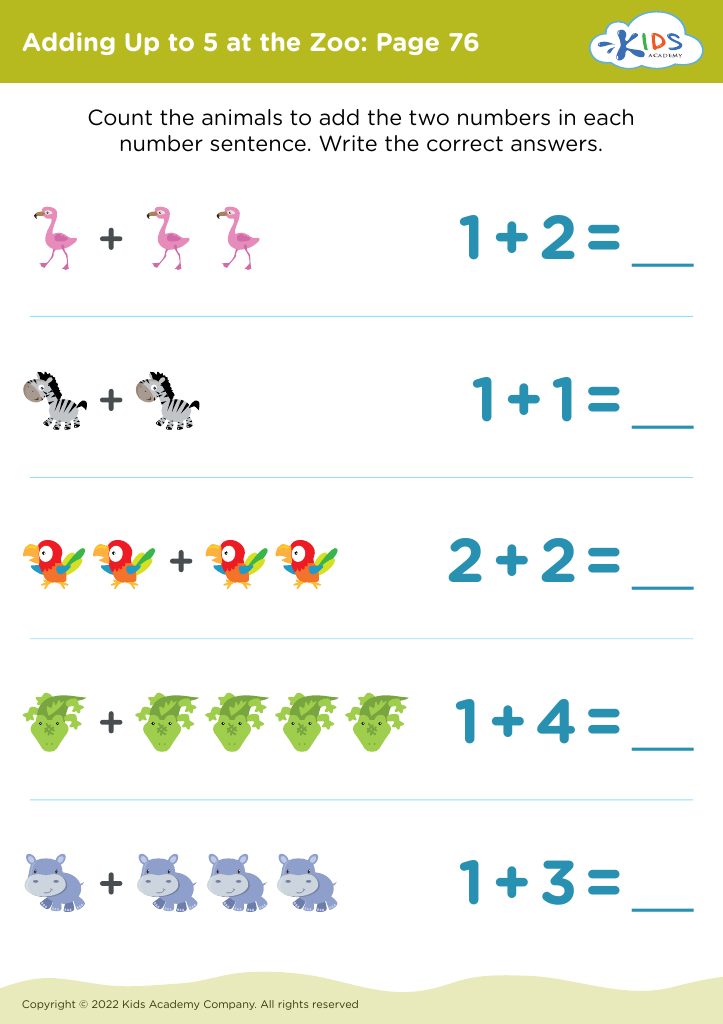
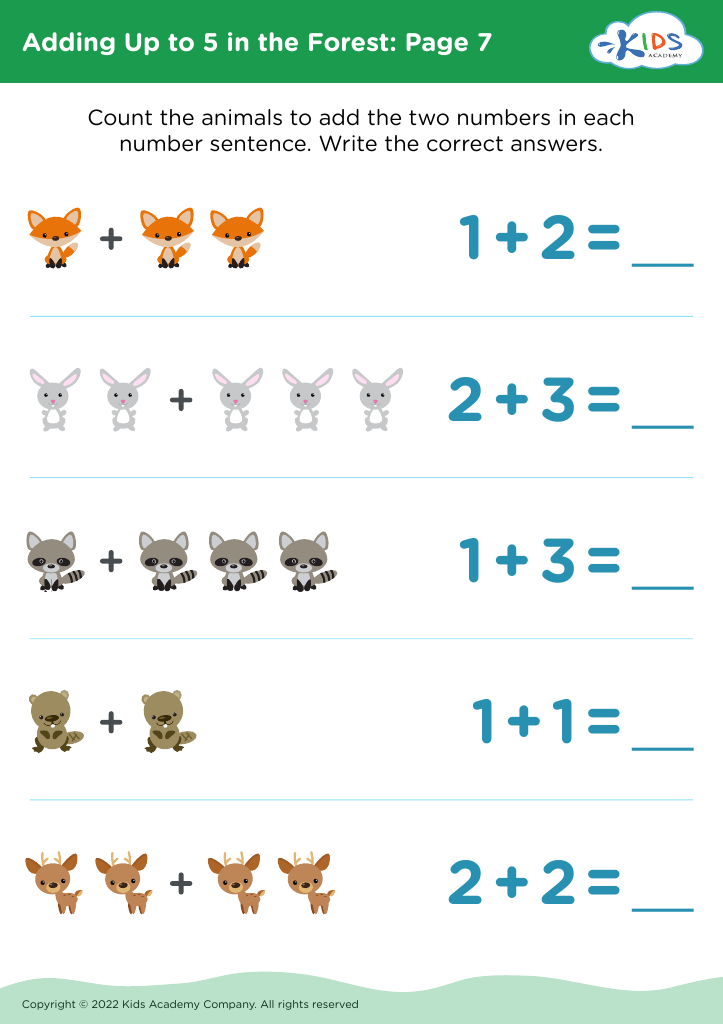
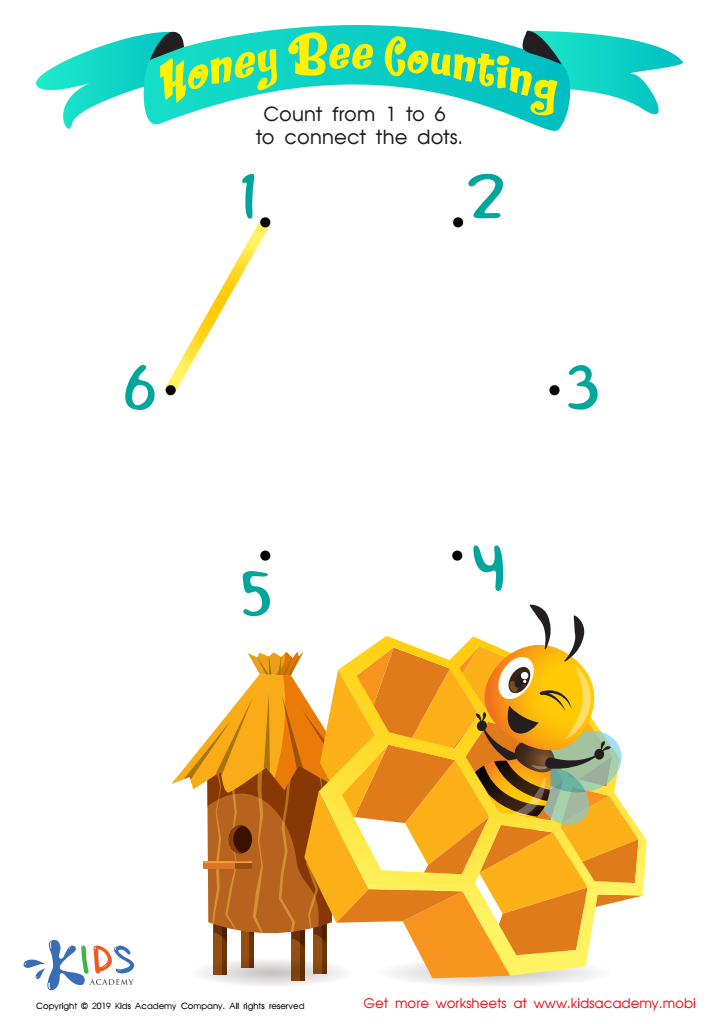
Honey Bee Counting Worksheet
Help your kids learn about honey bees while practising their counting skills! Show them the picture and ask them to point out the bee. Then, give them this worksheet and have them count up to 6, connecting the dots as they go. Numbers are provided for guidance - it's a great way to have fun and learn!
Honey Bee Counting Worksheet
Worksheet
Join Kids Academy for Free
Who is primarily going to use this learning content?








Understanding quantities is a foundational skill in mathematics that supports children's cognitive development and problem-solving abilities. For children aged 4 to 9, grasping the concept of quantities enables them to engage with higher mathematical concepts later on, such as addition, subtraction, and even multiplication. When parents and teachers prioritize this understanding, they lay the groundwork for a robust mathematical education.
From a developmental perspective, kids learn about quantities through hands-on activities like counting objects, measuring ingredients in cooking, or sorting items by size or quantity. This engagement fosters their critical thinking and reasoning skills. Moreover, it enhances their ability to make sense of the world around them and helps in developing a positive attitude toward math, which is crucial for lifelong learning.
Additionally, understanding quantities promotes conversations around numbers in everyday contexts, making math relevant and interesting. This approach not only strengthens their numerical skills but also builds confidence in their abilities. In essence, when parents and teachers focus on teaching quantities, they are cultivating a generation of competent, confident young learners who see math as a valuable tool in their lives. Supporting this early learning is essential for a strong educational foundation.








