Visual Learning Math Worksheets for Ages 4-9 - Page 5
101 filtered results
-
From - To
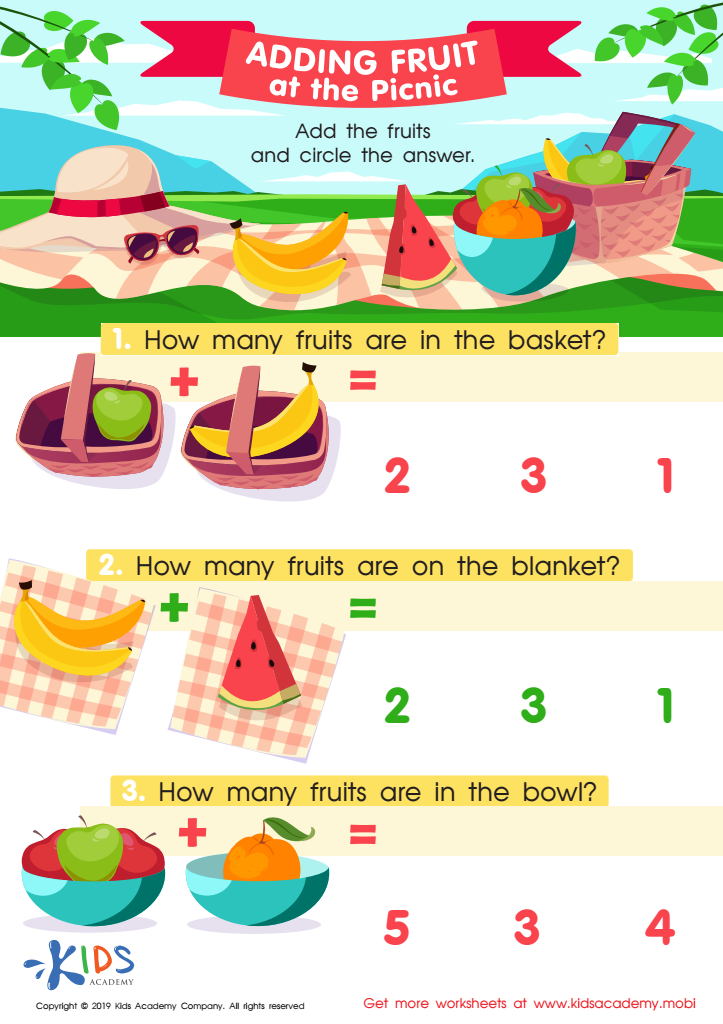
Adding Fruit at the Picnic Worksheet
 Assign to My Students
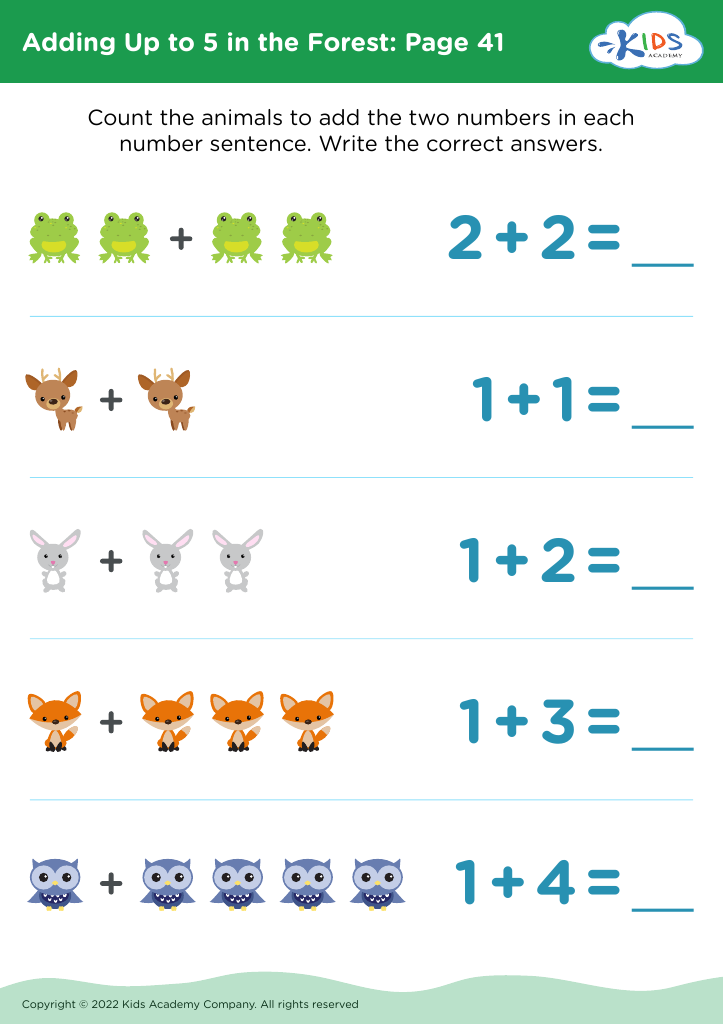








Visual Learning Math for ages 4-9 is essential because it caters specifically to young learners' developmental stages, making abstract concepts tangible through visual aids. Children at this age typically benefit from concrete examples and representations, which help them grasp foundational math concepts such as addition, subtraction, shapes, and patterns. By integrating visuals like charts, blocks, and drawings into lessons, teachers and parents can capture students’ attention and enhance engagement.
Visual learning supports diverse learning styles, accommodating those who may struggle with traditional methods. In addition, it fosters critical thinking and problem-solving skills: children learn to analyze information, make connections, and visualize mathematical relationships, paving the way for deeper understanding. Early exposure to visual math strategies not only builds competence but also boosts confidence, allowing children to approach math with a positive mindset.
Furthermore, strong early math skills correlate with future academic success. By encouraging visual learning, parents and teachers play a crucial role in laying a solid foundation for students’ lifelong learning experiences. Prioritizing visual learning in math can help bridge educational gaps, ensuring that all children have the opportunity to thrive in a subject integral to everyday life, technology, and numerous career paths.








