Comparing objects Measurement Worksheets for Ages 4-9
3 filtered results
-
From - To
Explore our engaging "Comparing Objects Measurement Worksheets" designed specifically for children aged 4-9. These interactive worksheets provide a fun and educational way for young learners to grasp foundational measurement concepts. Through a variety of activities, kids will compare sizes, lengths, and volumes using real-world objects, enhancing their critical thinking and analytical skills. Our resources foster a hands-on learning experience, allowing children to gain confidence in their measurement abilities. Perfect for classroom use or homeschooling, these worksheets will keep your little ones entertained while they learn essential math skills. Download your free worksheets today and watch their understanding of measurements grow!
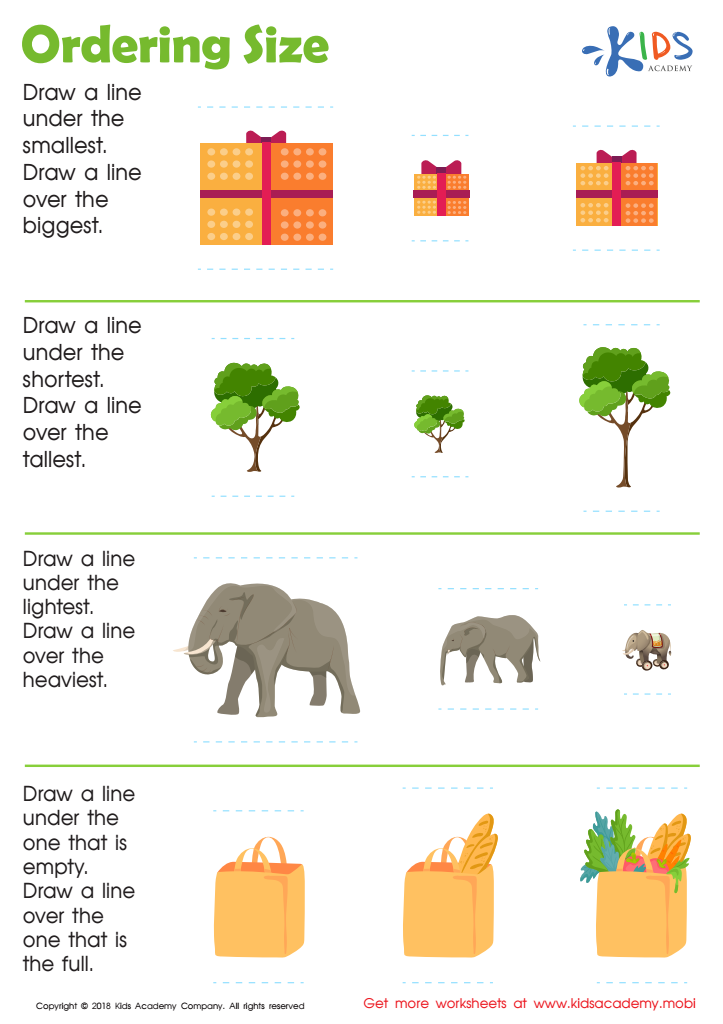
Ordering Size Worksheet
 Assign to My Students
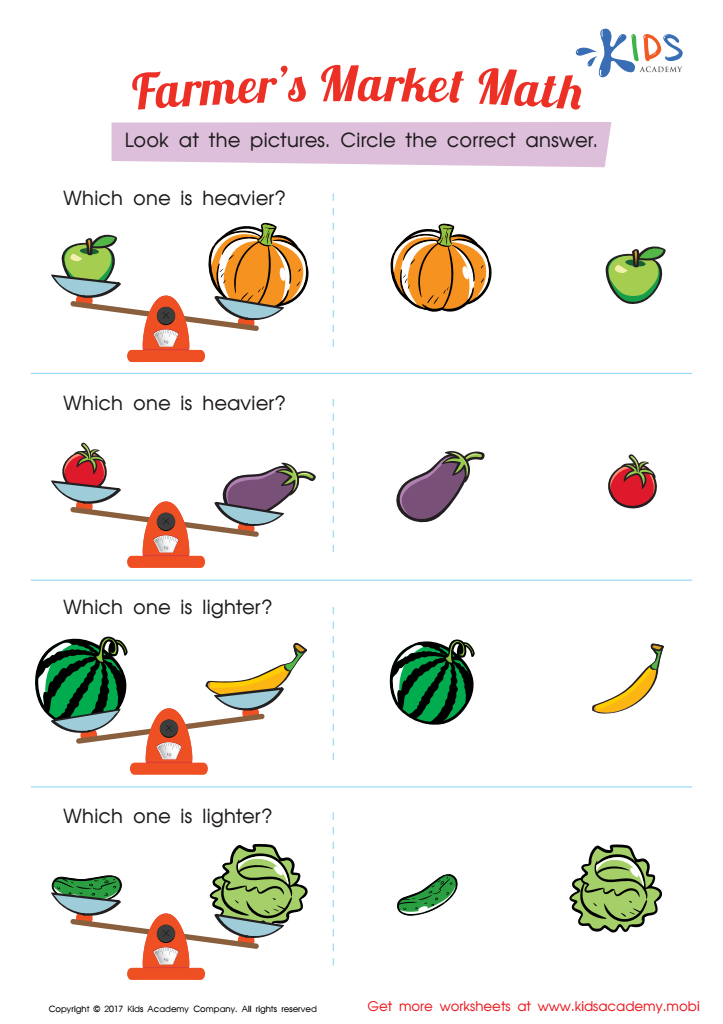
Which One Is Heavier Worksheet
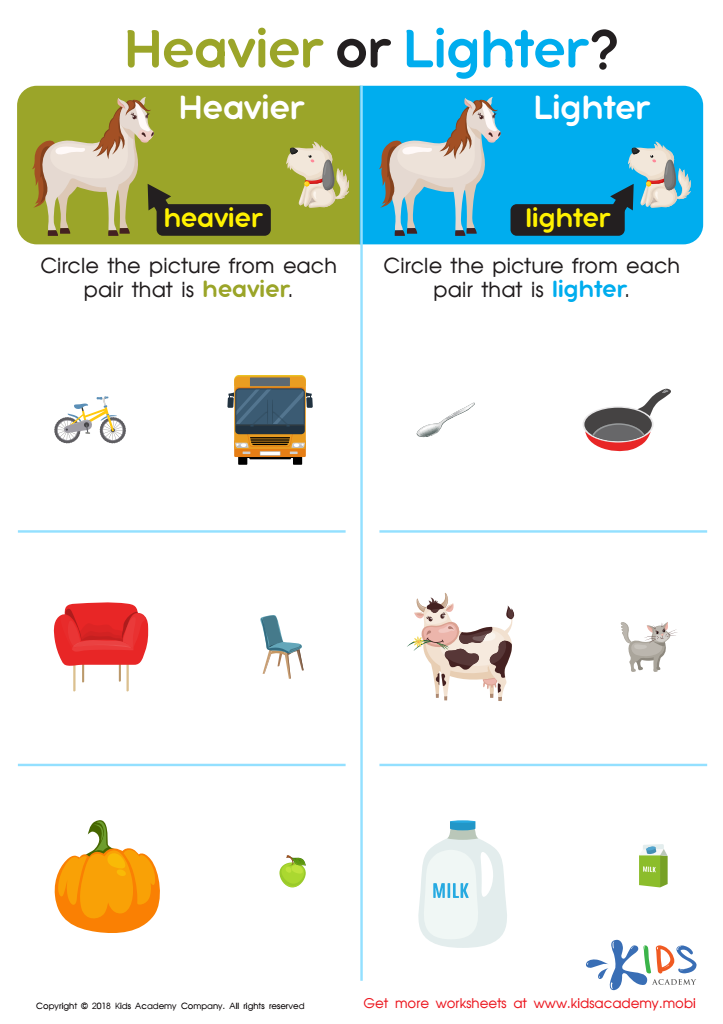
Heavier or Lighter? Worksheet








Comparing objects through measurement is a vital aspect of early childhood education for children aged 4 to 9. Engaging in these activities enhances children's cognitive skills, laying a foundational understanding of mathematics. When children learn to compare sizes, weights, or lengths, they develop critical thinking abilities and learn to articulate their observations effectively.
Understanding measurement fosters a sense of curiosity and exploration. Children are naturally inquisitive learners, and introducing measurement terminology encourages them to ask questions, predict outcomes, and engage in problem-solving activities. For parents and teachers, this is an opportunity to make learning enjoyable and interactive, blending natural play with educational concepts.
Moreover, comparing objects builds spatial awareness and helps children recognize patterns and relationships, important skills in later mathematical learning. It also aids in their social development by teaching them how to communicate their thoughts and engage with peers in collaborative activities.
Ultimately, by nurturing measurement skills, parents and teachers equip children with essential tools that transcend math and science learning. These skills aid daily life activities, stimulate interest in STEM fields, and promote lifelong learning habits, making it crucial for adults to prioritize measurements in their teaching or parenting practices.








