Visual perception Measurement Worksheets for Ages 4-9
4 filtered results
-
From - To
Enhance your child's visual perception skills with our tailored Visual Perception Measurement Worksheets for Ages 4-9! Carefully designed for young learners, these engaging and educational worksheets are perfect for developing critical observation and comparison abilities. Our printable activities help kids to recognize patterns, distinguish between different sizes, and improve spatial awareness, all while having fun. Ideal for classroom use or at-home practice, these worksheets support essential early learning skills in a structured, playful manner. Visit our download library today at Kids Academy to give your child a head start on a lifetime of learning and success!
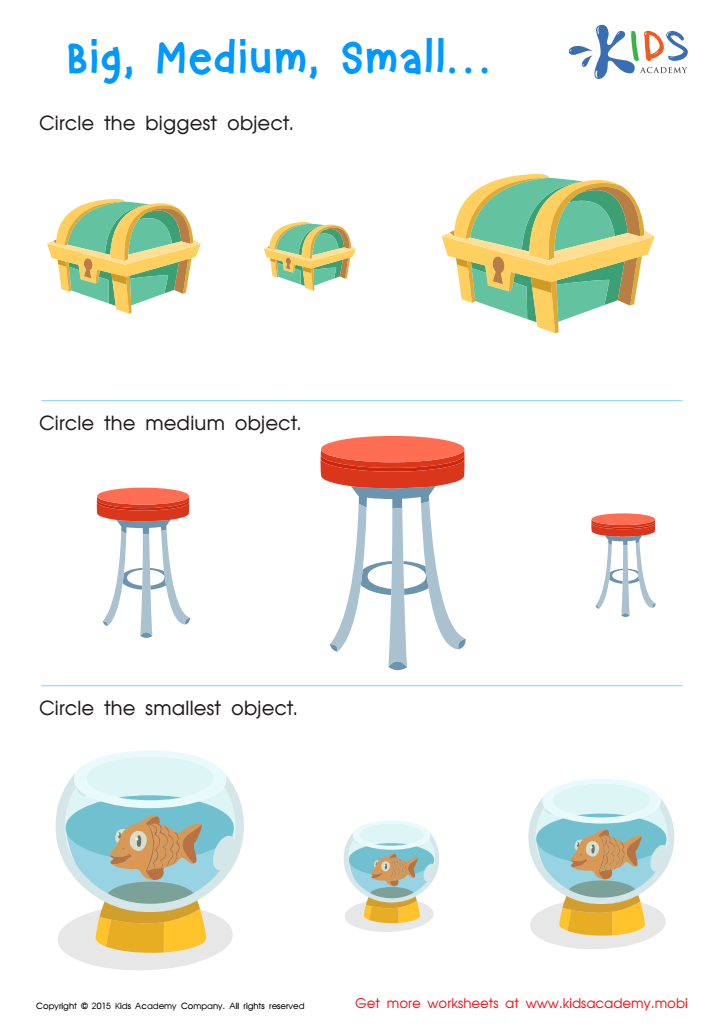
Big Medium Small Worksheet
 Assign to My Students
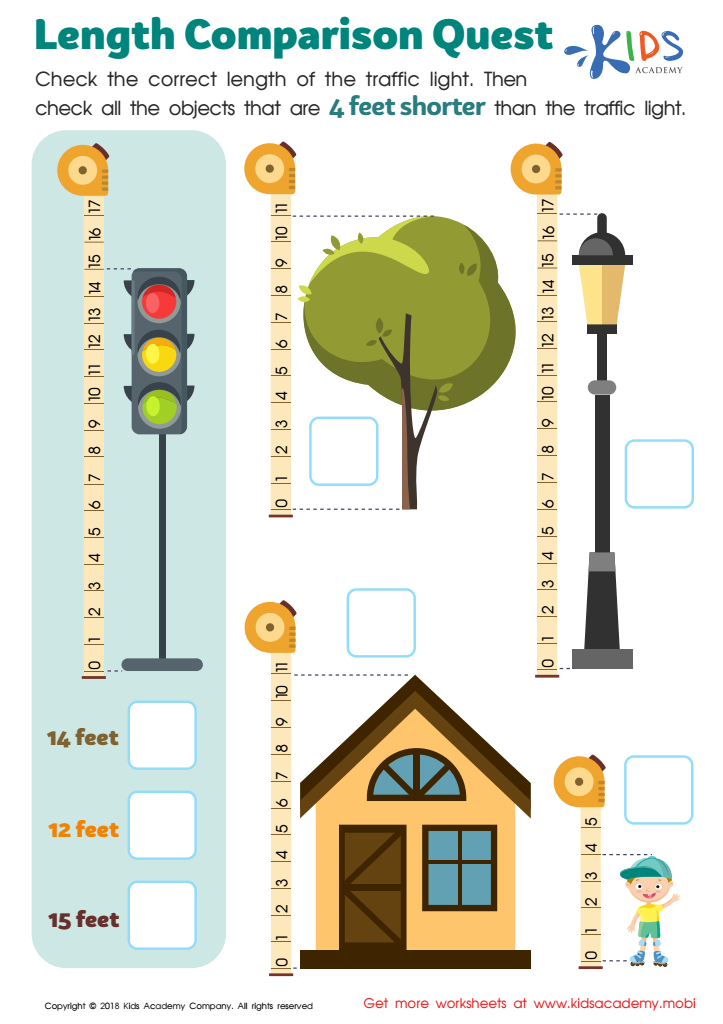
Length Comparison Quest Worksheet
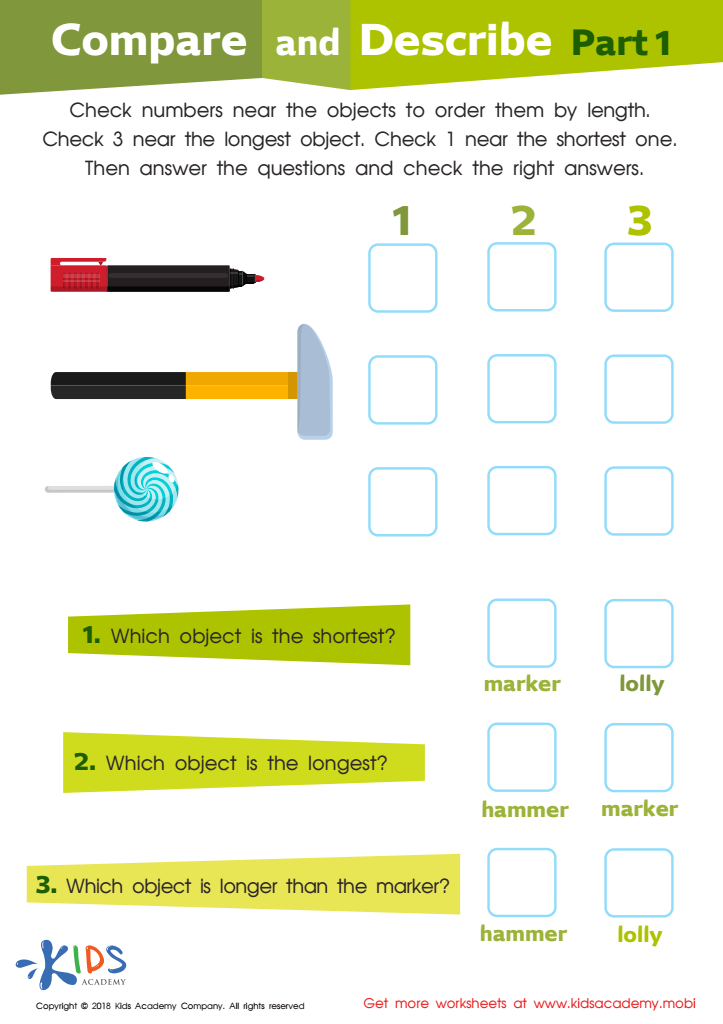
Compare and Describe: Part 1 Worksheet
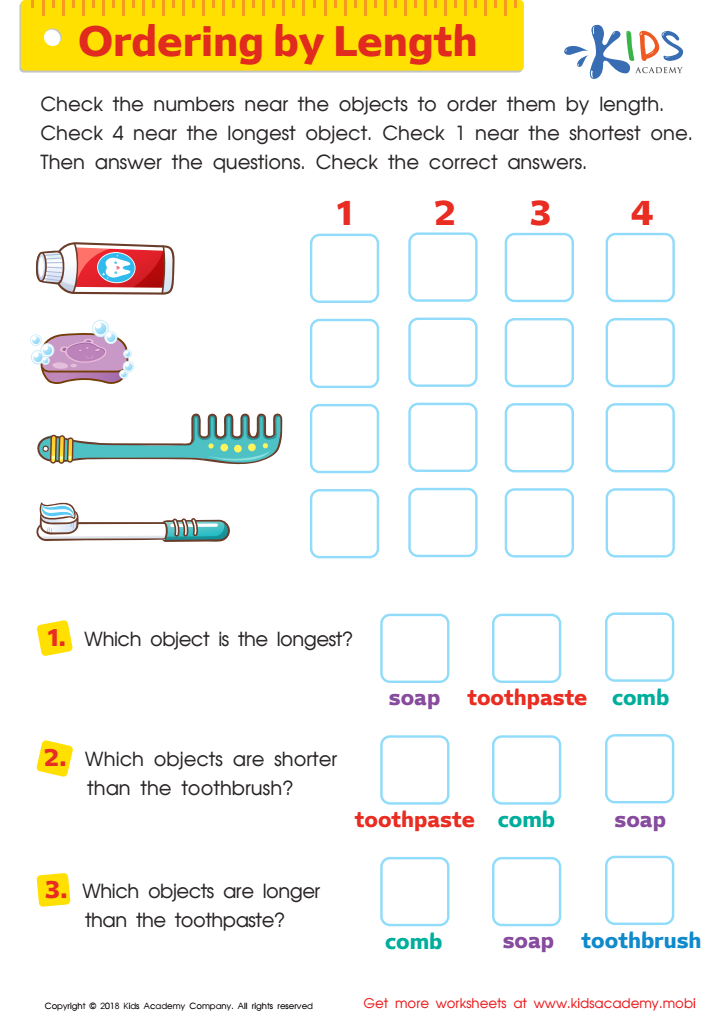
Ordering by Length Worksheet







Visual perception is a critical component of early childhood development, acting as a cornerstone for learning in school. Visual perception measurement for children aged 4-9 is vital, as it assesses how well kids interpret and process visual information, which directly affects their academic and daily life skills.
First, many foundational learning activities, such as reading, writing, and arithmetic, rely heavily on visual perception. Children who struggle with skills like visual discrimination (identifying differences in shapes, letters, or numbers) or visual memory (recalling what was seen) can find tasks more challenging, which may impact their academic performance. Early detection through visual perception measurement allows educators and parents to implement supportive interventions or accommodations early, ensuring children do not fall behind.
Second, good visual perception skills contribute to a child’s ability to perform daily activities independently, such as navigating their environment, organizing toys, and engaging in arts and crafts. Deficiencies might affect a child’s confidence and social interactions as they combat challenges others might not face.
Finally, measuring visual perception helps in identifying potential underlying issues like visual impairments or developmental disorders (such as dyslexia). By understanding where each child struggles or excels, personalized educational strategies can be developed, providing every child with an equal opportunity to thrive in both academics and life skills.








