Number comparison Numbers 0–10 Worksheets for Ages 4-9
4 filtered results
Difficulty Level
Grade
Age
-
From - To
Subject
Activity
Standards
Our engaging Number Comparison Numbers 0–10 Worksheets are designed for children ages 4-9 to master the basics of comparing numbers. These printable, fun activities help young learners build a solid foundation in math by practicing greater than, less than, and equal to concepts. Vivid illustrations and interactive exercises ensure active participation and enhance comprehension. Suitable for classroom or at-home use, our worksheets cater to diverse learning styles making math enjoyable and effective. Encourage your child’s numerical skills and confidence with Kids Academy's expertly crafted materials for a successful early learning journey.
Favorites
With answer key
Interactive
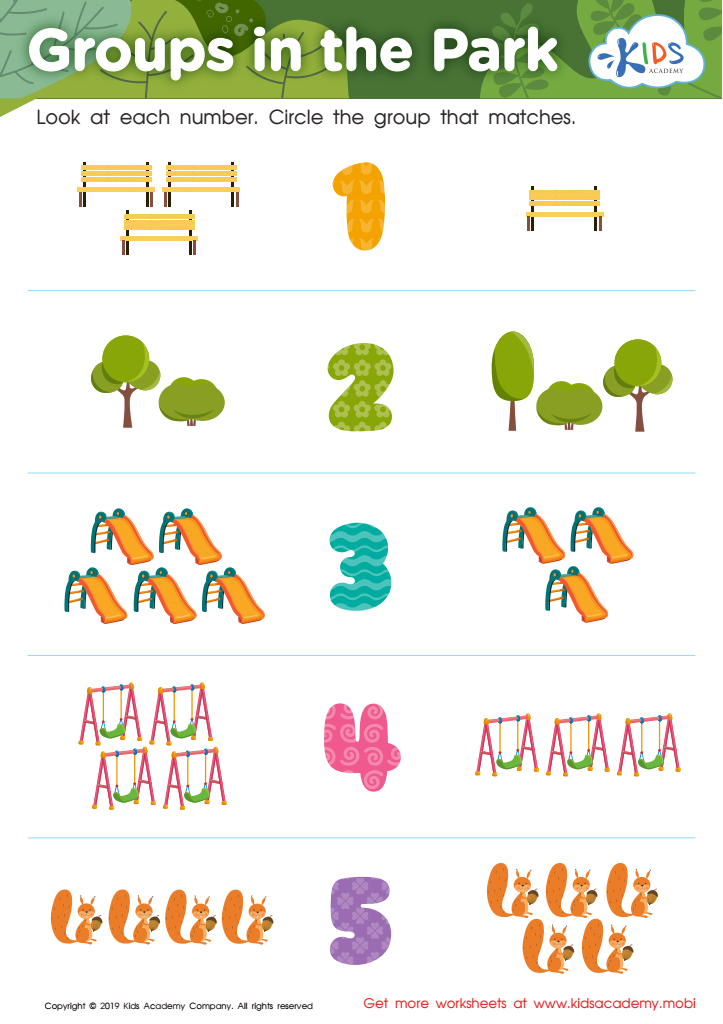
Groups in the Park Worksheet
Take your kids to the park and let them enjoy the freedom to play! Ask them what they love doing most and study a picture together - name items and count objects in the sets, then circle the correct one. It's a fun way for your kids to learn.
 Assign to My Students
Groups in the Park Worksheet
Worksheet
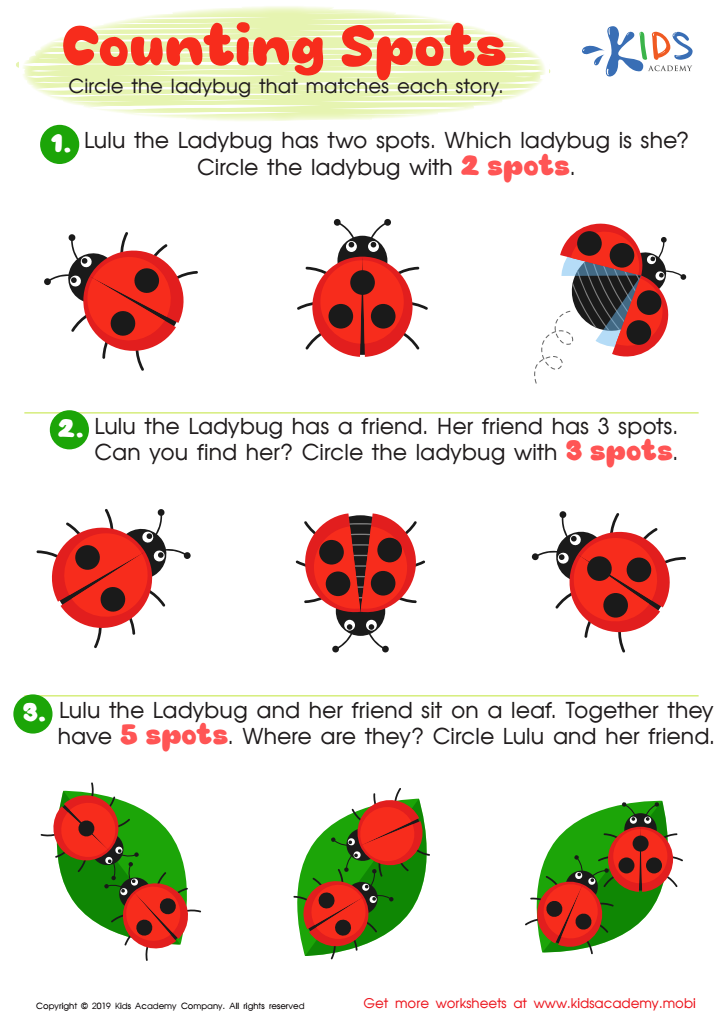
Counting Spots Worksheet
This worksheet is full of cute, colorful ladybugs. Help your kids identify Lulu, who has two spots on her body. Count the spots on each ladybug and circle the one with two spots. Then read the instructions on the other sections and help them find the ladybugs there, too!
Counting Spots Worksheet
Worksheet
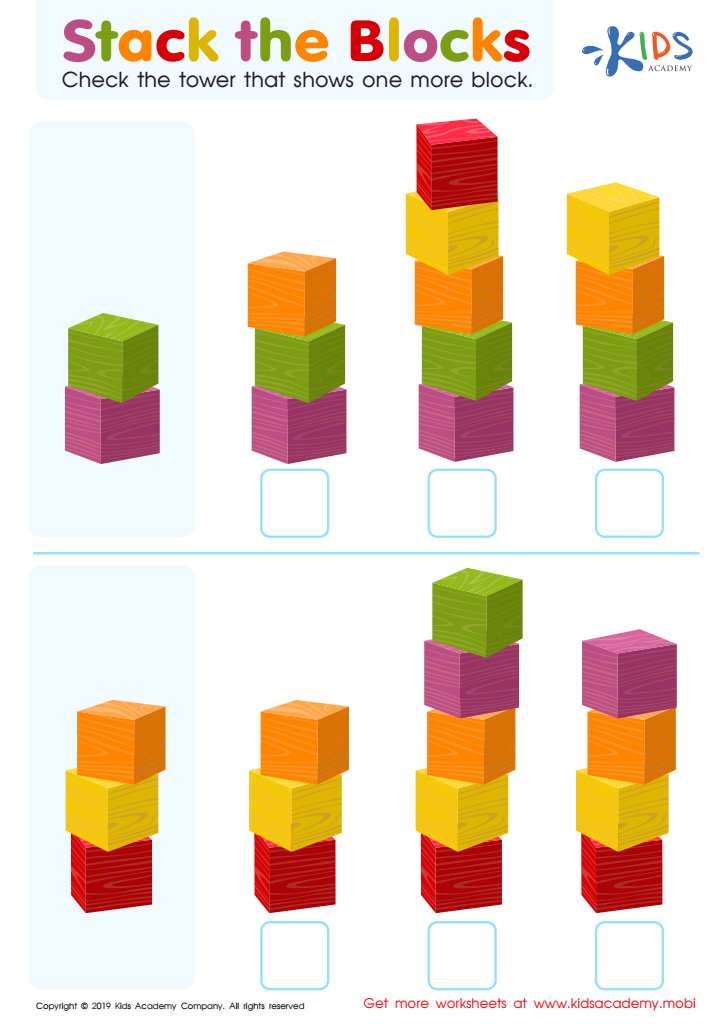
Stack the Blocks Worksheet
Playing with blocks is a great way for kids to learn! They can create patterns, shapes, and even count. In this worksheet, ask them to identify the colors and count each stack of blocks. If they can spot one extra block in the tower, even better! Encourage learning through play with these fun blocks.
Stack the Blocks Worksheet
Worksheet
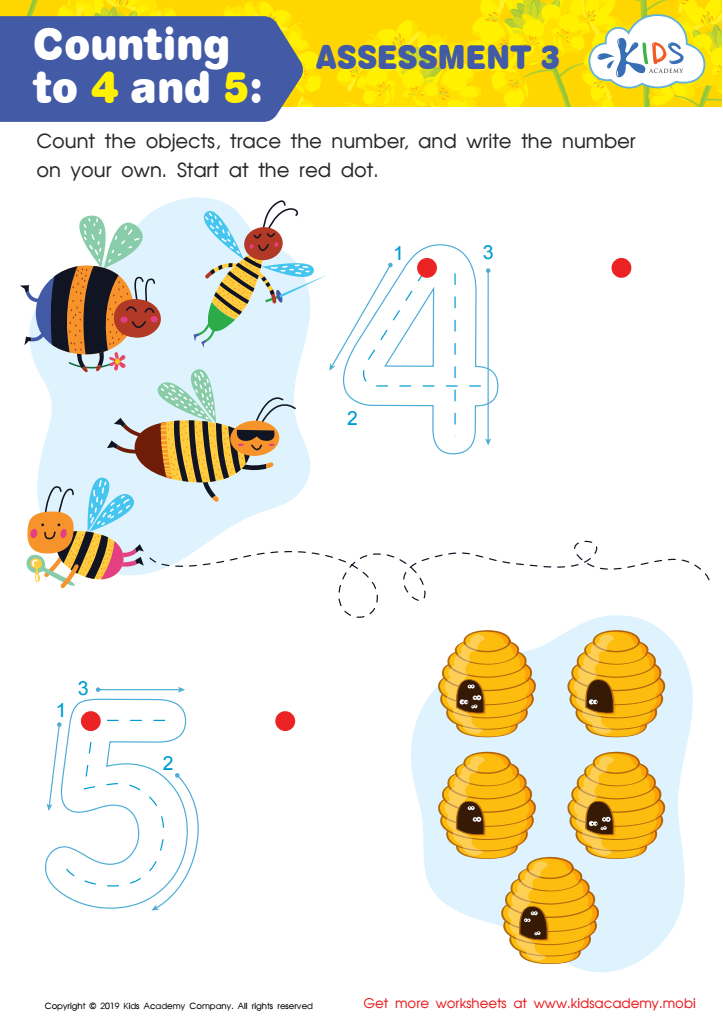
Counting to 4 and 5: Assessment 3 Worksheet
Help your kids learn to count with fun objects and items they like - like the bees in this worksheet. Ask them to count, trace the number, and write it down. Give guidance, starting at the red dot. This is an important first step in math and your kids will love it!
Counting to 4 and 5: Assessment 3 Worksheet
Worksheet
Join Kids Academy for Free
Who is primarily going to use this learning content?








Number comparison for numbers 0–10 is fundamental for children aged 4-9 because it lays the groundwork for mathematical literacy and future learning. At this age, children are developing the cognitive skills necessary to understand more complex mathematical concepts. Number comparison activities foster numerical understanding and help children grasp the notion of quantity, which is critical for addition, subtraction, and even multiplication and division later on.
Furthermore, engaging young children in comparing numbers enhances their problem-solving and critical thinking abilities. They learn to make decisions based on the relative sizes and values of numbers, which translates to improved reasoning skills in everyday situations.
From a developmental perspective, mastering number comparison also promotes confidence and enthusiasm for learning. When children understand that seven is more than three, for example, they feel a sense of achievement which encourages further engagement with mathematics.
Moreover, early exposure to number comparison can help identify learning difficulties early on, allowing for timely intervention. This proactive approach ensures that children receive the support they need to develop strong numerical foundations.
In summary, focusing on number comparison for numbers 0–10 is essential for cultivating a child’s mathematical understanding, critical thinking, and overall academic success, making it a priority for both parents and teachers.