Understanding Quantities Numbers 0–10 Worksheets for Ages 4-9
3 filtered results
-
From - To
Welcome to our "Understanding Quantities Numbers 0–10 Worksheets," designed for children ages 4-9! These engaging worksheets help young learners explore the concept of quantities through fun activities and visuals. Tailored to support early math skills, the worksheets cover counting, comparing, and grouping numbers 0-10, fostering a strong foundation in number sense. Teachers and parents can easily incorporate these resources into lessons or at-home practice to enhance understanding and retention. Easy to print and adapt, these materials are perfect for evolving learning journeys, making math enjoyable and interactive for preschoolers and early elementary students. Start your child's math adventure today!
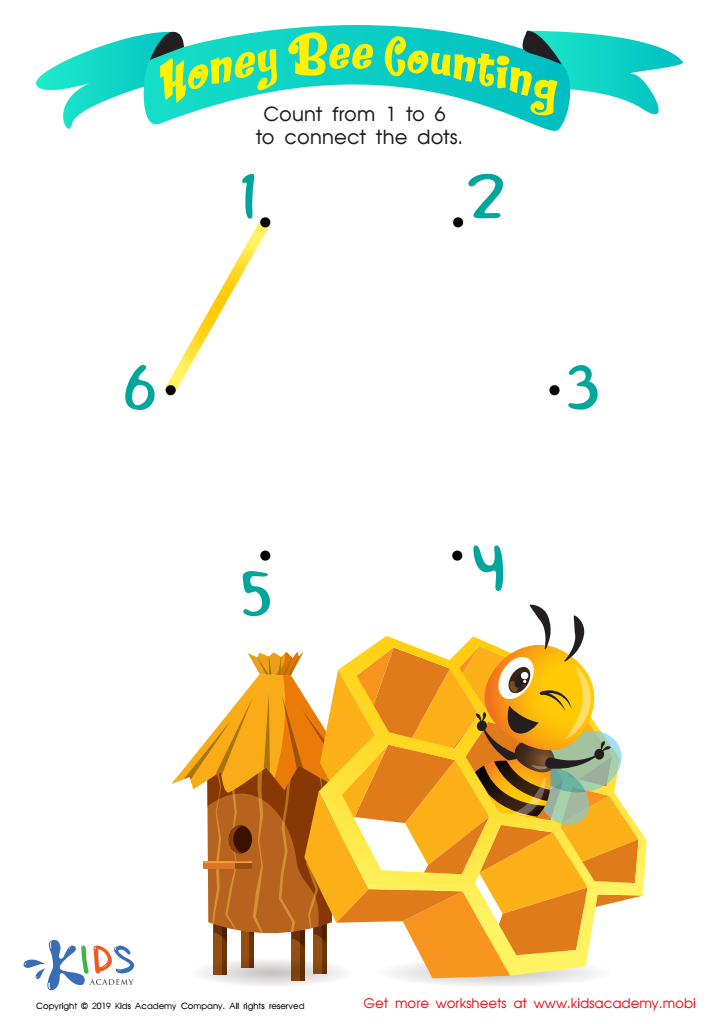
Honey Bee Counting Worksheet
 Assign to My Students
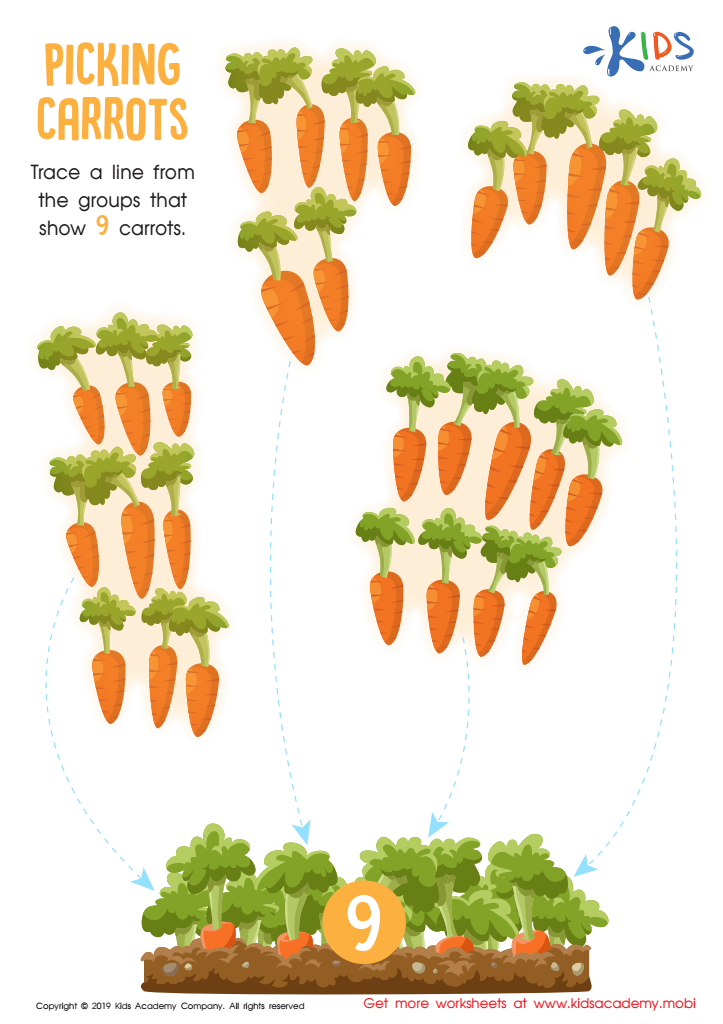
Picking Carrots Worksheet
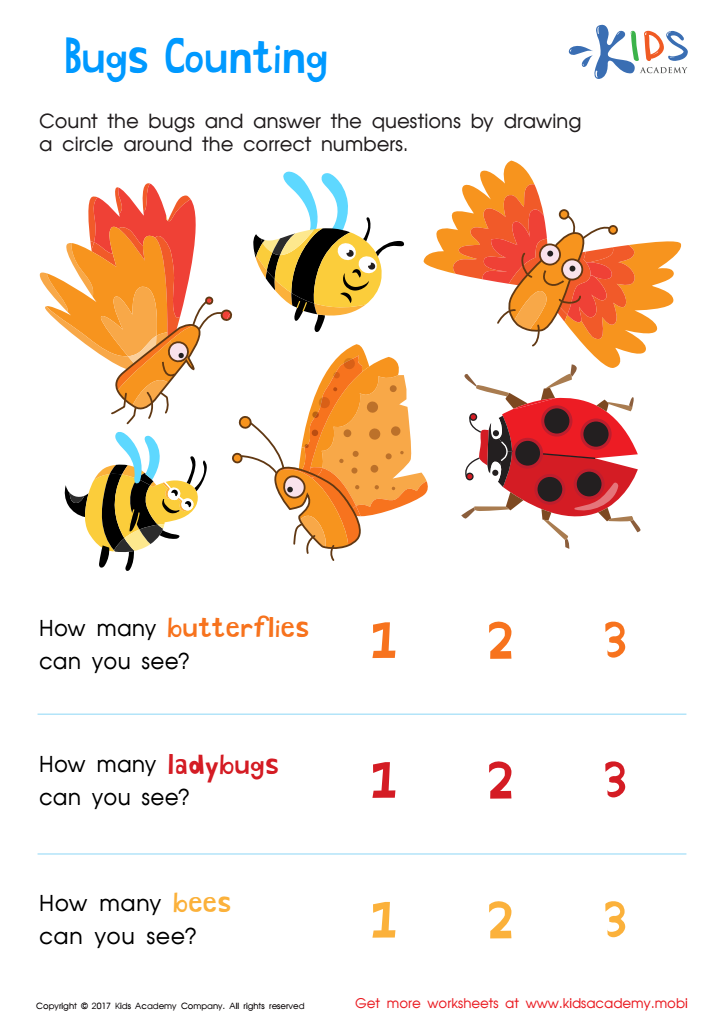
Bugs Counting Worksheet








Understanding quantities and numbers from 0 to 10 is a fundamental building block for early learners, significantly influencing their academic and life skills. For parents and teachers, fostering this understanding is crucial for several reasons.
Firstly, it facilitates cognitive development. Children aged 4-9 are in a critical stage of brain growth, and engaging with numbers helps enhance their problem-solving abilities and logical reasoning. Grasping the concept of quantities aids in object recognition and counting, which are prerequisites for more complex mathematical concepts later on.
Secondly, early numerical skills correlate with later academic success. Research indicates that a strong foundation in basic math is predictive of overall achievement in both math and literacy as children progress in school.
Furthermore, understanding these concepts fosters confidence in kids. When they can recognize, compare, and manipulate small quantities, they feel empowered and more willing to engage with more challenging content.
Lastly, it also enriches everyday experiences. From cooking together to counting toys, these interactions nurture a love for learning. This lays the groundwork for lifelong skills, ensuring that children not only excel in school but also grow into numerically literate individuals in the wider world. Thus, promoting skills related to quantities and numbers is vital for holistic child development.