Understanding patterns Times Tables Worksheets for Ages 4-9
3 filtered results
-
From - To
Explore our "Understanding Patterns Times Tables Worksheets" designed for children aged 4-9. These engaging worksheets help young learners grasp the concept of times tables through visual patterns and interactive exercises. By identifying and exploring numerical relationships, students enhance their multiplication skills while enjoying the learning process. Our worksheets cater to various learning styles, ensuring a fun and effective way to build a solid mathematical foundation. Perfect for home or classroom use, these resources foster critical thinking and problem-solving abilities. Unlock your child’s potential in math with our thoughtfully crafted times tables worksheets and make learning patterns an exciting adventure!
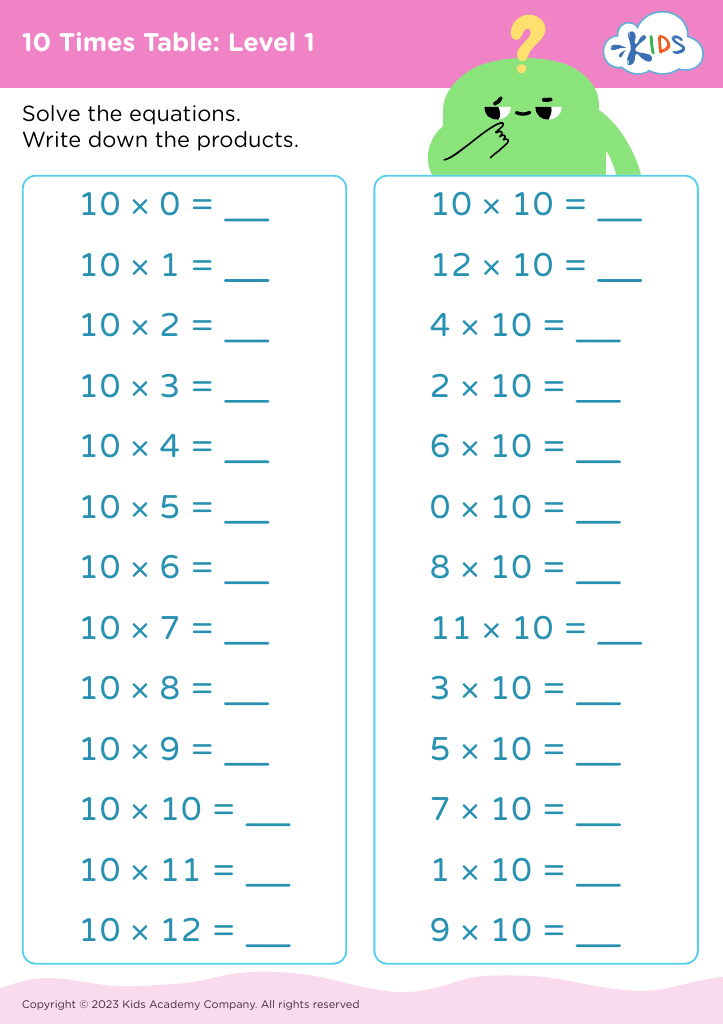
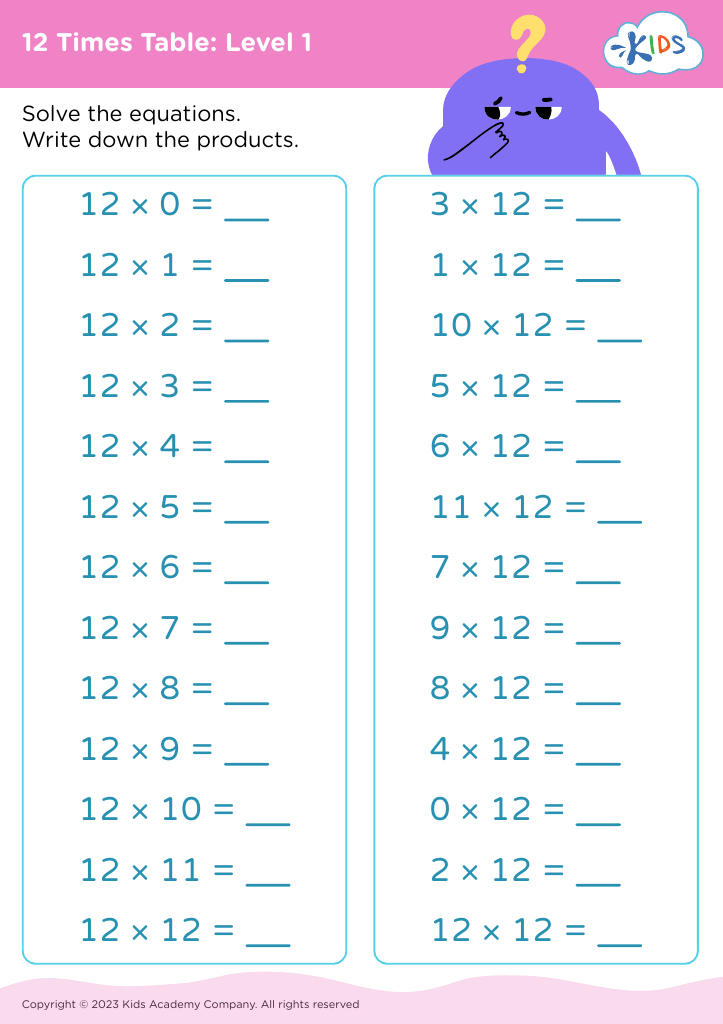
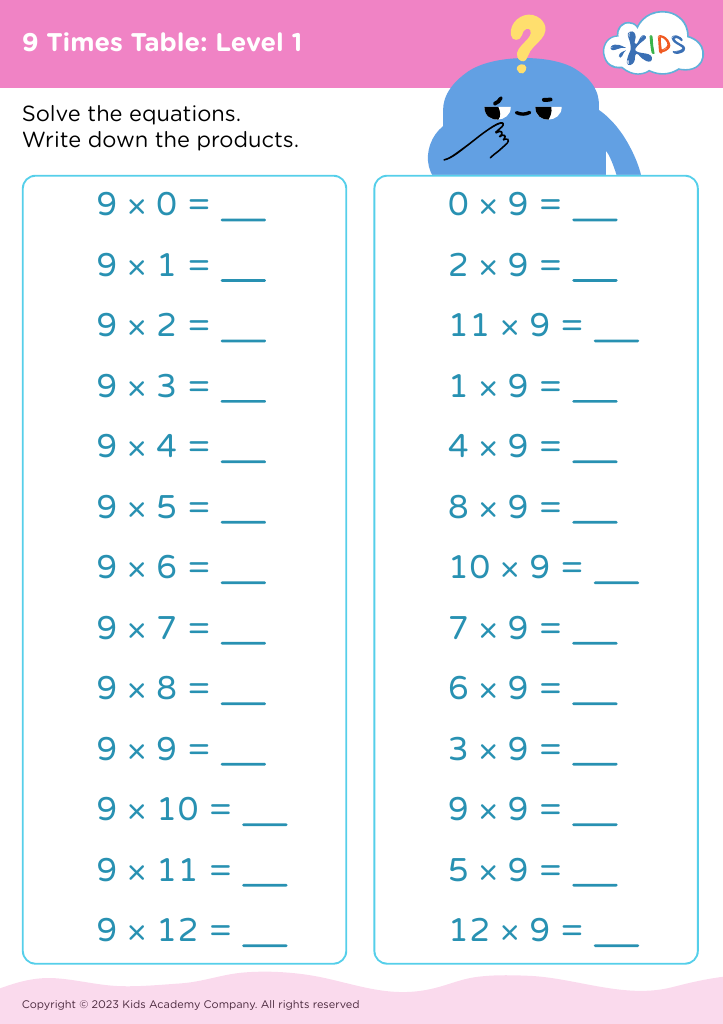





Understanding patterns in times tables is crucial for children aged 4-9 as it lays the foundation for their mathematical development. At this age, children are rapidly building their numerical skills and understanding. Times tables not only enhance their ability to memorize multiplication facts, but recognizing patterns within them fosters deeper mathematical reasoning.
When children identify patterns—like how 5 times any number will always end in either 0 or 5—they develop a stronger conceptual understanding rather than rote memorization. This skill enables them to tackle more complex math problems in the future and cultivates critical thinking.
Additionally, mastering times tables through patterns can instill confidence in young learners, making them more inclined to engage with math positively. This confidence reflects in classroom performance and helps reduce anxiety around mathematics.
For parents and teachers, supporting children in understanding patterns in times tables not only prepares them for advanced mathematical concepts but also promotes effective problem-solving strategies. By creating an engaging learning environment, adults can help children see math not only as a subject but as an important and enjoyable part of everyday life, setting them up for long-term academic success.








