Moral lesson understanding Building Vocabulary Worksheets for Ages 4-9
3 filtered results
-
From - To
Introducing our "Moral Lesson Understanding Building Vocabulary Worksheets for Ages 4-9". These engaging, educational worksheets are designed to enhance your child's vocabulary while instilling essential moral values. Each worksheet incorporates age-appropriate stories and activities, encouraging children to expand their language skills and comprehend key moral lessons. Perfectly tailored for young learners, these exercises foster critical thinking, empathy, and ethical reasoning in a fun, interactive way. Nurture your child's character and communication abilities simultaneously with our expertly crafted materials, ideal for both classroom and home environments. Give your child the tools to excel academically and morally today!

King Midas Worksheet
 Assign to My Students











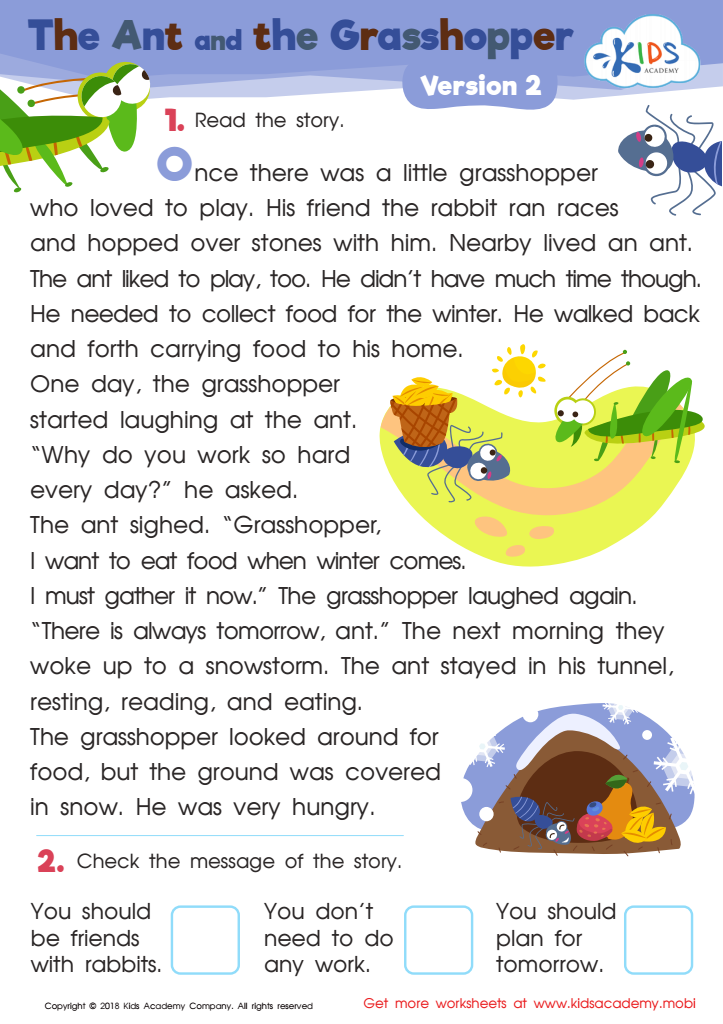
The Ant and The Grasshopper Version 2 Worksheet
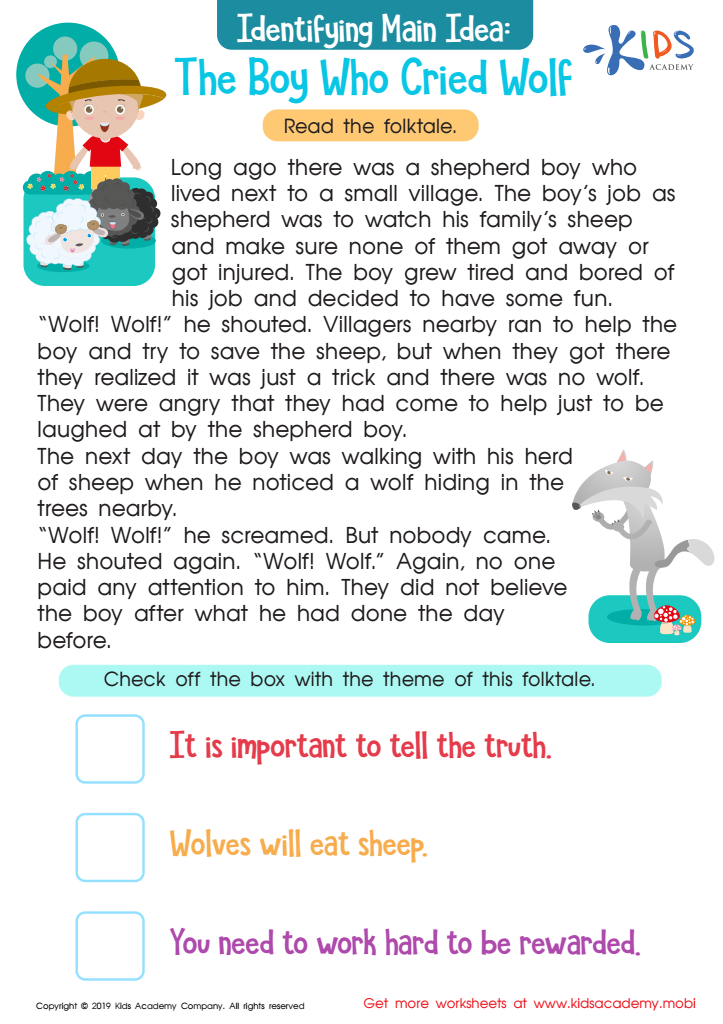
The Boy Who Cried Wolf Part 2 Worksheet








Parents and teachers play a crucial role in shaping the moral and cognitive development of children aged 4-9. During these formative years, children navigate their social world, learn essential communication skills, and develop foundational moral values. Fostering an understanding of moral lessons and building vocabulary are intertwined aspects of this development and are vital for several reasons.
First, understanding moral lessons equips children with a sense of empathy, fairness, and respect. Teaching concepts like honesty and kindness helps children make ethical decisions and build healthy relationships. These values become the bedrock of their character and influence their behavior in various social settings, including classrooms and playgrounds.
Second, expanding vocabulary is critical as language is a primary tool for understanding and expressing complex ideas, including moral concepts. A rich vocabulary allows children to articulate their thoughts and feelings more accurately, engage in meaningful discussions, and comprehend stories and experiences that illustrate moral lessons. It enhances their ability to understand narratives and moral reasoning, fostering cognitive development.
Together, moral education and vocabulary enhancement contribute to well-rounded development, allowing children to process information deeply and interact more effectively. When parents and teachers prioritize these areas, they lay the groundwork for children to grow into thoughtful, articulate, and morally conscious individuals, prepared for lifelong learning and social interaction.








