Visual interpretation Building Vocabulary Worksheets for Ages 4-9
3 filtered results
-
From - To
Enhance your child's vocabulary with our "Visual Interpretation Building Vocabulary Worksheets" designed for ages 4-9. These engaging worksheets combine visual cues with vocabulary development, ensuring your child connects words to images effectively. By identifying and interpreting pictures, children strengthen their language skills while enjoying playful and interactive tasks. Our resources support early literacy, promote critical thinking, and boost comprehension, making learning fun and accessible. Ideal for both parents and educators, these worksheets are perfect for classroom activities or at-home learning. Foster a love for words and visual learning through these creative exercises that pave the way for lifelong literacy skills.
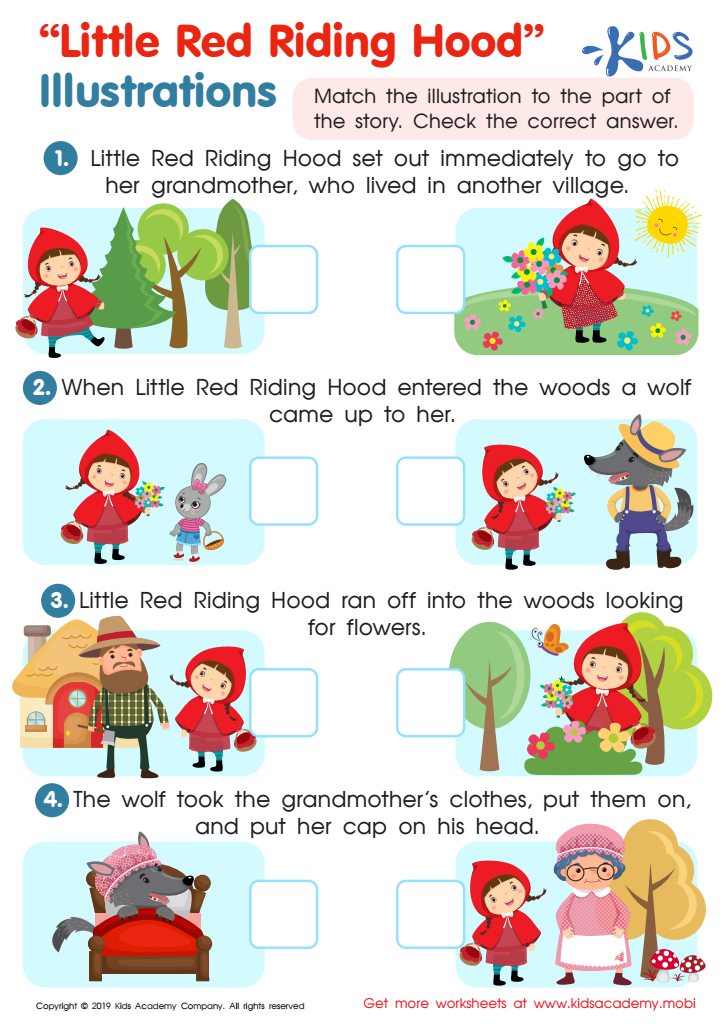
Little Red Riding Hood: Illustrations Worksheet
 Assign to My Students











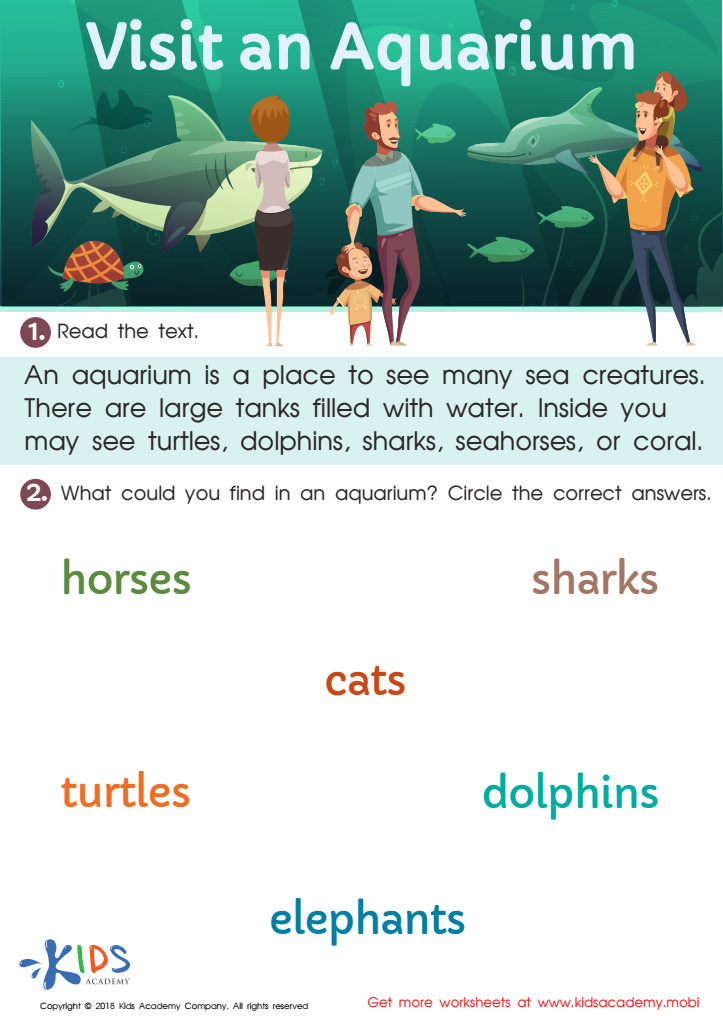
Visit an Aquarium Worksheet
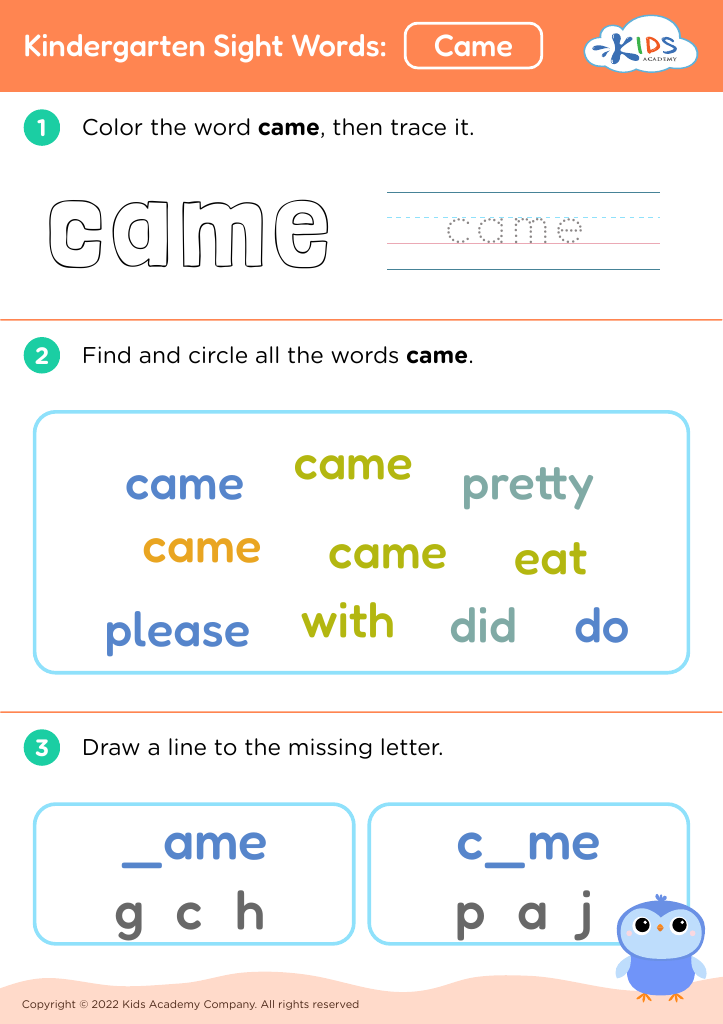








Visual interpretation and building vocabulary are crucial components of language development for children aged 4-9. At this stage, children's brains are highly receptive to new information, making it an ideal time to enhance their communication skills. Visual interpretation allows children to derive meaning from images, symbols, and other visual stimuli, which is directly connected to their ability to articulate thoughts and ideas. When children can decode visuals, they enhance their understanding of context and improve their ability to make associations between words and meanings.
Parents and teachers should prioritize these skills because they serve as a foundation for academic success. A robust vocabulary supports reading comprehension, writing proficiency, and effective verbal communication—all essential skills for lifelong learning. Engaging children in activities that promote vocabulary growth through visual aids fosters creativity, critical thinking, and imaginative play, enhancing their overall cognitive abilities.
In addition, vocabulary development is incredibly beneficial in social contexts. Children learn to express themselves clearly, negotiate with peers, and understand narratives in their interactions. Supporting visual interpretation and vocabulary growth not only enriches a child's educational journey but also builds confidence and interpersonal skills, preparing them for future academic and social challenges. Investing time and resources in these areas ultimately leads to well-rounded, articulate individuals.








