
Critical thinking skills Reading Fiction Worksheets for Ages 4-9
4 filtered results
Difficulty Level
Grade
Age
-
From - To
Subject
Activity
Standards
Enhance your child’s critical thinking skills with our comprehensive reading fiction worksheets tailored for ages 4-9. Designed to engage young minds, these worksheets foster analytical thinking through captivating stories and thought-provoking questions. As children dive into imaginative tales, they’ll be encouraged to make inferences, identify themes, and evaluate characters' actions. Our resources support class and home settings, nurturing a lifelong love for reading and intellectual growth. Spark curiosity and develop essential problem-solving abilities in a fun and educational way with Kids Academy’s expertly crafted materials. Perfect for young learners eager to explore the world of fiction through a critical lens.
Favorites
With answer key
Interactive
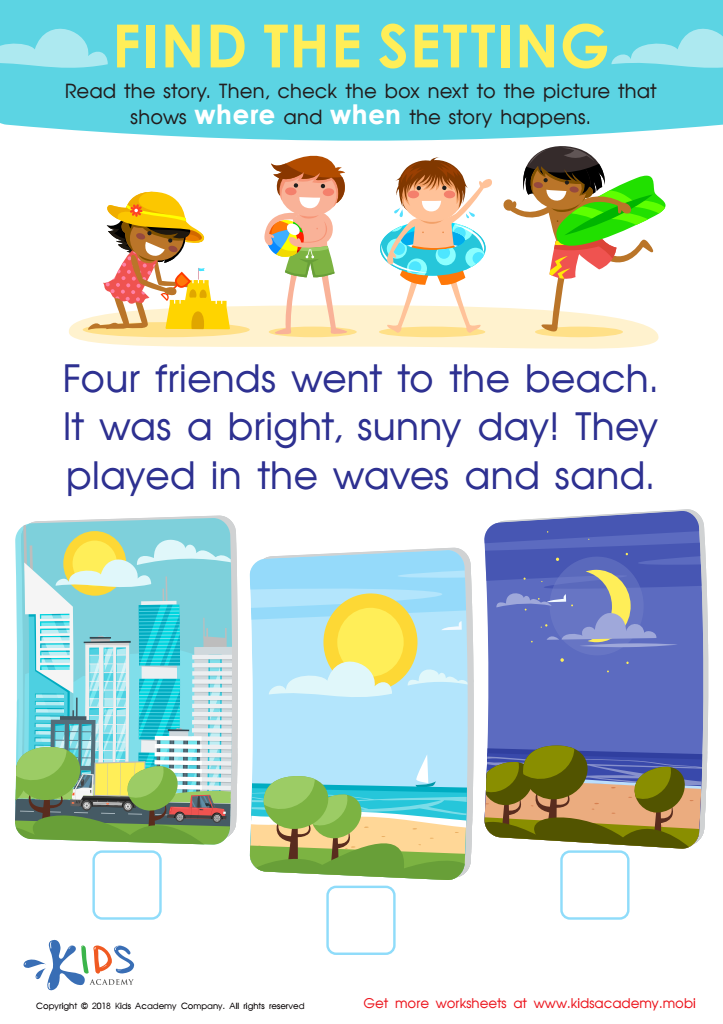
Find the Setting Worksheet
Writing a good story requires decisions about theme, plot, characters, and setting. Setting is the place and time where events occur. Read the story in this fun worksheet with your children and ensure they are paying attention. Guide them to check the box next to the picture that shows the story's setting. 80 words.
 Assign to My Students
Find the Setting Worksheet
Worksheet
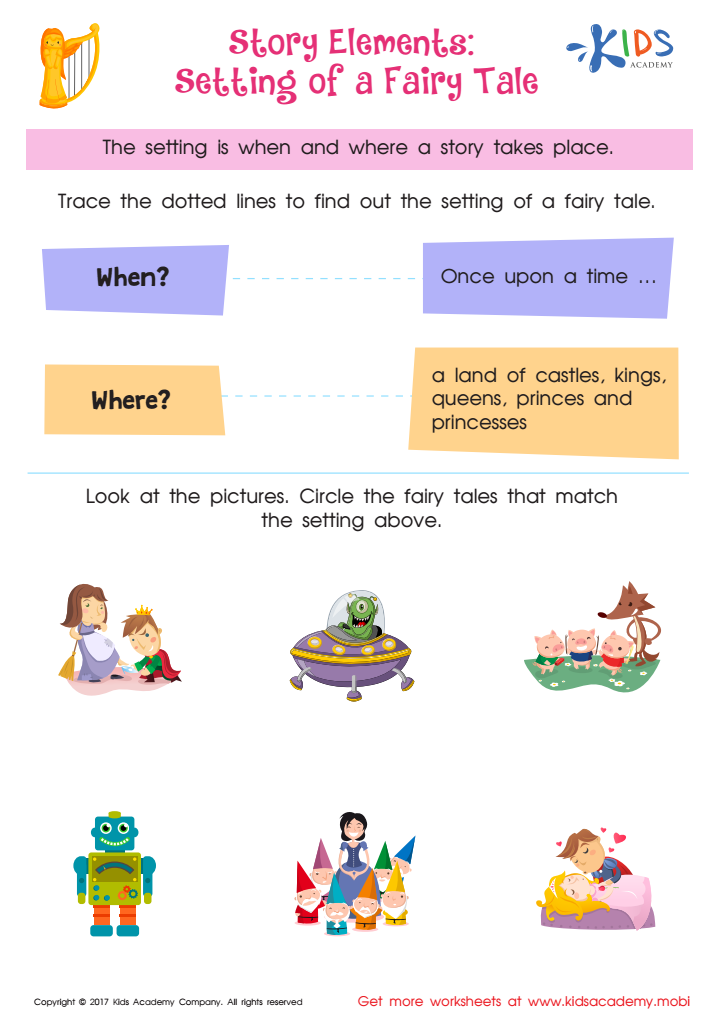
Story Elements: Setting of a Fairy Tale Printable
Help your child learn to analyze stories starting with setting. Use Story Elements worksheet to break down setting into two parts. This will help your child recognize setting quickly and understand its importance in the plot.
Story Elements: Setting of a Fairy Tale Printable
Worksheet
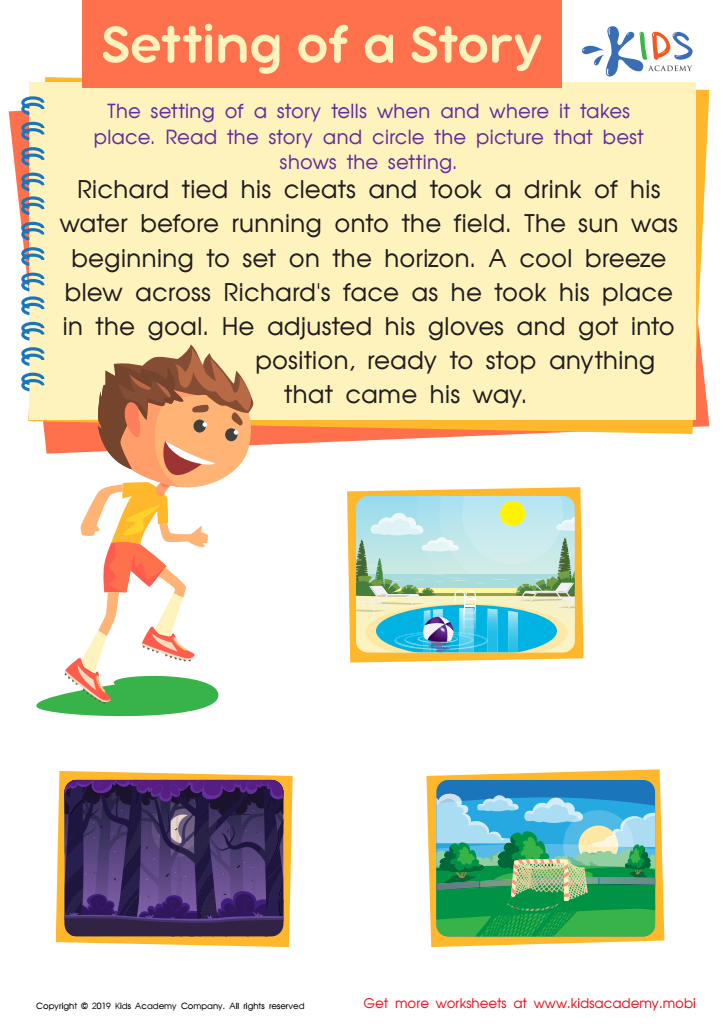
Setting of a Story Worksheet
You need characters, theme, POV, plot and setting to tell a good story. Ask your kids to explain them and use this worksheet with a story to teach them about setting. Read the story with your kids, then have them circle the picture that best shows the setting.
Setting of a Story Worksheet
Worksheet
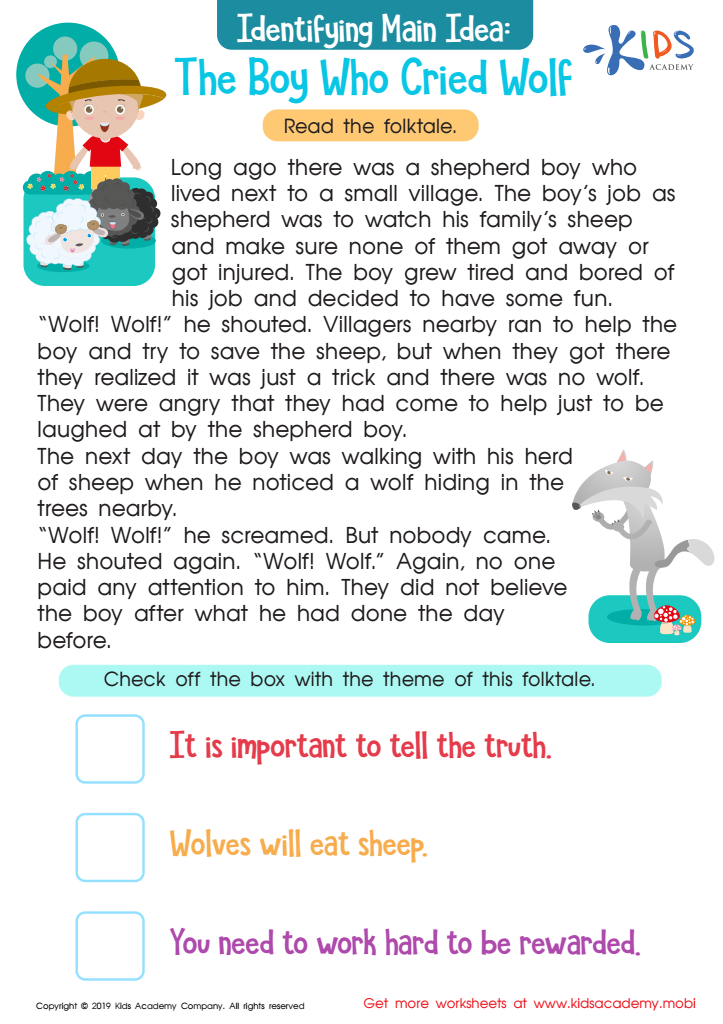
The Boy Who Cried Wolf Part 2 Worksheet
Kids love story time - no doubt they know their favorites! This worksheet tells a story with a theme or main idea. Read it carefully with your kids and ensure they understand every word. Then, help them answer the simple questions at the bottom of the page.
The Boy Who Cried Wolf Part 2 Worksheet
Worksheet
Join Kids Academy for Free
Who is primarily going to use this learning content?


.jpg)





Critical thinking skills are essential for children aged 4-9 because they lay the foundation for future academic success and personal growth. Encouraging these skills through the reading of fiction enhances a child's ability to understand and engage with the world. Fiction, with its varied plots, characters, and settings, stimulates a child's imagination, fostering creativity while challenging their thinking processes.
Reading fiction improves a child's ability to analyze situations, differentiate between right and wrong, and understand diverse perspectives. This builds empathy and social understanding, key components in developing well-rounded individuals. By questioning characters' motives and predicting plot outcomes, children learn to consider multiple aspects of a situation before forming conclusions.
In the early years, children's brains are exceptionally receptive to new information. Teaching critical thinking skills during this period ensures strong cognitive development. Parents and teachers should care because these skills are transferable to every aspect of life, from solving math problems to making everyday decisions.
Moreover, fostering a love for reading and critical analysis can build confidence, improve attention spans, and enhance communication skills. Ultimately, prioritizing critical thinking through reading fiction equips children with the tools they need to navigate an increasingly complex world with curiosity and prudence.








