Rhyme recognition Reading Fiction Worksheets for Ages 4-9
3 filtered results
-
From - To
Explore our engaging Rhyme Recognition Reading Fiction Worksheets designed for children aged 4-9! These worksheets help young learners develop phonemic awareness through fun, age-appropriate activities that promote reading fluency and comprehension skills. By engaging with fictional texts and practicing rhyming, children enhance their vocabulary and auditory discrimination abilities. Each worksheet features colorful illustrations and interactive tasks that make learning exciting and effective. Whether at home or in the classroom, these resources encourage a love for reading while ensuring foundational literacy skills. Start your child's reading journey with our thoughtfully crafted worksheets that rhyme their way to success! Perfect for young learners!
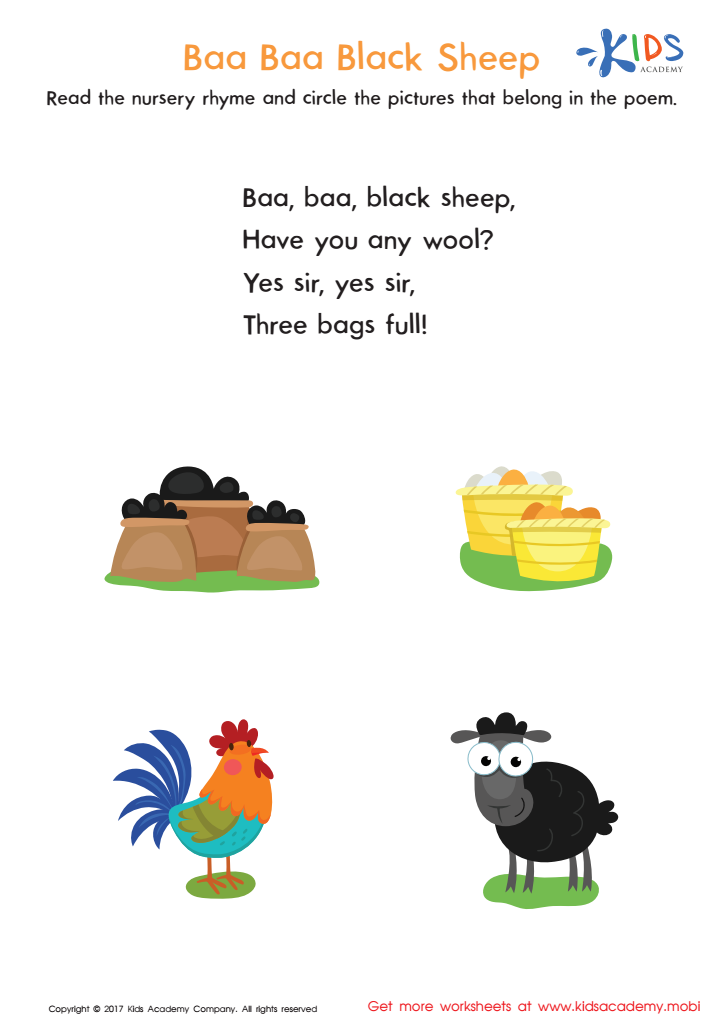
Baa Baa Black Sheep Printable
 Assign to My Students
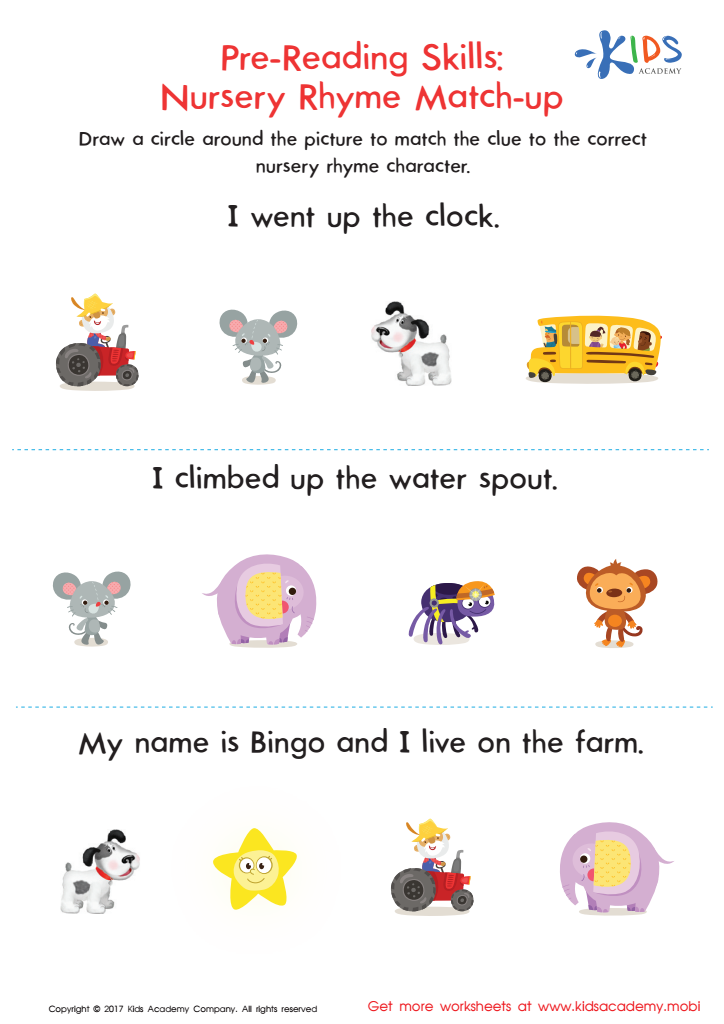
Nursery Rhyme Match–Up Worksheet
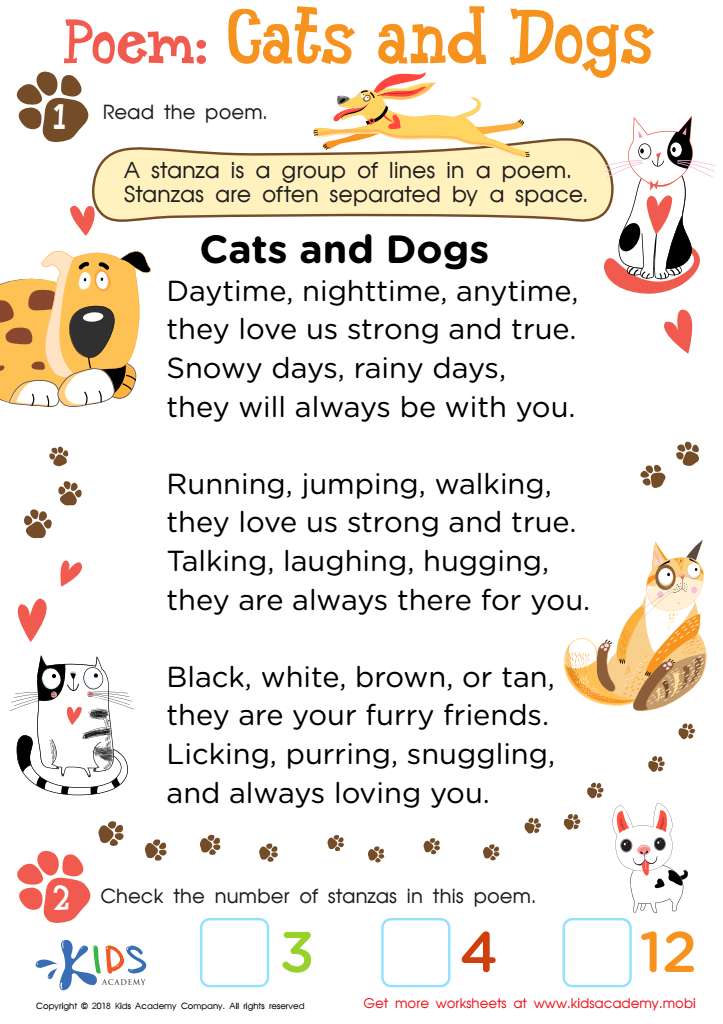
Poem: Cats and Dogs Worksheet


.jpg)





Rhyme recognition is a crucial skill in early literacy development for children ages 4-9, making it essential for both parents and teachers to prioritize it in reading fiction. Firstly, rhyming helps children develop phonemic awareness, which is the ability to hear and manipulate the sounds in words. This skill is foundational for reading competency, allowing children to decode words and enhance their vocabulary. When children listen to rhyming stories, they become attuned to the sound patterns in language, making it easier for them to identify and create new words.
Moreover, engaging with rhyming texts is not just educational; it’s also enjoyable. The playful nature of rhymes captivates children’s attention and encourages a love for reading. This enjoyment fosters a stronger bond between parents, teachers, and children as they share reading experiences together. As children explore fiction that incorporates rhyme, they can develop critical thinking skills by predicting what might happen next based on sound patterns.
Ultimately, caring about rhyme recognition not only boosts reading skills but also ignites a lifelong passion for literacy, making it a vital focus for parents and educators alike. By incorporating rhyming stories into their routines, they can lay a strong foundation for future academic success.








