Shape Recognition Reading Fiction Worksheets for Ages 4-9
3 filtered results
-
From - To
Shape Recognition Reading Fiction Worksheets for Ages 4-9 Elevate children's learning with our Shape Recognition Reading Fiction Worksheets, designed for ages 4-9. Perfect blend of fun and education, these worksheets improve reading comprehension and shape recognition skills through engaging fictional tales. Tailored for different skill levels, each activity encourages young readers to identify and differentiate various shapes within captivating stories. Ideal for early learners, our worksheets foster critical thinking, creativity, and problem-solving abilities. Enhance your child's academic journey with our expertly crafted resources. Happy learning starts here! Discover more at Kids Academy.
Explore more at Kids Academy for enjoyable and educational activities!
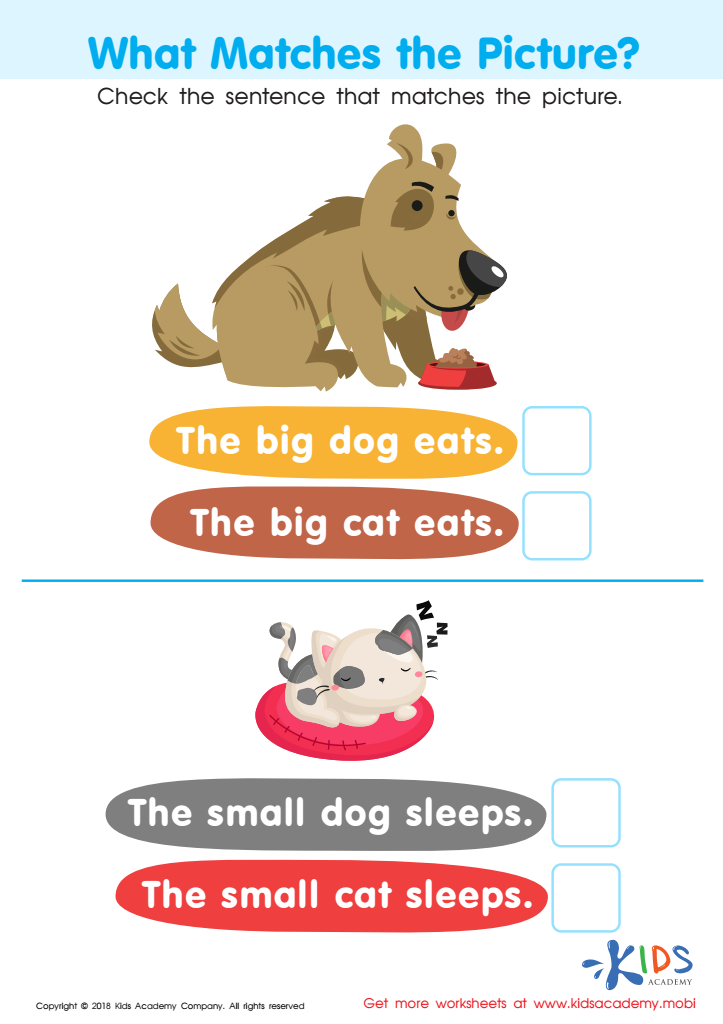
What Matches the Picture? Worksheet
 Assign to My Students
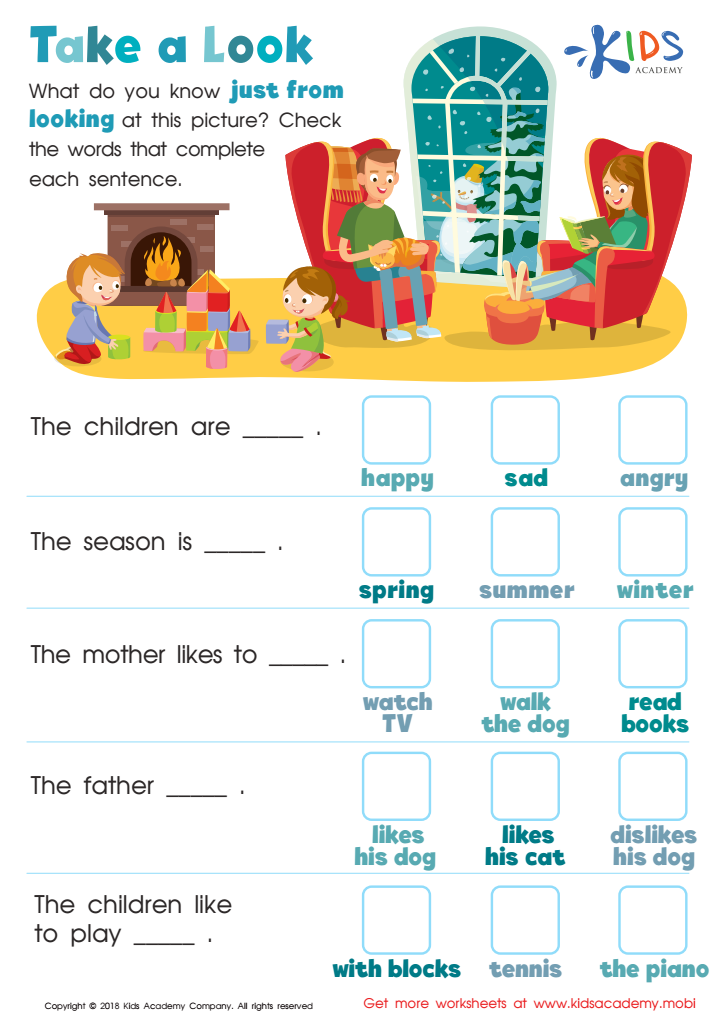
Take a Look - Part 1 Worksheet
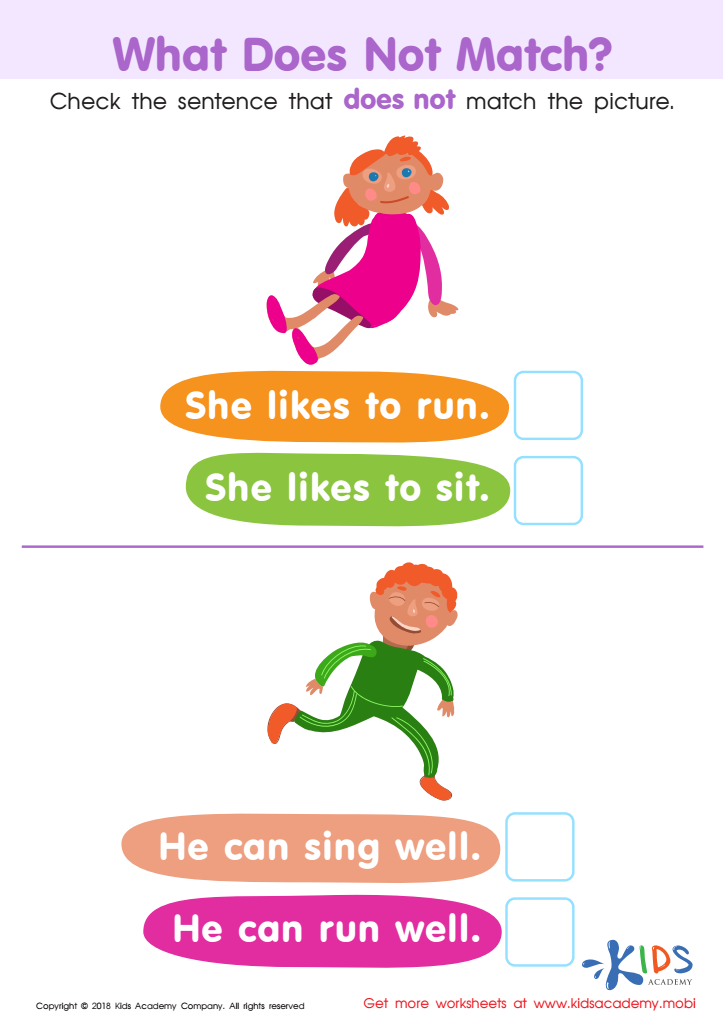
What Does Not Match? Worksheet








Shape recognition and reading fiction are crucial aspects of a child's early development (ages 4-9) that merit significant attention from both parents and teachers. When children engage with shape recognition activities, they sharpen their visual discrimination skills, an ability essential for reading and writing. Identifying shapes helps children understand the structure of letters and numbers, forming a fundamental step in literacy and numeracy.
Reading fiction, on the other hand, broadens a child's imagination and enhances language skills. Stories introduce new vocabulary, sentence structures, and cultural contexts, aiding in linguistic development. Fictional narratives also stimulate cognitive and emotional growth, teaching children about empathy, problem-solving, and the consequences of actions through the experiences of characters.
Combining shape recognition with reading fiction targets both hemispheres of the brain, fostering a well-rounded developmental approach. Interactive storybooks that incorporate shape-based puzzles or illustrations magnify this benefit. Encouraging shape-based literacy activities not only prepares children for academic success but also instills a love for reading and a curiosity for the world around them. Therefore, proactive efforts from parents and teachers in these areas play a pivotal role in nurturing confident, capable, and creative learners.








