Understanding perspectives Reading Fiction Worksheets for Ages 4-9
3 filtered results
-
From - To
Unlock the power of storytelling with our “Understanding Perspectives Reading Fiction Worksheets” designed specifically for ages 4-9. These engaging activities help young readers explore different viewpoints, fostering critical thinking and empathy. Through captivating stories and interactive exercises, children learn to identify characters' feelings, thoughts, and motivations, enhancing comprehension and analytical skills. Perfect for classroom settings or at-home learning, these worksheets inspire creativity while sharpening reading abilities. Encourage your child's love for literature and their understanding of diverse perspectives with fun, age-appropriate tasks that make learning enjoyable. Dive into the world of fiction and help your little ones become thoughtful, imaginative readers today!
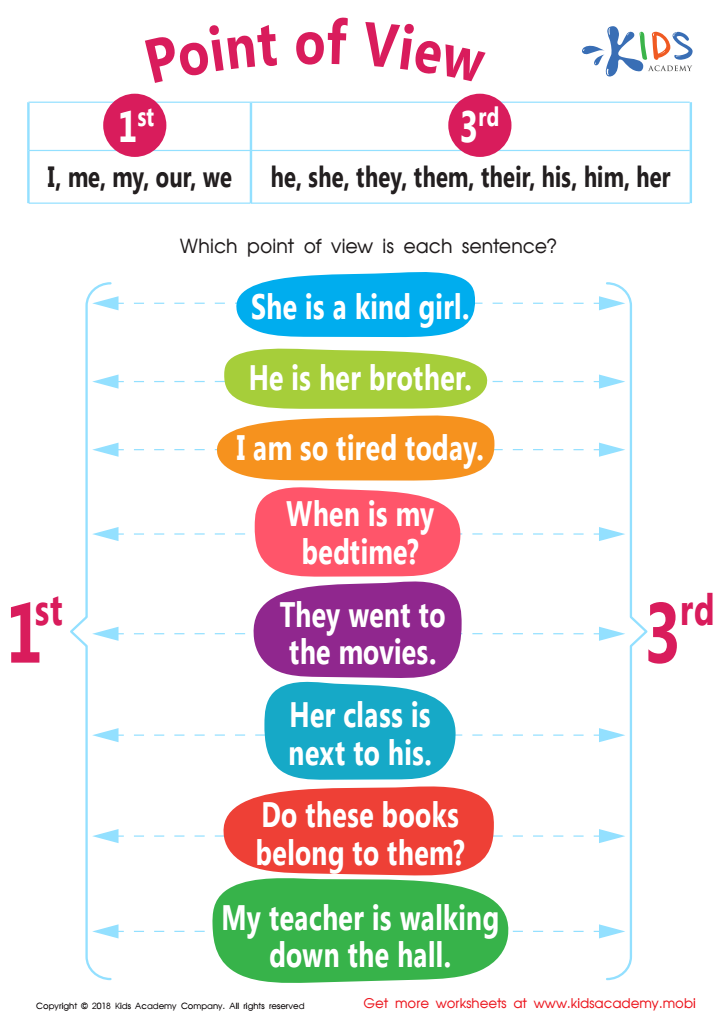
Point of View Worksheet
 Assign to My Students
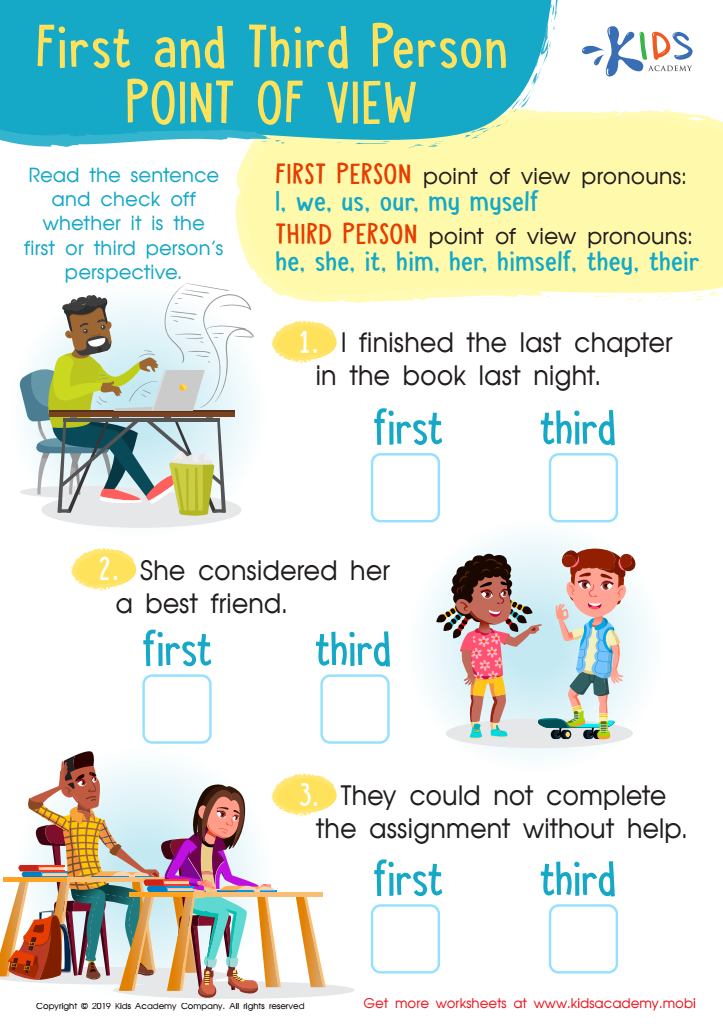
First and Third Person Point of View Worksheet
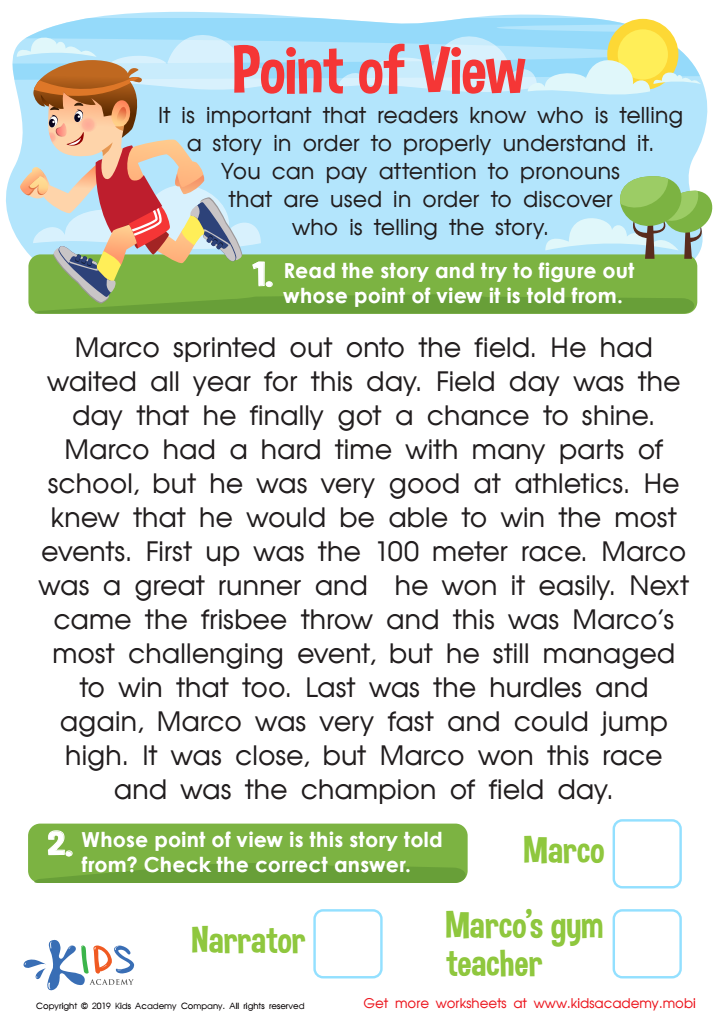
Point of View Worksheet








Understanding perspectives while reading fiction is vital for children ages 4-9, as it cultivates essential cognitive and social-emotional skills. At this early age, children are beginning to grasp the concept of different viewpoints, which fosters empathy and compassion. When they read stories featuring diverse characters and experiences, they learn to appreciate how others think, feel, and react, ultimately enhancing their emotional intelligence.
Moreover, engaging with stories enhances critical thinking. Children start to ask questions about motives and outcomes, developing analytical skills that are critical for their academic journey. This ability to understand multiple perspectives also supports conflict resolution and effective communication, as children learn that conversations are often a matter of seeing the world through someone else’s lens.
Additionally, reading fiction can spark creativity and imagination. As children visualize different scenarios and characters, they expand their understanding of real-life complexities, preparing them for the diverse world beyond their immediate experiences. For parents and teachers, promoting this understanding not only enriches the reading experience but also contributes to a more compassionate and insightful generation, capable of addressing societal challenges with empathy. In summary, fostering perspective-taking through fiction is a fundamental step in holistic childhood development.








