Understanding Sequences Reading Fiction Worksheets for Ages 4-9
3 filtered results
-
From - To
Discover our engaging "Understanding Sequences" reading fiction worksheets tailored for children ages 4-9. These worksheets are designed to help young readers improve their comprehension skills by focusing on the sequence of events in stories. Through fun and interactive activities, children will explore the logical progression of plots, enhancing their critical thinking and storytelling abilities. Ideal for home or classroom use, our resources support early literacy development while making learning enjoyable. Join your child on an exciting reading adventure that builds essential skills for future academic success. Explore our collection and watch your child's confidence in understanding stories grow!
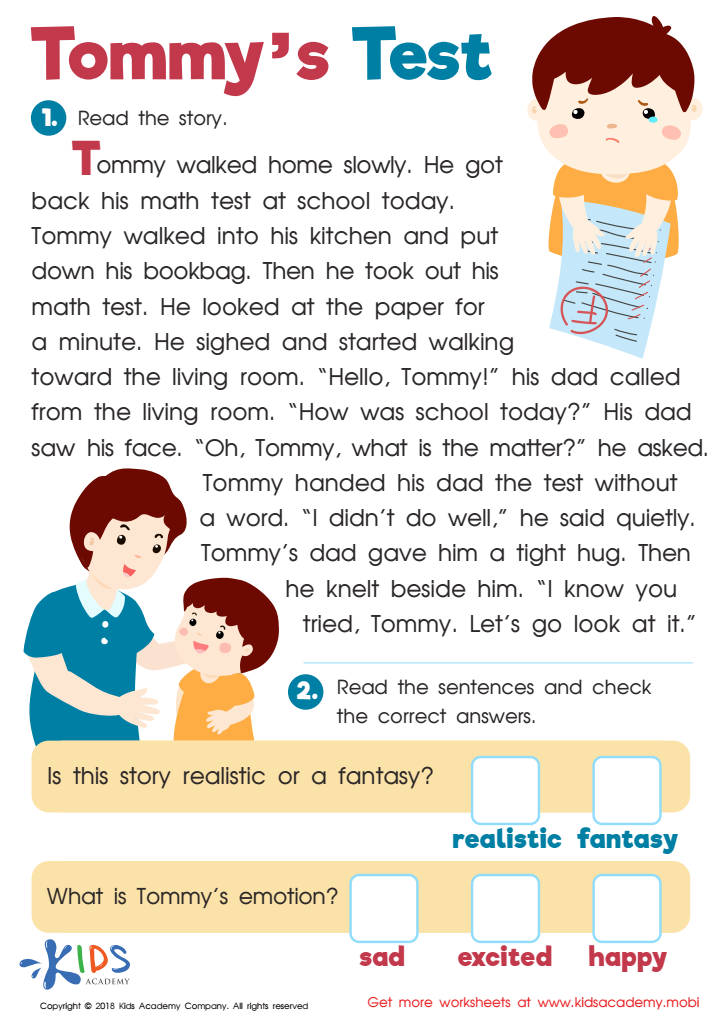
Tommys Test Worksheet
 Assign to My Students
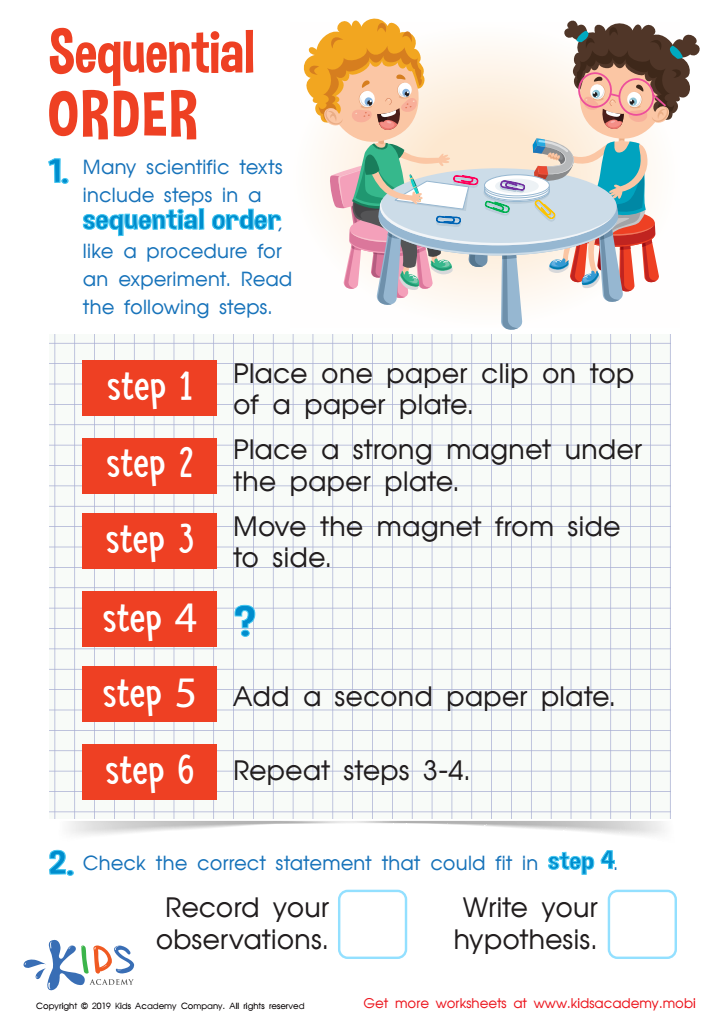
Sequencential Order Worksheet
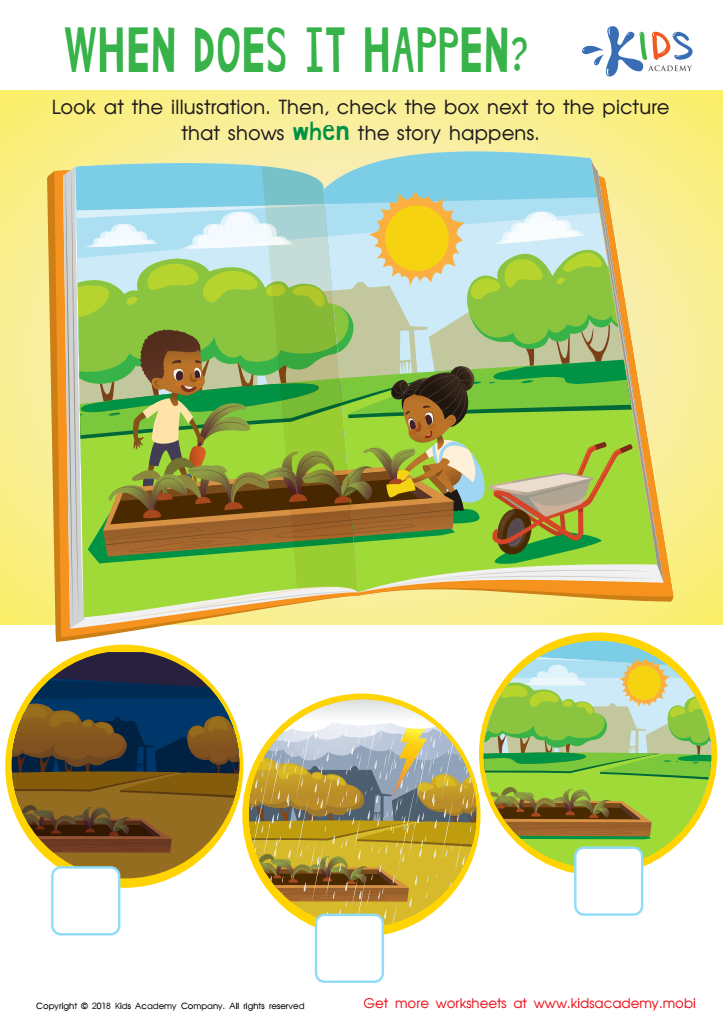
When Does It Happen? Worksheet




.jpg)



Understanding sequences in reading fiction is crucial for children aged 4-9, as it lays the foundation for their overall literacy skills. When children comprehend sequences, they learn to identify the order of events, which enhances their narrative skills and boosts their ability to retell stories both verbally and in writing. This understanding is essential for their academic progression and everyday interactions, helping them make sense of chronological information in various contexts.
Parents and teachers should care about this aspect of literacy because it encourages critical thinking and comprehension. By grasping the sequence of events, children can predict outcomes, draw inferences, and link ideas, resulting in a richer reading experience. Furthermore, it aids in vocabulary development, as they become familiar with the structure of storytelling and language patterns.
Engaging children with sequential reading activities, such as story mapping or sequencing picture cards, can foster a joyful approach to learning. This comprehension skill is not only essential for literacy but also promotes patience, memory, and logical reasoning, vital skills for future academic success. Investing time in developing these skills within young readers will ensure they become confident and competent learners as they progress through their educational journey.








