
Animal identification Reading Non-Fiction Worksheets for Ages 4-9
4 filtered results
Difficulty Level
Grade
Age
-
From - To
Subject
Activity
Standards
Our Animal Identification Reading Non-Fiction Worksheets are designed for young learners aged 4-9 to foster their reading skills and curiosity about the animal kingdom. Each worksheet features engaging, easy-to-read text paired with captivating images to help children identify and learn about various animals. These resources promote critical thinking and comprehension while nurturing a love for wildlife. Ideal for use at home or in the classroom, these worksheets aim to enhance vocabulary, observation skills, and knowledge about different species. Encourage your child's educational journey with these fun, informative, and interactive animal identification activities.
Favorites
With answer key
Interactive
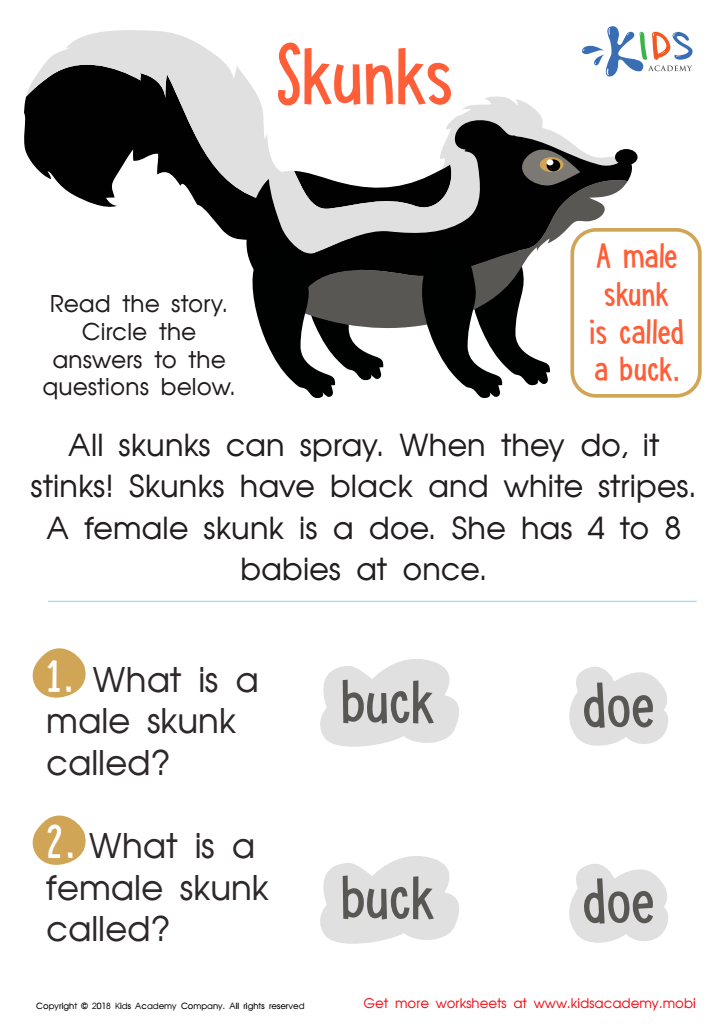
Skunks Worksheet
Kids can learn fascinating information about a beloved and smelly animal with this fun worksheet. They'll read articles, texts, and look at an accompanying picture while reading. Captions and sidebars can give extra details. Finally, answer the given questions by selecting the correct response. Reading is a fun and informative way to gain knowledge!
 Assign to My Students
Skunks Worksheet
Worksheet
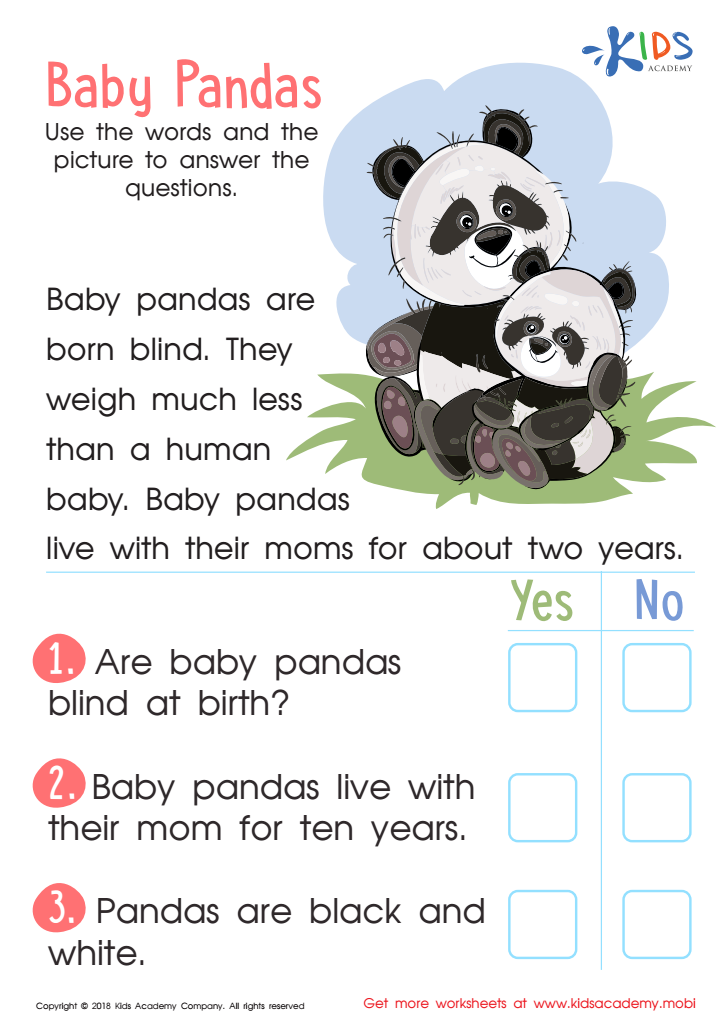
Baby Pandas Worksheet
Kids can't usually see pandas in person, but they can learn more about them with this fun worksheet! It includes a passage and picture, plus questions at the end to check kids' reading comprehension. Just ask them to read the text, check the "yes" and "no" boxes, and enjoy the fascinating facts about baby pandas!
Baby Pandas Worksheet
Worksheet
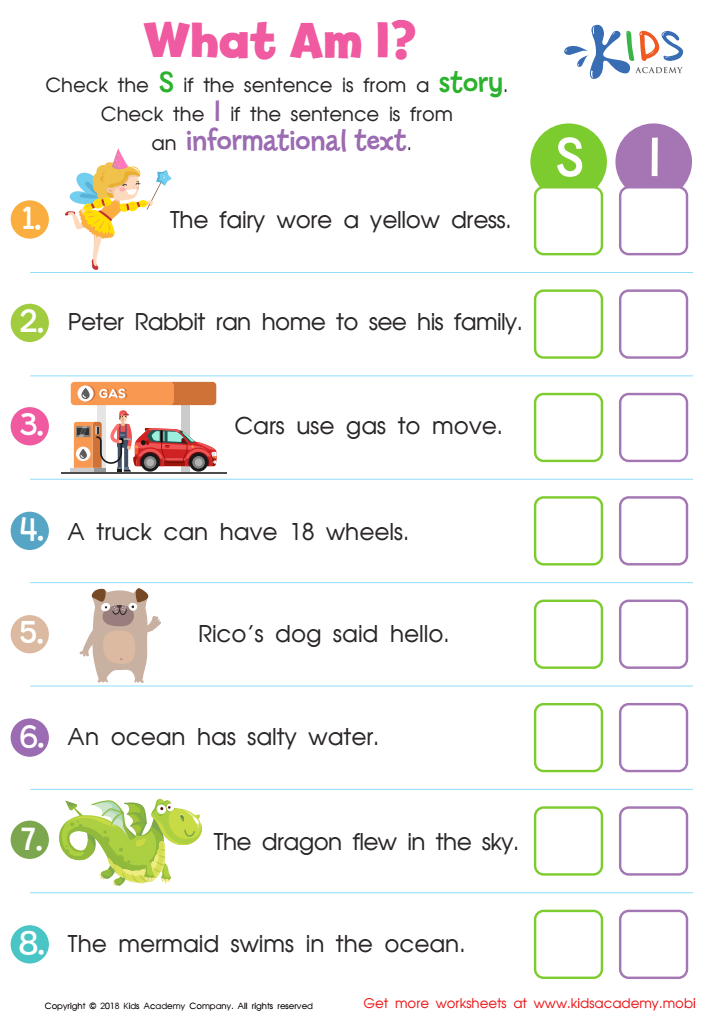
What Am I? Worksheet
This worksheet assesses students' ability to differentiate between stories and texts they read for facts. Students learn to distinguish between reading for pleasure and reading for information. It includes statements from both a story and an informational text, and students must decide what type of text it is.
What Am I? Worksheet
Worksheet
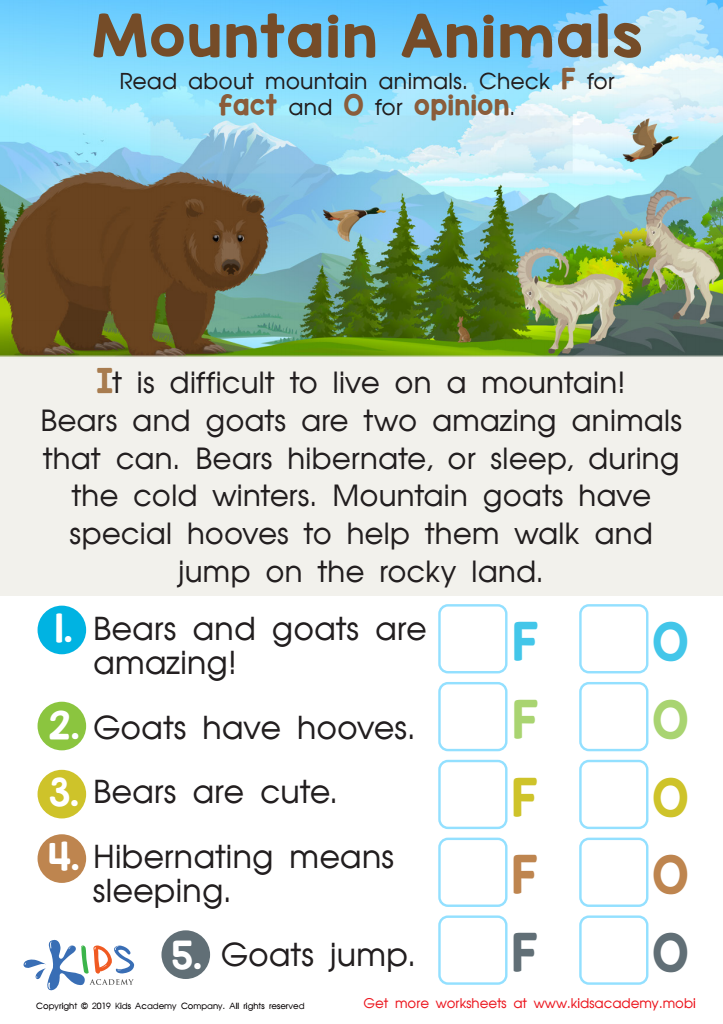
Mountain Animals Worksheet
Is mountain wildlife amazing? Fact or fiction? Help your child sharpen critical-thinking skills with this engaging worksheet. Featuring a fun nonfiction passage about animals like bears and goats, your child will read through the text and identify each statement as fact or fiction. Perfect for boosting reading comprehension and analytical abilities!
Mountain Animals Worksheet
Worksheet
Join Kids Academy for Free
Who is primarily going to use this learning content?








Animal identification within non-fiction reading materials for children ages 4-9 is profoundly beneficial for their development and learning. First, it nurtures curiosity and fosters a love for nature and wildlife. By identifying animals and learning fascinating facts about them, children develop an appreciation for the environment and a sense of responsibility towards it.
Second, incorporating animal identification into their reading helps improve critical literacy skills. Non-fiction texts expose children to factual information, enhancing their vocabulary, comprehension, and general knowledge. These skills are foundational for later academic success, enabling children to better grasp complex subjects as they grow older.
Additionally, engaging with non-fiction builds cognitive skills such as attention to detail, analytical thinking, and categorization. Recognizing different species and understanding their traits and habitats requires children to observe carefully and differentiate based on physical and behavioral characteristics.
Lastly, animal identification reinforces emotional intelligence and empathy. As children learn about various species, understanding their roles in ecosystems, and the challenges they often face, they develop a sense of empathy and compassion for living beings other than humans. Parents and teachers should value and integrate this form of non-fiction reading to promote a well-rounded, informed, and empathetic generation.








