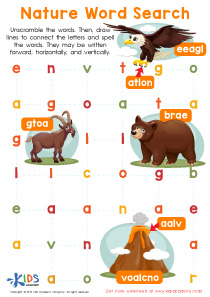
Cognitive Development Sight Words Worksheets for Ages 4-9
5 filtered results
-
From - To
Enhance your child's cognitive development with our engaging Sight Words Worksheets designed specifically for ages 4-9. These worksheets facilitate early reading skills by introducing essential sight words that children need for smooth reading. Our printable materials promote critical thinking, memory retention, and visual recognition, making learning fun and interactive. With colorful illustrations and interactive exercises, children will find joy in mastering sight words and building foundational literacy skills. Our resources are perfect for at-home learning or classroom activities, ensuring that children have the tools they need to thrive in their reading journey. Start nurturing young readers today!
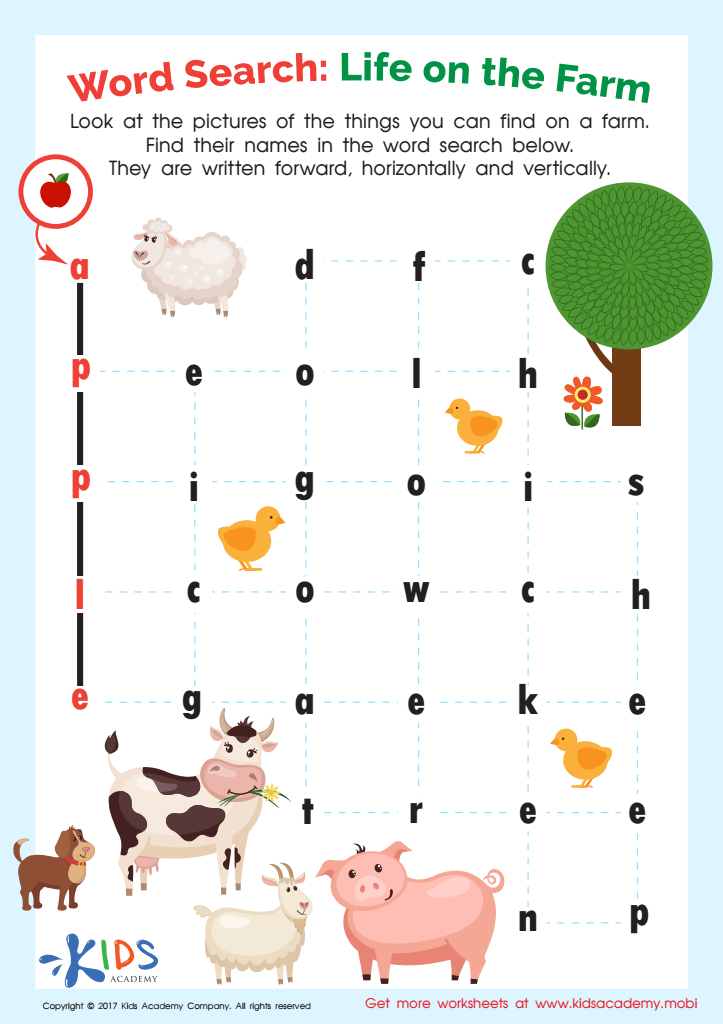
Word Search Puzzles Worksheet
 Assign to My Students









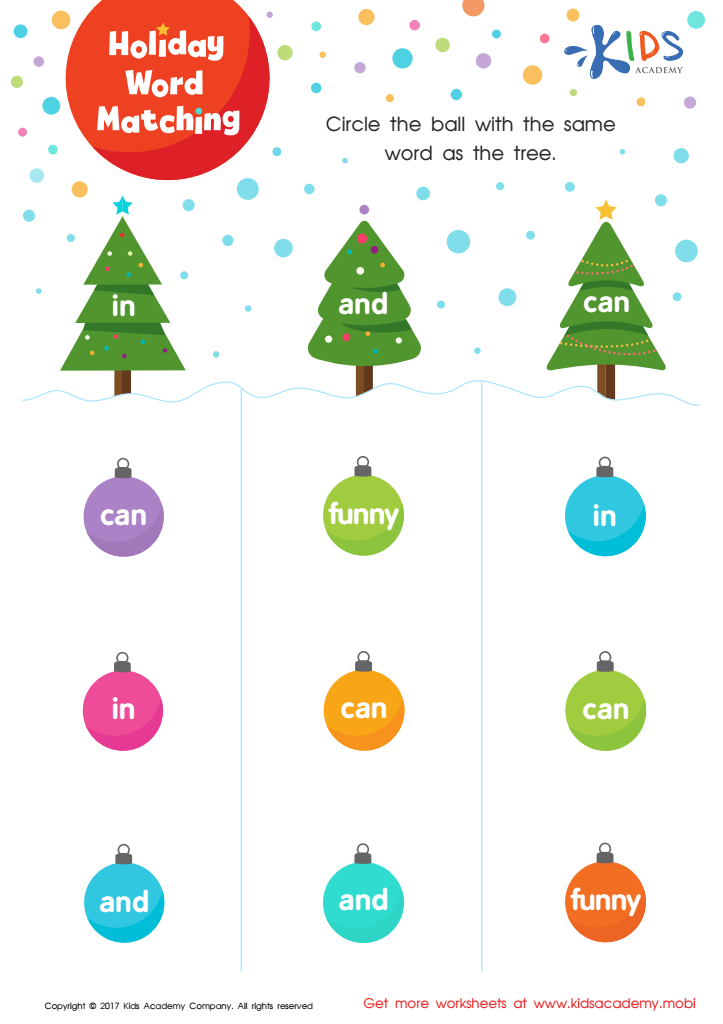
Holiday Word Matching Worksheet
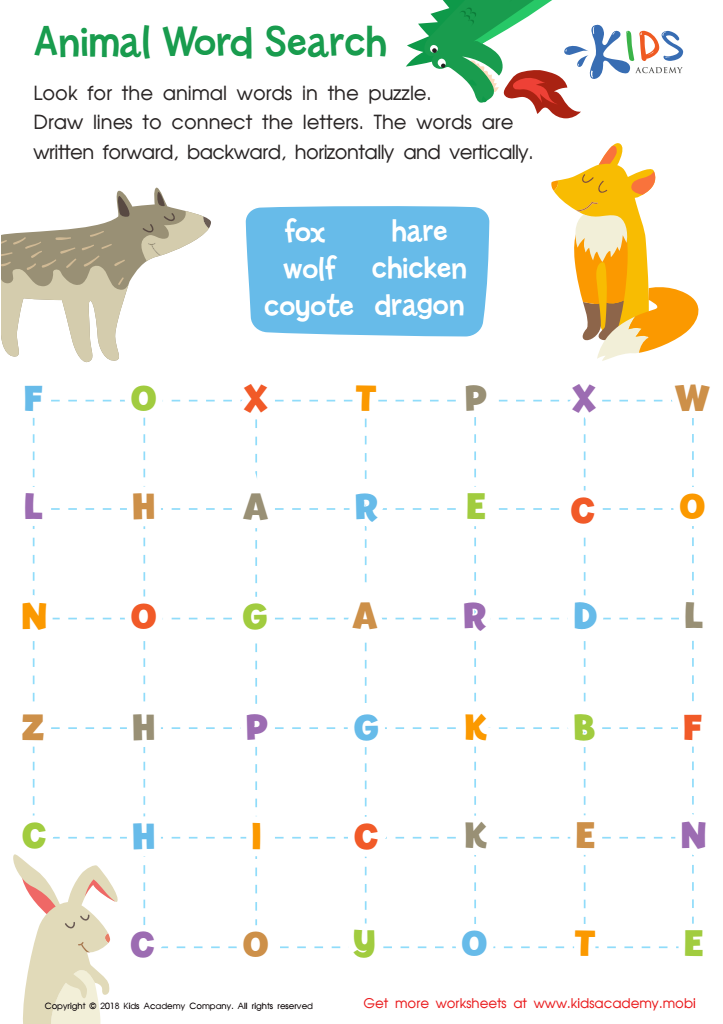
Animal Word Search Worksheet
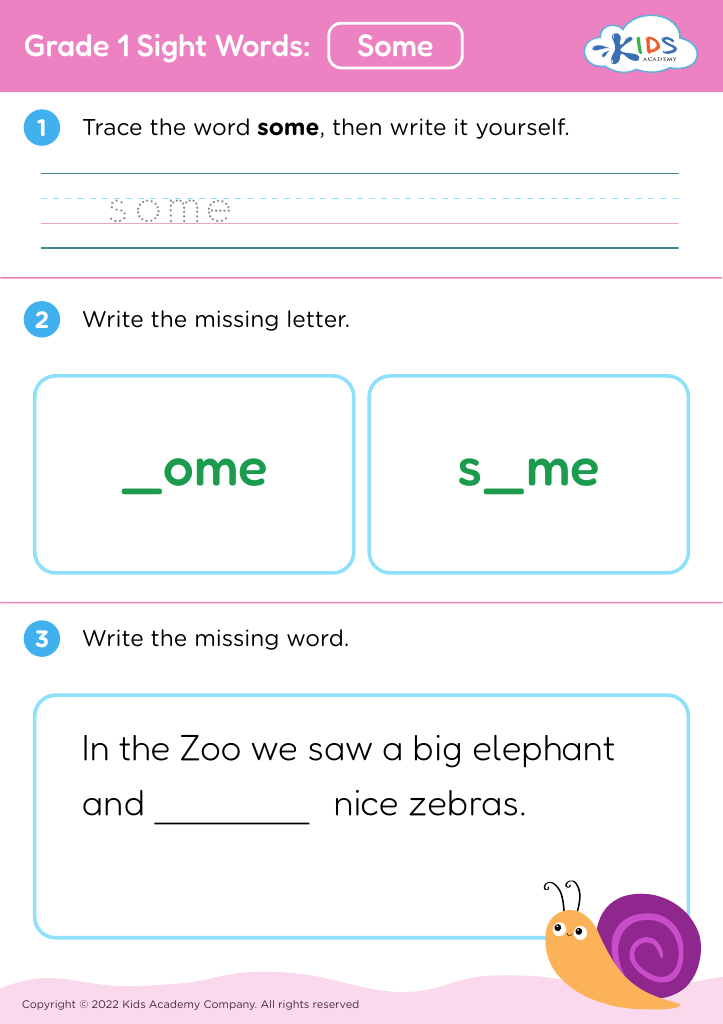
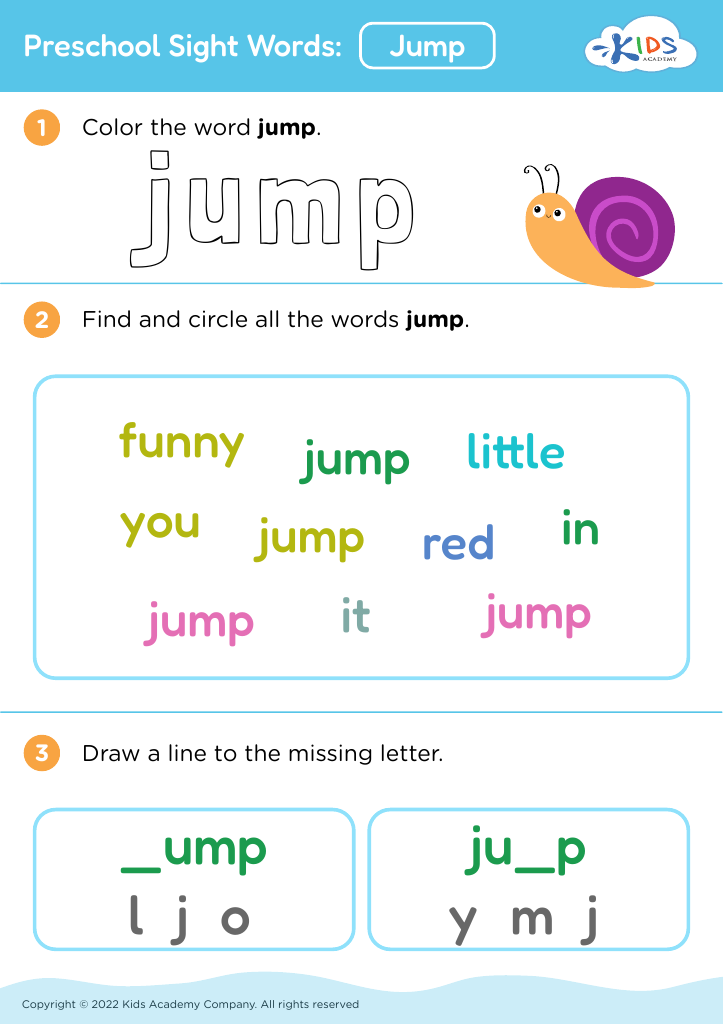








Cognitive development is crucial in the formative years of a child's life, especially between ages 4 to 9. Learning sight words - commonly recognized words that children can identify without needing to sound them out - plays a significant role in this development. Understanding these words fuels a child's reading fluency, comprehension, and overall literacy skills.
When children master sight words, they can transition from decoding simple words to engaging with more complex texts. This advancement enhances their ability to understand and interact with stories, enriching their imagination and critical thinking. Additionally, recognizing sight words boosts a child's confidence in reading, making them more willing to explore new books and materials.
Furthermore, parents and teachers should consider the social-emotional aspects of this learning. When children succeed in recognizing sight words, they experience a sense of accomplishment, fostering a positive attitude toward learning. Engaged readers are more inclined to communicate effectively, enhancing their vocabulary and language skills.
By prioritizing sight words through interactive activities and consistent practice at home and in the classroom, parents and teachers contribute to a robust foundation for cognitive development. This not only paves the way for academic success but also prepares children for lifelong learning and effective communication.