Counting objects Sight Words Worksheets for Ages 4-9
3 filtered results
-
From - To
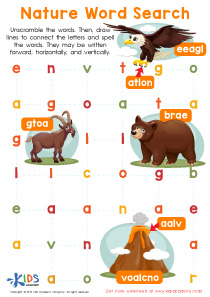
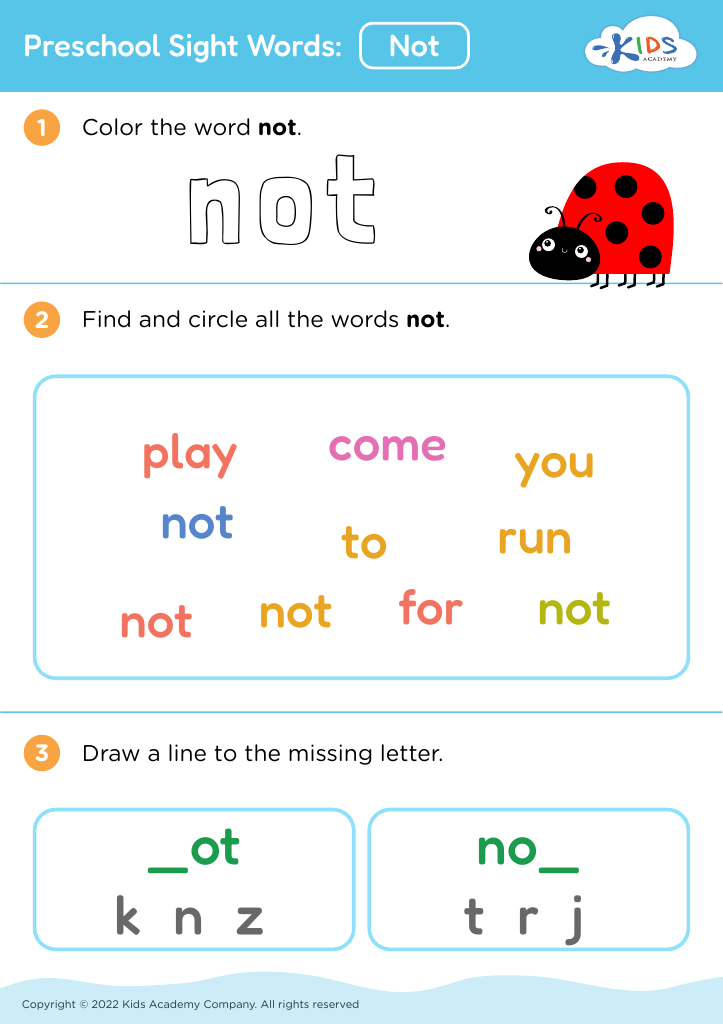
Enhance your child’s early math and reading skills with our Counting Objects Sight Words Worksheets for Ages 4-9 from Kids Academy. These engaging, beautifully designed worksheets help young learners practice counting and recognizing sight words through fun, interactive activities. Tailored for children aged 4 to 9, they seamlessly blend fundamental math concepts and essential reading skills to boost their confidence and improve their academic foundation. Each worksheet features colorful illustrations and diverse exercises that capture your child's interest while promoting critical thinking. Support your child's education journey and watch them thrive with our enriching resources.







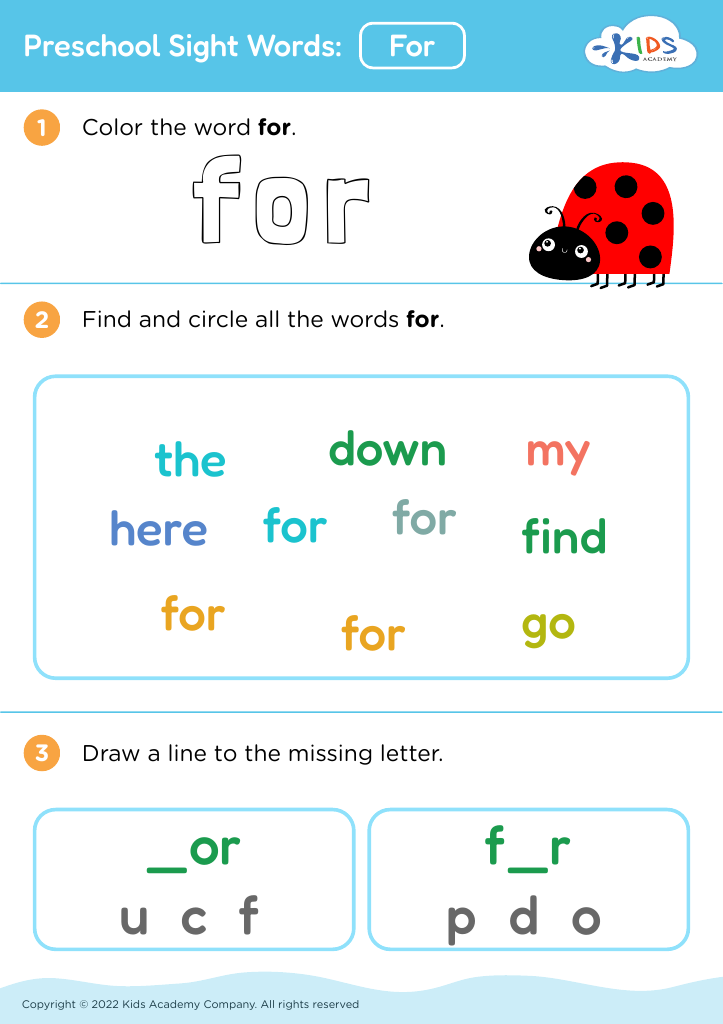
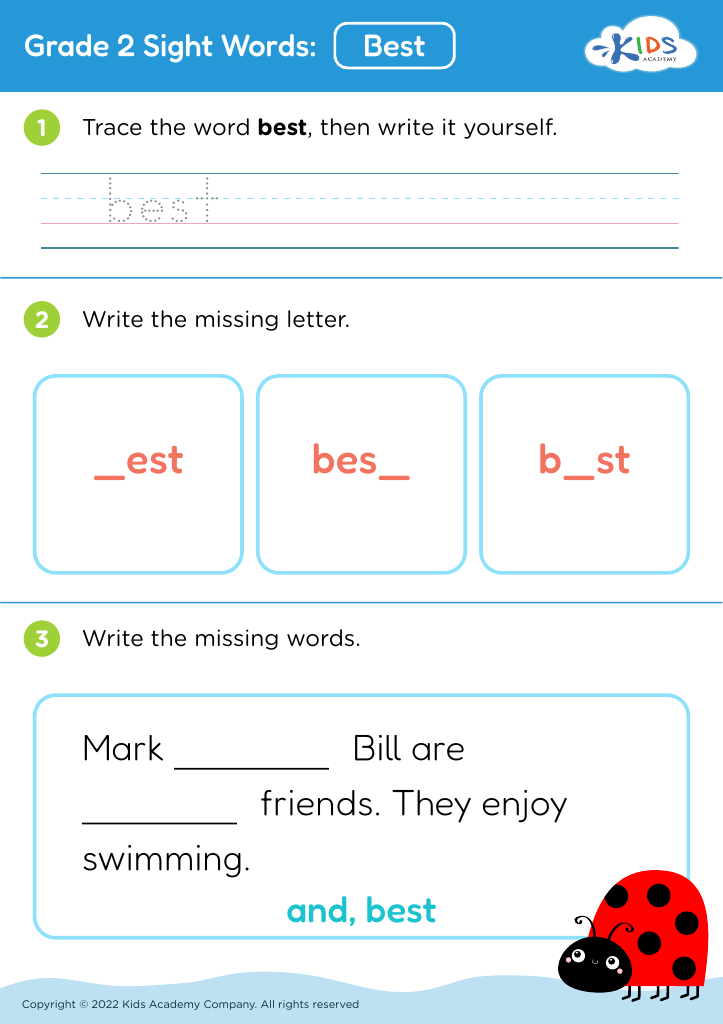








Parents and teachers should greatly prioritize teaching counting objects and sight words to children ages 4-9 because these foundational skills are crucial for early cognitive development and future academic success. Counting objects helps children understand numerical concepts and develop essential math skills, such as addition and subtraction. It encourages logical thinking and problem-solving abilities, which are important throughout a child's education and life.
Sight words, on the other hand, are commonly used words that kids recognize instantly without needing to decode them phonetically. Mastery of sight words boosts reading fluency and comprehension, enabling children to read more smoothly and confidently. This enhances their love for reading, leading to improved vocabulary and linguistic skills.
Together, these skills foster a strong educational foundation. When children effectively count objects, they gain confidence in handling numbers, making math less intimidating. Similarly, proficiency in sight words promotes literacy, making reading a more enjoyable and adventurous activity. Parents and teachers should support these learning processes with engaging and interactive methods, ensuring that children feel motivated and enthusiastic about their educational journeys. Ultimately, focused efforts on these skills enrich children's overall academic performances and prepare them for more complex tasks ahead.