Fine Motor Skills Sight Words Worksheets for Ages 4-9
11 filtered results
Difficulty Level
Grade
Age
-
From - To
Subject
Activity
Standards
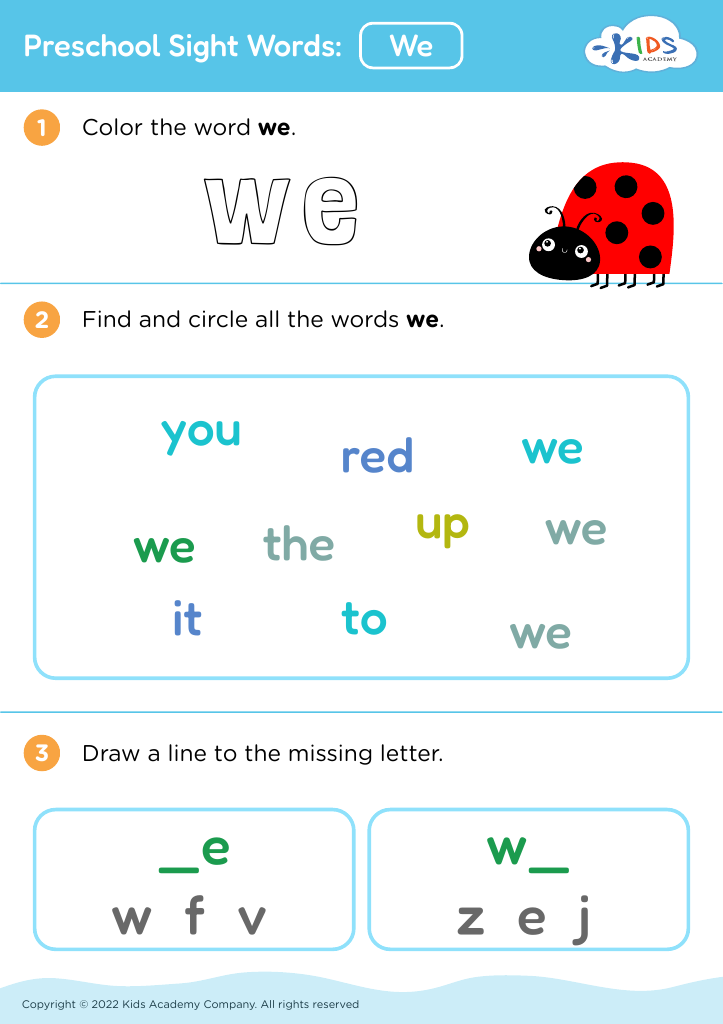
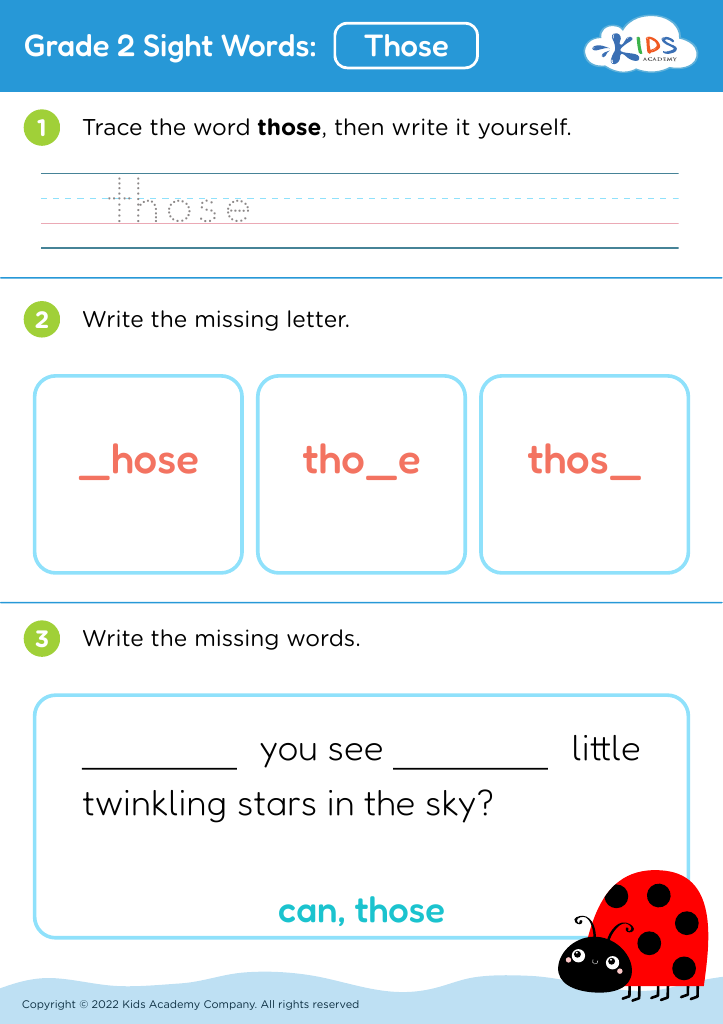
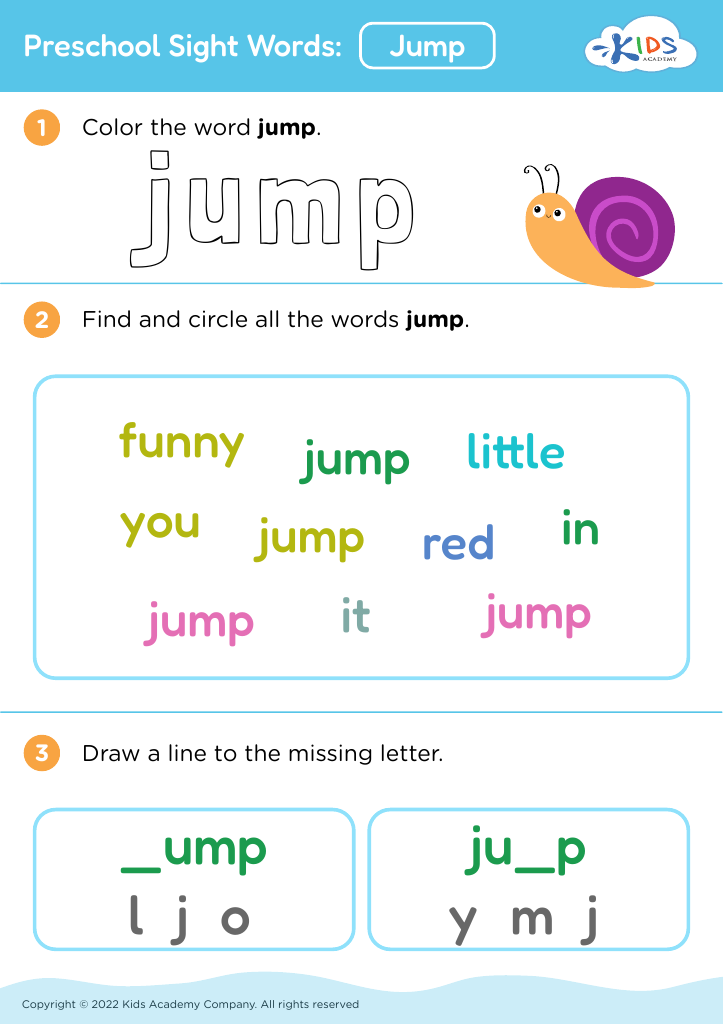
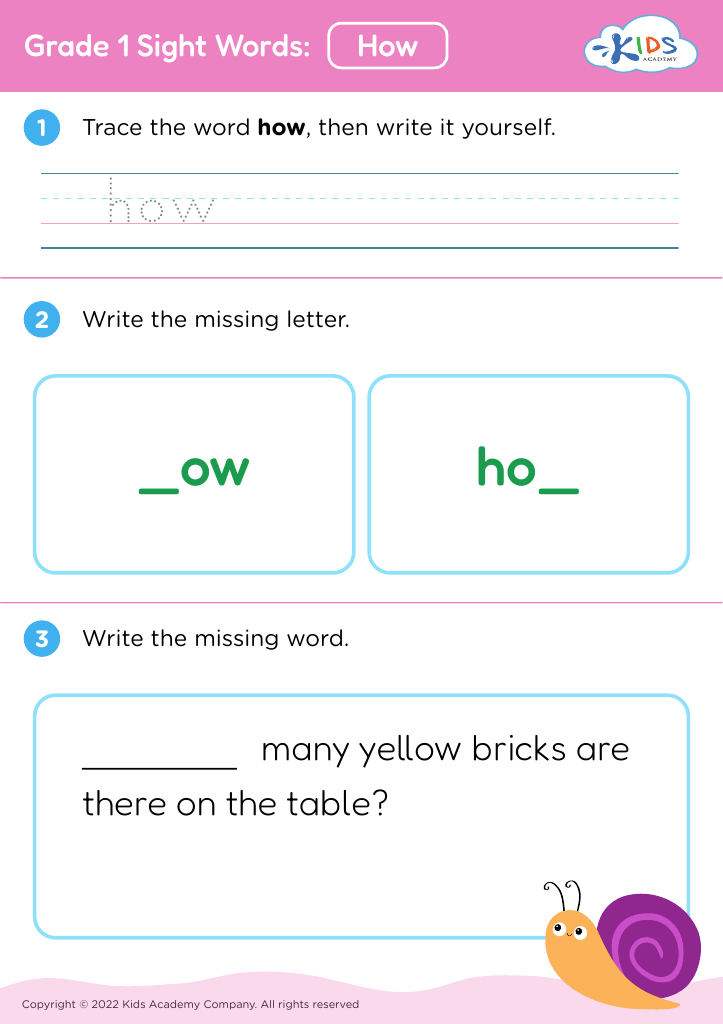
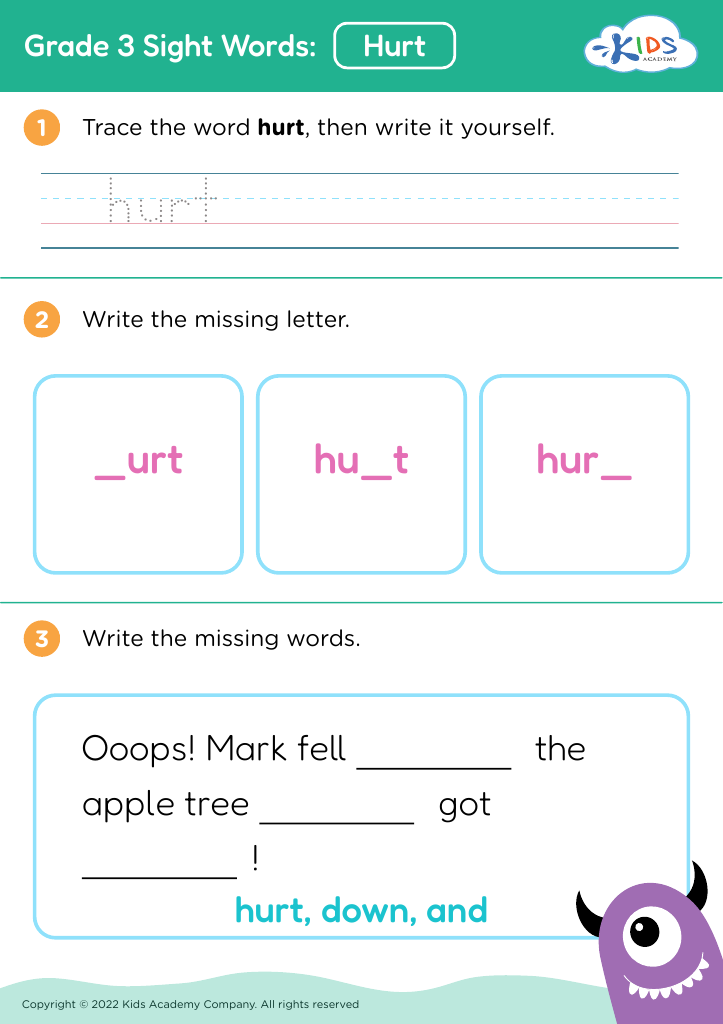
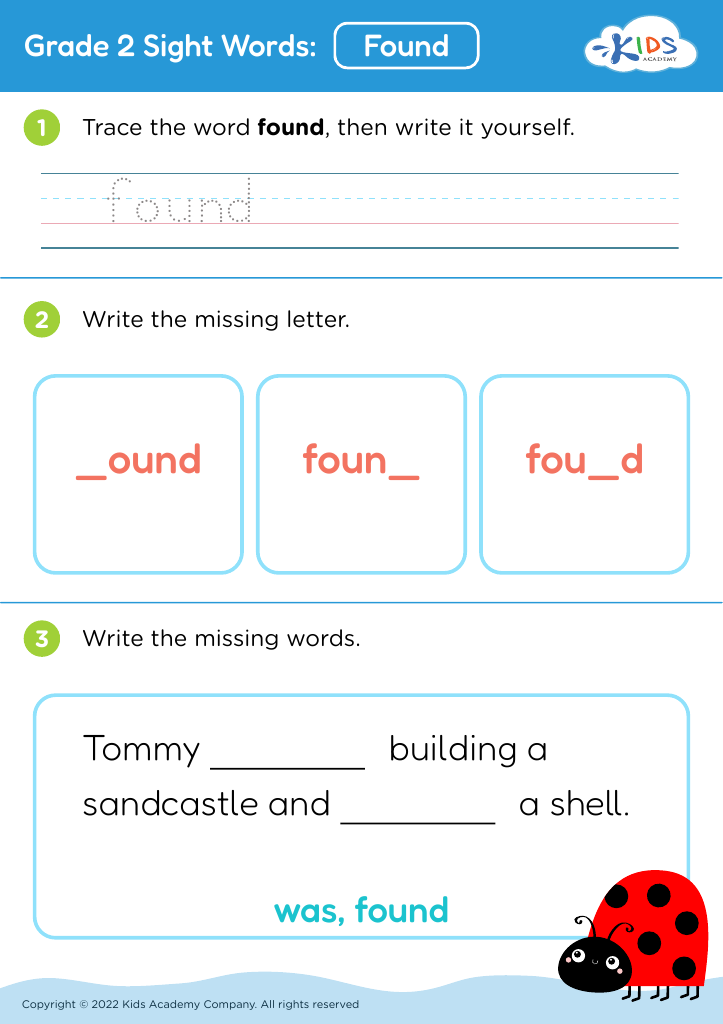
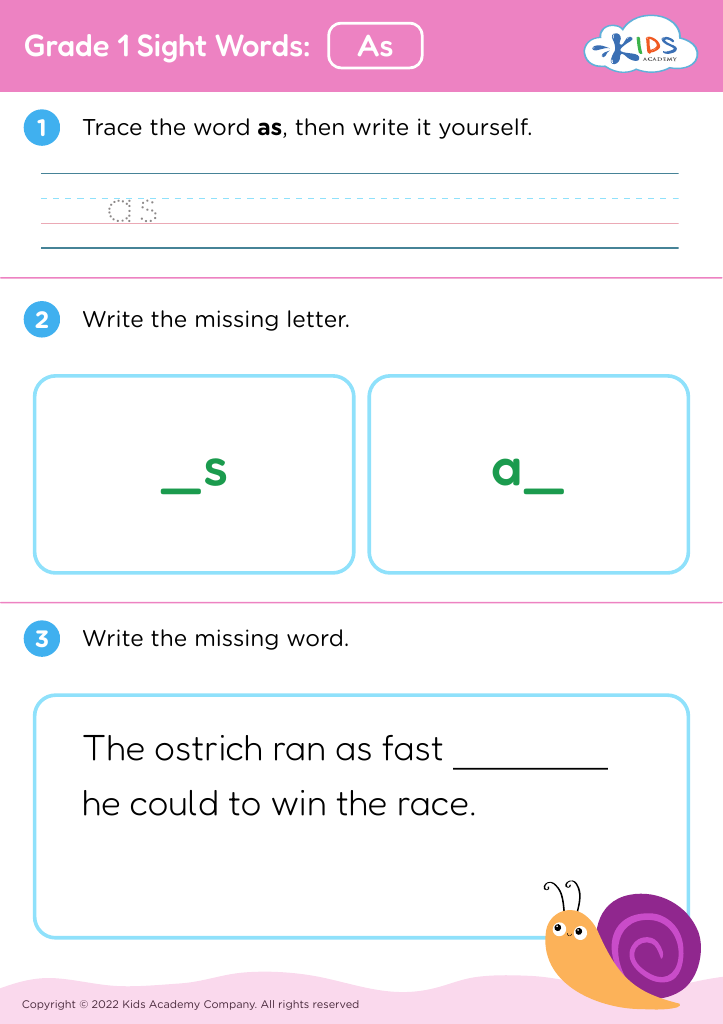
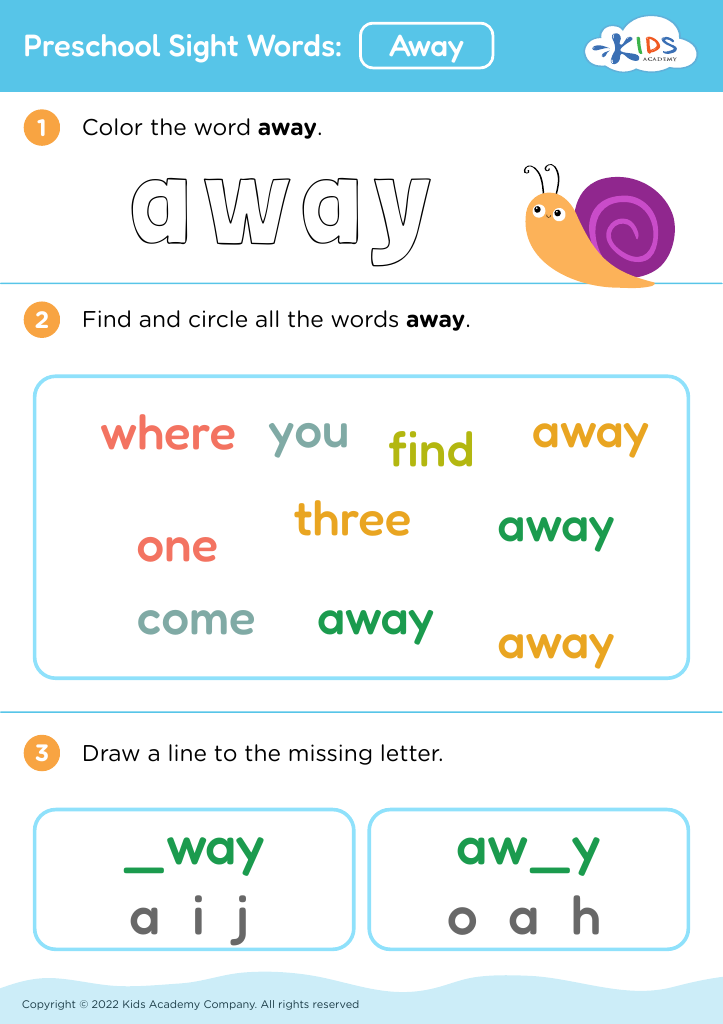
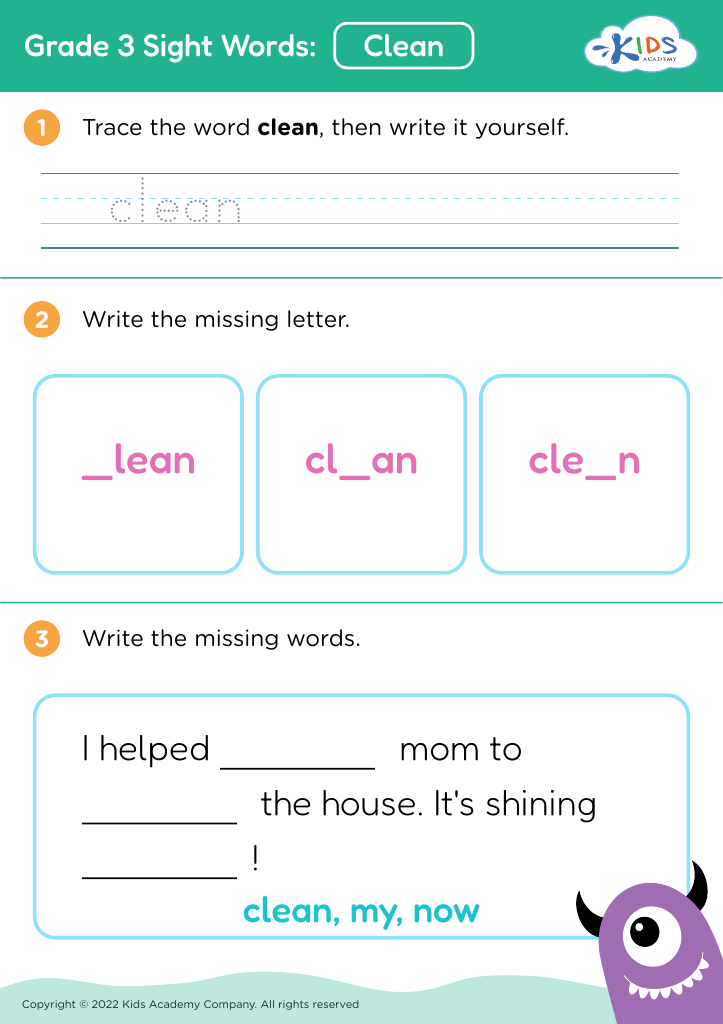
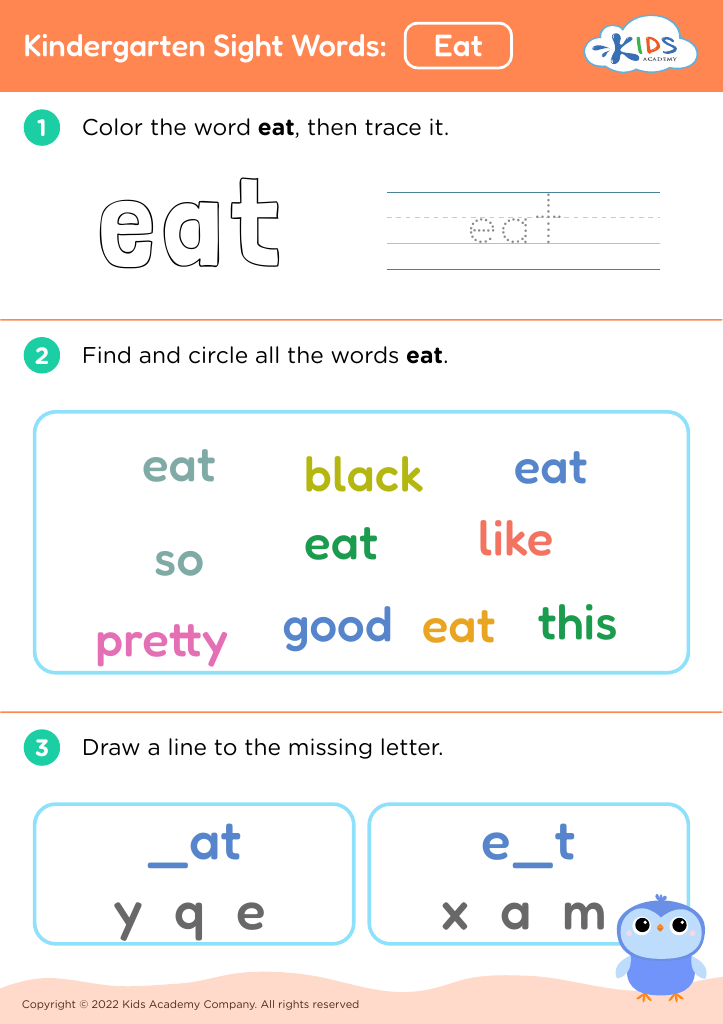
Discover our engaging Fine Motor Skills Sight Words Worksheets designed specifically for children ages 4-9! These worksheets seamlessly combine early literacy with essential fine motor skill development, making learning fun and interactive. Ideal for preschool and early elementary classrooms, each activity encourages kids to practice writing and recognizing sight words through tracing, coloring, and creative exercises. By enhancing their motor skills while building a strong foundation in reading, children gain confidence and prepare for future academic success. Join us in fostering a love for learning with these thoughtfully crafted resources that support young learners on their educational journey! Download your worksheets today!
Favorites
With answer key
Interactive
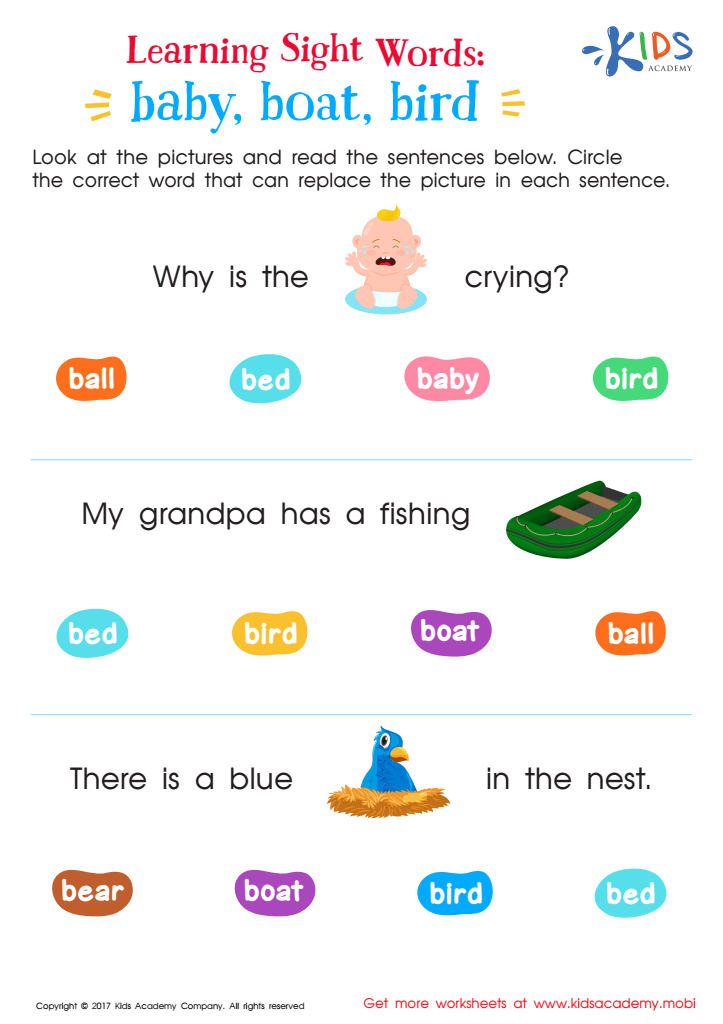
Baby, Boat, Bird Worksheet Sight Words Worksheet
Sight words are an essential part of fluency; help kids build it by writing and reading them. This worksheet is a great way to start.
 Assign to My Students
Baby, Boat, Bird Worksheet Sight Words Worksheet
Worksheet







Join Kids Academy for Free
Who is primarily going to use this learning content?








Fine motor skills and sight words are crucial components in the early development of children, particularly for ages 4 to 9. Fine motor skills refer to the small movements of the hands and fingers that are essential for tasks like writing, drawing, and tying shoelaces. Improving these skills enhances a child's ability to perform everyday functions and fosters independence, which builds self-esteem.
In parallel, sight words—common words that children should recognize instantly—are fundamental for reading fluency and comprehension. When students can effortlessly identify sight words, they can concentrate more on understanding the text instead of decoding it. This skill lays the groundwork for more complex literacy development, supporting academic success in the long run.
Parents and teachers play a vital role in nurturing both fine motor skills and sight word recognition. Activities like playing with playdough, cutting with scissors, or engaging in tracing exercises can enhance fine motor abilities. Similarly, reading together and using flashcards can effectively improve sight word recognition.
Fostering both of these skills aligns with early educational goals and equips children with the foundational tools they need for academic and personal growth. Ignoring these aspects can hinder a child's confidence and readiness for future educational challenges.