Practice subtraction Sight Words Worksheets for Ages 4-9
4 filtered results
-
From - To
Our engaging Practice Subtraction Sight Words Worksheets for ages 4-9 provide a unique blend of literacy and math learning. Tailored for young learners, these worksheets seamlessly combine essential sight words practice with subtraction exercises to reinforce key skills. Through fun, interactive activities, children will enhance their reading ability while simultaneously building a solid foundation in basic arithmetic. Perfect for both classroom and at-home use, these worksheets make learning enjoyable and effective, aiding in the development of critical early learning abilities. Explore our collection to help your child gain confidence in reading and math while having fun!



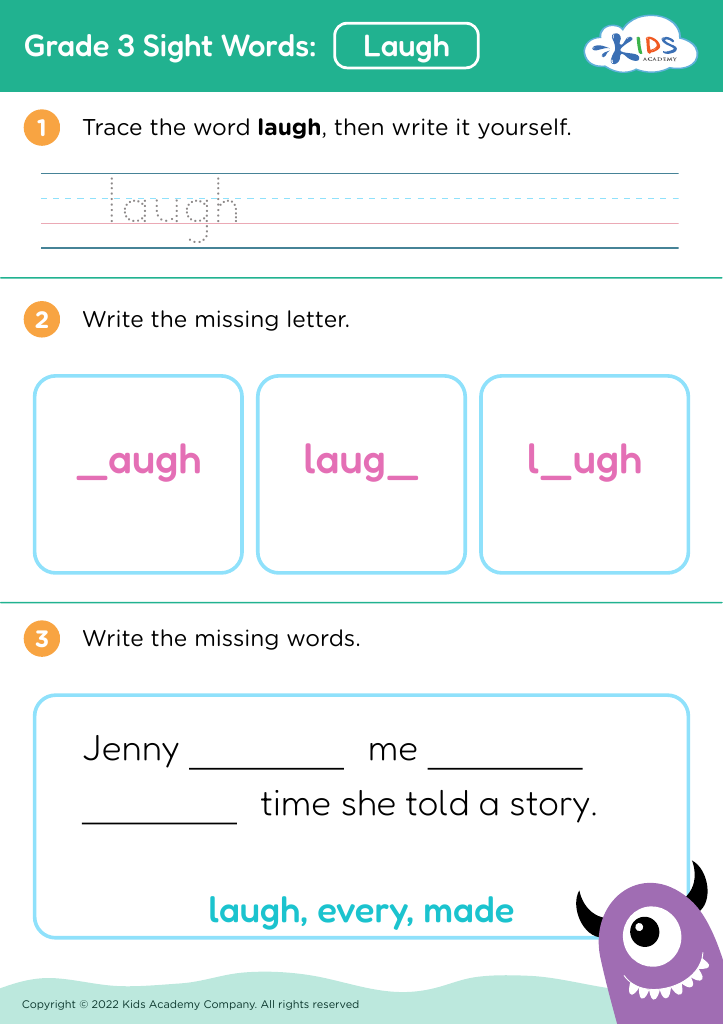
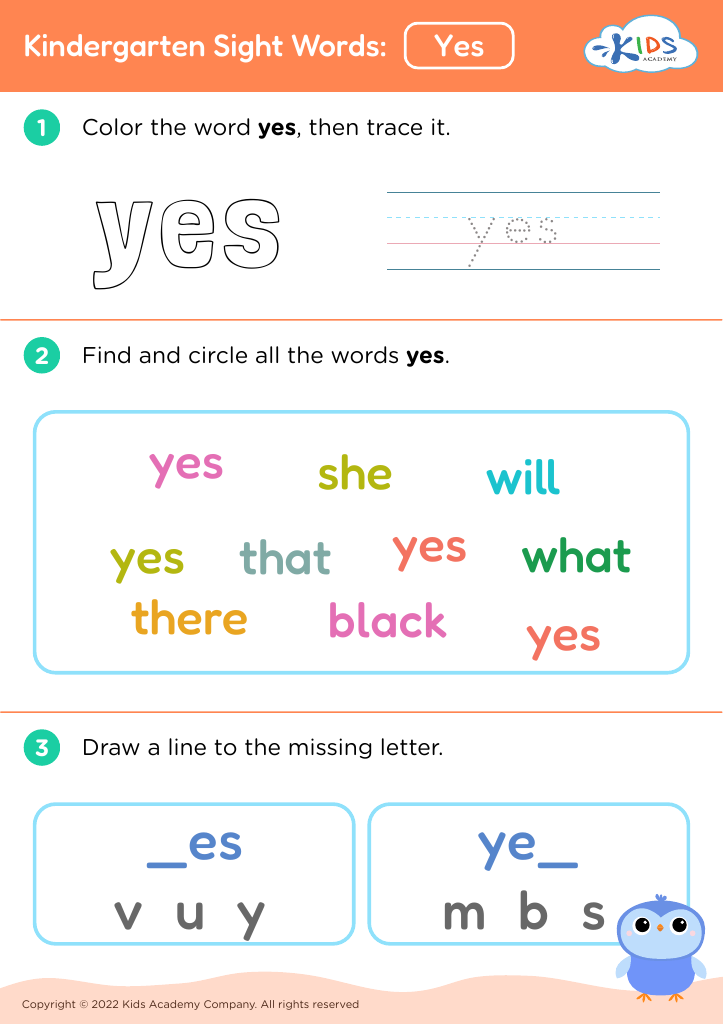
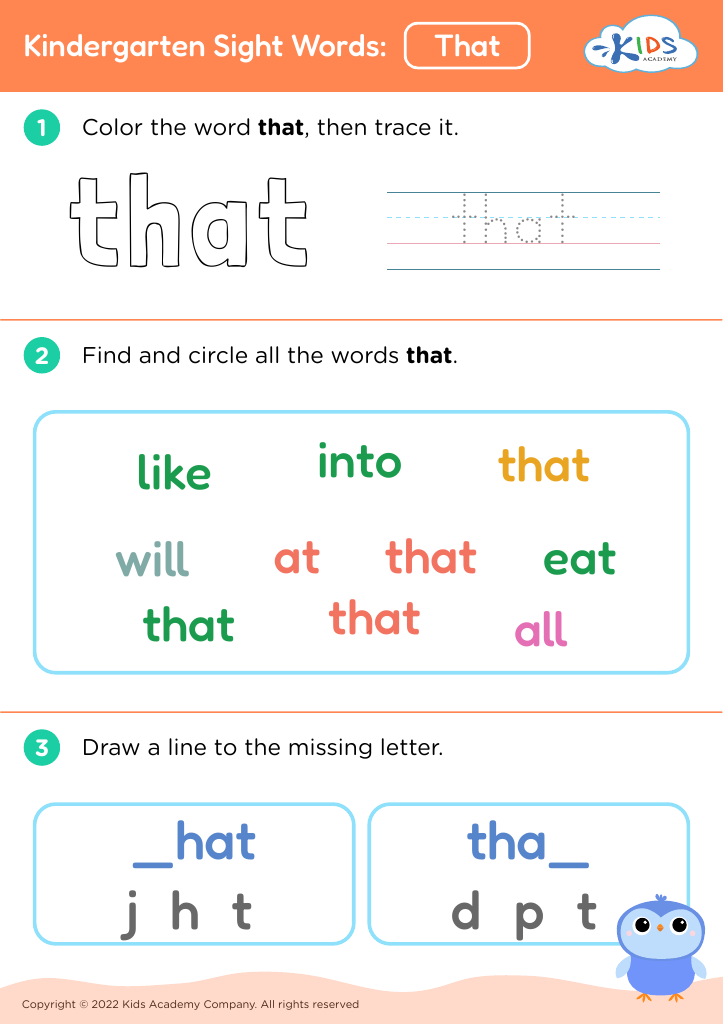








Developing foundational math skills and sight word recognition in children aged 4-9 is crucial for their academic growth, and practicing subtraction sight words combines both these foundational areas. Firstly, subtraction is a core mathematical concept widely applicable in everyday life, from basic calculations to more advanced problem-solving. By mastering subtraction at an early age, children enhance their numerical fluency and confidence in math, paving the way for academic success in later grades.
Simultaneously, sight words are high-frequency words that children must recognize instantly to achieve reading fluency. Integrating sight words with subtraction practice offers a dual benefit: children strengthen their arithmetic skills while improving their ability to read quickly and efficiently. This blending of math and literacy promotes cognitive flexibility, enabling children to switch between different types of thinking smoothly.
Moreover, interactive and varied practices keep young learners engaged. Fun and engaging subtraction sight word activities make learning less intimidating and more enjoyable for children, fostering a positive attitude towards both reading and math. Parents and teachers should prioritize this practice to create a solid educational foundation, ensuring children are not only school-ready but also eager and motivated learners across all subjects.