Understanding adjectives Grammar Worksheets for Ages 4-9
5 filtered results
-
From - To
Explore our engaging "Understanding Adjectives Grammar Worksheets" designed for children aged 4-9! These worksheets make learning fun and interactive, helping young learners grasp the concept of adjectives through vibrant activities and appealing visuals. Each worksheet focuses on enhancing vocabulary, encouraging children to identify and use descriptive words effectively. With varying difficulty levels, kids will reinforce their grammar skills while enjoying exciting exercises like fill-in-the-blank, matching, and coloring activities. Perfect for home or classroom use, these worksheets foster creativity and critical thinking, laying a strong foundation for their future writing and communication skills. Start your child's grammatical journey today!
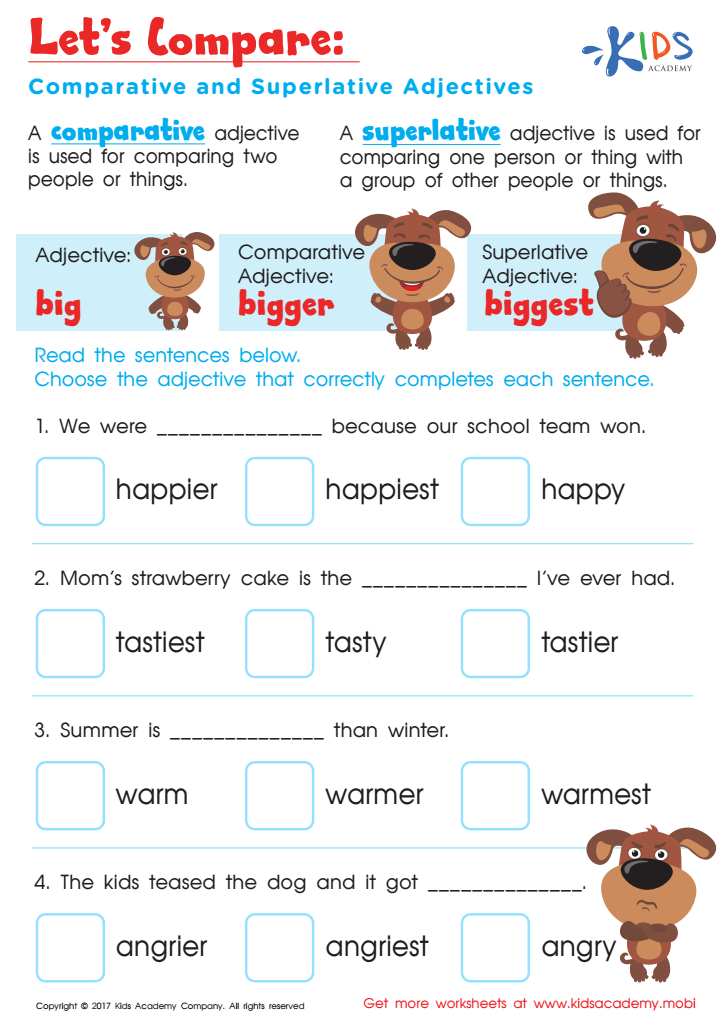
Comparative and Superlative Worksheet
 Assign to My Students
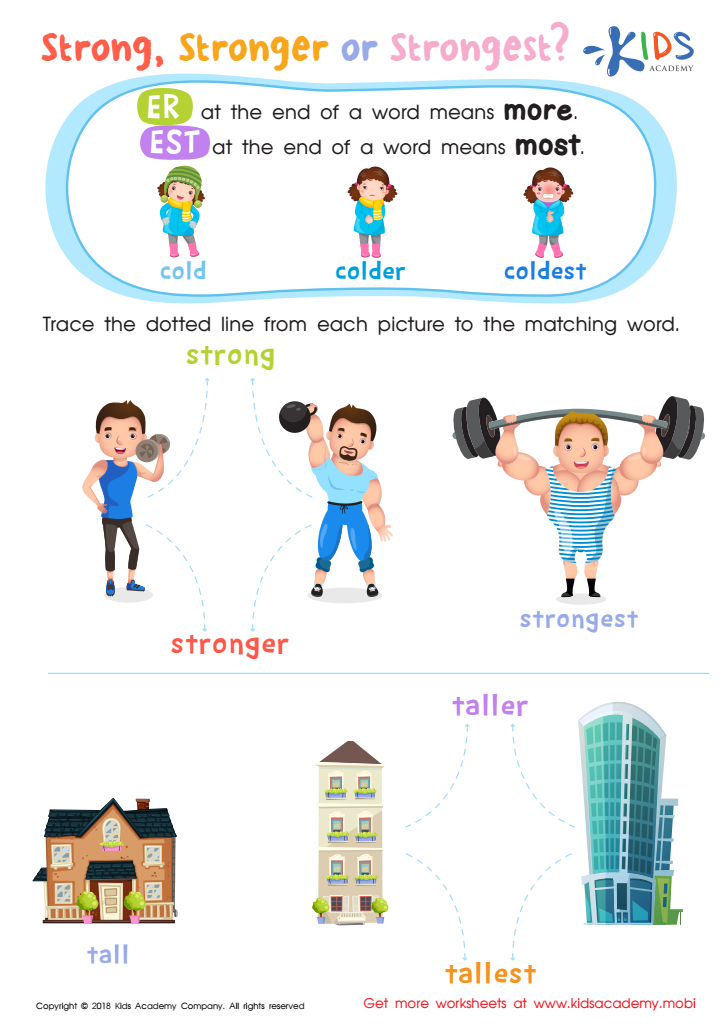
Strong or Stronger? Worksheet
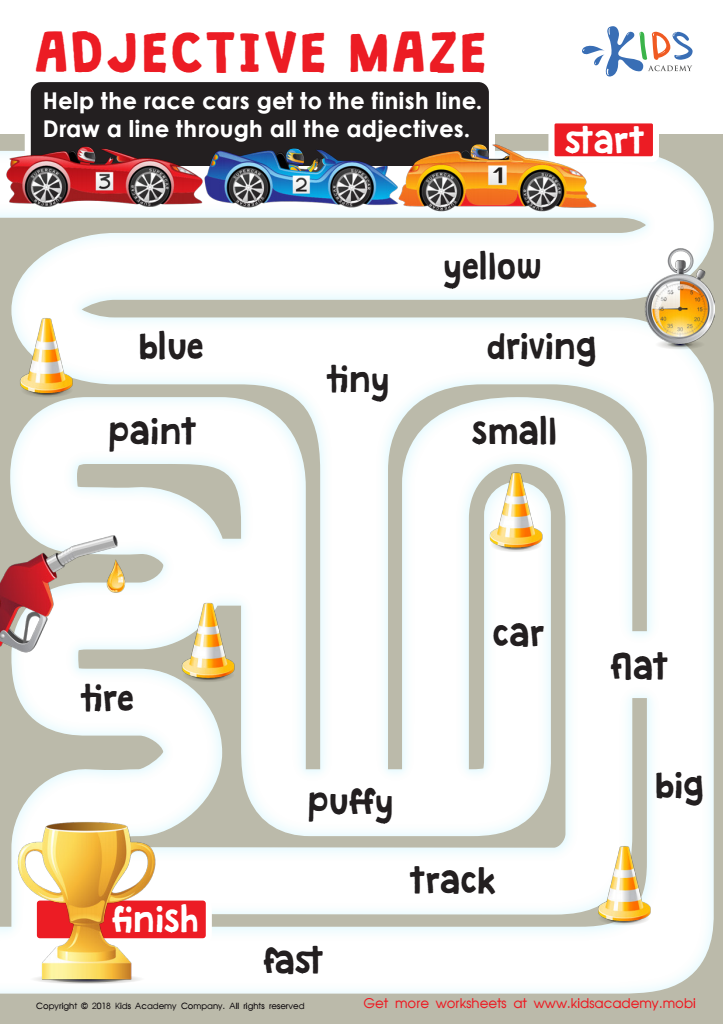
Adjective Maze Worksheet
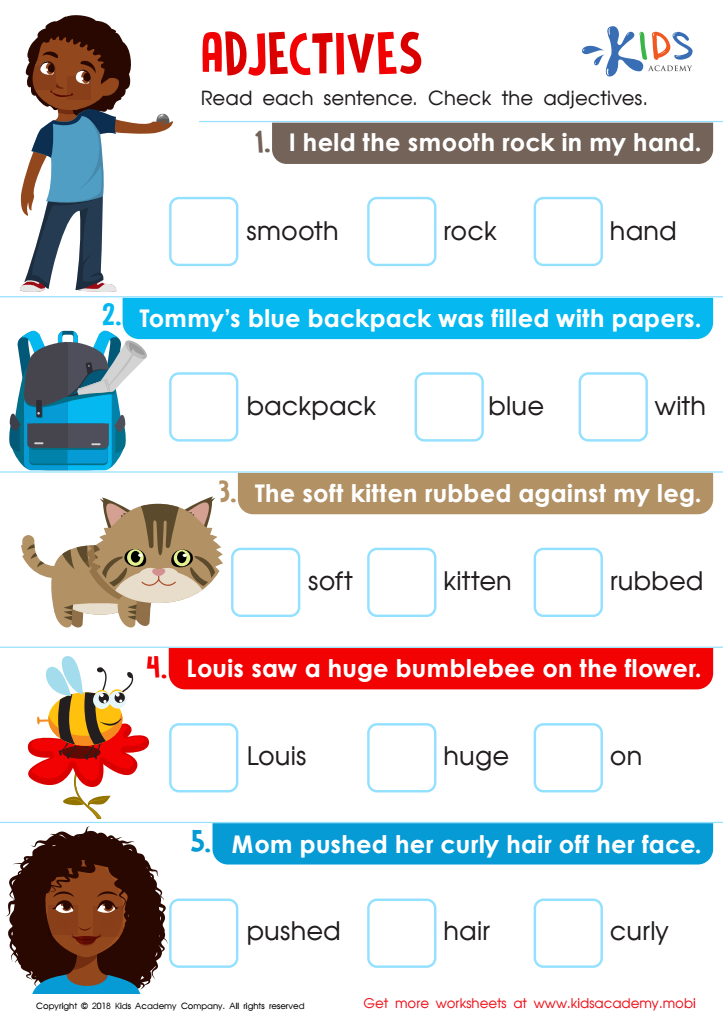
Adjectives Worksheet
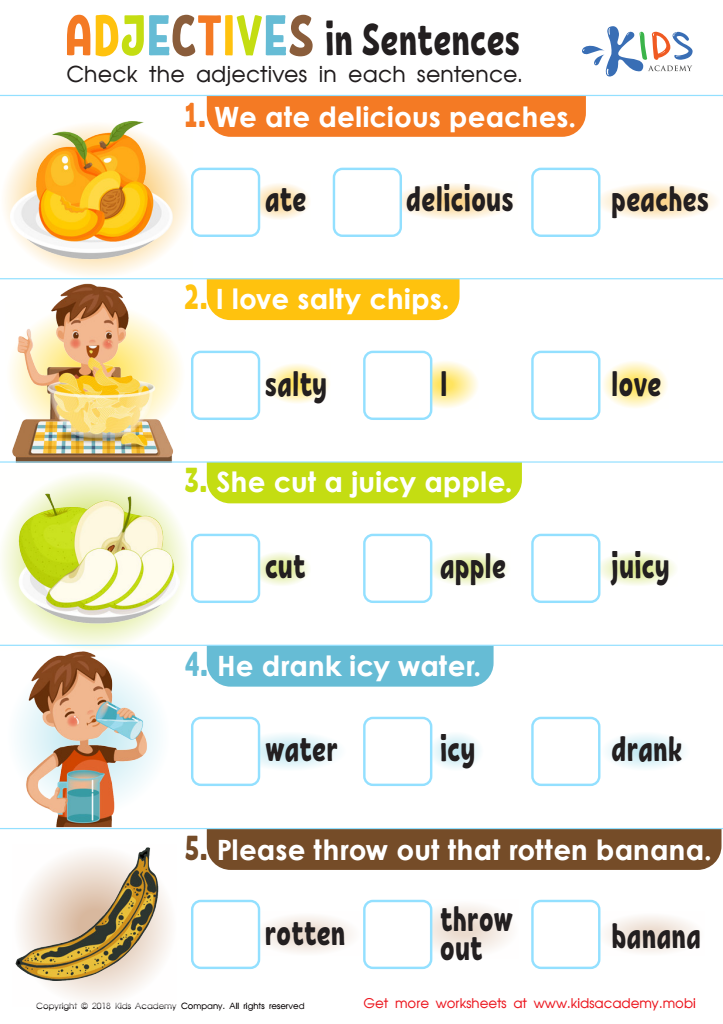
Adjectives in Sentences Worksheet



.jpg)



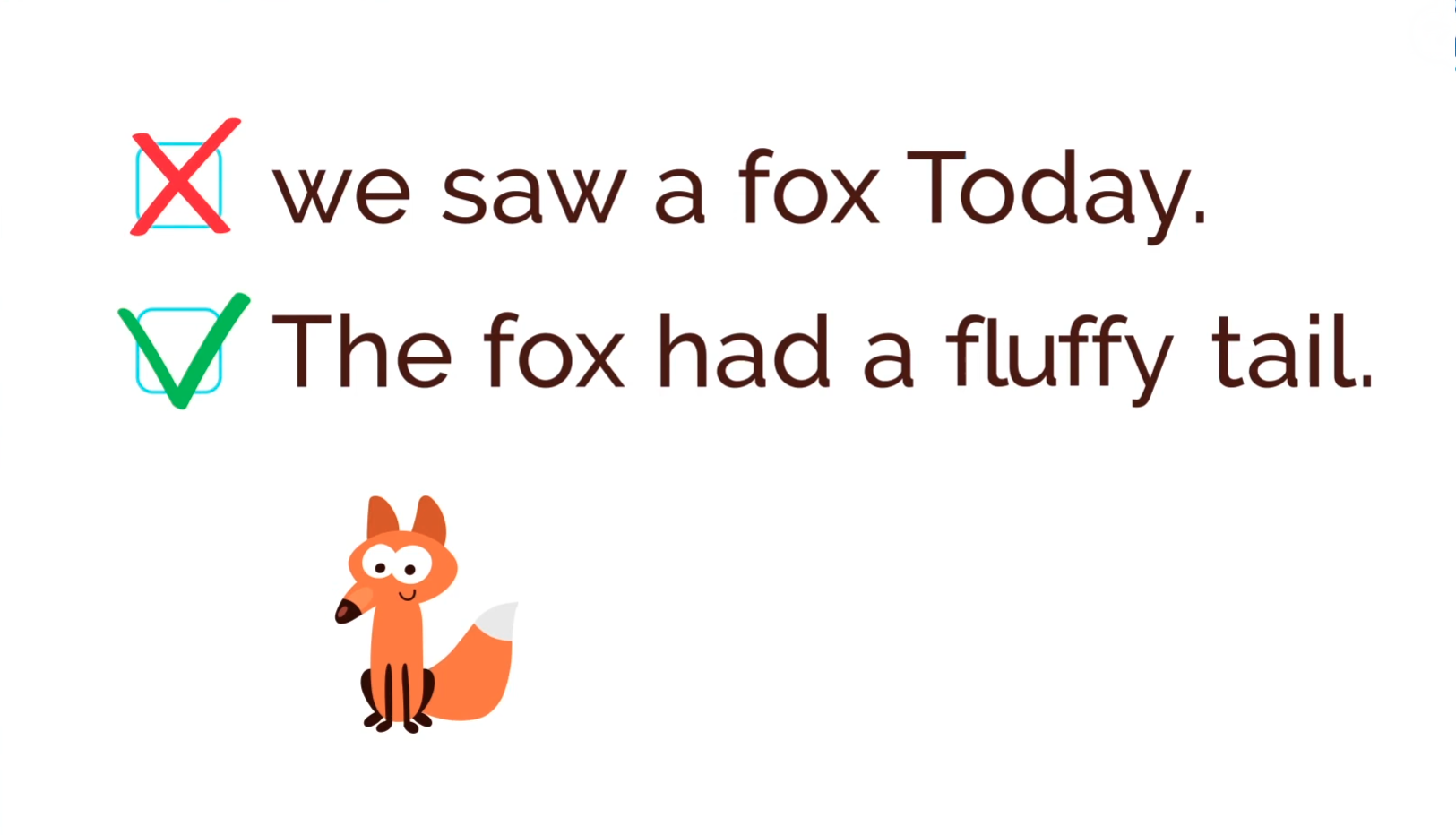
Understanding adjectives is crucial for young learners aged 4 to 9 as it lays the foundation for effective communication and enhances their language skills. Adjectives are descriptive words that give information about nouns, allowing children to articulate their thoughts and feelings more precisely. By learning to identify and use adjectives, children can enrich their vocabulary, making their writing and speaking more engaging and vivid.
Parents and teachers should care about this aspect of grammar because it supports cognitive development. As children grasp the concept of adjectives, they improve their reading comprehension and can better describe their surroundings, experiences, and emotions. This ultimately leads to more meaningful interactions and helps cultivate their creativity.
Moreover, proficiency in using adjectives fosters confidence in self-expression during storytelling and conversations. Encouraging children to explore adjectives through fun activities—like identifying colors, sizes, or feelings—can make learning enjoyable and memorable.
Parents and teachers play a significant role in this learning process. By incorporating adjectives into daily discussions, reading sessions, and creative play, they can help children develop a strong linguistic foundation, preparing them for more advanced language concepts in the future. Thus, understanding adjectives is not just about grammar; it's key to empowering young minds.








