Vocabulary development Grammar Worksheets for Ages 4-9
8 filtered results
Difficulty Level
Grade
Age
-
From - To
Subject
Activity
Standards
Boost your child’s language skills with our engaging Vocabulary Development Grammar Worksheets for ages 4-9. Designed to enhance vocabulary and grammar proficiency, these worksheets are perfect for young learners in Kindergarten through Grade 3. Through fun, interactive activities, kids will grasp essential grammar rules, expand their vocabulary, and improve reading and writing. Perfect for classroom use or at-home practice, our printables turn learning into an enjoyable adventure. Watch as your little ones build a strong language foundation with the help of Kids Academy's expertly crafted worksheets. Start today and unlock your child's full linguistic potential!
Favorites
With answer key
Interactive
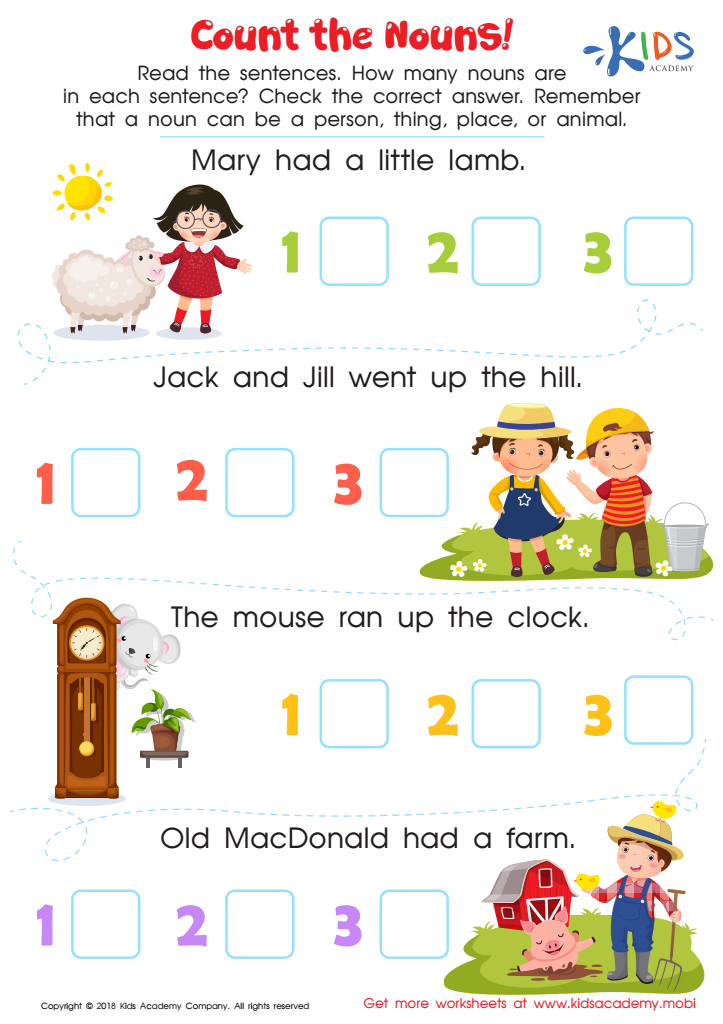
Count the Nouns Worksheet
Read the sentences with your children and ask them to find the nouns. Explain that nouns are names of people, animals, places or things. Point out the boxes with the answers to check.
 Assign to My Students
Count the Nouns Worksheet
Worksheet
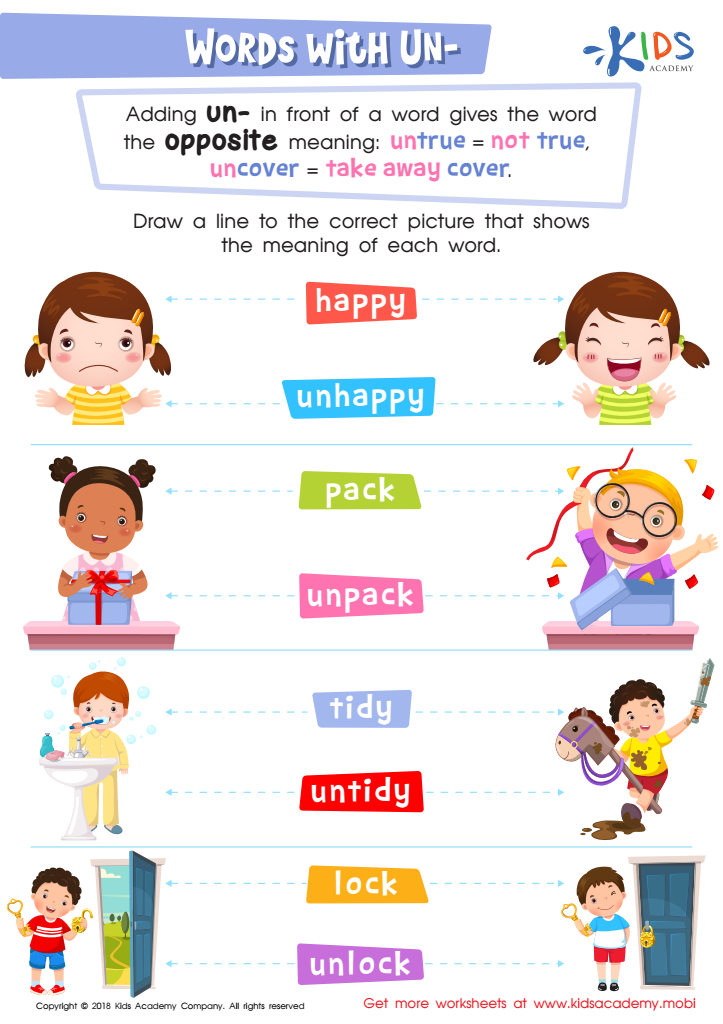
Words with Un– Worksheet
Prefixes can change the meaning of words. Adding "Un-" can give the opposite meaning, like Un-true, Un-happy, and Un-finish. Help your child learn with this worksheet. Draw a line to the picture that shows each word's meaning.
Words with Un– Worksheet
Worksheet
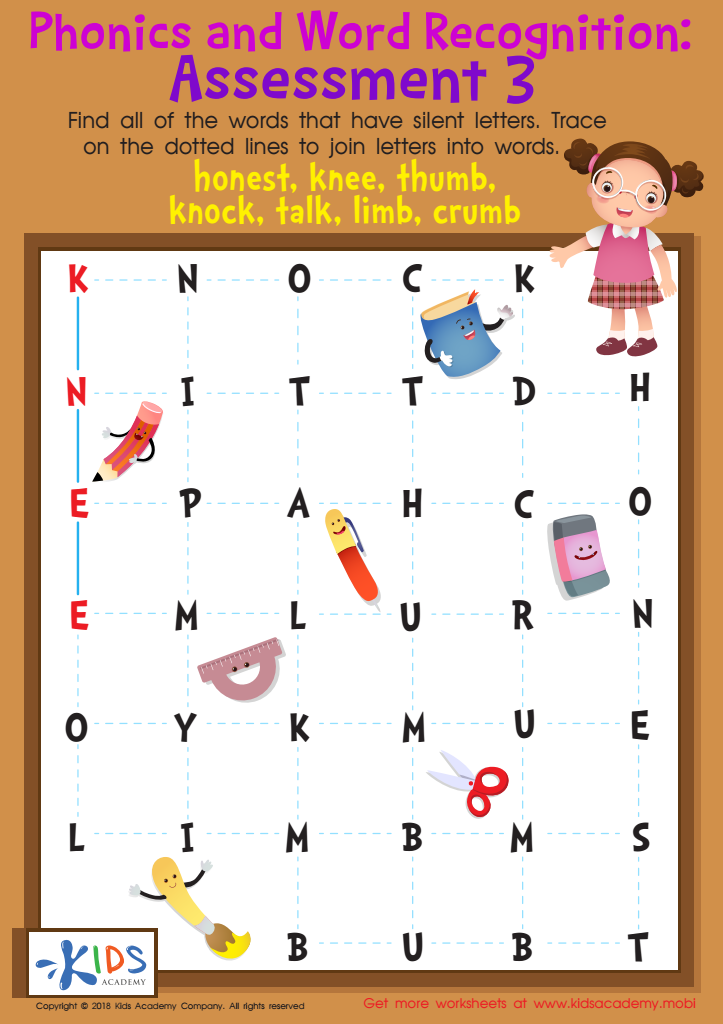
Phonics and Word Recognition: Assessment 3 Worksheet
Silent letters can be tricky for kids learning to read and write. Show them how they work with words like 'knee' and 'dumb'. Then, challenge them to come up with their own. Give them a worksheet with silent letters and trace the lines to join the letters into words.
Phonics and Word Recognition: Assessment 3 Worksheet
Worksheet
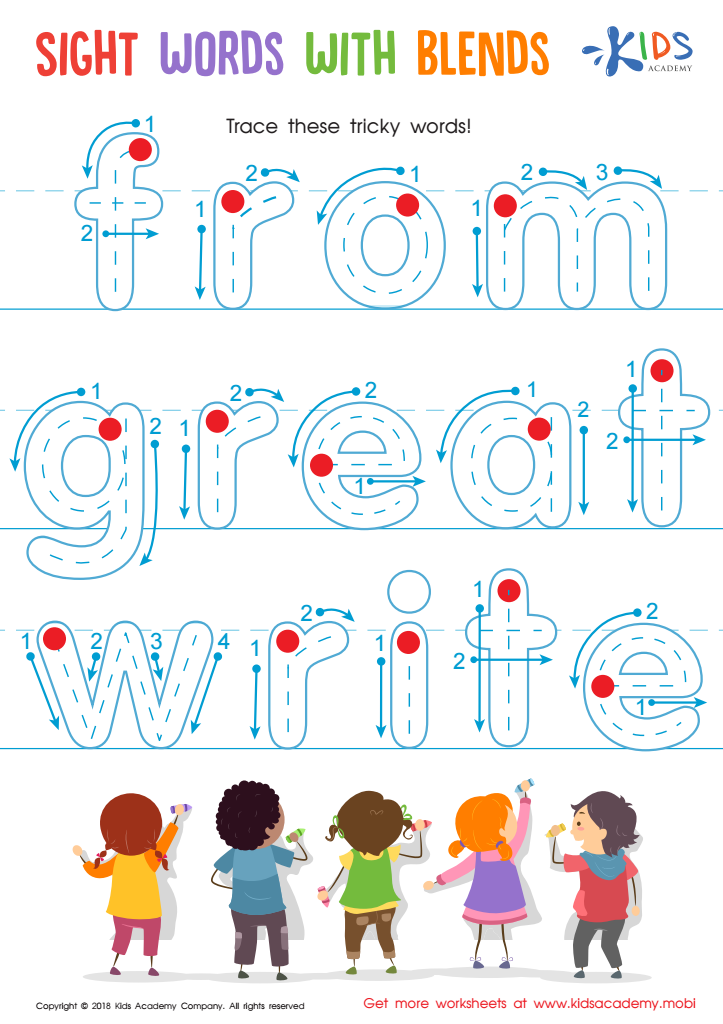
Sight Words with Blends Worksheet
This free PDF lets your children trace and write sight words with tricky blends. The guide numbers help them start from the top, building fine motor skills and enhancing sight word vocab. It's a great way to give your kids a solid foundation for reading!
Sight Words with Blends Worksheet
Worksheet
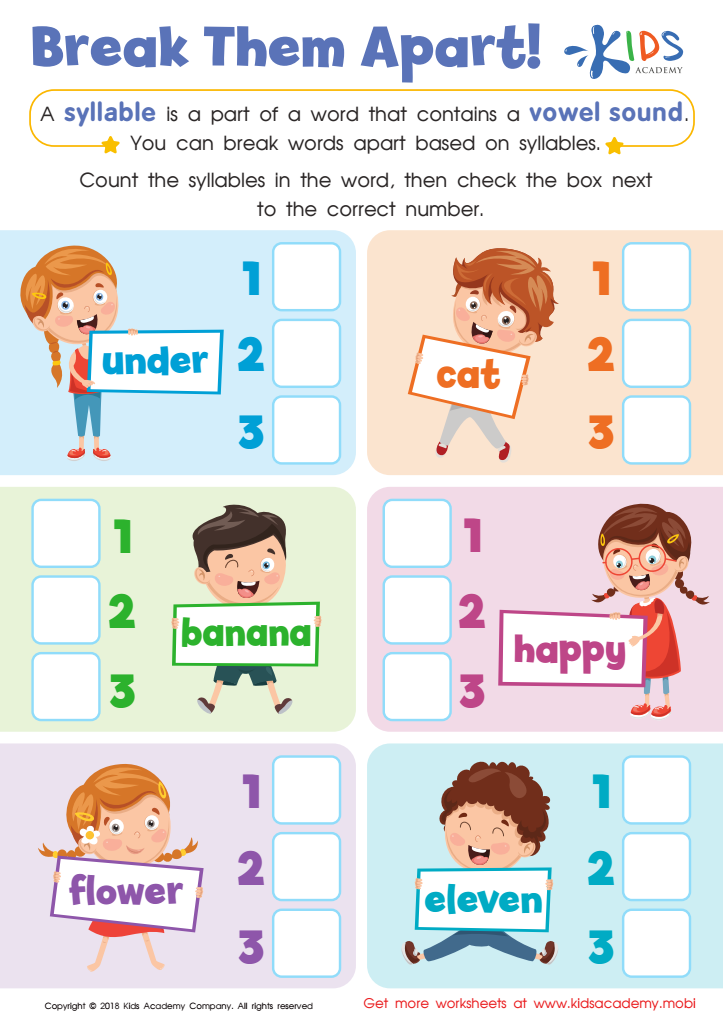
Reading: Break Them Apart Worksheet
See if students understand syllables with this fun worksheet. It teaches them that a syllable is a word part with a vowel sound. Kids read each word and choose how many parts it has. Doing this often helps them decode new words and gain confidence.
Reading: Break Them Apart Worksheet
Worksheet
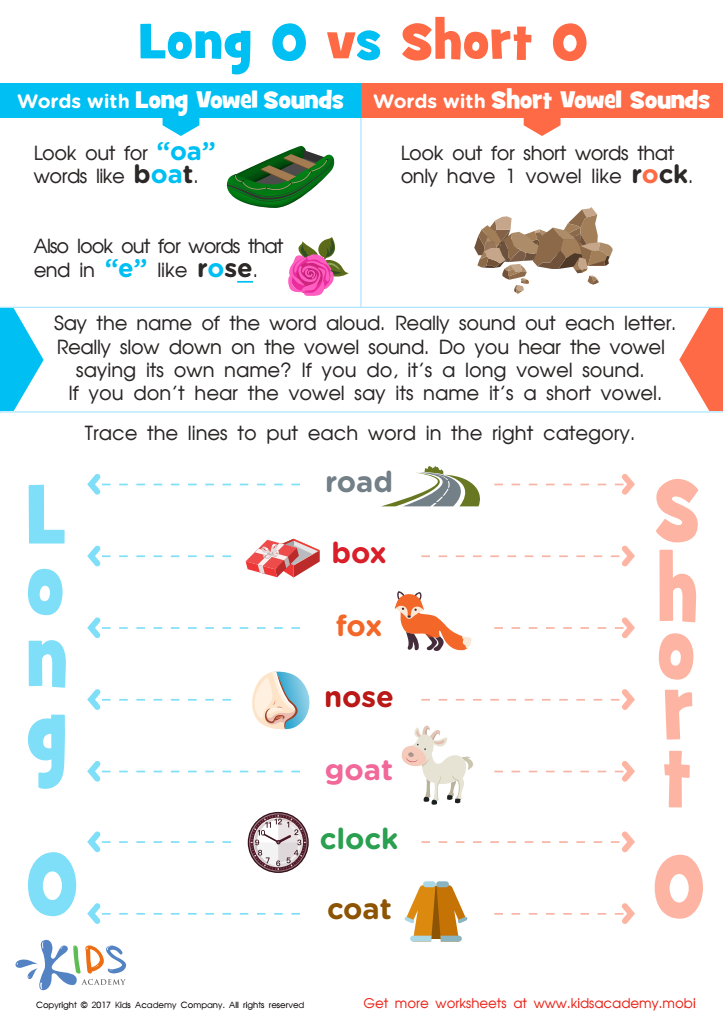
Long and Short Vowel O Spelling Worksheet
This colorful worksheet teaches kids to distinguish tricky "O" words. It's easy to spot the long "O" sound by looking for an extra vowel. Kids practice by viewing examples and sounding out each word. Help your child master long and short vowel "O" sounds!
Long and Short Vowel O Spelling Worksheet
Worksheet
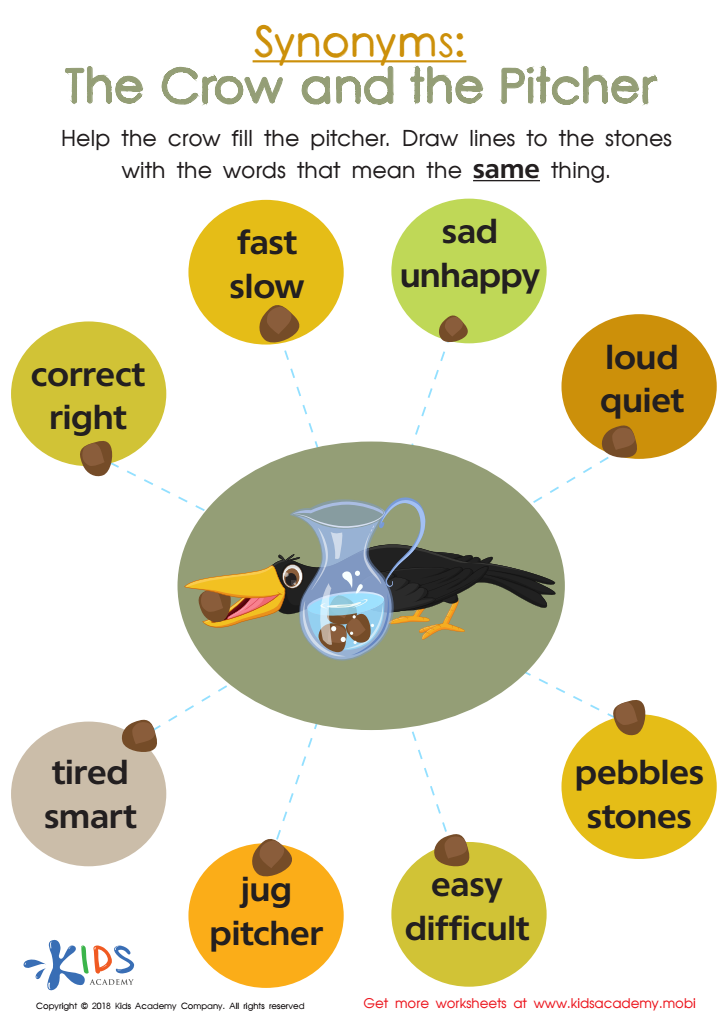
The Crow and the Pitcher Synonyms Worksheet
Give your child the building blocks for effective communication with an ELA lesson! Help the crow in this Kids Academy worksheet find the correct stones to fill the pitcher - only those next to synonym pairs! This is a fun way for kids to learn and expand their vocabulary and language skills.
The Crow and the Pitcher Synonyms Worksheet
Worksheet
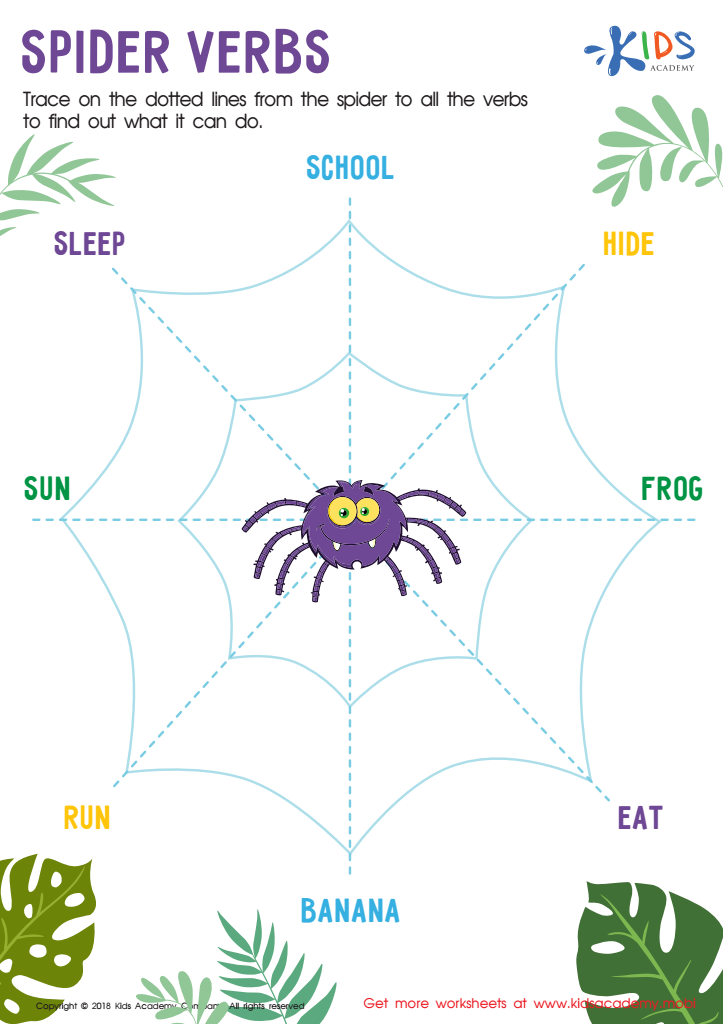
Spider Verbs Worksheet
Verbs are action words. Examples: run, play, talk. Show your child this tracing sheet for them to learn about verbs. Ask them to trace the dotted lines from the spider to the words that are verbs. These words are what the spider can do.
Spider Verbs Worksheet
Worksheet
Join Kids Academy for Free
Who is primarily going to use this learning content?






Vocabulary development and grammar skills are vital for children aged 4-9 as they form the foundation for effective communication, reading, and academic success. In these formative years, children are particularly receptive to language learning. A rich vocabulary helps them express their thoughts, emotions, and needs more precisely, building their confidence and ability to interact socially.
Moreover, strong vocabulary skills are closely linked to reading comprehension, an essential skill for academic achievement. As children learn to read, a robust vocabulary allows them to understand new words in context, making reading a more enjoyable and rewarding experience.
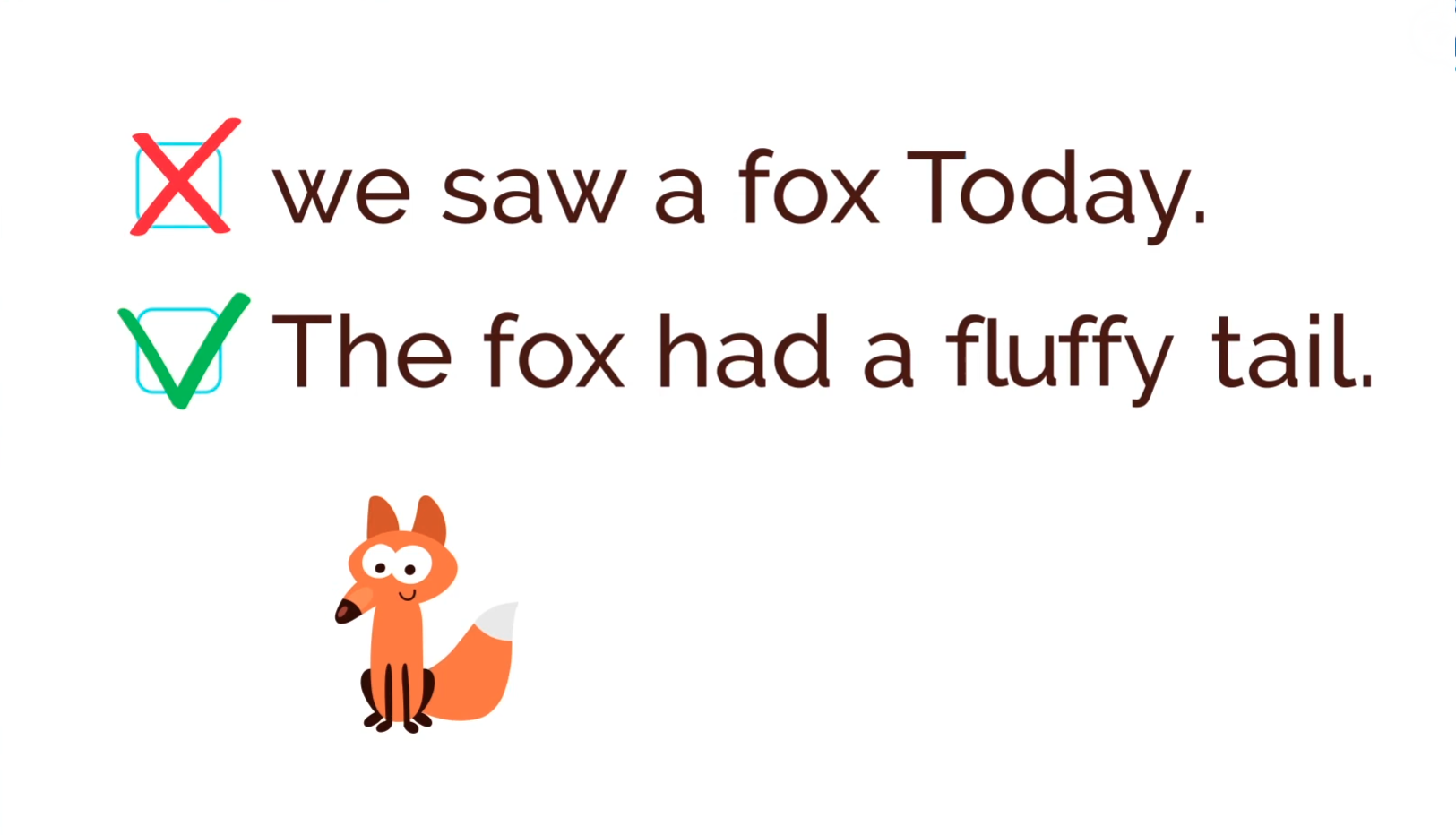
Grammar proficiency enables children to structure sentences correctly, which is crucial for clear and coherent communication. Understanding and using grammar rules help children not only in speaking and writing but also in understanding reading material.
Neglecting these language skills can lead to difficulties in school, where much of the learning depends on the ability to read and understand complex texts. Additionally, poor vocabulary and grammar skills can impede social interaction and self-esteem.
Hence, parents and teachers should prioritize vocabulary and grammar development during these early years to ensure children are well-prepared for future academic challenges and can interact effectively in social situations. This proactive approach supports a child's overall cognitive and linguistic development.