Alphabetical order Alphabet Worksheets for 4-Year-Olds
3 filtered results
-
From - To
Introduce your 4-year-old to the basics of alphabetical order with our engaging Alphabetical Order Worksheets. Crafted to make learning fun, these worksheets help children recognize letters and understand their sequence. Featuring colorful and interactive activities, kids will hone their alphabetical skills while enjoying every minute. Ideal for preschool readiness, our printable sheets are designed by experts to support early literacy skills such as letter recognition, ordering, and early reading. Perfect for preschool or home use, these worksheets provide a strong foundation for your child's educational journey. Visit Kids Academy to download and get started today!
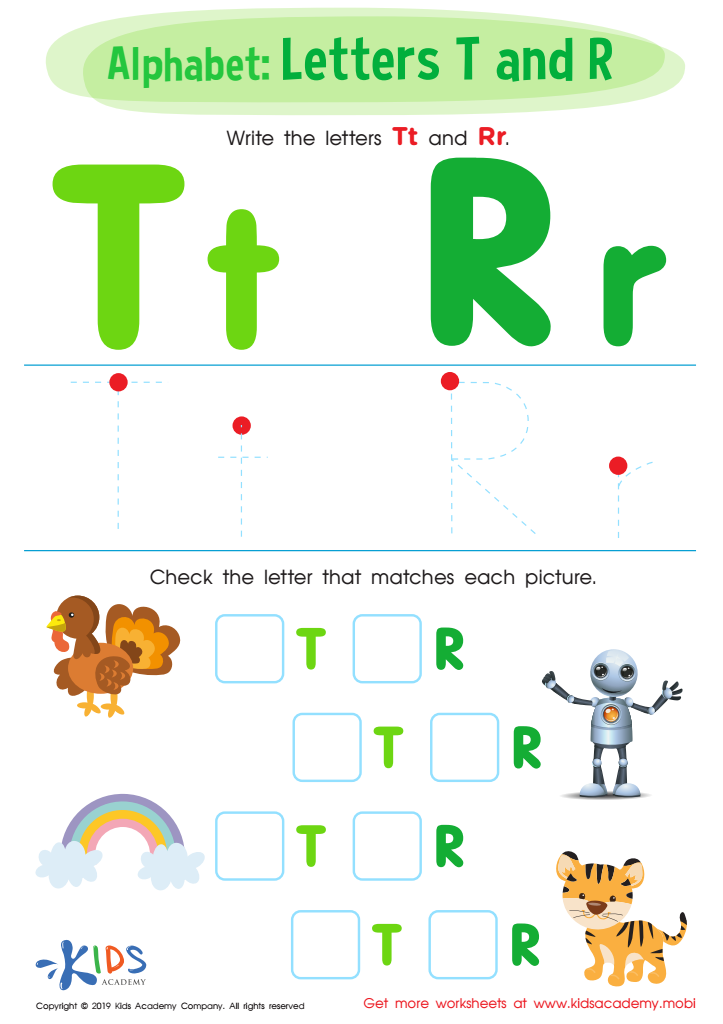
Letters T and R Worksheet
 Assign to My Students
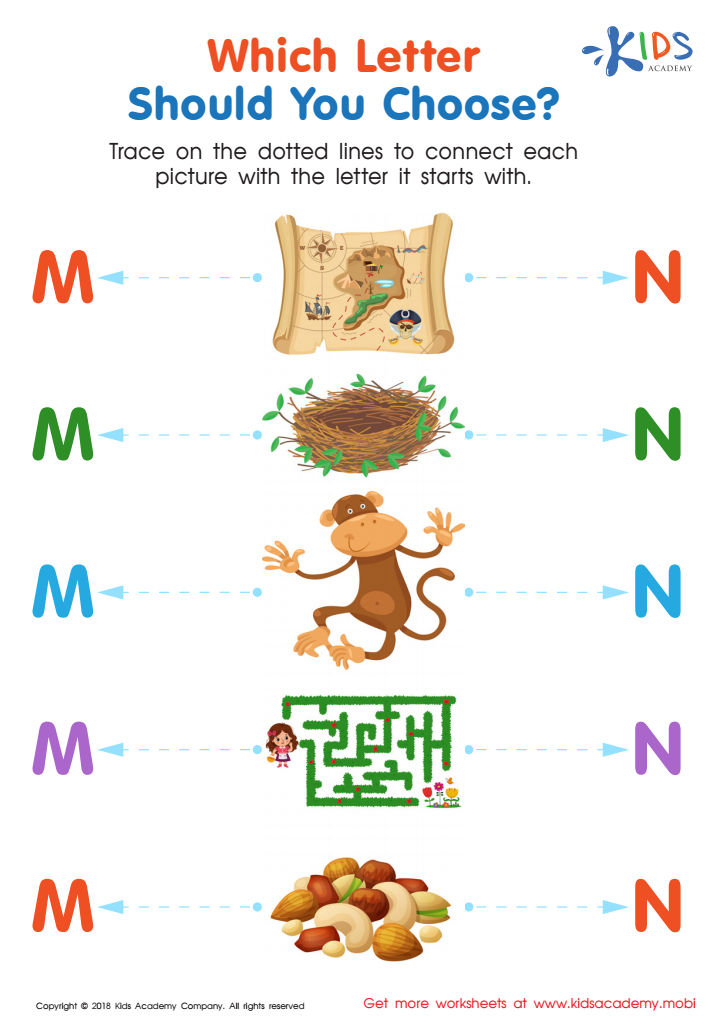
Which Letter Should you Choose? Worksheet
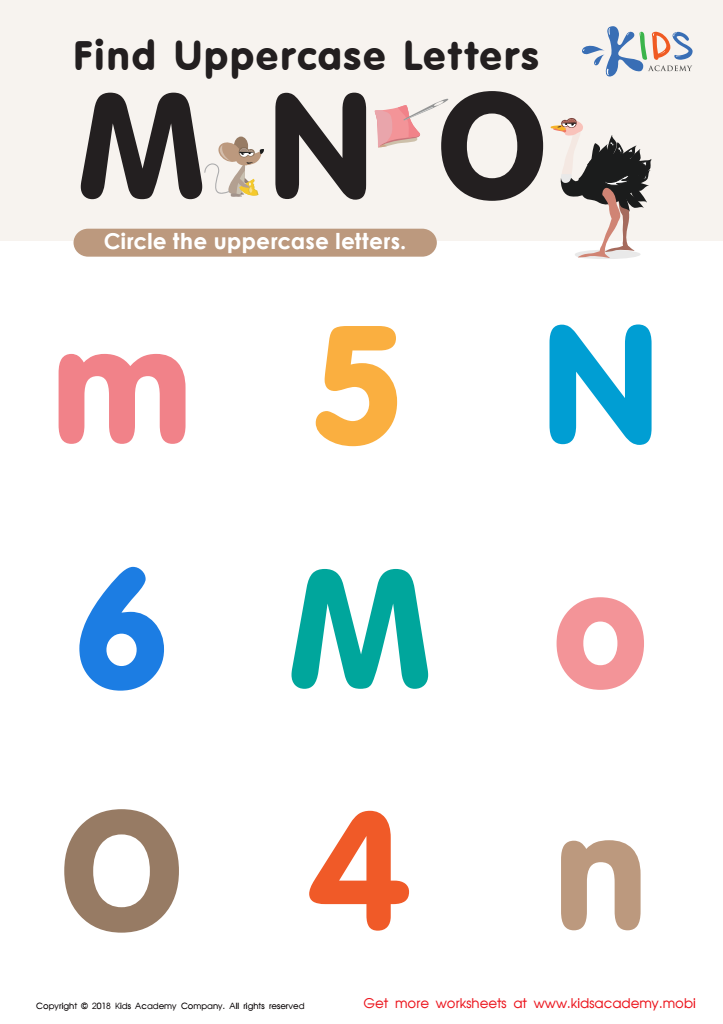
Find Uppercase Letters M, N, and O Worksheet








Parents and teachers should care about introducing alphabetical order to 4-year-olds because it lays the foundation for essential language and organizational skills. At this early stage, children are like sponges, eagerly absorbing new information. Learning the alphabet in sequential order helps them recognize letter patterns, understand how words are structured, and begin forming early phonetic connections.
-
Language Development: Knowing alphabetical order enhances children’s ability to identify and distinguish between letters. This is crucial for literacy as they learning to read and write. Recognizing that ‘A’ comes before ‘B’ helps kids sort, sequence, and decode words more efficiently.
-
Cognitive Skills: Teaching alphabetical order strengthens a child's memory and problem-solving abilities. The practice of putting things in order tends to boost cognitive development, encouraging logical thinking and organization from an early age.
-
Educational Foundation: This knowledge becomes indispensable as children progress through school. Alphabetical order is used in a variety of educational settings such as organizing books in a library, looking up words in a dictionary, and even understanding basic mathematics, since ordering and sequences form core parts of both literacy and numeracy.
Engaging 4-year-olds in fun, interactive alphabetical activities can transform learning into play, making it an enjoyable and meaningful experience that provides lasting academic and cognitive benefits.







