
Lowercase identification Alphabet Worksheets for 4-Year-Olds
5 filtered results
Difficulty Level
Grade
Age
-
From - To
Subject
Activity
Standards
Discover our engaging Lowercase Identification Alphabet Worksheets designed specifically for 4-year-olds! These colorful and interactive worksheets will help young learners recognize and differentiate lowercase letters. Crafted to enhance early literacy skills, each activity progresses in difficulty, ensuring a fun and effective learning experience. Children will enjoy activities such as tracing, matching, and identifying lowercase letters in playful contexts, fostering their handwriting and letter recognition abilities. Perfect for use at home or in the classroom, these worksheets will not only build foundational skills but also inspire a love for letters and reading. Download and start your educational journey today!
Favorites
With answer key
Interactive
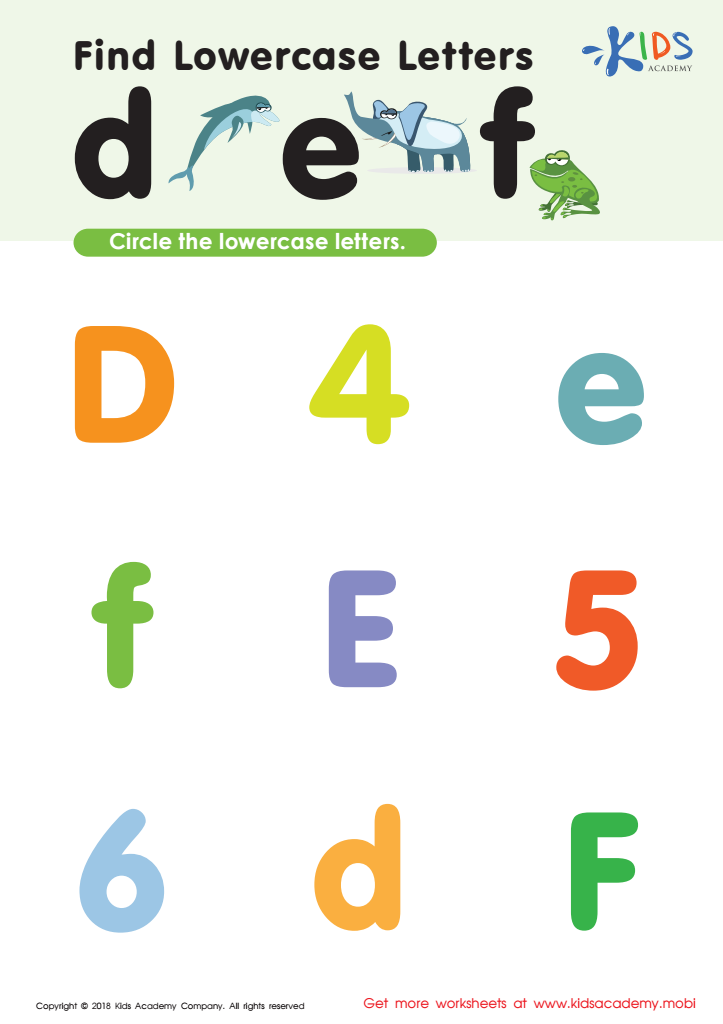
Find Lowercase Letters d e f Worksheet
Engage your child's brain with this fun, colorful worksheet. They'll identify and circle lowercase letters among other numbers and uppercase letters in bright colors. This will keep their attention as they learn, and can be downloaded in PDF form!
 Assign to My Students
Find Lowercase Letters d e f Worksheet
Worksheet
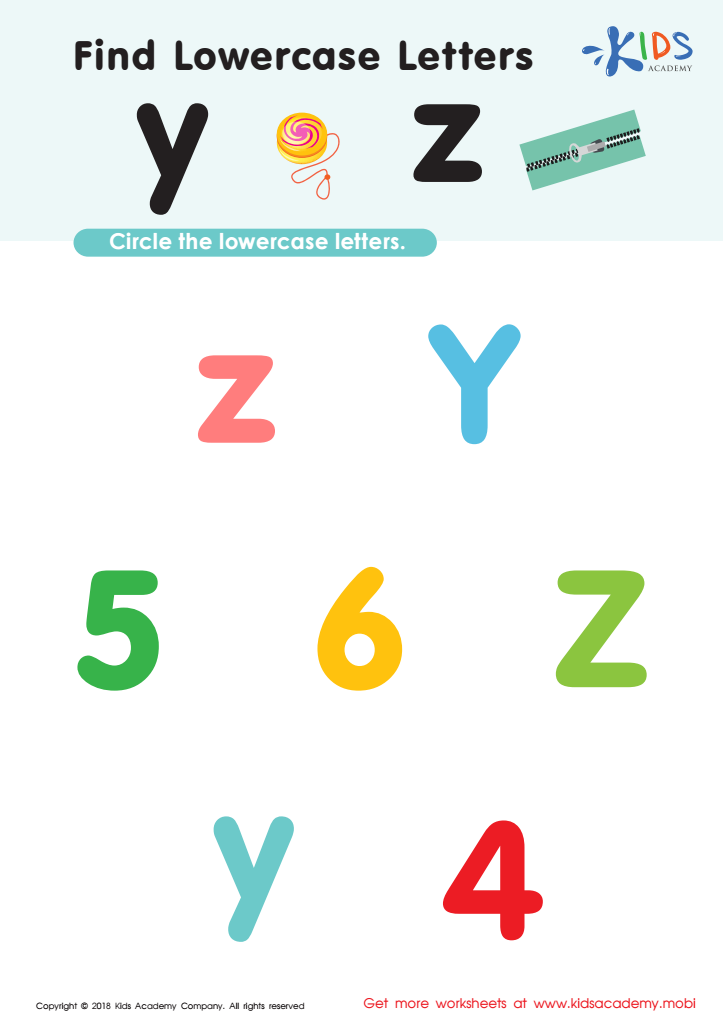
Find Lowercase Letters y z Worksheet
Help your kid learn the alphabet. Before they can move on to words and reading, they must first know the lower and uppercase letters. Show them how to find the letters y and z in this worksheet, which is filled with uppercase letters and numbers. Together, find and circle them.
Find Lowercase Letters y z Worksheet
Worksheet
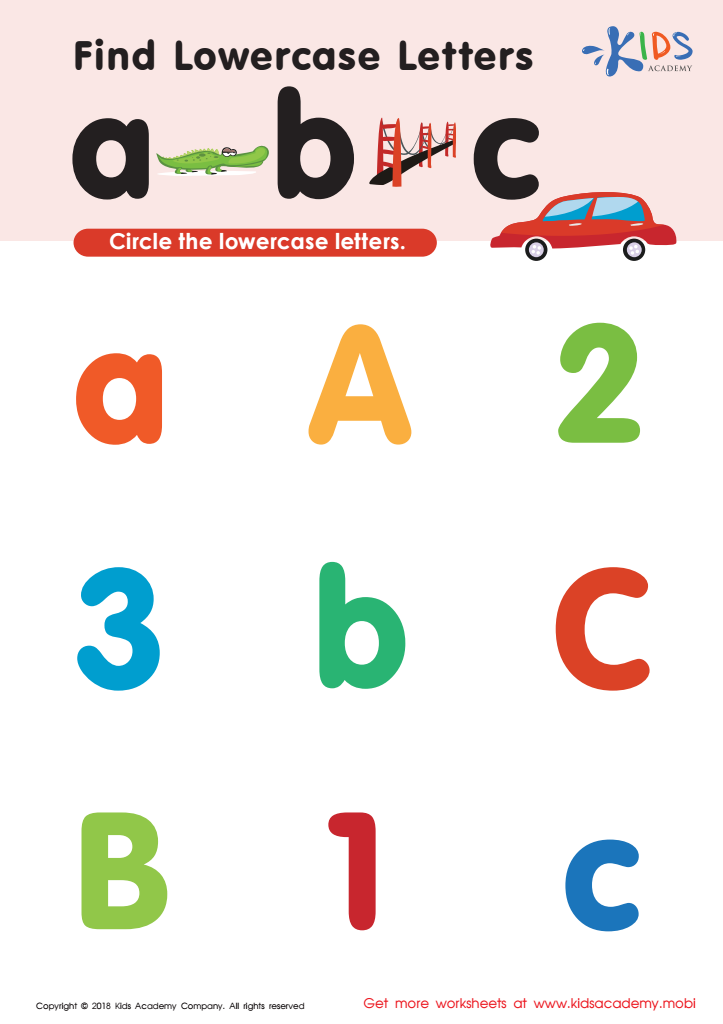
Find lowercase letters a b c Worksheet
Help your child identify lowercase letters with this worksheet. Carefully look at each letter and have your child circle the lowercase ones. This exercise is vital in helping them understand the alphabet and the difference between lower and uppercase letters.
Find lowercase letters a b c Worksheet
Worksheet
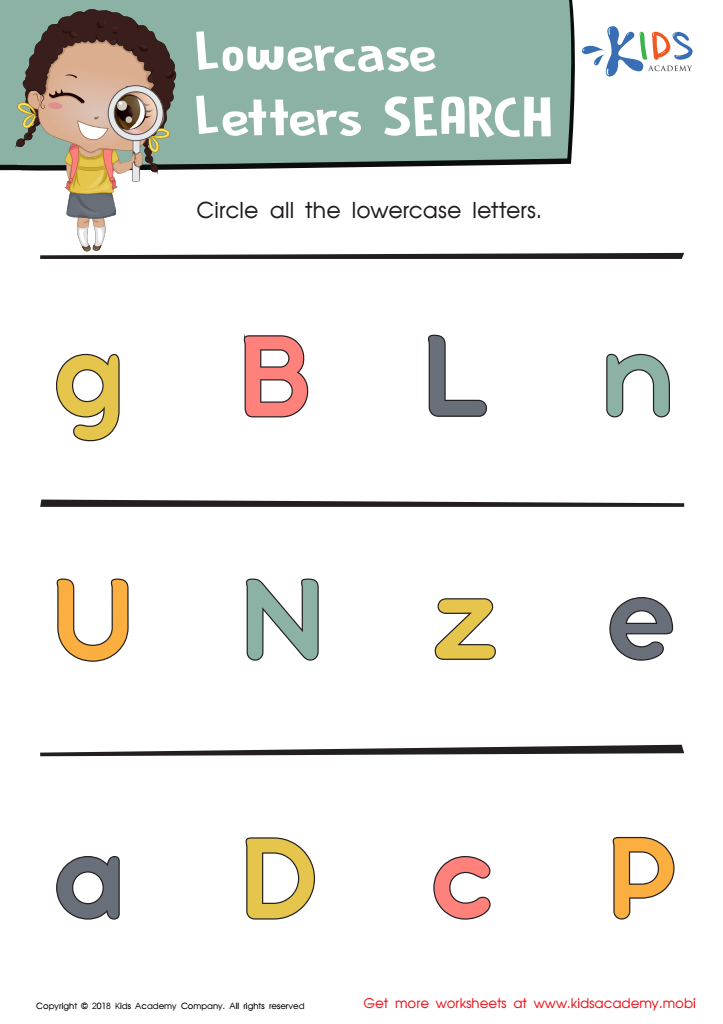
Lowercase Letters Search: Assessment Worksheet
Circle all the lowercase letters in this worksheet. Identify them among a mix of uppercase and lowercase letters. Your child will have fun with this exercise thanks to its bright primary colors. Enjoyment and learning go hand-in-hand!
Lowercase Letters Search: Assessment Worksheet
Worksheet

Find Lowercase Letters v w x Worksheet
If your child doesn't know the alphabet, get them this helpful worksheet. It's an easy exercise to build their understanding of the alphabet and lowercase letters. Find the letters v, w, and x among other uppercase letters and numbers in the downloadable PDF.
Find Lowercase Letters v w x Worksheet
Worksheet
Join Kids Academy for Free
Who is primarily going to use this learning content?




.jpg)



Lowercase letter identification is a fundamental skill for 4-year-olds that lays the groundwork for reading and writing proficiency. At this age, children are beginning to explore language and literacy, making it essential for parents and teachers to prioritize lowercase letter recognition. Lowercase letters are the most frequently used in written text and dominate reading materials, making familiarity with them crucial for children as they transition from letter learning to meaningful reading experiences.
Moreover, recognizing lowercase letters boosts children's confidence and ability to decode words. This skill enhances phonemic awareness, allowing children to understand how sounds connect to letters and facilitating a smoother learning journey. Additionally, understanding lowercase letters helps children make connections between their spoken language and text, deepening their engagement with reading and writing.
Parents and teachers play a pivotal role in nurturing this skill through playful activities, books, and interactive learning. Incorporating songs, games, and hands-on experiences makes learning enjoyable and memorable. By fostering a love for letters at such an early age, adults can pave the way for lifelong literacy habits, empowering children to express themselves and navigate the world around them more effectively. This foundational skill is essential for their future academic success and communication abilities.







