Filters

13 filtered results

Clear all filters
Favorites
With answer key
Interactive

13 filtered results

Difficulty Level

Grade


Explore our engaging Vocabulary Development Alphabet Worksheets designed specifically for 4-year-olds! These fun and interactive worksheets help young learners enhance their vocabulary while becoming familiar with letters and sounds. Each worksheet focuses on important language concepts, pairing words with vibrant images to stimulate young minds. Perfect for home or classroom use, these resources promote early literacy skills, encouraging children to identify and understand new vocabulary in an enjoyable way. Our thoughtfully crafted activities cater to various learning styles, ensuring every child can thrive. Download these worksheets today and support your child’s language journey with creativity and enthusiasm!

Check out this FREE Trial Lesson on Alphabet for age 4!

The Short A Sound

Favorites
With answer key
Interactive
  • 4
  • Vocabulary development
  • Alphabet
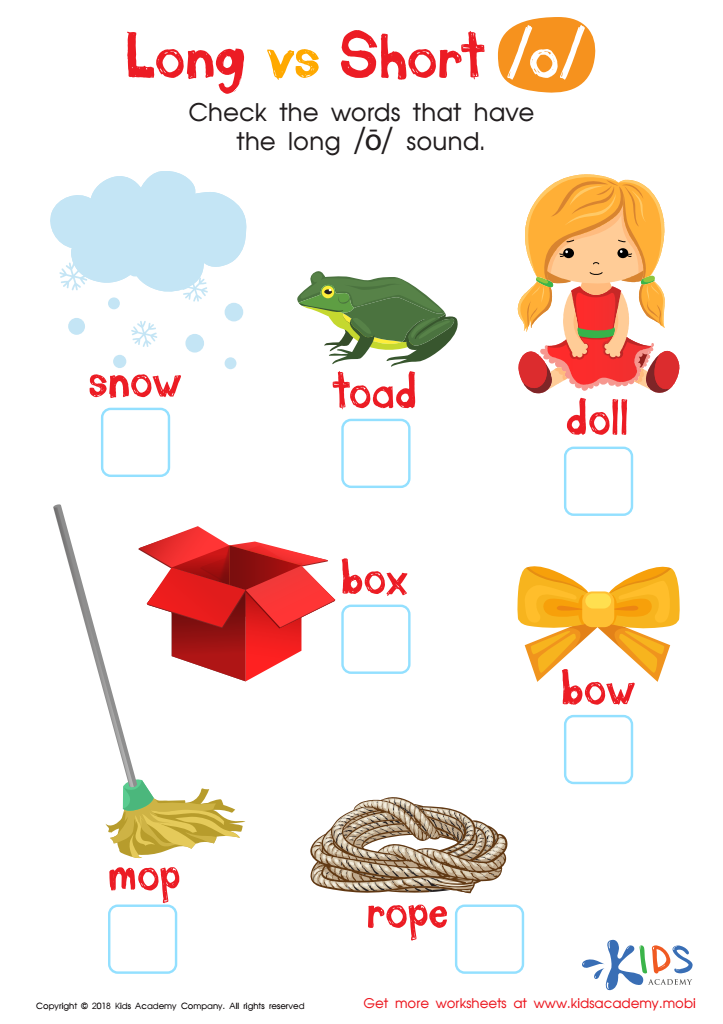
Long vs Short O Reading Worksheet

Long vs Short O Reading Worksheet

Help your child learn to identify the long and short «o» sound with this colourful worksheet. Guide them as they spot words with the long or short «o» sound. With practice, your child will find it easier to tell the difference between the two.
Long vs Short O Reading Worksheet
Worksheet
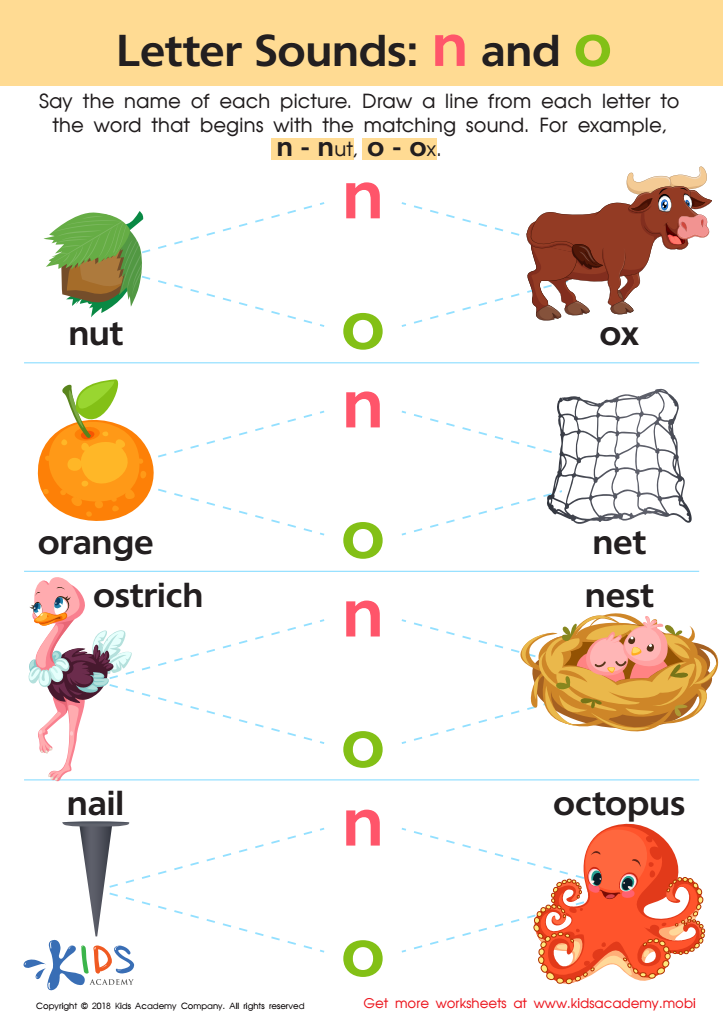
Letter N and O Sounds Worksheet

Letter N and O Sounds Worksheet

Help your preschooler learn to recognize the N and O letter sounds with this vibrant worksheet from Kids Academy! Have them say the name of each picture and listen for N or O. Trace the dotted line from letter to its match to complete the phonics review. It's a fun way to help them master the difference between the two sounds!
Letter N and O Sounds Worksheet
Worksheet
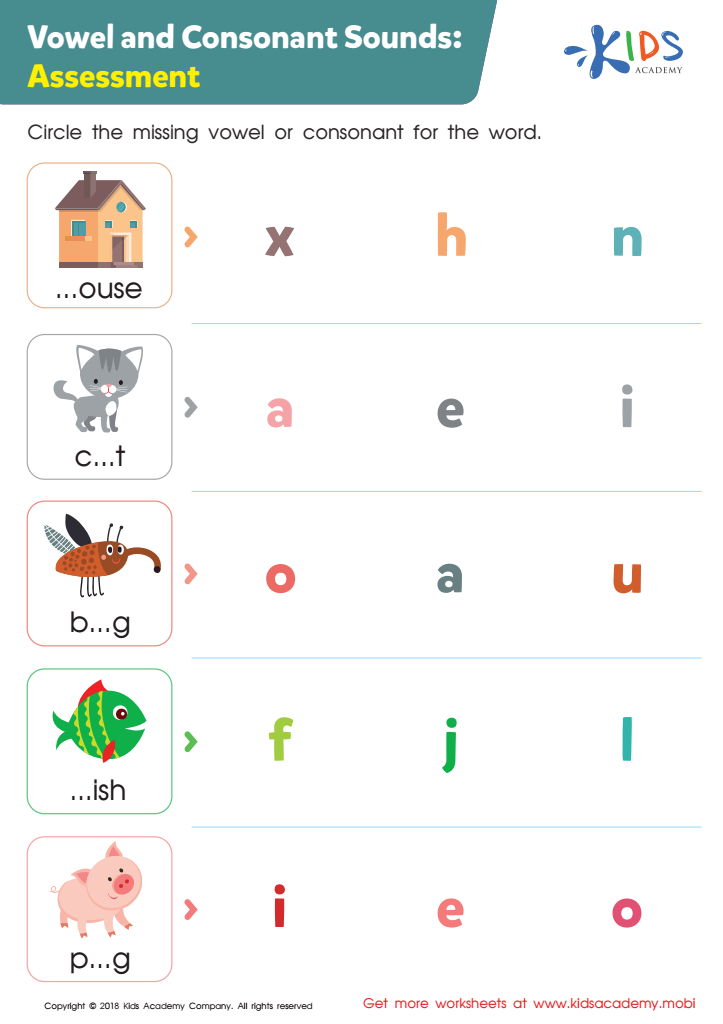
Vowel and Consonant Sounds: Assessment Worksheet

Vowel and Consonant Sounds: Assessment Worksheet

Test young elementary students on vowel and consonant sounds with this friendly phonics assessment worksheet. Get kids to name each image and look at the word underneath. Ask them to sound out the word, then circle the missing letter to complete. This will help assess their knowledge and skills!
Vowel and Consonant Sounds: Assessment Worksheet
Worksheet
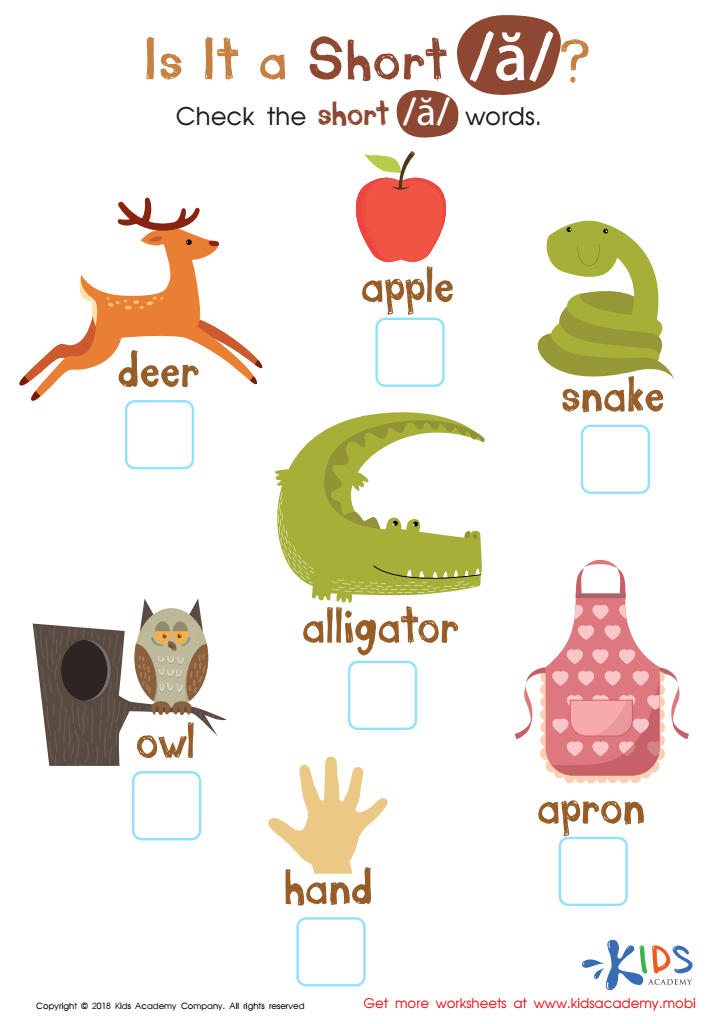
Is It Short A? Reading Worksheet

Is It Short A? Reading Worksheet

Struggling readers may have difficulty distinguishing short from long vowels. With this fun PDF worksheet, they practice identifying the corresponding short «ă» by naming each picture and ticking the right boxes. It's a great way to work on decoding and fluency skills!
Is It Short A? Reading Worksheet
Worksheet
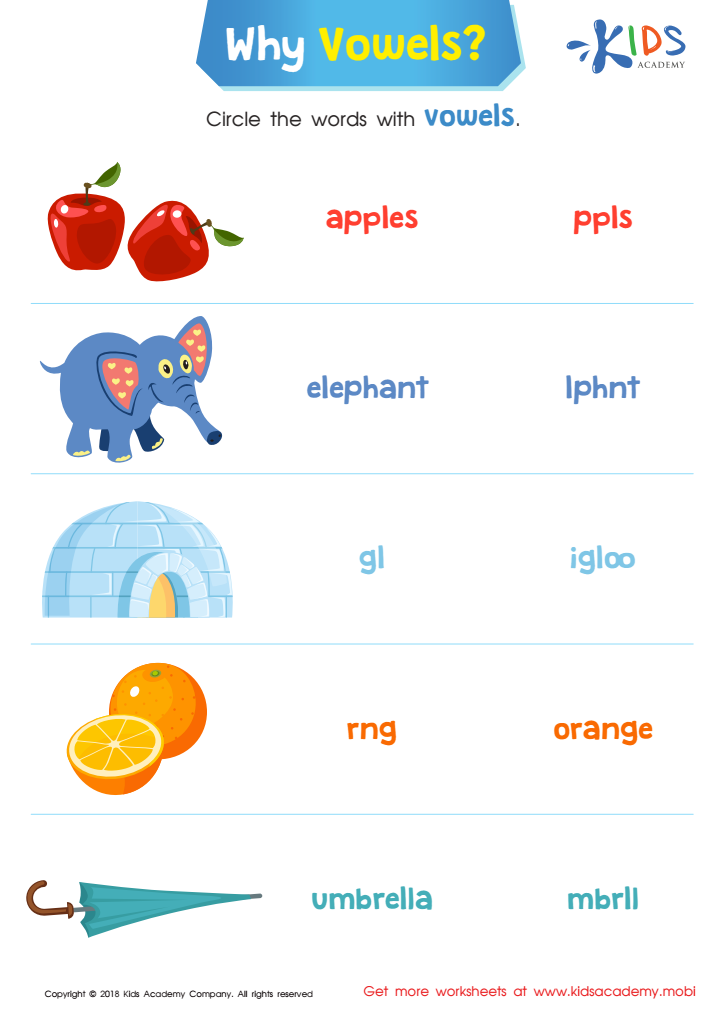
Why Vowels? Reading Worksheet

Why Vowels? Reading Worksheet

This worksheet teaches kids to spell words with vowels. It features familiar pics for them to recognize, and they practice fine motor skills by circling the correct spelling. It's an enjoyable way for kids to learn how to spell and promote reading skills.
Why Vowels? Reading Worksheet
Worksheet
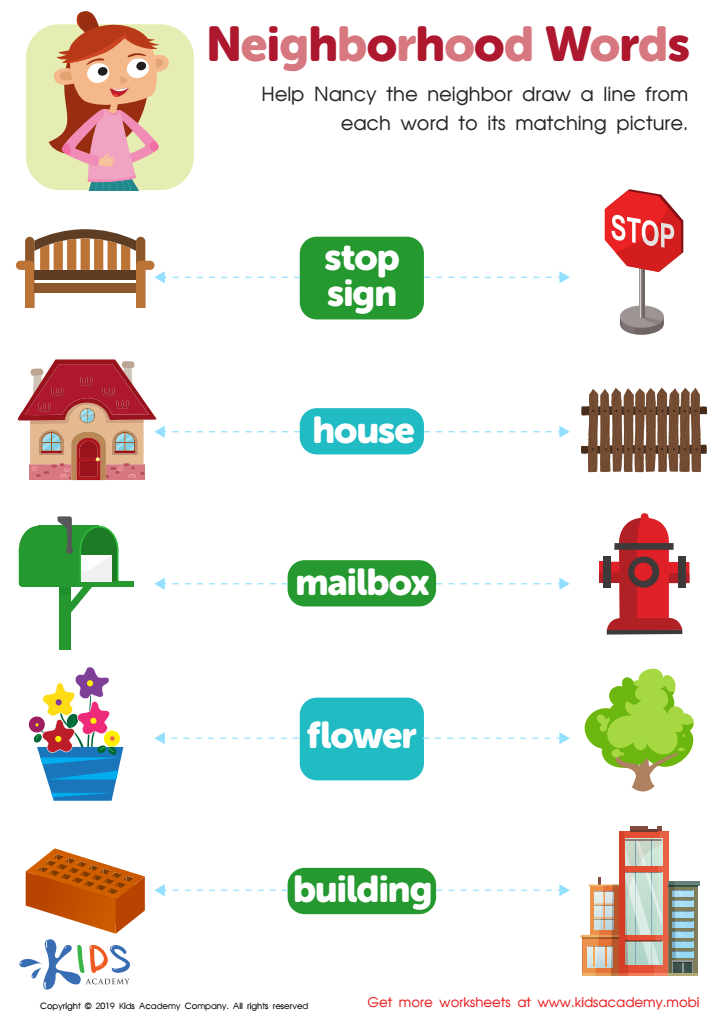
Neighborhood Words Worksheet

Neighborhood Words Worksheet

Help preschoolers develop life skills and familiarize them with words and concepts with this worksheet! It'll also boost their fine motor skills as they trace lines to match pictures with the words. They'll learn new words and feel more confident in their reading.
Neighborhood Words Worksheet
Worksheet
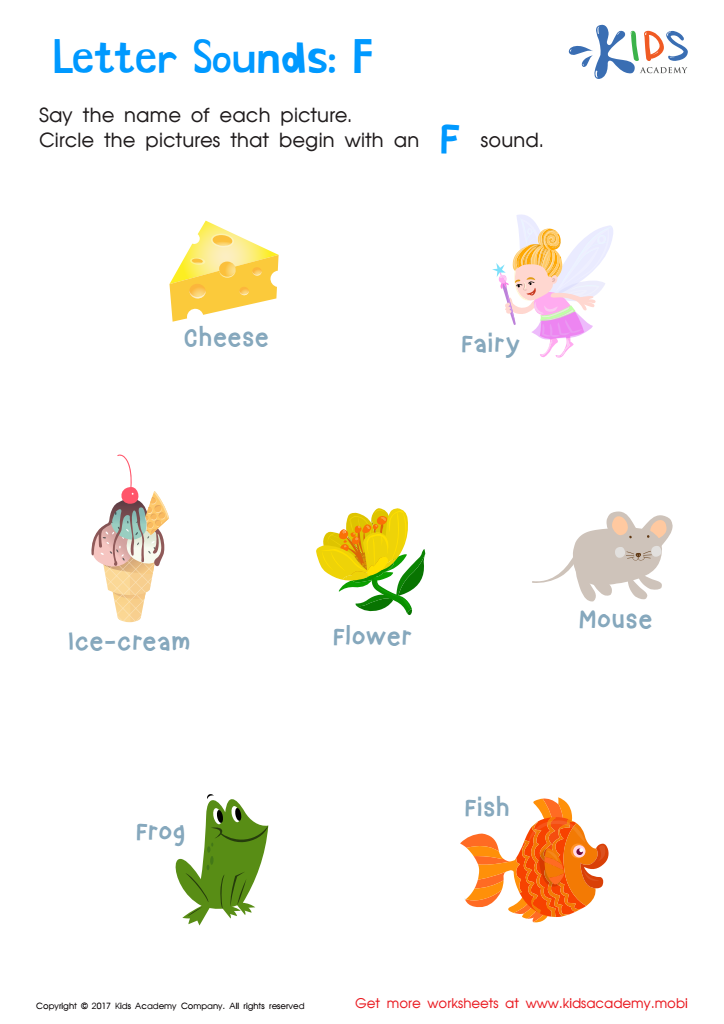
Letter f sounds worksheet

Letter F Sounds Worksheet

Kids will practice identifying 'f' words, tracing, and coloring the letter F for a great way to learn phonics. Help your child discover the wonders of the letter 'F' with this fun worksheet! Kids will practice identifying 'F' words, tracing and coloring the letter, and building early reading skills. Stimulate their learning and let them connect letter sounds to words they know. An enjoyable way to practice phonics!
Letter F Sounds Worksheet
Worksheet
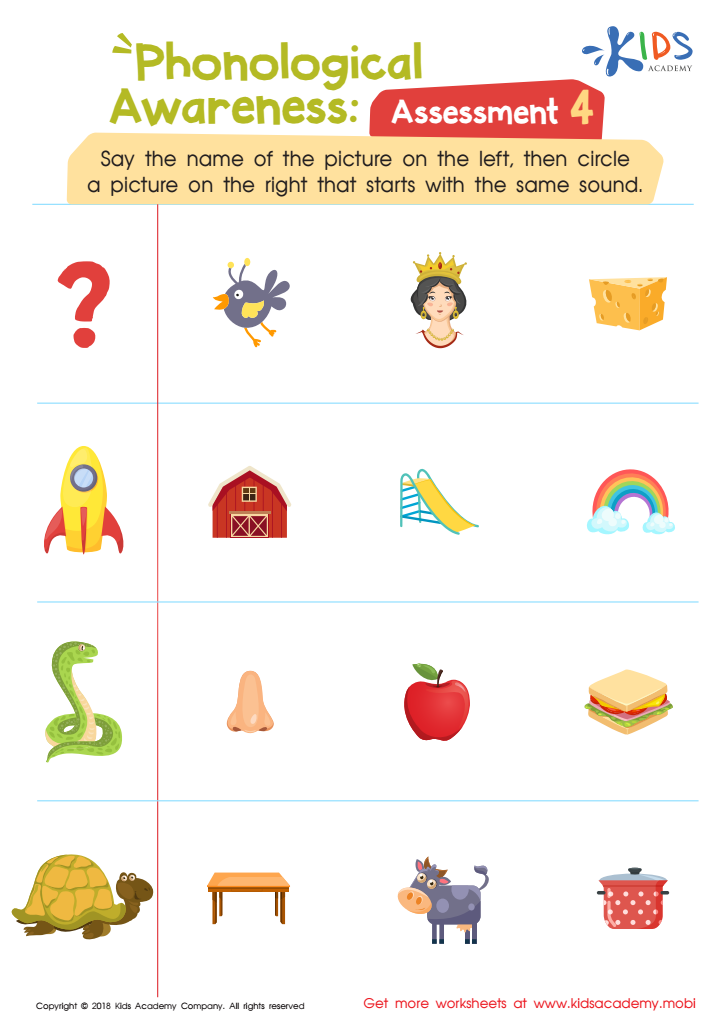
Phonological Awareness: Assessment 4 Worksheet

Phonological Awareness: Assessment 4 Worksheet

It can be tricky for young readers to differentiate between sounds in words. Make it fun with this downloadable worksheet! Ask your child to name each picture on the left and match the starting sound with an image on the right. This helps assess their phonics skills and make learning enjoyable.
Phonological Awareness: Assessment 4 Worksheet
Worksheet
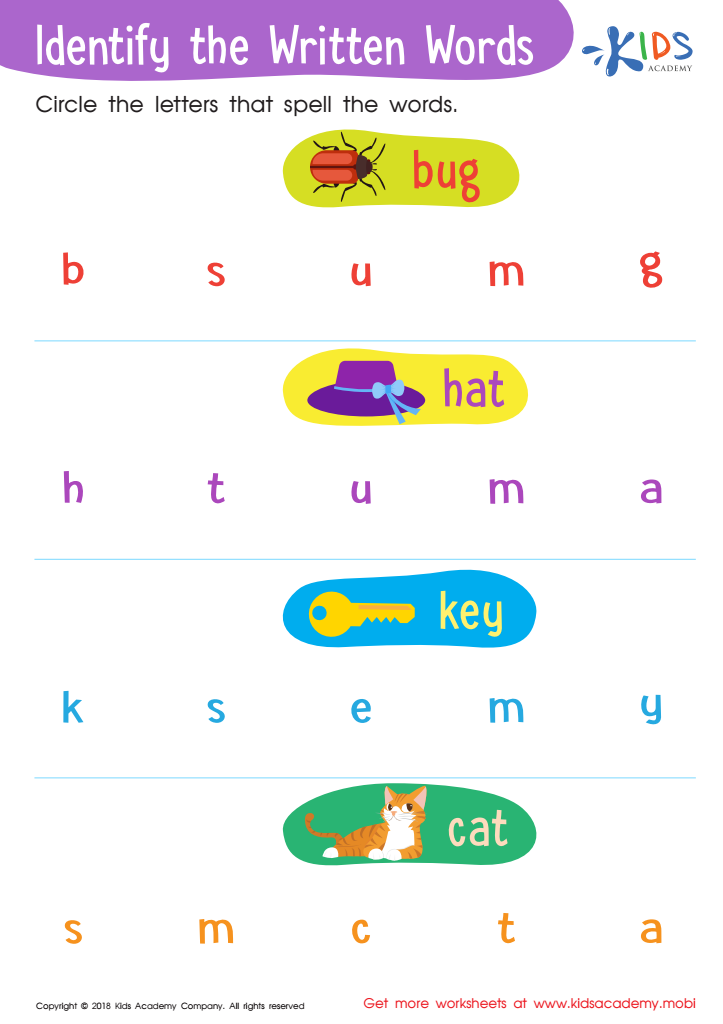
Identify the Written Words Worksheet

Identify the Written Words Worksheet

Have your students identify the objects on the printout, then spell the words. If they already know how to spell, this exercise should be easy. Help them circle the correct letters from the set to spell out the words. This is a great way to reinforce reading and spelling skills. Max 80 words.
Identify the Written Words Worksheet
Worksheet
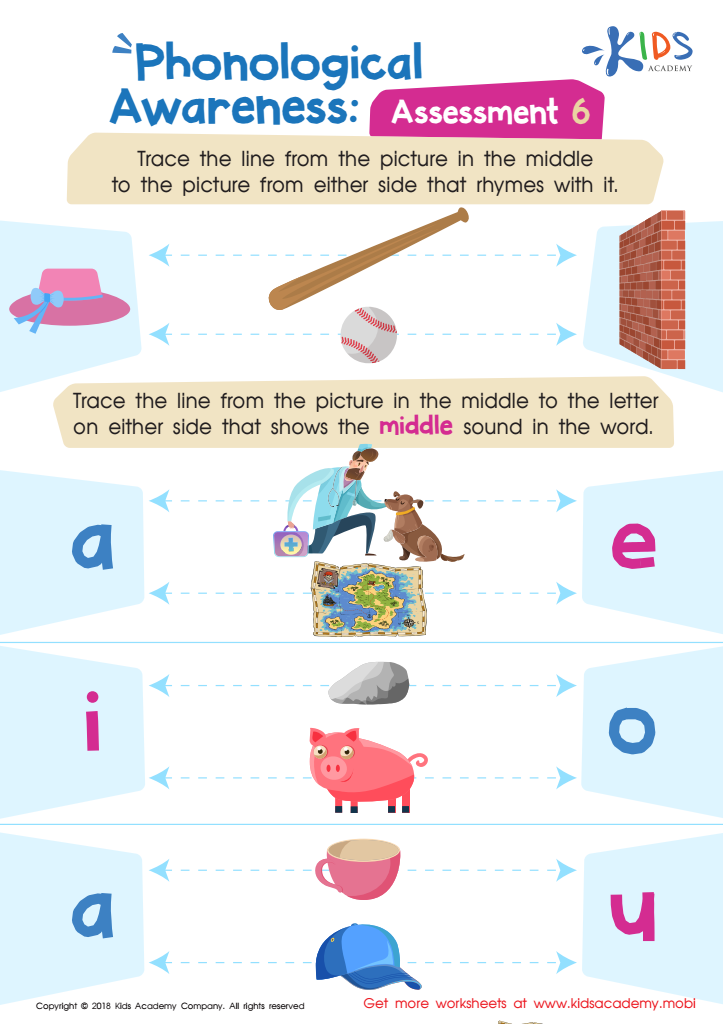
Phonological Awareness: Assessment 6 Worksheet

Phonological Awareness: Assessment 6 Worksheet

Check your child's ability to recognize middle word sounds using this free worksheet. Help them learn phonics by practicing with rhyming. Trace the line from the image to its rhyming match then encourage them to name each image aloud to identify which letter matches the sound. It's a great way to assess letter and sound recognition.
Phonological Awareness: Assessment 6 Worksheet
Worksheet
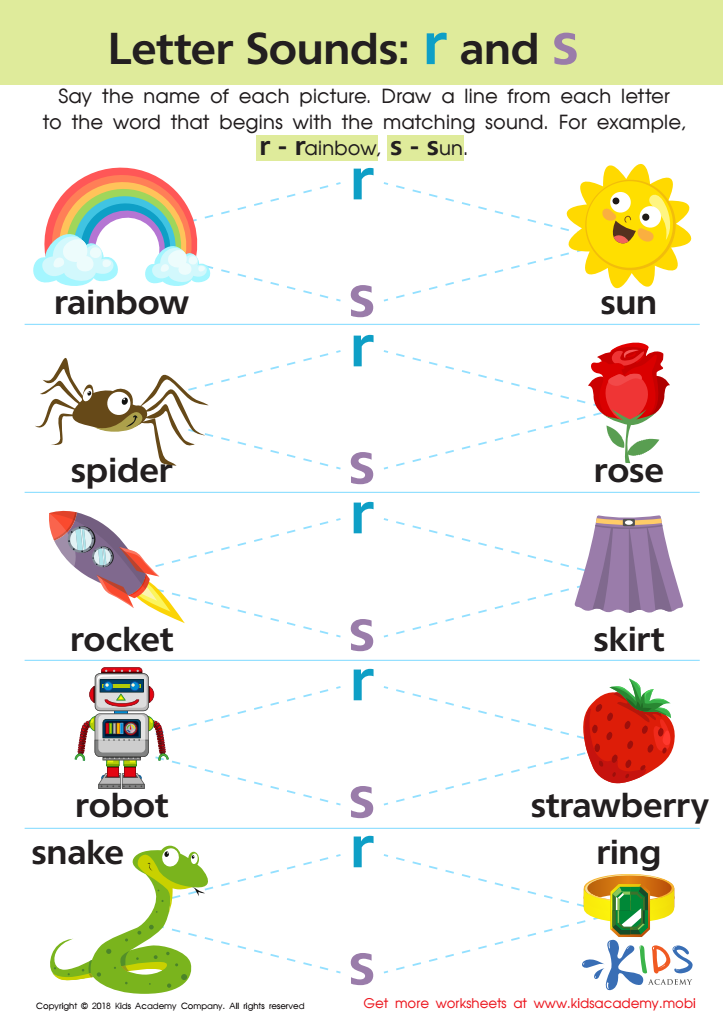
Letter R and S Sounds Worksheet

Letter R and S Sounds Worksheet

Kids Academy's phonics worksheet is full of fun and color! Help your child name the pictures and read the words under each one. Does it begin with an R or S? Then, use a pencil to trace the dotted line from the letter to its image. It's a great way to practice phonics skills!
Letter R and S Sounds Worksheet
Worksheet
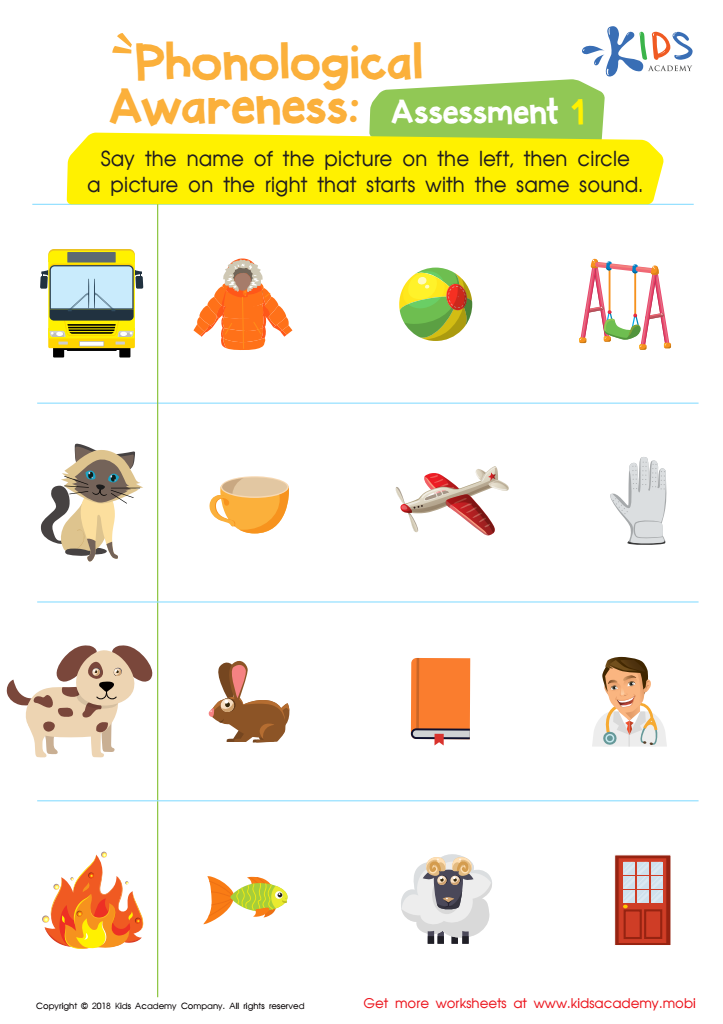
Phonological Awareness: Assessment 1 Worksheet

Phonological Awareness: Assessment 1 Worksheet

This worksheet helps kids build key phonics skills for pre-reading. They say each picture name aloud, focusing on the starting sound. Then, they match the sound with an image in the same row. Use as a checkpoint for kindergarten or grade 1 phonics readiness.
Phonological Awareness: Assessment 1 Worksheet
Worksheet
Letter D and E Sounds Worksheet


Letter D and E Sounds Worksheet

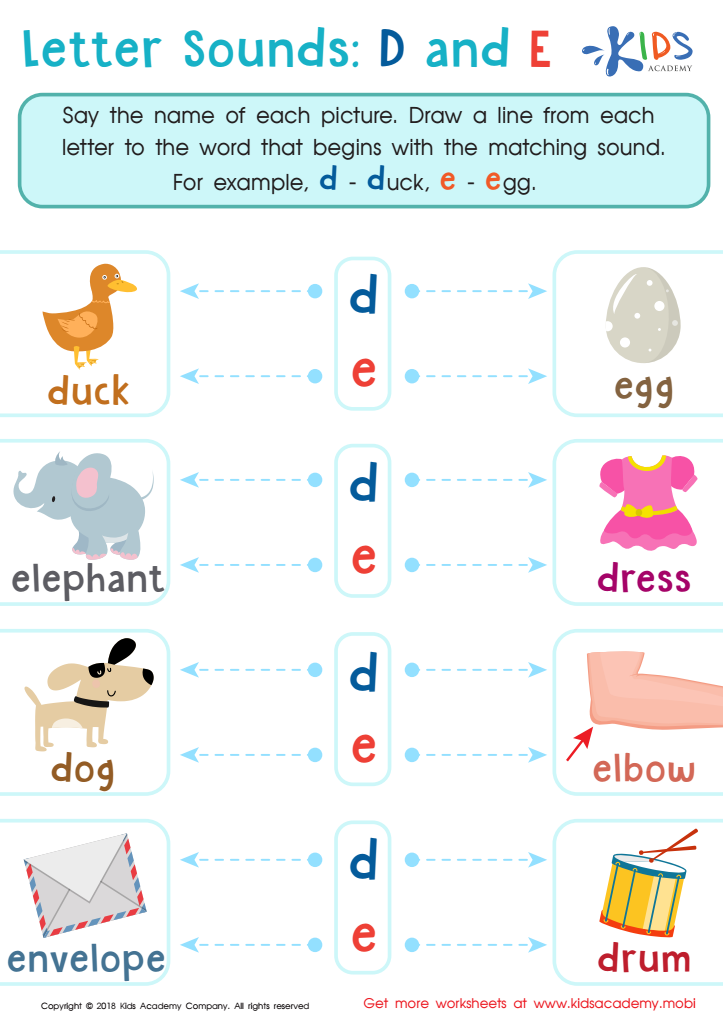
Kids can use picture clues and visual discrimination to name cheerful pics and isolate the beginning sound. This free PDF worksheet will help them develop phonological awareness, differentiate between "D" and "E", and hone fine-motor skills. It'll also boost their confidence as they become readers.
Letter D and E Sounds Worksheet

Worksheet


Vocabulary development is crucial for 4-year-olds as it forms the foundation of their language skills and communication abilities. At this age, children are naturally curious and eager to explore new concepts, making it an ideal time to introduce them to the building blocks of language—letters and sounds.

Parents and teachers should care about vocabulary development because it directly influences a child's ability to express themselves and understand others. A strong vocabulary enhances reading skills, critical thinking, and even social interactions. By helping children learn the alphabet, they not only start to recognize letters but also associate them with sounds and words, fostering phonemic awareness.

Moreover, vocabulary development at this stage supports cognitive growth. Engaging children with diverse words extends their imagination and helps in understanding complex ideas in the future. Additionally, research shows that early exposure to rich vocabulary can close achievement gaps later in school.

Incorporating fun and interactive activities, like songs and games, encourages an enjoyable learning experience. When parents and teachers actively participate in this process, they create a supportive environment that nurtures a child's linguistic abilities, promoting a love for learning that can last a lifetime. This foundational investment pays off as children develop into effective communicators and confident learners.