Lowercase identification Letter Recognition Worksheets for 4-Year-Olds
5 filtered results
-
From - To
Enhance your 4-year-old's literacy skills with our engaging Lowercase Identification Letter Recognition Worksheets! Designed specifically for young learners, these worksheets focus on recognizing and distinguishing between lowercase letters. Through exciting games and colorful visuals, children will enjoy practicing their letter identification while building essential foundational skills. Our resources cater to different learning styles, making it easy and fun for kids to explore the world of letters. Ideal for preschool educators and parents, these worksheets can seamlessly integrate into any curriculum. Get started on the journey to reading readiness today and watch your child gain confidence in their abilities!
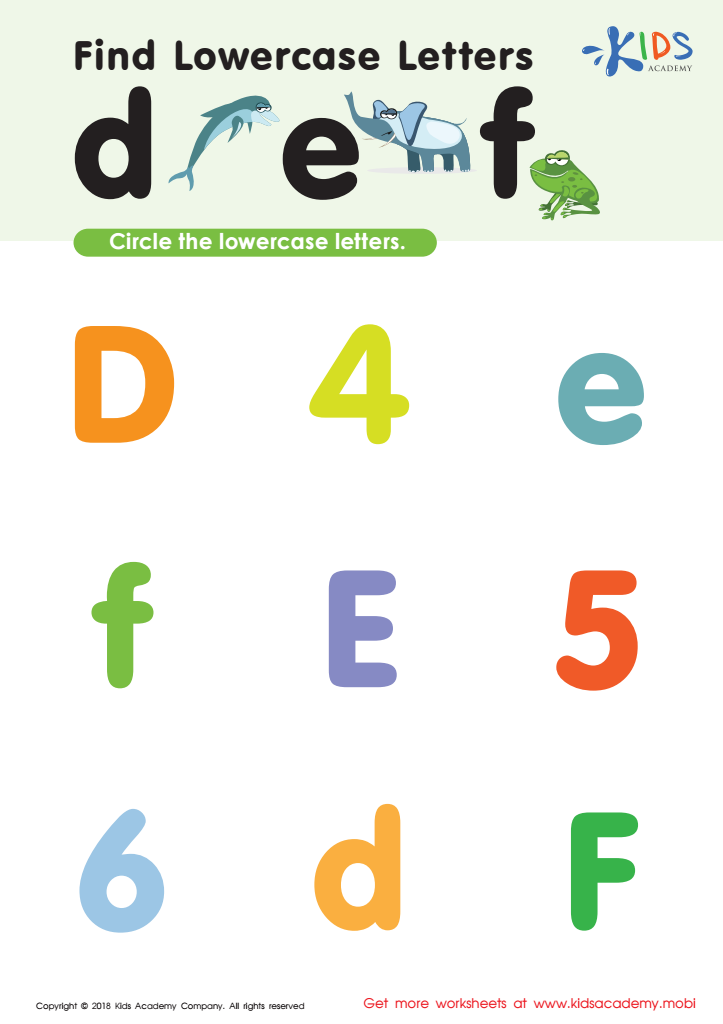
Find Lowercase Letters d e f Worksheet
 Assign to My Students
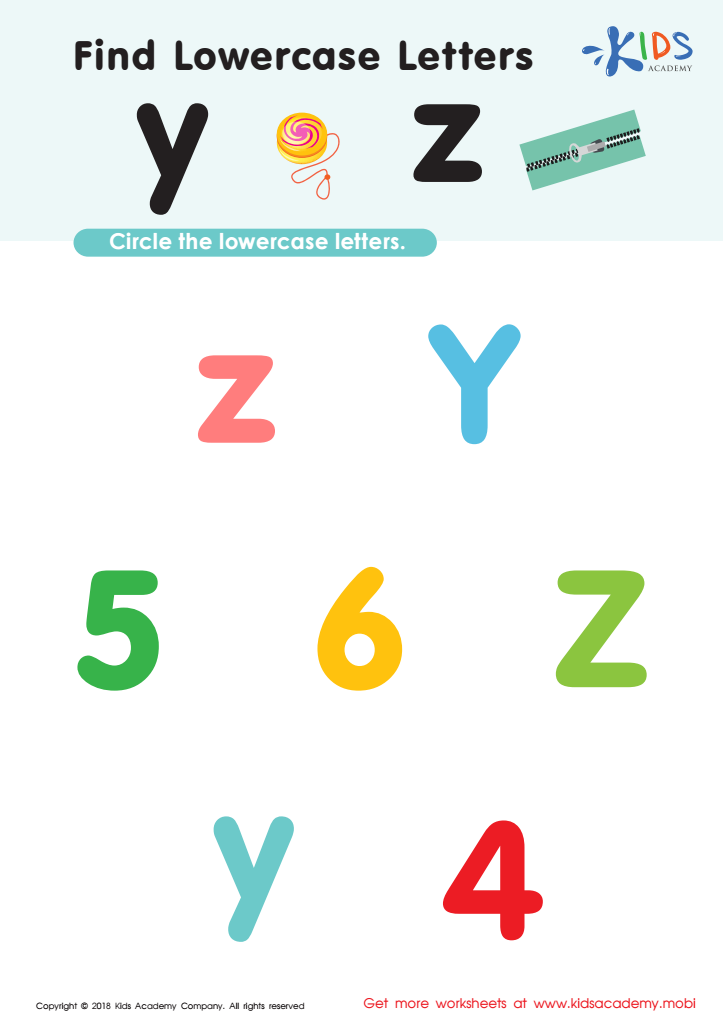
Find Lowercase Letters y z Worksheet
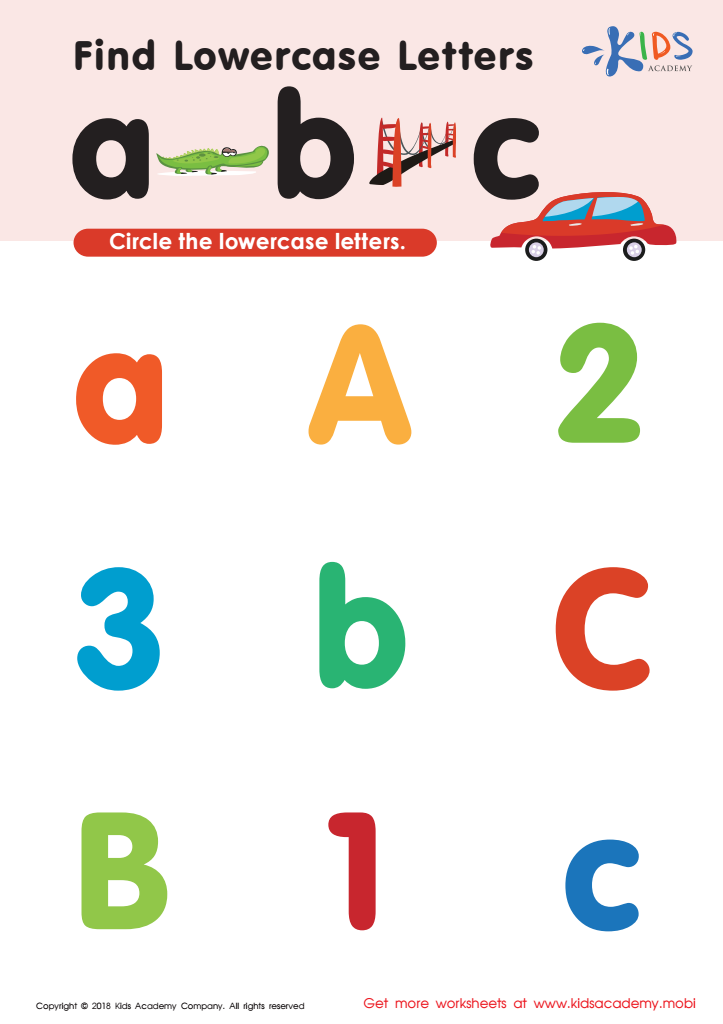
Find lowercase letters a b c Worksheet
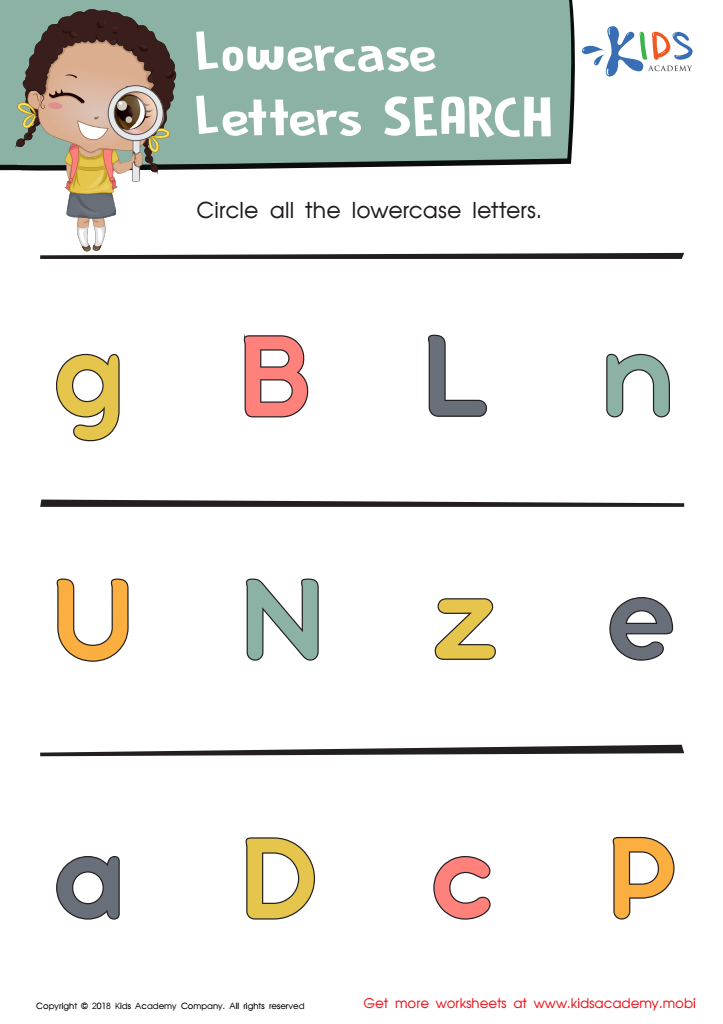
Lowercase Letters Search: Assessment Worksheet
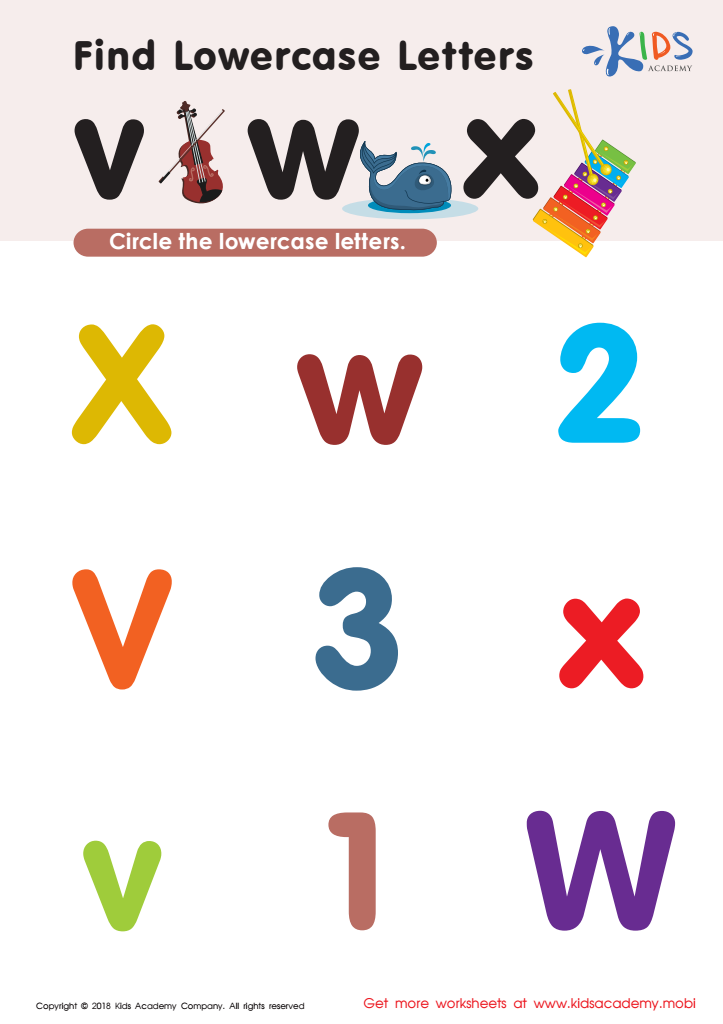
Find Lowercase Letters v w x Worksheet








Lowercase letter recognition is a crucial milestone in early literacy development for 4-year-olds. Understanding lowercase letters helps children connect spoken language to written text, promoting reading proficiency as they advance in school. Teachers and parents should care about this aspect of literacy for several reasons.
First, lowercase letters are the most commonly used in written language. Most children's literature, signs, and educational materials predominantly feature lowercase letters. Familiarity with these letters enables kids to decode and comprehend text more effectively.
Second, lowercase letter recognition supports the development of phonemic awareness, allowing young learners to sound out words and understand how letters represent specific sounds. This skill is foundational for reading and writing success.
Additionally, recognizing lowercase letters fosters a sense of confidence and independence in young learners. When children can identify and write letters, they engage more positively in literacy activities, leading to a lifelong love for reading and learning.
Lastly, parents and teachers can use lowercase identification as a springboard for vocabulary-building, encouraging children to explore new words and their meanings. Engaging children in recognizing lowercase letters is essential for setting them on a successful literacy path and nurturing their overall development.







