Sound identification Phonics Worksheets for 4-Year-Olds
4 filtered results
-
From - To
Our Sound Identification Phonics Worksheets for 4-Year-Olds provide an engaging and educational way for young learners to master phonics. Through fun activities and colorful illustrations, children will identify and match sounds with the corresponding letters and words. These worksheets enhance crucial early reading skills, including sound recognition, letter identification, and vocabulary development, laying a solid foundation for future literacy. Designed specifically for preschoolers, each worksheet is age-appropriate and easy to follow, ensuring an enjoyable learning experience. Give your child a head start in reading with our expertly crafted phonics worksheets. Explore now at Kids Academy!
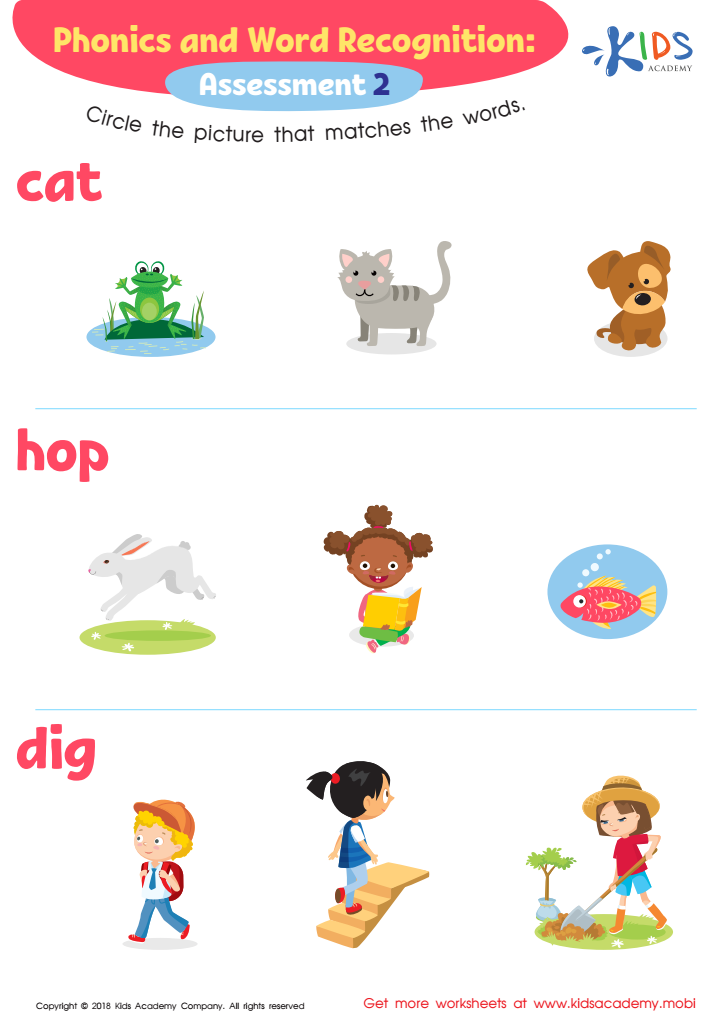
Phonological Awareness: Assessment 2 ELA Worksheet
 Assign to My Students
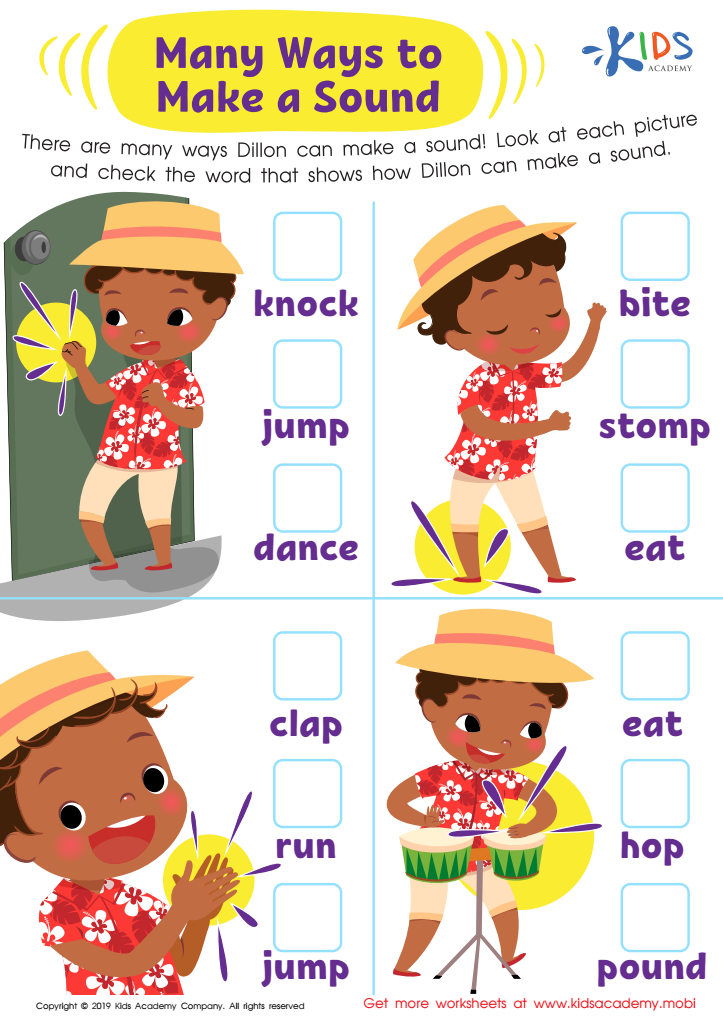
Many Ways to Make a Sound Worksheet
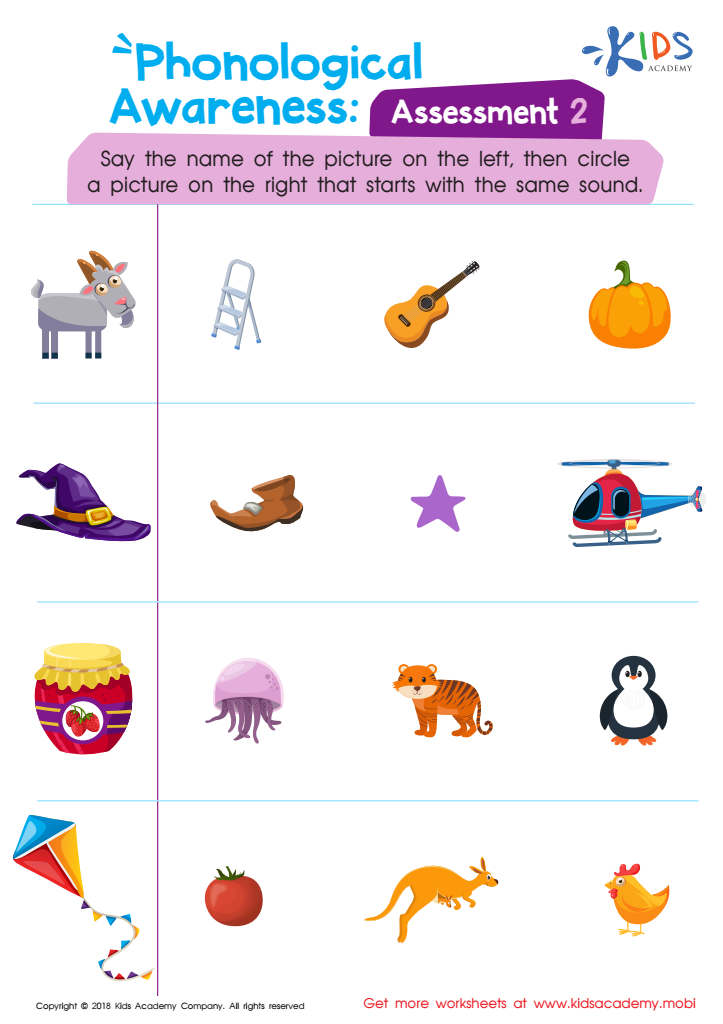
Phonological Awareness: Assessment 2 Worksheet
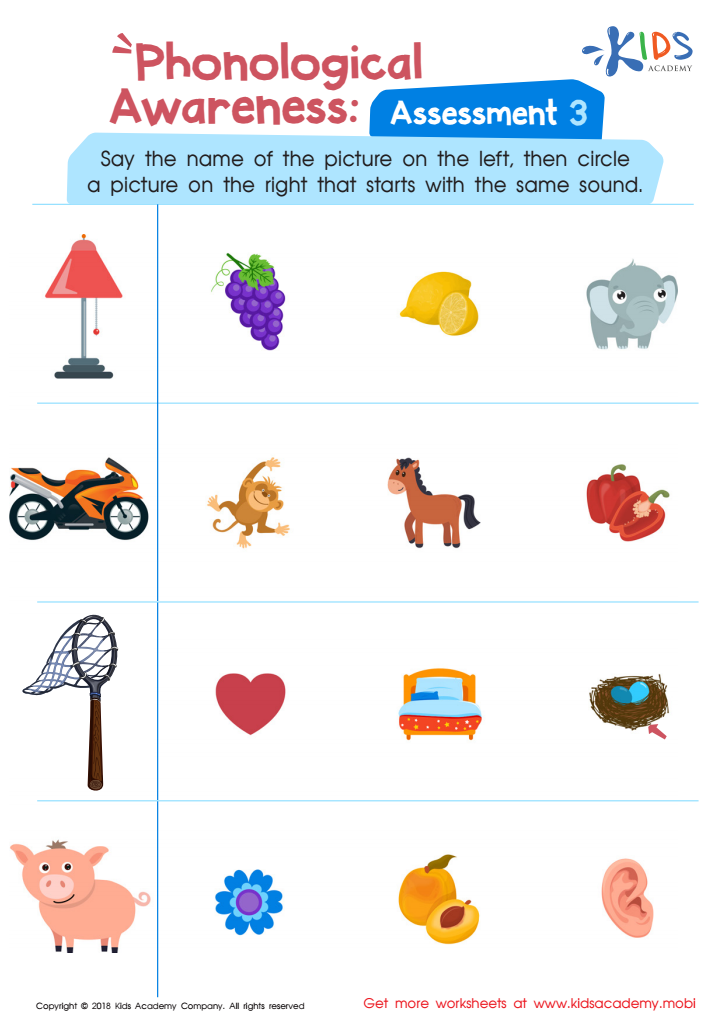
Phonological Awareness: Assessment 3 Worksheet








Sound identification phonics is a foundational aspect of early literacy that plays a crucial role in a child's reading and writing development. For 4-year-olds, who are at a critical age for language acquisition, understanding and identifying sounds in words is essential. This skill helps them recognize the relationship between letters and sounds, paving the way for decoding words, a key process in reading.
Parents and teachers should care about sound identification phonics because it directly impacts a child's ability to learn to read, spell, and build a robust vocabulary. When children can identify and manipulate sounds, they develop phonemic awareness, an early stage of phonics that is critical for reading fluency and comprehension. Children with a solid foundation in sound identification are better equipped to encounter new words and read with confidence.
Moreover, phonics instruction supports cognitive development by enhancing memory, attention, and auditory discrimination skills. Children who grasp phonics early are more likely to experience academic success and develop a love for reading, which is associated with better performance across all subjects.
Engaging 4-year-olds in playful, interactive phonics activities not only boosts their literacy skills but also fosters a positive, lifelong relationship with learning. Recognizing phonetic sounds is the key to unlocking the wondrous world of words and stories for young minds.







