Lowercase identification Upper & Lowercase Letters Worksheets for 4-Year-Olds
5 filtered results
-
From - To
Discover our engaging Lowercase Identification Worksheets designed specifically for 4-year-olds! These fun and interactive resources help young learners distinguish between uppercase and lowercase letters. Tailored to ignite curiosity, these worksheets employ vibrant visuals and enjoyable activities that make mastering letters exciting. Each worksheet supports crucial literacy skills while enhancing fine motor development through practice. Kids can trace, identify, and match lowercase letters, laying a strong foundation for reading and writing. Perfect for preschool or kindergarten settings, our worksheets encourage independent learning and are a fantastic way to foster early literacy. Download now and watch your child excel in letter recognition!
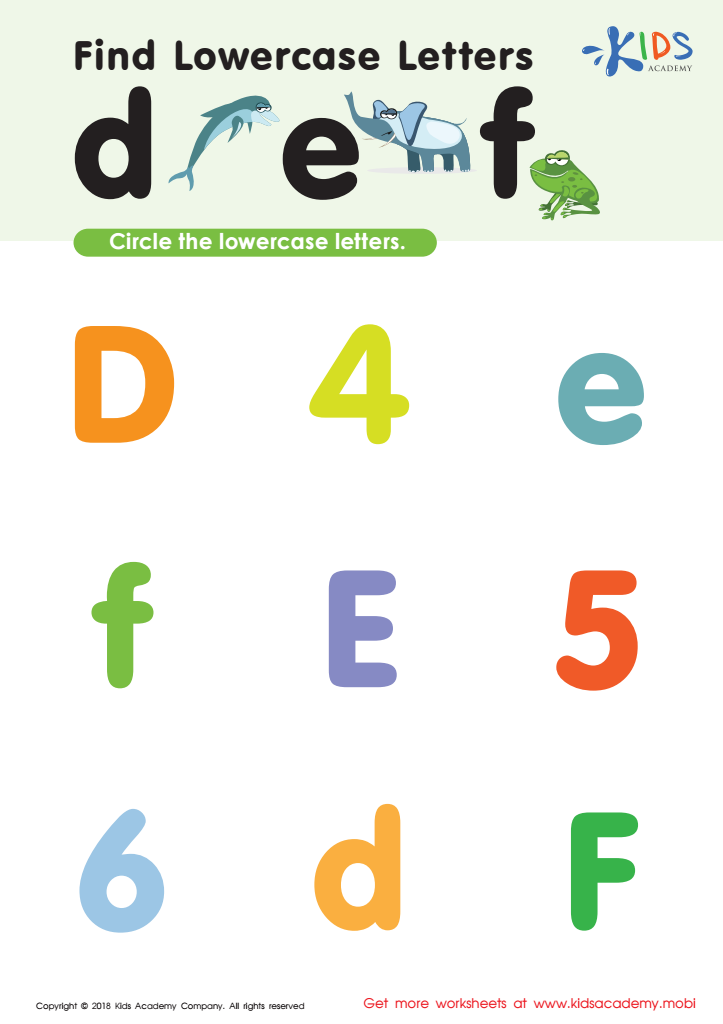
Find Lowercase Letters d e f Worksheet
 Assign to My Students


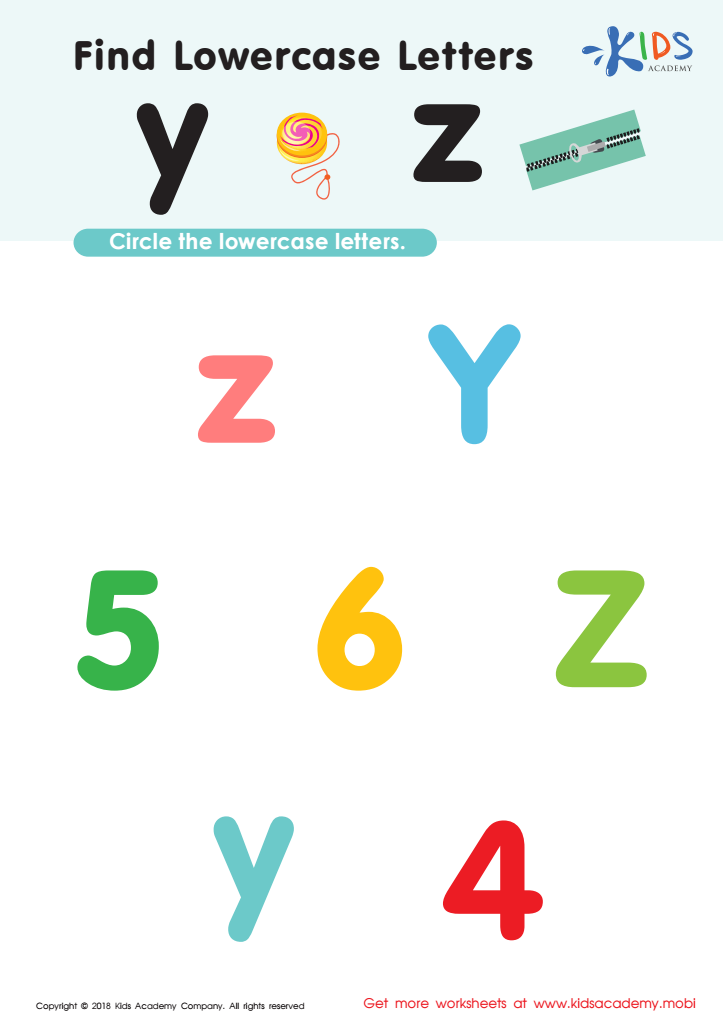
Find Lowercase Letters y z Worksheet
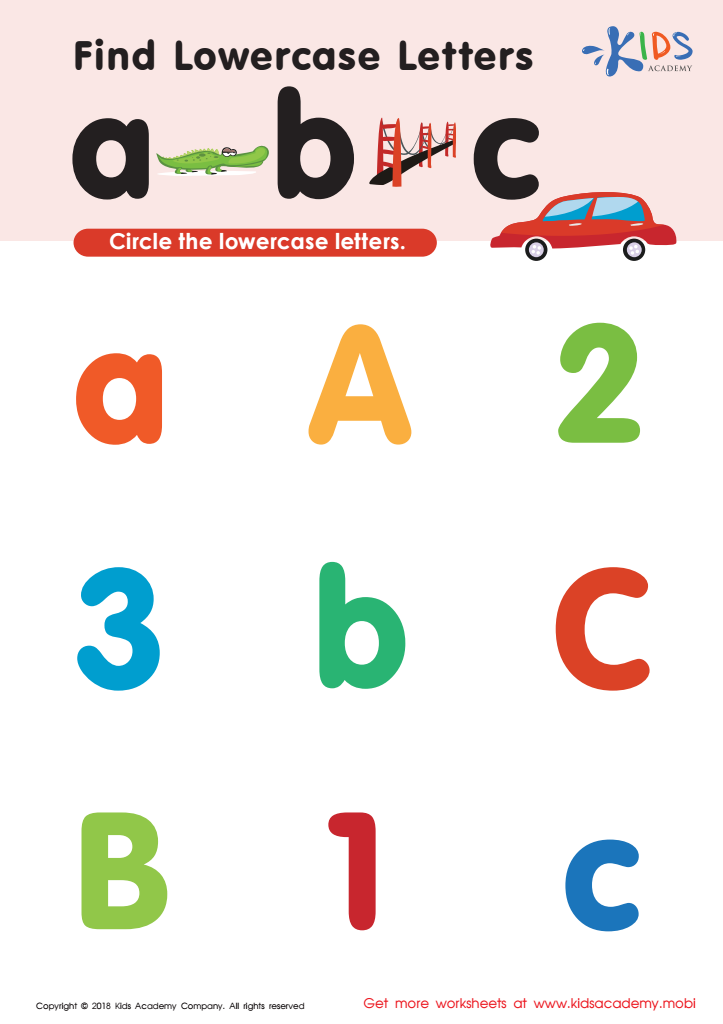
Find lowercase letters a b c Worksheet
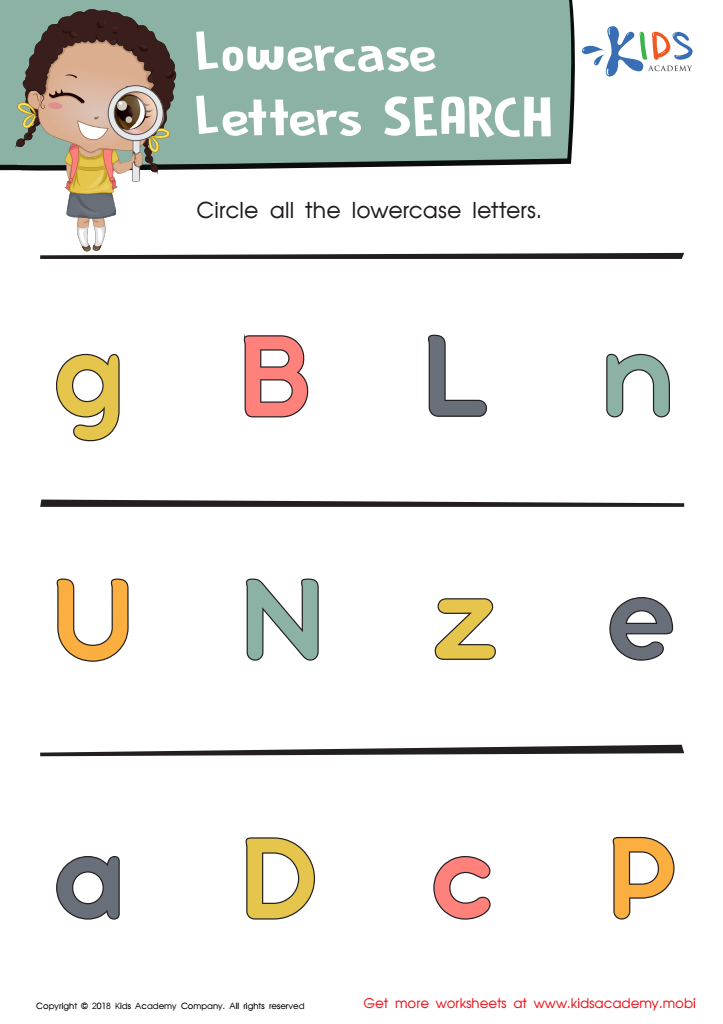
Lowercase Letters Search: Assessment Worksheet
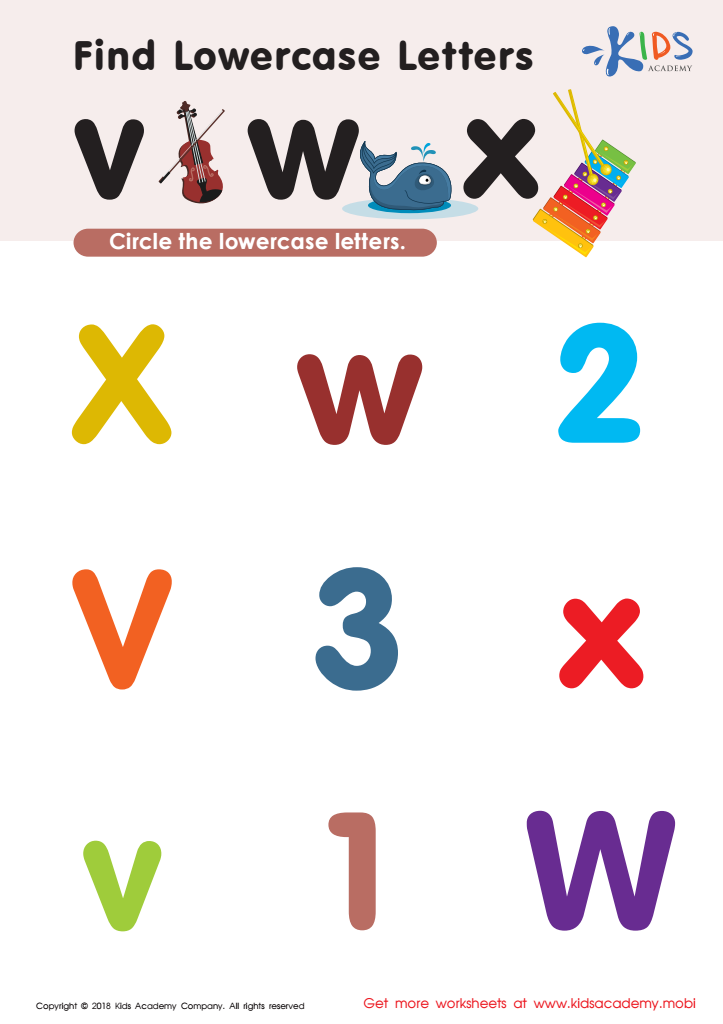
Find Lowercase Letters v w x Worksheet






Understanding lowercase and uppercase letters is crucial for 4-year-olds, as it lays the foundation for literacy and communication skills. At this age, children are naturally curious about their environment, and recognizing letters is a fundamental step toward reading and writing. When parents and teachers emphasize lowercase and uppercase letter identification, they enhance phonemic awareness, which is essential for decoding words.
Moreover, most text encountered in everyday life, such as signs, books, and labels, predominantly uses lowercase letters. Thus, recognizing these letters helps children engage more effectively with print in their surroundings. Early mastery of letter recognition fosters confidence in young learners, encouraging them to explore reading independently.
Additionally, learning to differentiate between uppercase and lowercase letters introduces children to basic concepts of writing, such as sentence construction and proper capitalization. This understanding is particularly important as they begin to form their own words and sentences, aiding their overall literacy development.
In summary, for parents and teachers, focusing on lowercase and uppercase letter identification not only supports the child’s cognitive and language development but also nurtures a lifelong love for reading and learning. Cultivating these skills early on sets a strong groundwork for reading success.







