Differentiating shapes Worksheets for 4-Year-Olds
4 filtered results
-
From - To
Our "Differentiating Shapes Worksheets for 4-Year-Olds" are expertly designed to help your little ones recognize and name various geometric shapes. These engaging and colorful worksheets not only make learning fun but also aim to enhance fine motor skills, hand-eye coordination, and cognitive development. Featuring a wide range of activities such as matching, tracing, and coloring, our worksheets ensure that young learners will stay entertained while mastering key early math concepts. Perfect for both at-home learning and kindergarten classrooms, these worksheets provide a solid foundation for your child's educational journey. Download now to start shaping young minds!
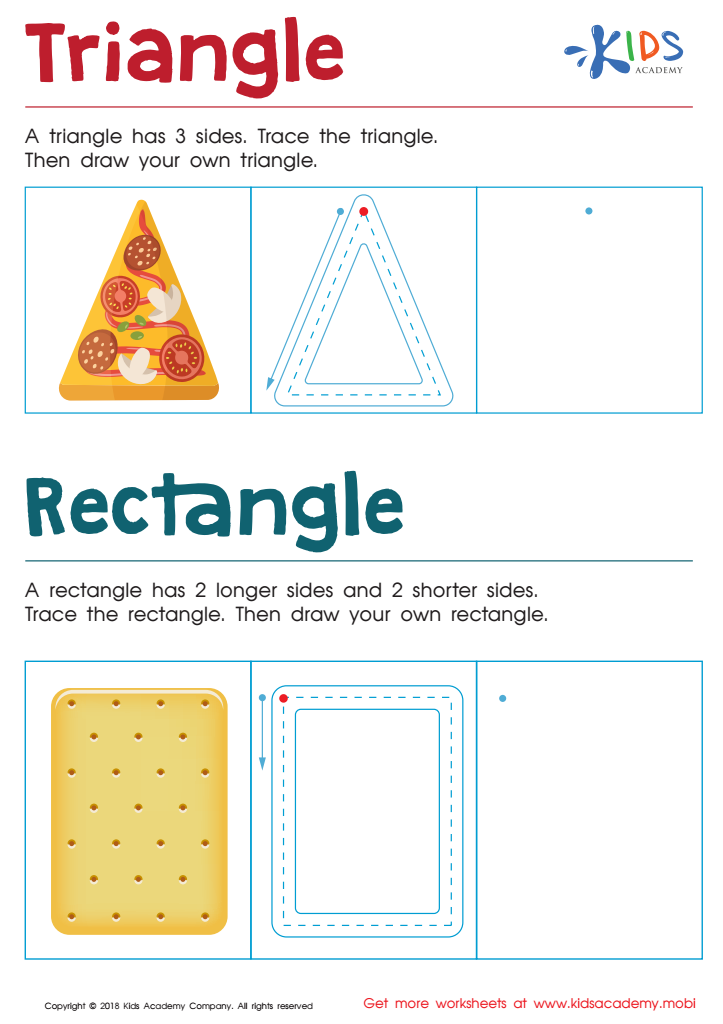
Triangle Rectangle Worksheet
 Assign to My Students
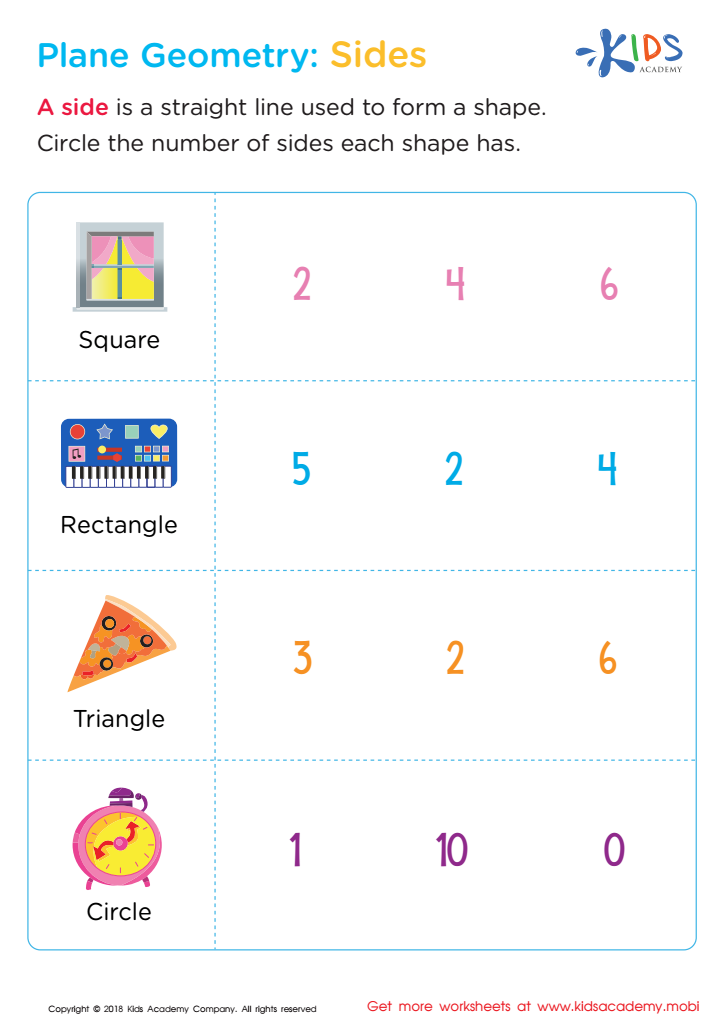
Plane Geometry: Sides Worksheet
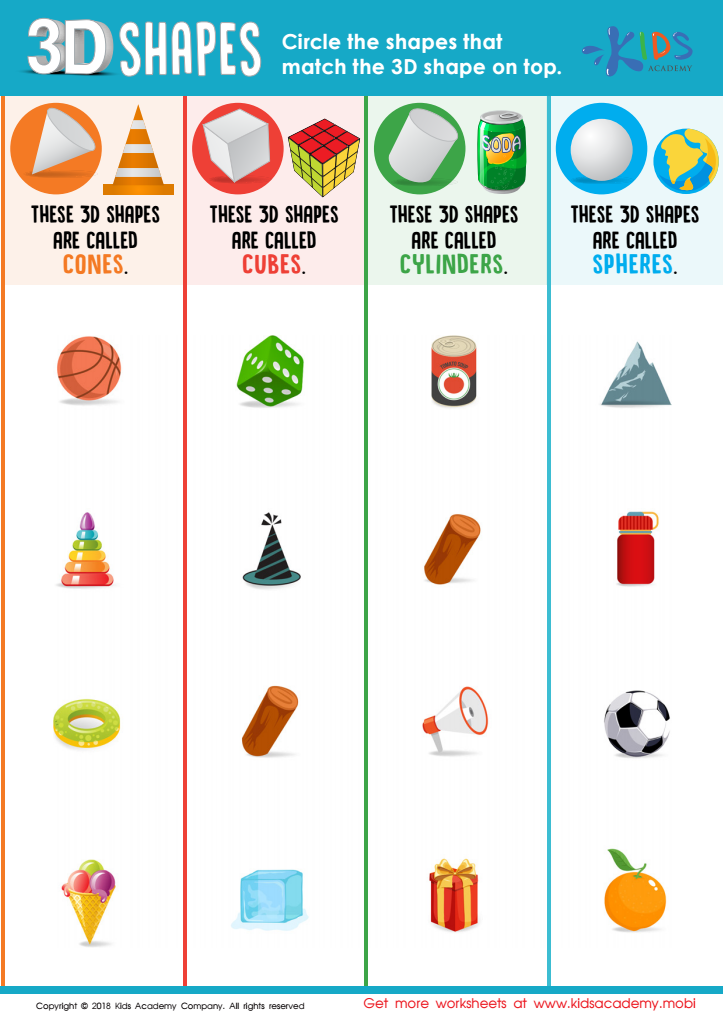
3D Shapes Worksheet








Differentiating shapes is foundational for 4-year-olds as it sets the stage for both cognitive and perceptual development. For parents and teachers, understanding that each child grasps concepts at a unique pace is fundamental. Introducing shape differentiation harnesses young learners' natural curiosity and helps form essential cognitive connections.
Firstly, shape recognition aids in enhancing visual perception skills, which are crucial as they are precursors to reading and writing. When children learn to distinguish between shapes, they begin to understand that symbols, like letters and numbers, have different forms and meanings.
Secondly, learning shapes also helps develop spatial awareness and problem-solving skills. Identifying and categorizing shapes allows children to simplify complex patterns, an invaluable skill in areas like mathematics and science.
Moreover, discussing and exploring different shapes enriches linguistic skills. Terms like "triangle," "square," or "circle" expand their vocabulary and improve descriptive abilities.
For social development, engaging in group activities that involve shapes strengthens their ability to work collaboratively, voice opinions, and share insights with peers.
Parents and teachers who emphasize differentiating shapes foster a learning environment that builds confidence, nurtures inquiry, and sets a solid groundwork for more complex academic skills. By prioritizing shape differentiation, parents and teachers equip children with the tools they need for future success.








