Identifying shapes Worksheets for 4-Year-Olds
8 filtered results
-
From - To
Discover our engaging "Identifying Shapes Worksheets for 4-Year-Olds," designed to introduce young learners to the world of shapes in a fun and interactive way! These worksheets feature colorful illustrations and straightforward activities tailored specifically for early childhood education. Perfect for classroom use or home practice, children will explore various shapes such as circles, squares, triangles, and more through tracing, coloring, and matching tasks. Each worksheet promotes essential skills like shape recognition, fine motor coordination, and cognitive development. Help your child build a strong foundation in geometry while enjoying hands-on learning activities that spark their creativity and curiosity!
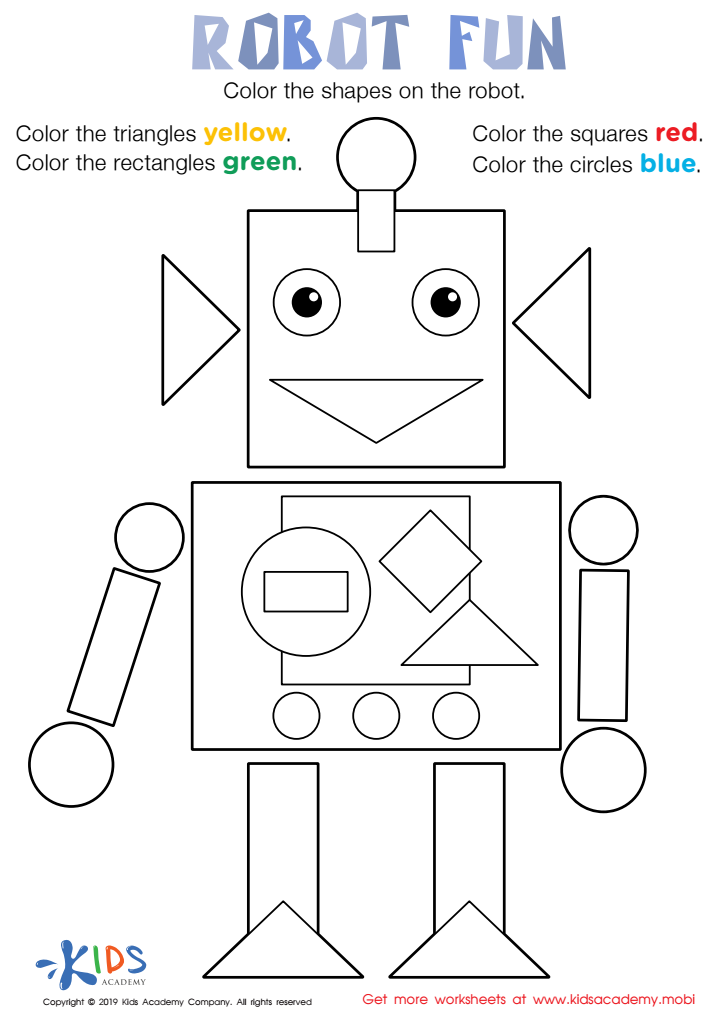
Robot Fun Worksheet
 Assign to My Students
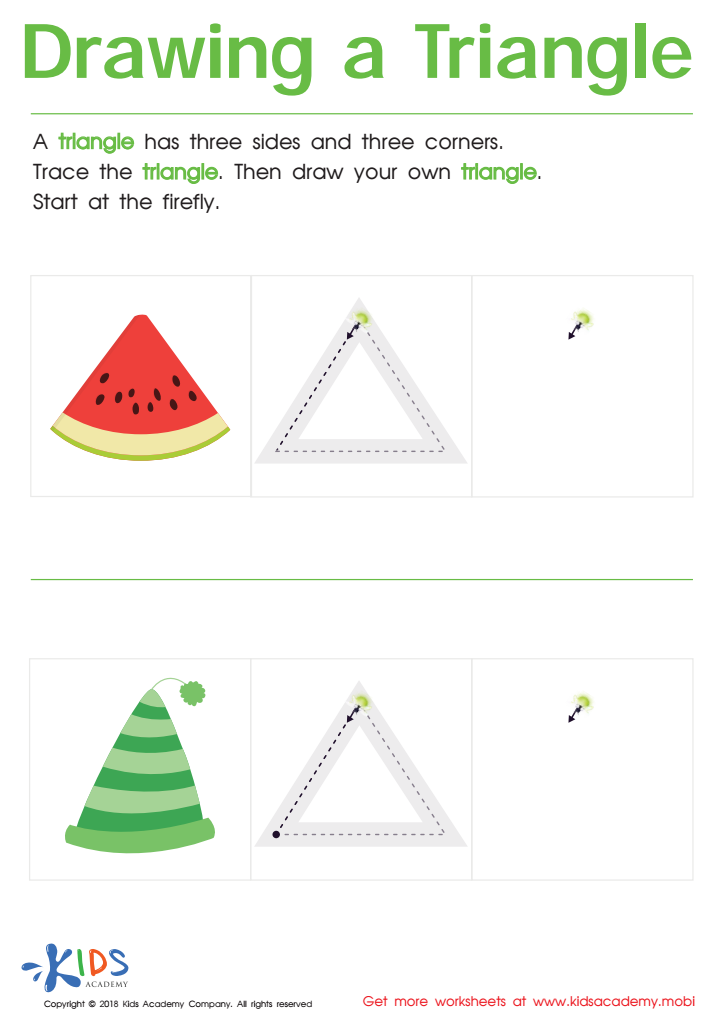
Drawing a Triangle Worksheet
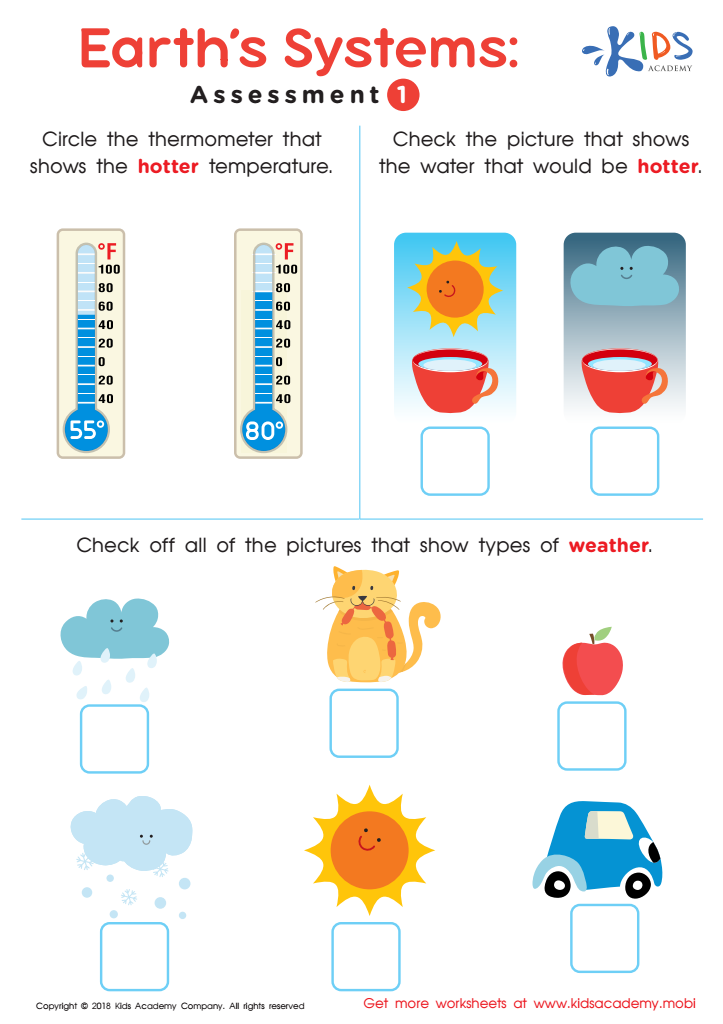
Earth's Systems: Assessment 1







Identifying shapes is a foundational skill for young children and holds significant importance for their cognitive and spatial development. For 4-year-olds, learning shapes enhances their ability to observe and categorize their environment, which is a critical part of cognitive growth. Recognizing basic shapes—such as circles, squares, triangles, and rectangles—helps children develop essential problem-solving skills as they learn to identify and compare objects in their surroundings.
Moreover, shape recognition lays the groundwork for future learning in math. It introduces children to concepts of symmetry, size, and spatial relationships, which are pivotal in more complex mathematical reasoning later on. While playing with shapes, children also engage in fine motor skills development through activities like stacking blocks or drawing shapes, which is crucial for their overall physical growth.
Additionally, teaching shapes can be an entertaining and interactive way to bond with young learners. Cozy activities, like shape sorting games or art projects, improve communication skills and can even integrate lessons in colors and patterns. By focusing on shape recognition, parents and teachers foster not just intellectual growth, but also creativity, critical thinking, and a sense of accomplishment, building a strong foundation for lifelong learning.








