Interpretation skills Worksheets for 4-Year-Olds
3 filtered results
-
From - To
Unlock the power of early learning with our Interpretation Skills Worksheets for 4-Year-Olds. These expertly designed printables help young minds develop crucial comprehension and analytical skills. Through fun activities involving pictures, stories, and patterns, children learn to observe, understand cause-and-effect relationships, and draw conclusions. Our colorful and engaging worksheets are perfect for captivating attention while fostering critical thinking and understanding of the world around them. Ideal for both home and classroom settings, these worksheets provide a solid foundation for growing minds. Start nurturing your child's interpretation skills today with our age-appropriate, skill-building resources.
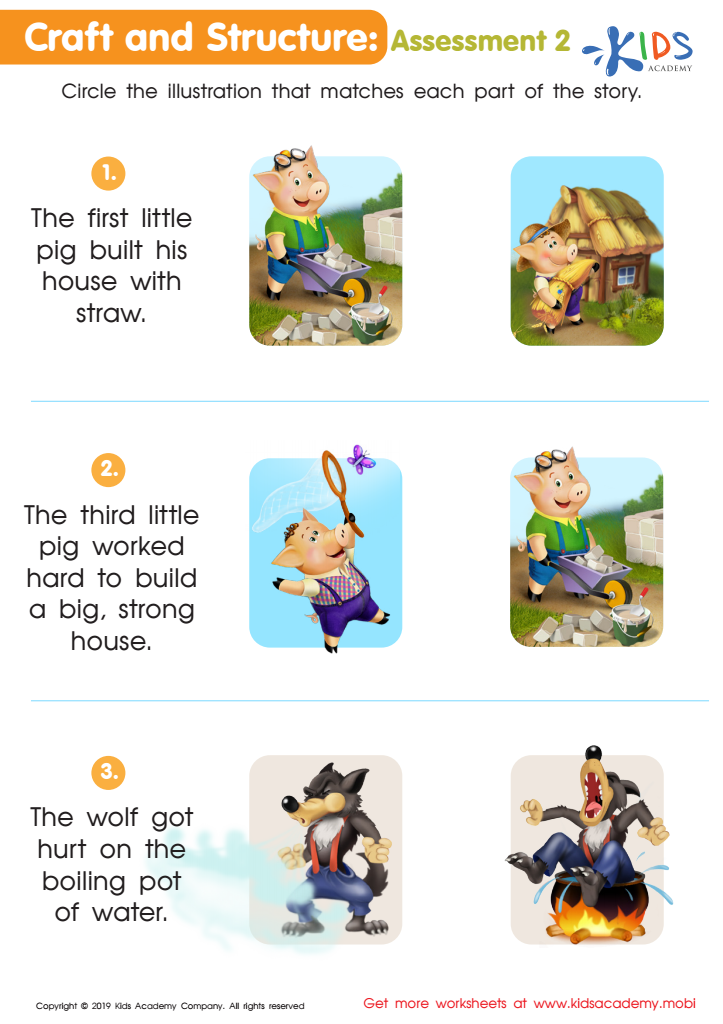
Craft and Structure: Assessment 2 Worksheet 2
 Assign to My Students
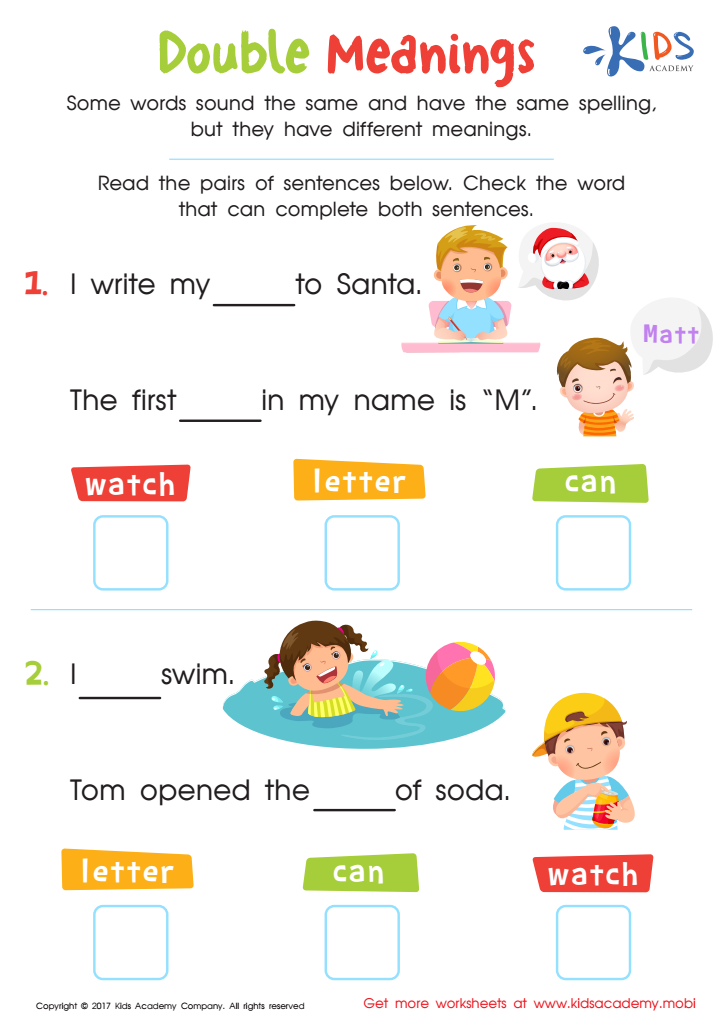
Double Meanings Worksheet
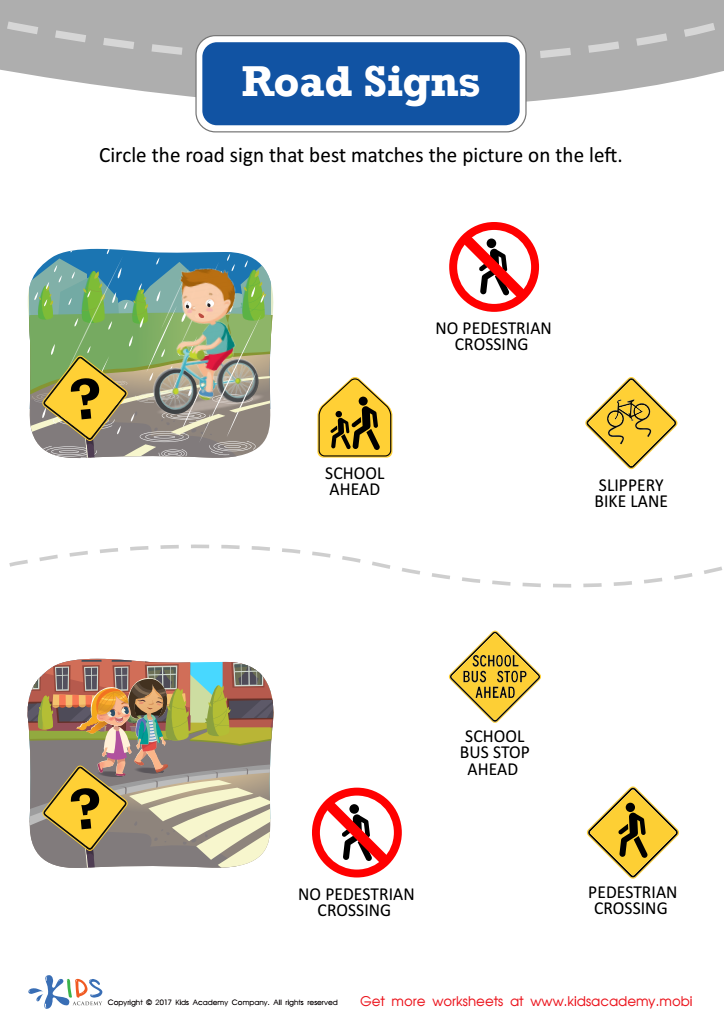
Road Signs (Part 2) Printable







Interpretation skills for 4-year-olds are foundational for their overall cognitive and social development. These skills help children understand and make sense of the world around them, a critical capability at this formative stage. When parents and teachers focus on fostering these skills, they enable children to process information, navigate social situations, and solve problems more effectively.
First, strong interpretation skills assist children in understanding language. This includes not just comprehending words but also grasping nuances, tone, and context. Enhanced language comprehension leads to better communication, reducing frustration and fostering expressive abilities. For instance, a child who interprets a question correctly can provide an accurate response, enriching conversations and learning experiences.
Second, interpretation skills help in emotional and social understanding. At age four, children are just beginning to recognize others' emotions and perspectives. By honing these skills, children learn empathy, improving their ability to form healthy relationships. Teachers and parents who offer varied, engaging opportunities for children to practice interpreting stories, scenarios, or even simple instructions are promoting essential life skills.
Investing time and energy in developing these abilities can set children up for academic success, better peer interactions, and emotional resilience, making learning a more enriching and engaging process.








