Lowercase identification Worksheets for 4-Year-Olds
5 filtered results
-
From - To
Discover engaging lowercase identification worksheets tailored for 4-year-olds! Our expertly designed activities help preschoolers recognize and match lowercase letters through fun exercises and colorful visuals. As kids navigate tracing, matching, and spotting differences, they enhance their literacy skills and alphabet familiarity. These worksheets are perfect for early learners to practice motor skills, attention to detail, and letter recognition. Ideal for parents and teachers seeking effective tools to prepare their little ones for reading and writing. Dive into a world of letters with our lower case identification worksheets – because learning can be both fun and educational!
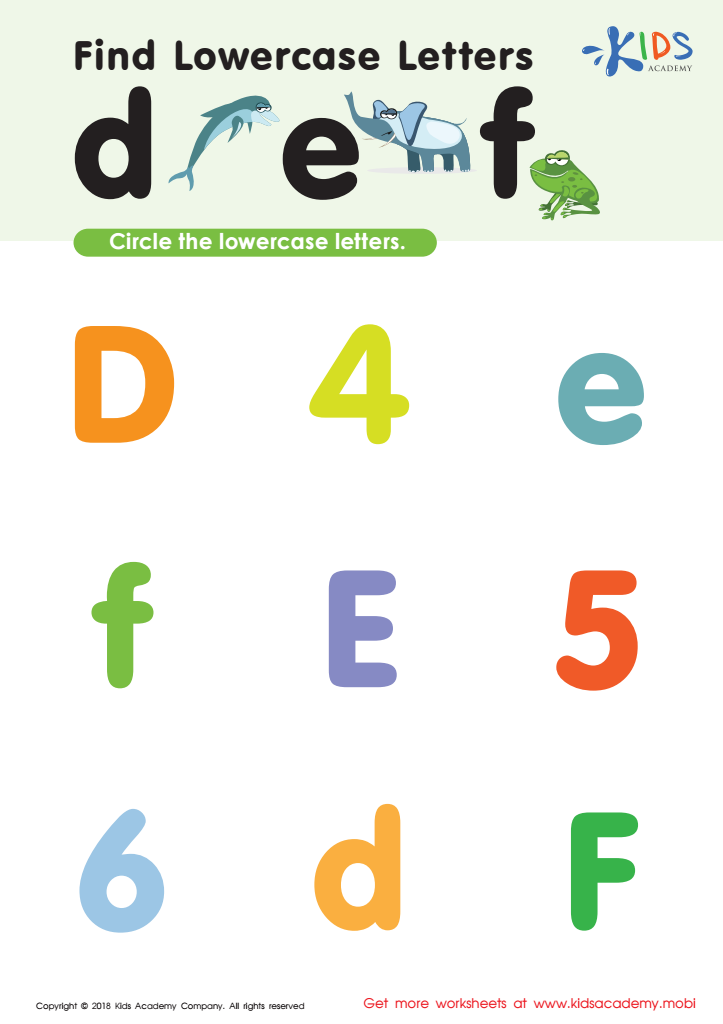
Find Lowercase Letters d e f Worksheet
 Assign to My Students
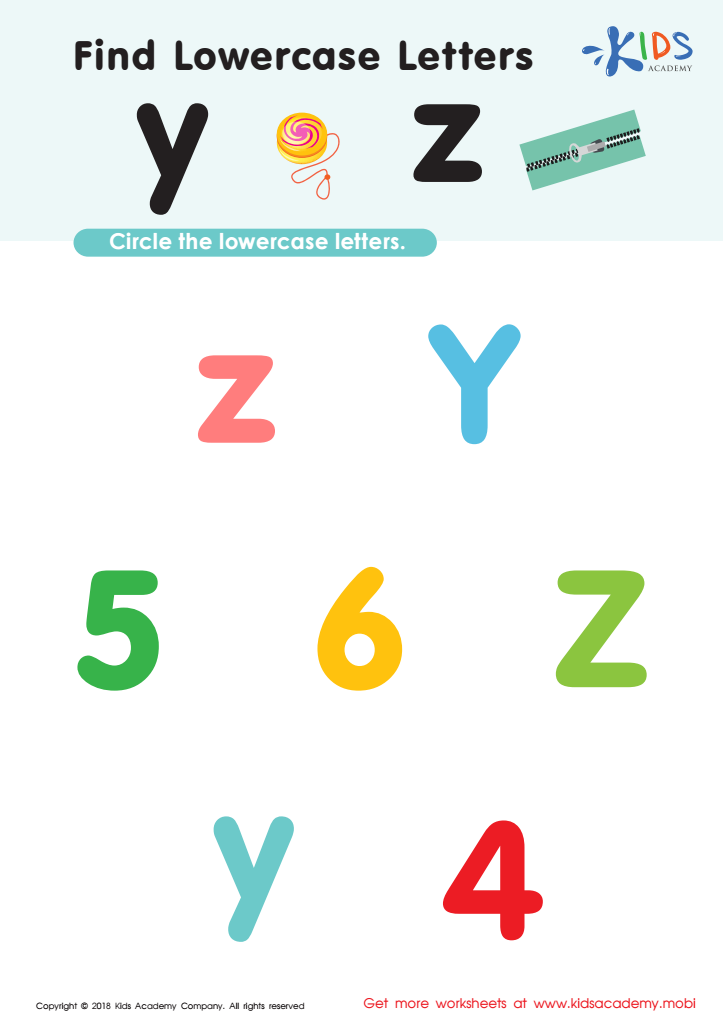
Find Lowercase Letters y z Worksheet
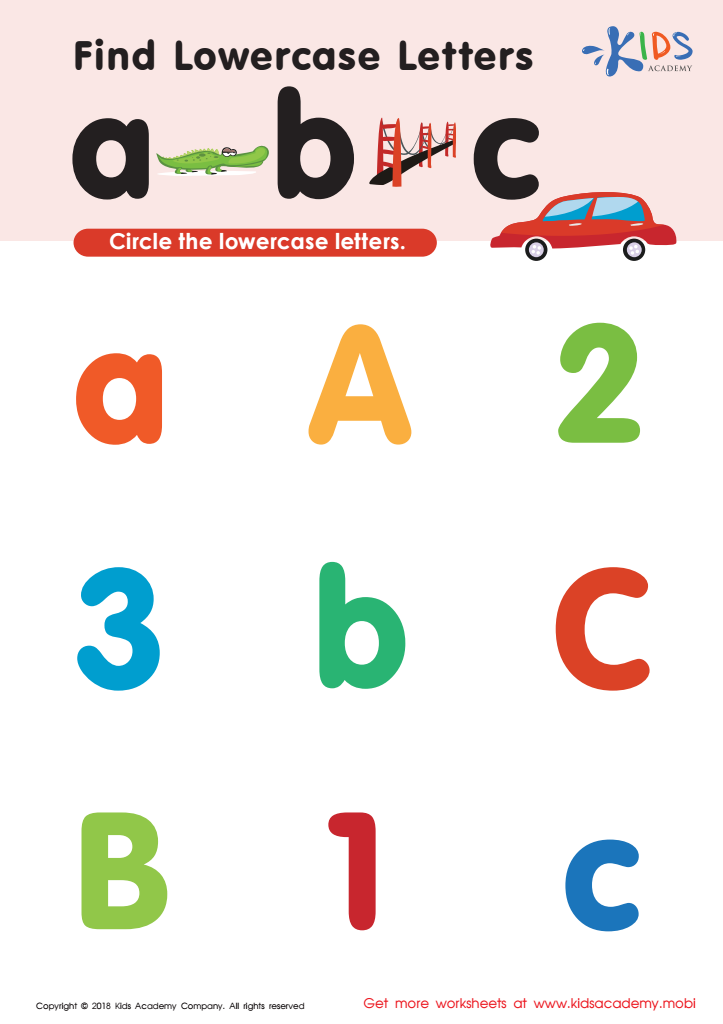
Find lowercase letters a b c Worksheet
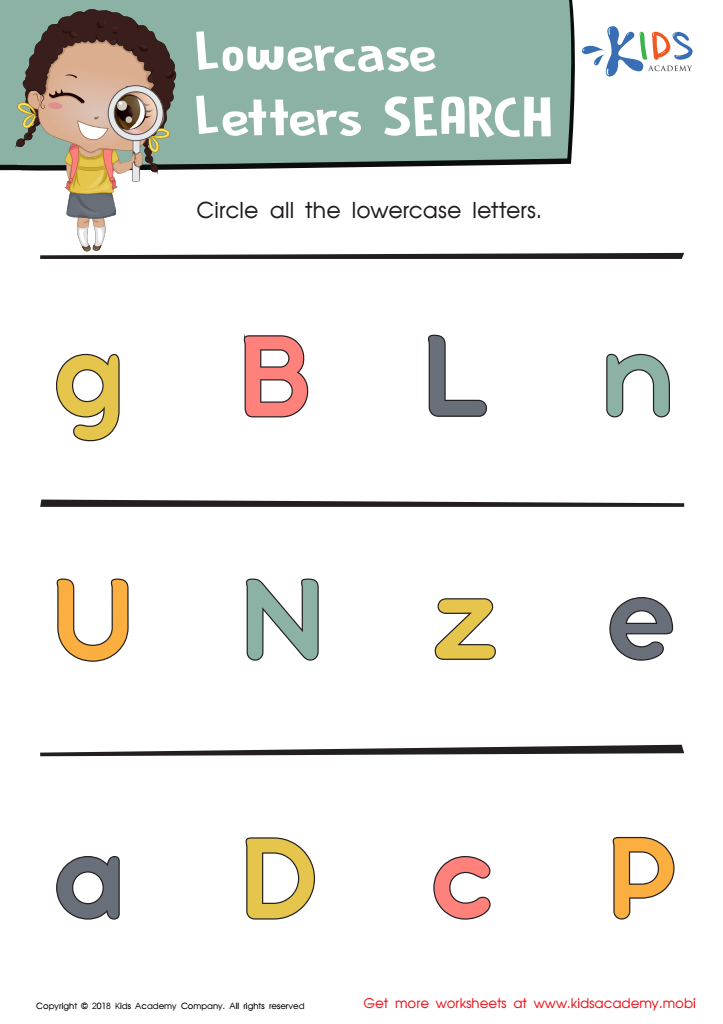
Lowercase Letters Search: Assessment Worksheet
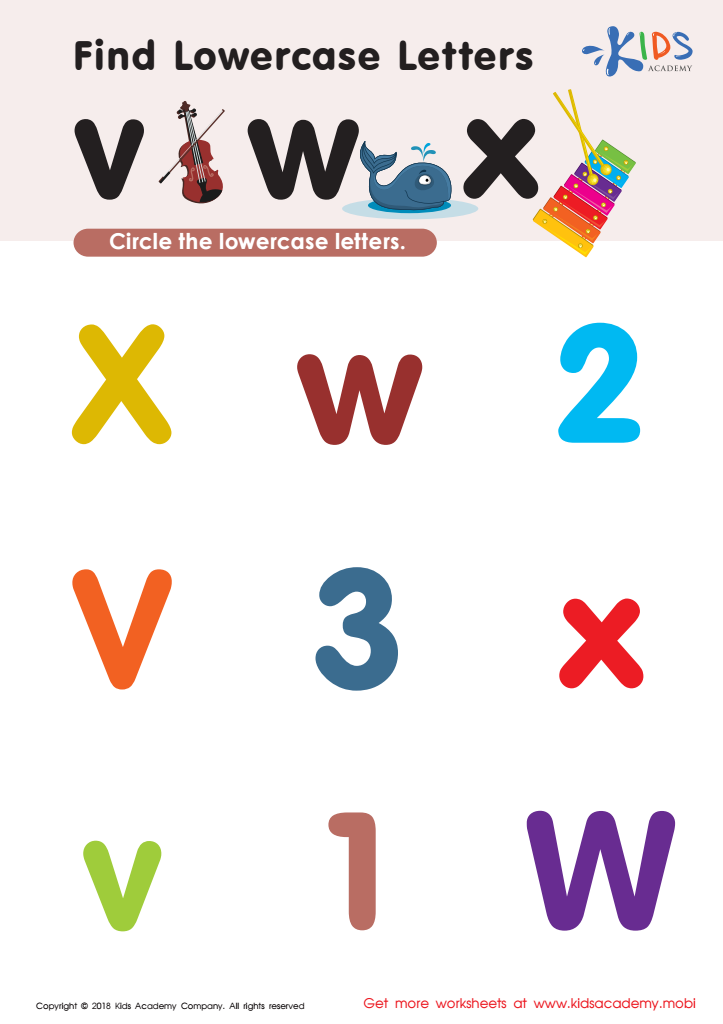
Find Lowercase Letters v w x Worksheet


.jpg)
.jpg)




Understanding lowercase letters is fundamental for 4-year-olds because it forms the cornerstone of early literacy. Children's ability to recognize lowercase letters ensures a smoother transition to reading and writing, key skills they will continually develop through their education. Most written text, such as storybooks and classroom materials, predominantly uses lowercase letters, making their identification imperative in early childhood learning.
Parents and teachers play crucial roles in fostering this skill. When children are proficient in recognizing lowercase letters, they can more effectively decode words, leading to a better comprehension of reading material. This proficiency can also contribute to their confidence and eagerness to learn, fostering a positive attitude toward education. Furthermore, early mastery of lowercase identification aids in letter formation during writing activities, promoting neat and legible handwriting from a young age.
Additionally, engaging with children in playful and educational activities that emphasize lowercase letters can significantly enhance their cognitive development. Activities like alphabet games, storytime, and writing exercises not only make learning enjoyable but also build the foundational skills necessary for academic success. In essence, ensuring that 4-year-olds can identify lowercase letters equips them with the tools for effective communication and lifelong learning.








