Phonological awareness Worksheets for 4-Year-Olds
9 filtered results
-
From - To
Enhance your 4-year-old's literacy skills with our engaging phonological awareness worksheets! Designed specifically for young learners, these printable resources introduce the fundamentals of sound recognition, rhyme, and syllable segmentation in a fun and stimulating way. Our activities promote essential pre-reading skills, helping kids develop confidence in their ability to manipulate sounds, essential for future reading success. Explore a variety of worksheets that combine colorful illustrations and playful exercises, capturing your child’s interest while laying the groundwork for effective communication. Download our phonological awareness worksheets today and watch your child thrive as they embark on their early literacy journey!
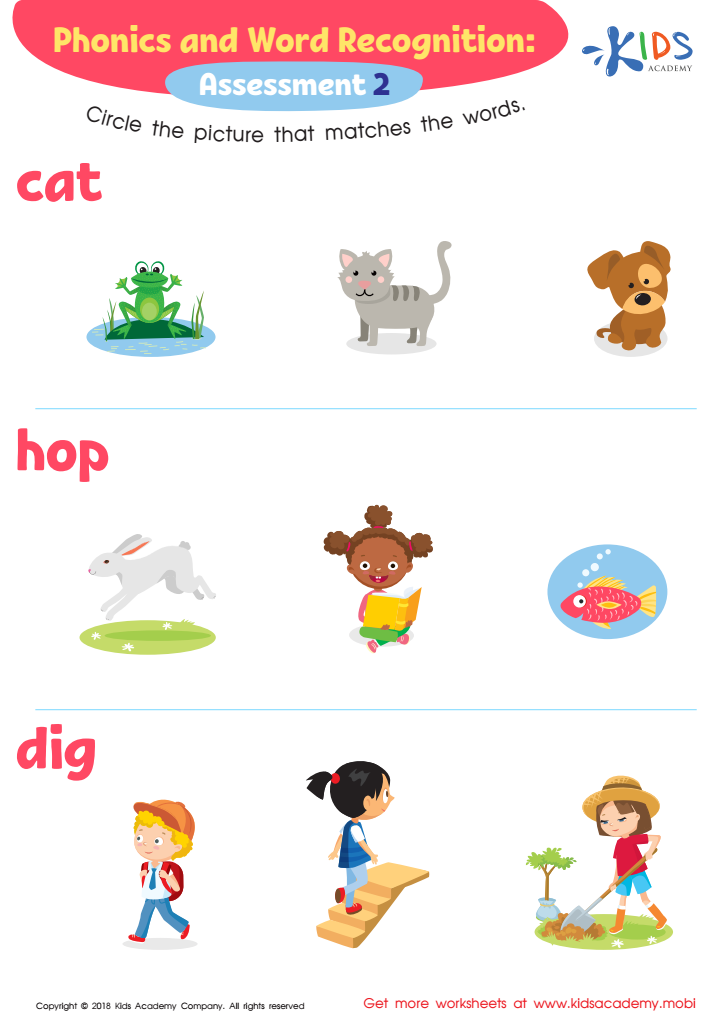
Phonological Awareness: Assessment 2 ELA Worksheet
 Assign to My Students
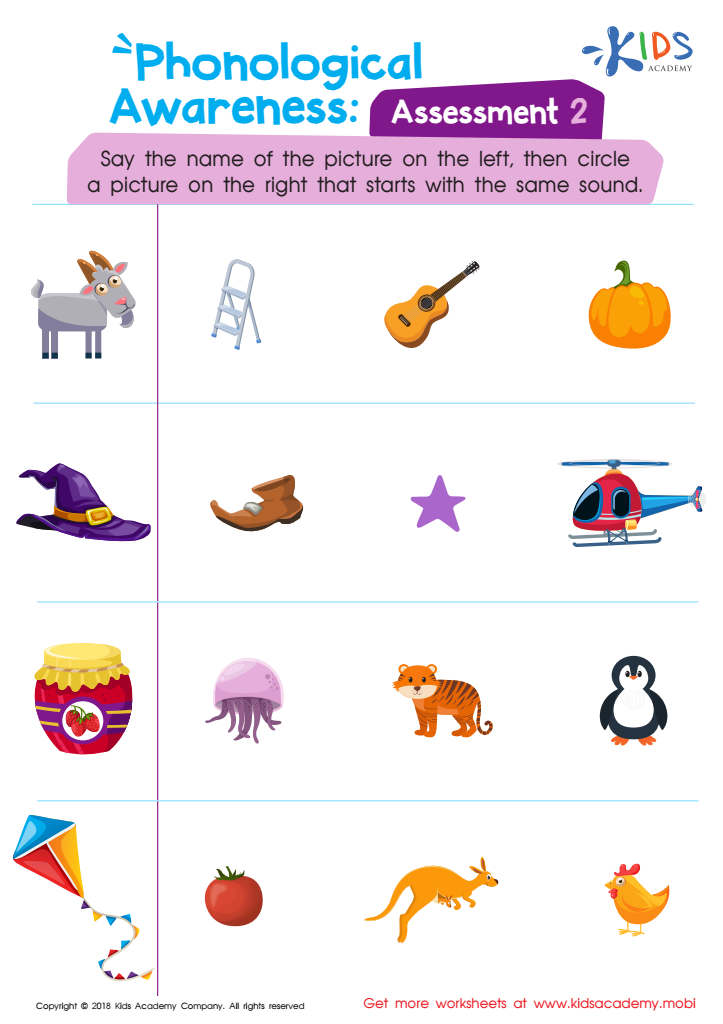
Phonological Awareness: Assessment 2 Worksheet
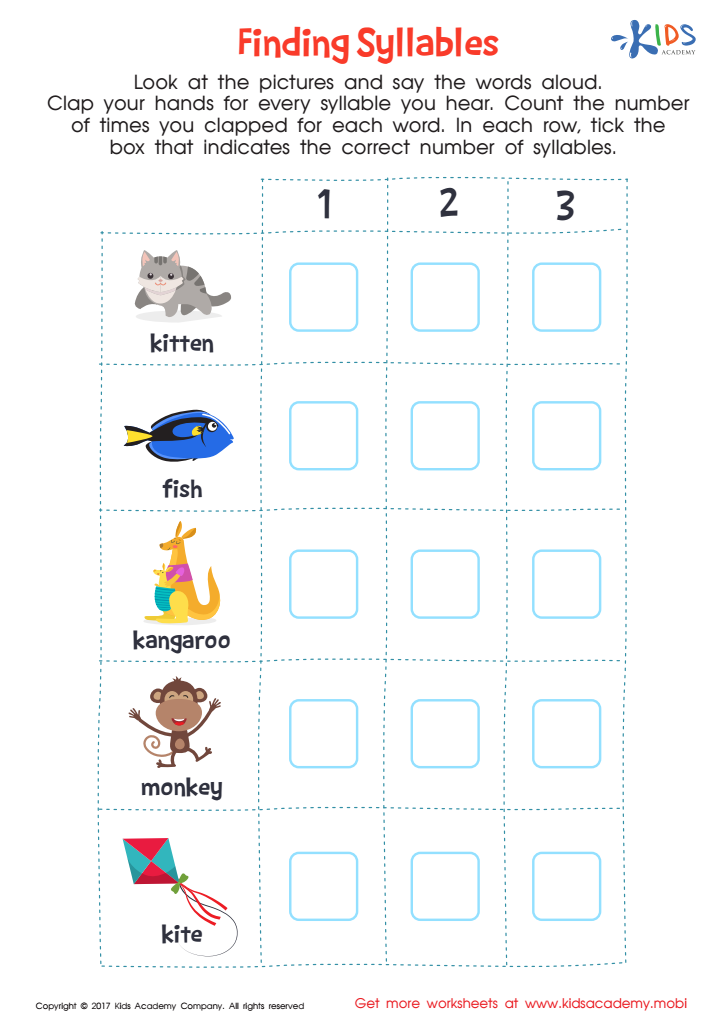
Finding Syllables Word Structure Worksheet
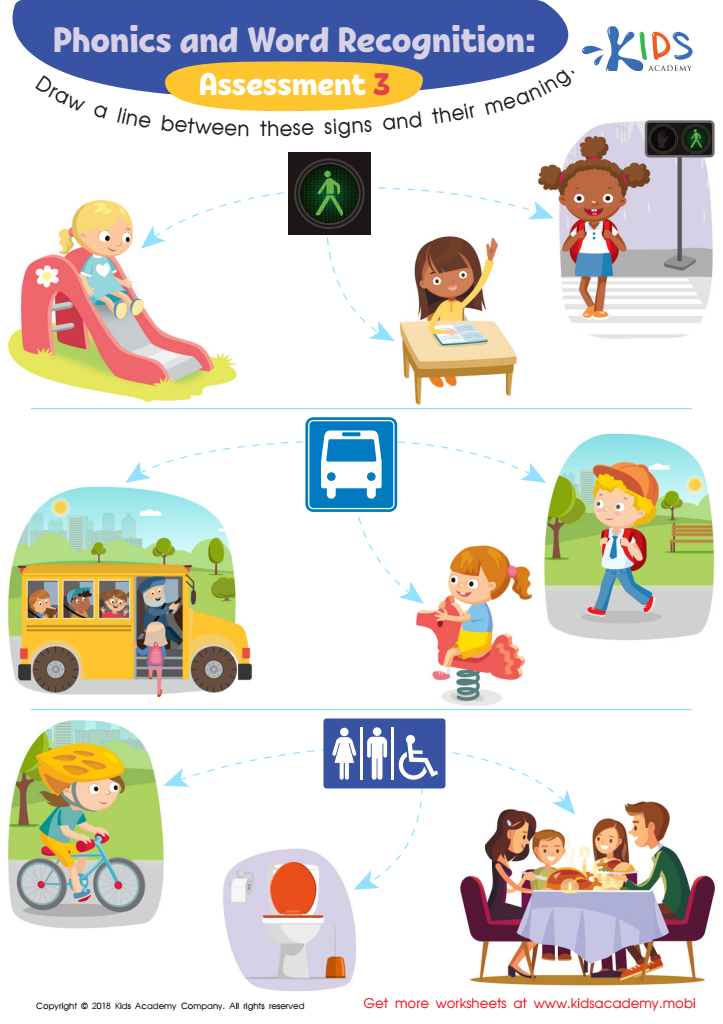
Phonological Awareness: Assessment 3 ELA Worksheet
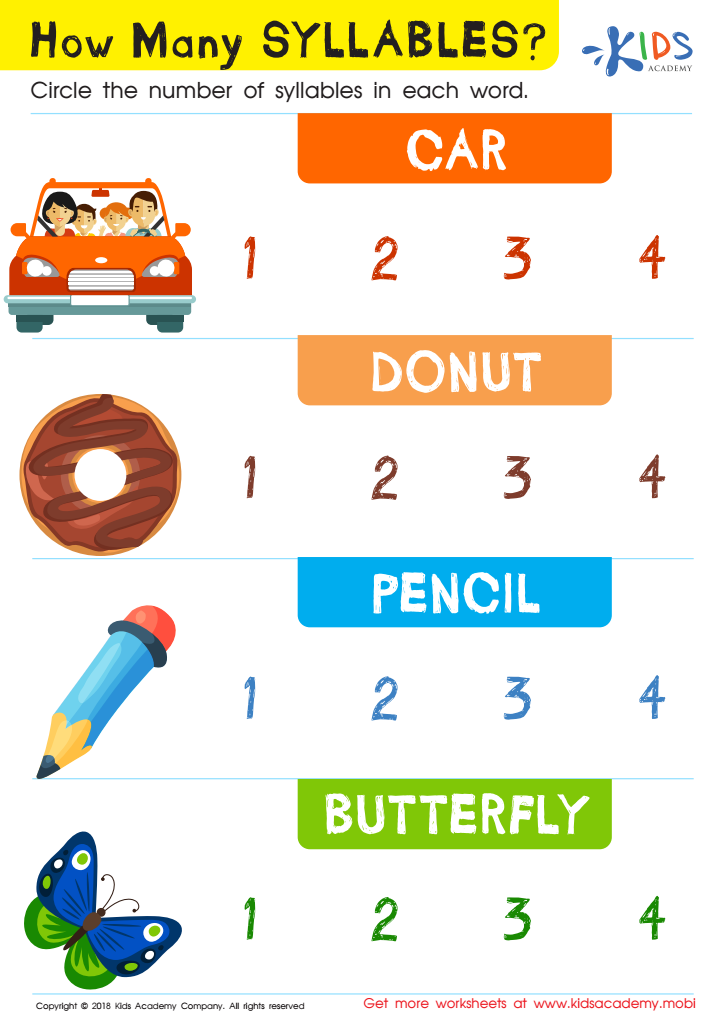
How Many Syllables? Worksheet
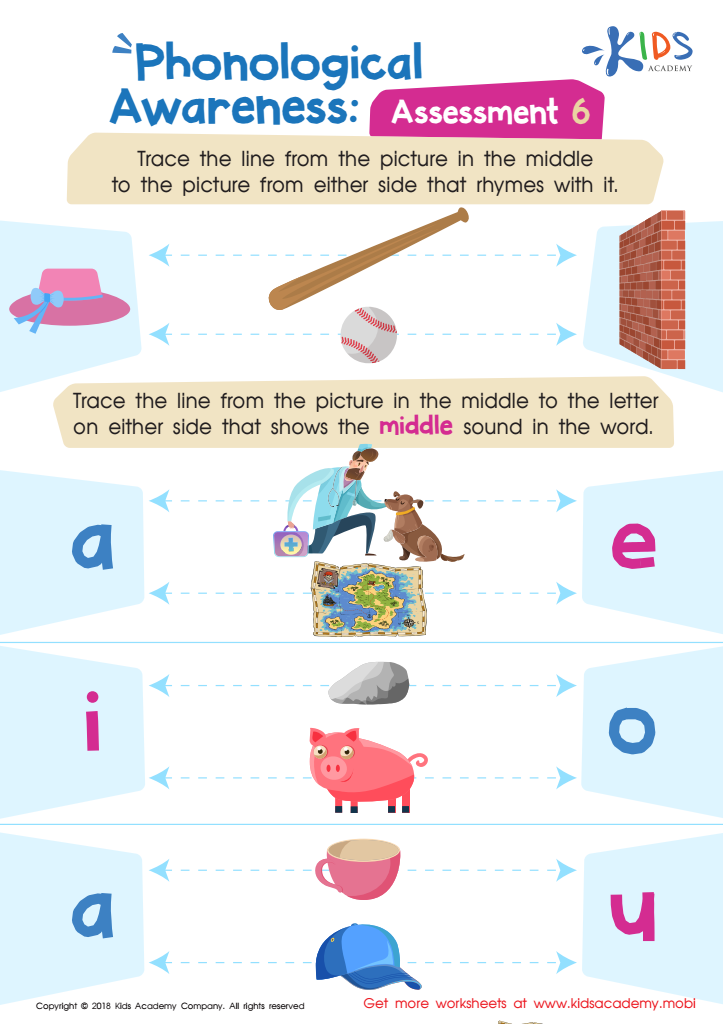
Phonological Awareness: Assessment 6 Worksheet
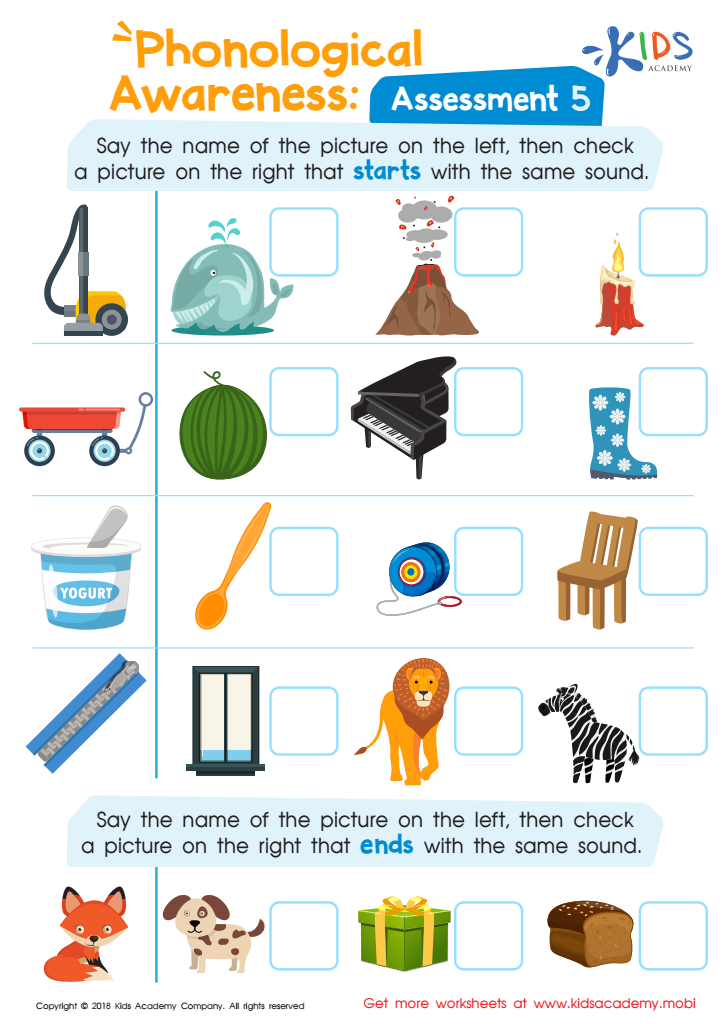
Phonological Awareness: Assessment 5 Worksheet
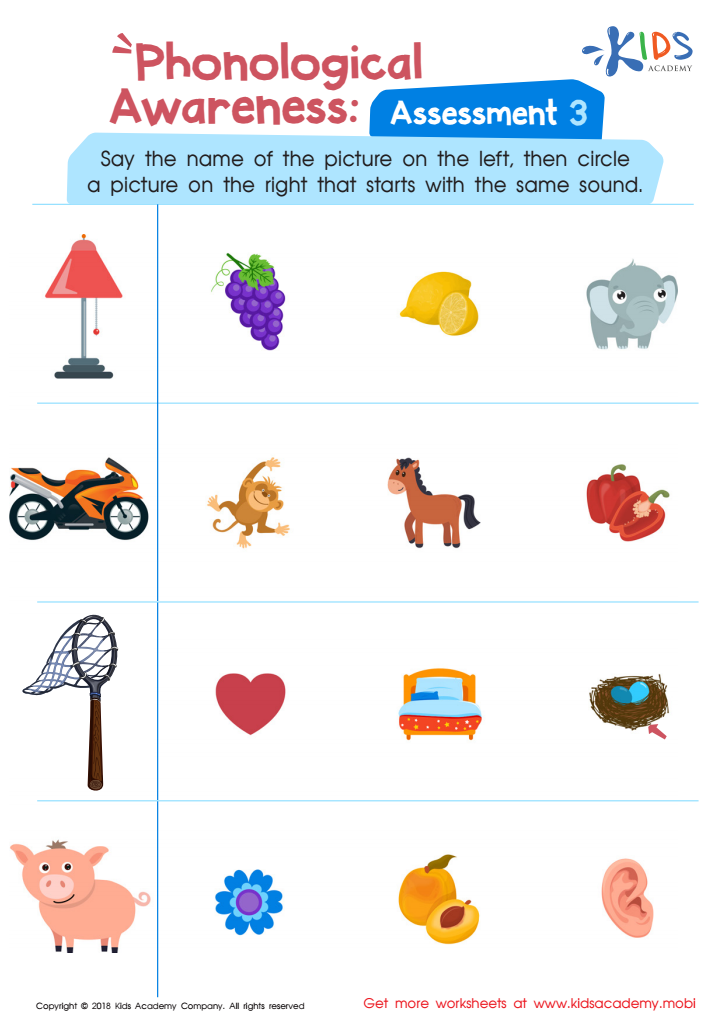
Phonological Awareness: Assessment 3 Worksheet
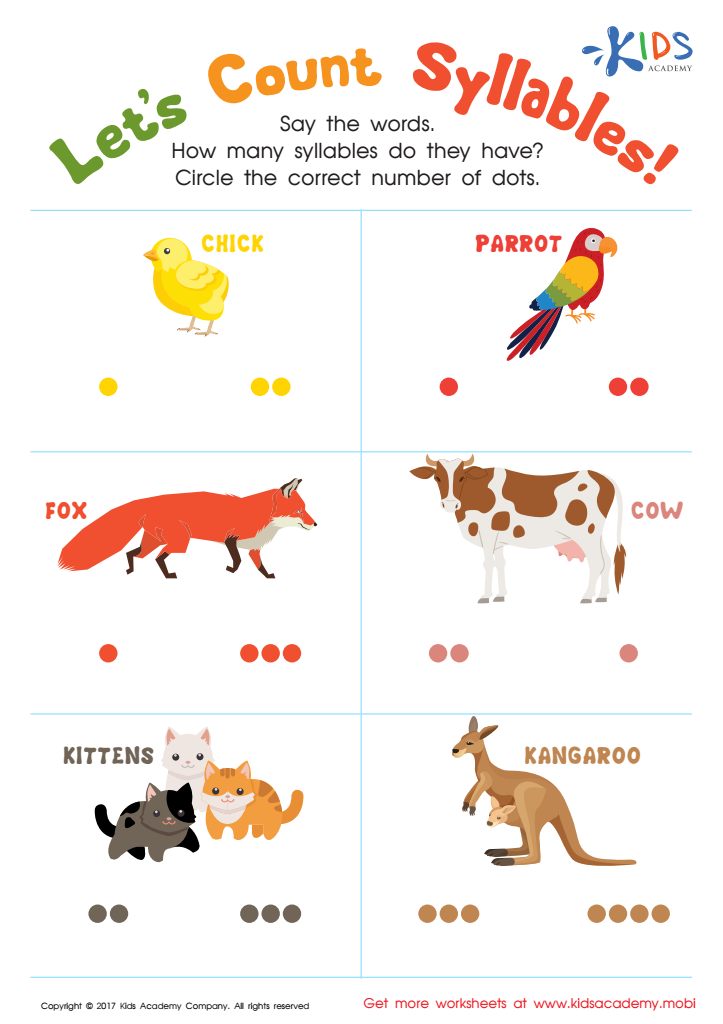
Lets Count Syllables Worksheet








Phonological awareness is fundamental for early literacy development in 4-year-olds and should be prioritized by parents and teachers. This skill involves recognizing and manipulating the sounds in spoken language, including elements like rhymes, syllables, and onsets. A solid foundation in phonological awareness is crucial because it prepares children for reading and writing by enabling them to understand that words are made up of smaller sound units.
When children develop phonological awareness, they begin to decode words more efficiently, enhancing their reading fluency and comprehension. Research has shown that early mastery of these skills significantly predicts future reading success. Moreover, fostering phonological awareness can build a child's confidence and enthusiasm for learning. Engaging in playful activities—such as singing songs, chanting rhymes, or clapping syllables—can make this learning enjoyable and interactive.
Additionally, parents and teachers can help identify children who may be struggling with these skills, allowing for timely intervention. By prioritizing phonological awareness, adults can lay a strong groundwork for children's language development, ultimately helping them become competent readers and confident communicators. This early investment has lasting benefits, equipping children not just for academic success but for lifelong learning.








