
Predicting outcomes Worksheets for 4-Year-Olds
3 filtered results
Difficulty Level
Grade
Age
-
From - To
Subject
Activity
Standards
Discover our engaging Predicting Outcomes Worksheets designed specifically for 4-year-olds! These interactive worksheets help young learners develop critical thinking skills by encouraging them to make predictions based on visual clues and stories. Each activity is thoughtfully crafted to boost comprehension, enhance vocabulary, and promote conversation as children learn to anticipate and reason. With vibrant illustrations and age-appropriate tasks, our worksheets provide a fun, hands-on approach to learning. Perfect for both classroom settings and home practice, these resources empower children to explore their creativity and develop a growth mindset. Start making predictions today and watch your little ones thrive!
Favorites
With answer key
Interactive
Down it Goes Worksheet
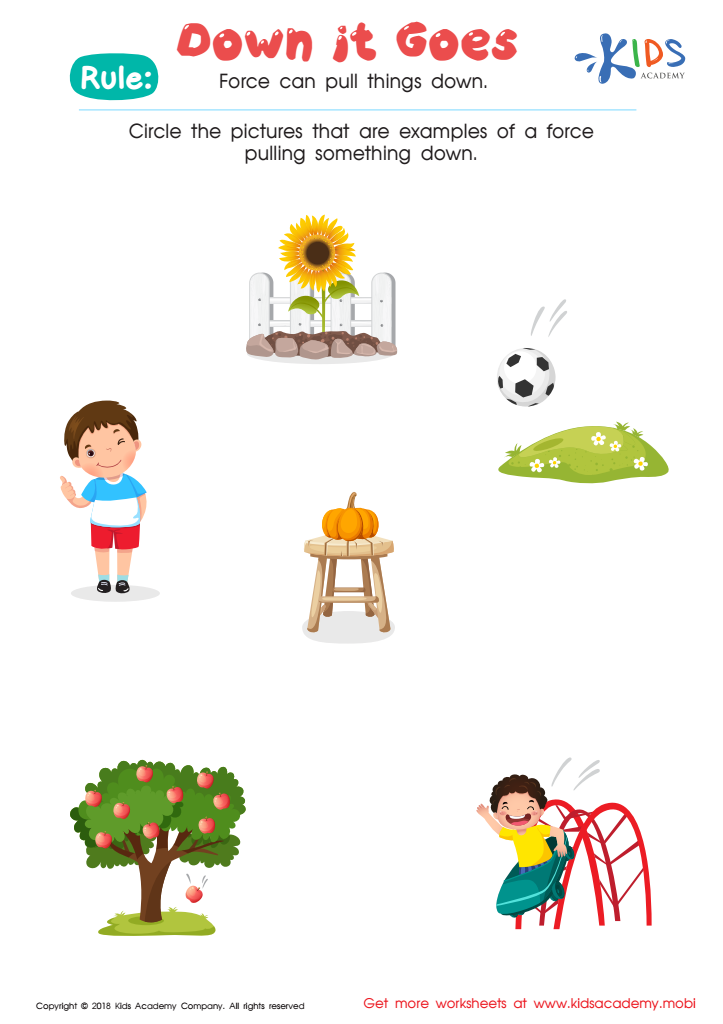
Explain gravity to your child using this fun worksheet. Ask them to give examples of things pulled down with force, then instruct them to circle the pictures that show this. It's a great way to help them understand the concept of gravity.
 Assign to My Students
Down it Goes Worksheet
Worksheet
Will it Move? Worksheet
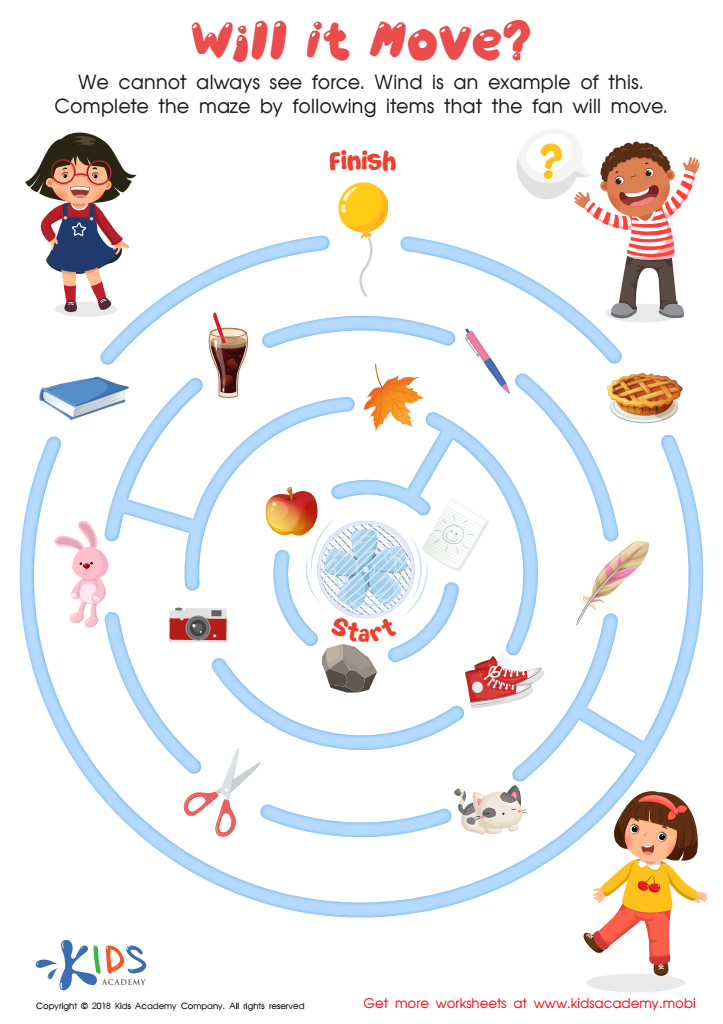
Does your child know about force? If yes/no, this worksheet can help. Force is invisible - like wind - but it moves objects. Ask your child to complete the maze, following the path of items moved by the wind. 80 words.
Will it Move? Worksheet
Worksheet

Race Car Ramp Worksheet
Kids can learn numbers quickly and have fun with this worksheet! It teaches preschoolers counting to 5 and allows them to draw a car ramp. It's a creative way to learn numbers, making them fun and easy to remember.
Race Car Ramp Worksheet
Worksheet
Join Kids Academy for Free
Who is primarily going to use this learning content?





.jpg)

Predicting outcomes for 4-year-olds is crucial for parents and teachers because it lays the foundation for a child’s future academic and social success. At this age, children experience significant cognitive, emotional, and physical development. By assessing their abilities and potential challenges early, parents and educators can tailor learning experiences to meet individual needs, ensuring children are engaged and supported.
Understanding outcomes can guide parents in making informed choices about educational programs and interventions. When teachers are aware of key predictive indicators, they can adapt their teaching methods to enhance learning, promote social skills, and address any developmental delays.
Moreover, early predictions help identify children at risk for later difficulties, allowing for timely support and intervention. This not only boosts a child’s confidence but also fosters resilience and a love for learning. The earlier these insights are addressed, the greater the chance children will thrive in later schooling and life.
Ultimately, caring about predicting outcomes empowers both parents and educators to create nurturing and effective environments where children can flourish, ensuring they have the tools necessary for lifelong success. In this way, the early years become a crucial element in shaping capable, contributing members of society.








