Sound Association Worksheets for 4-Year-Olds - Page 2
27 filtered results
-
From - To
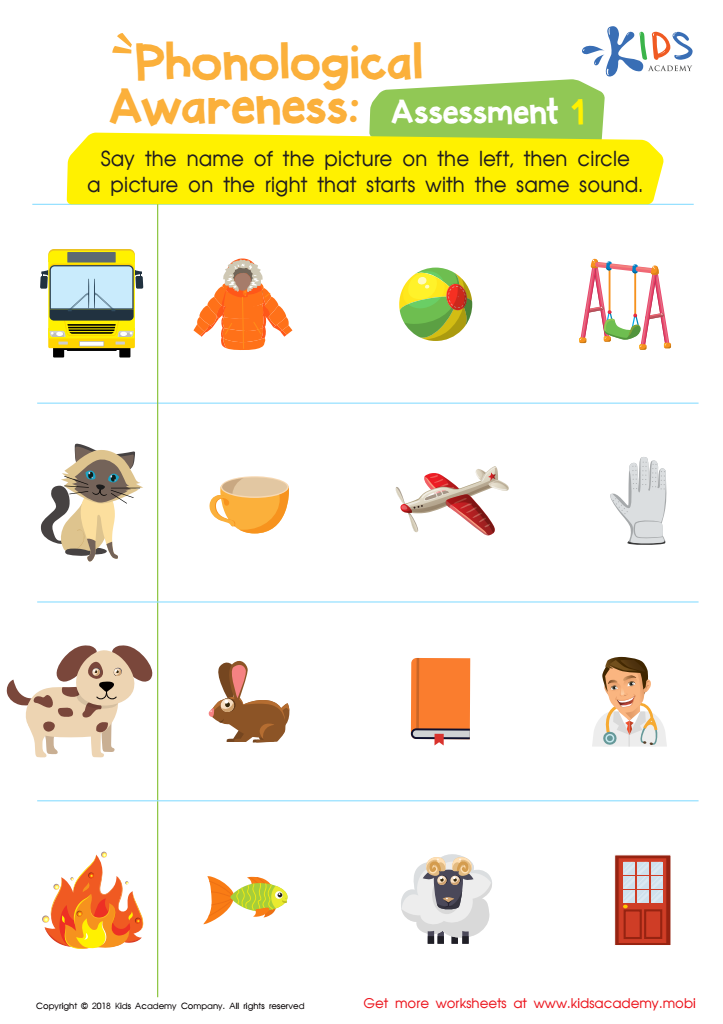
Phonological Awareness: Assessment 1 Worksheet
 Assign to My Students
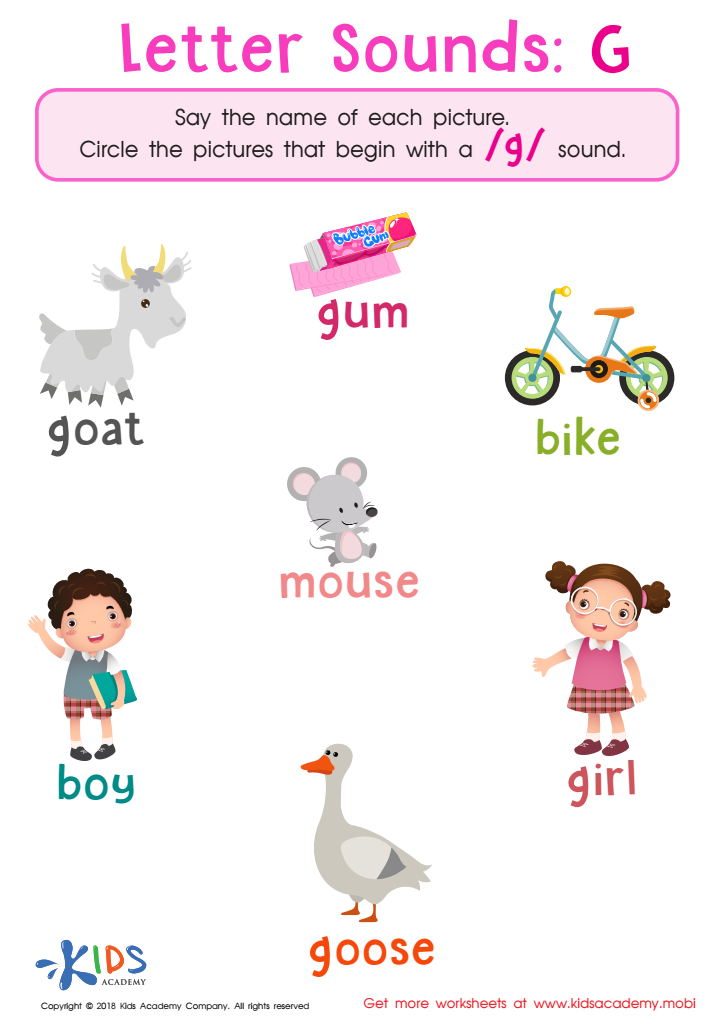
Letter G Sounds Worksheet
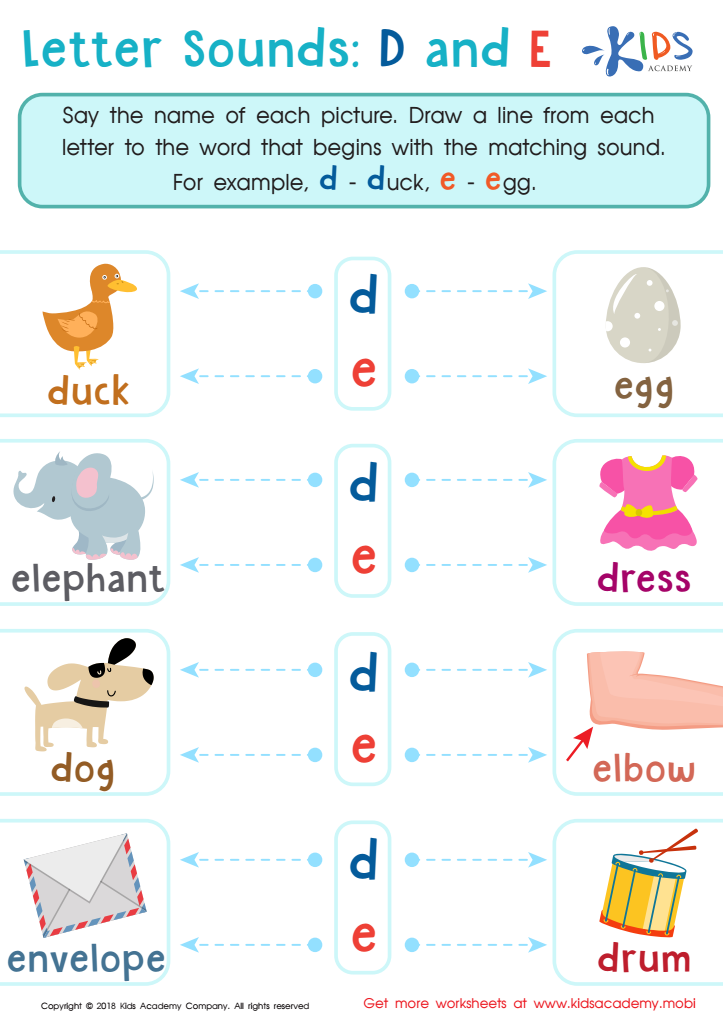
Letter D and E Sounds Worksheet







Sound association, also known as phonemic awareness, forms the foundation of early literacy skills crucial for 4-year-olds. Parents and teachers play pivotal roles in nurturing these early abilities. Sound association involves recognizing and understanding how sounds blend to form words, a critical step before reading and writing skills can flourish.
Young children exposed to sound association activities can more easily make connections between letters and sounds, enhancing their ability to decode new words, which is a fundamental aspect of reading. For 4-year-olds, this means being able to listen to and replicate sounds, recognizing patterns, rhyming, and playing with words, all of which make literacy enjoyable and engaging.
Moreover, early mastery of phonemic awareness contributes directly to a child’s future academic success. Children with strong sound association skills tend to excel in learning to read, understand, and even spell as they progress in school. Parents and teachers should therefore integrate activities that bolster sound association, such as singing, reading aloud, and playing word games, into daily routines.
Overall, promoting sound association for 4-year-olds creates a solid basis for reading and writing proficiency, fostering confidence and a love for learning that will benefit a child throughout their educational journey.








