
Understanding quantity Worksheets for 4-Year-Olds
25 filtered results
Difficulty Level
Grade
Age
-
From - To
Subject
Activity
Standards
Explore our engaging "Understanding Quantity Worksheets for 4-Year-Olds," designed to nurture early math skills in a fun and interactive way. These worksheets focus on helping young learners grasp the concept of quantity through colorful visuals and relatable themes. Kids will enjoy counting objects, comparing quantities, and identifying numbers while developing their fine motor skills. Each activity promotes critical thinking and fosters number recognition in an enjoyable format. Perfect for homeschooling and classroom settings, these materials will keep your little ones motivated as they embark on their math journey. Download now and watch your child build a strong foundation in understanding quantity!
Favorites
With answer key
Interactive
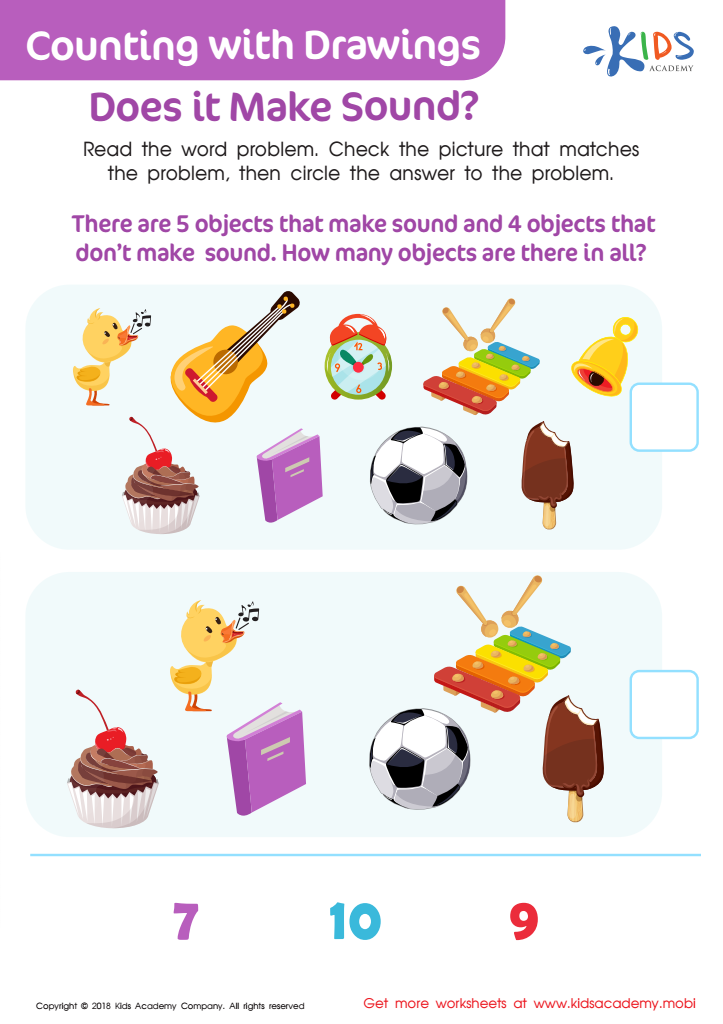
Counting With Drawings. Does It Make Sound? Worksheet
Introduce word problems with this simple worksheet. Ask your students to name the objects pictured, then read the word problem and ask them to circle the answer. With practice, it'll help them scale this challenging area of math.
 Assign to My Students
Counting With Drawings. Does It Make Sound? Worksheet
Worksheet
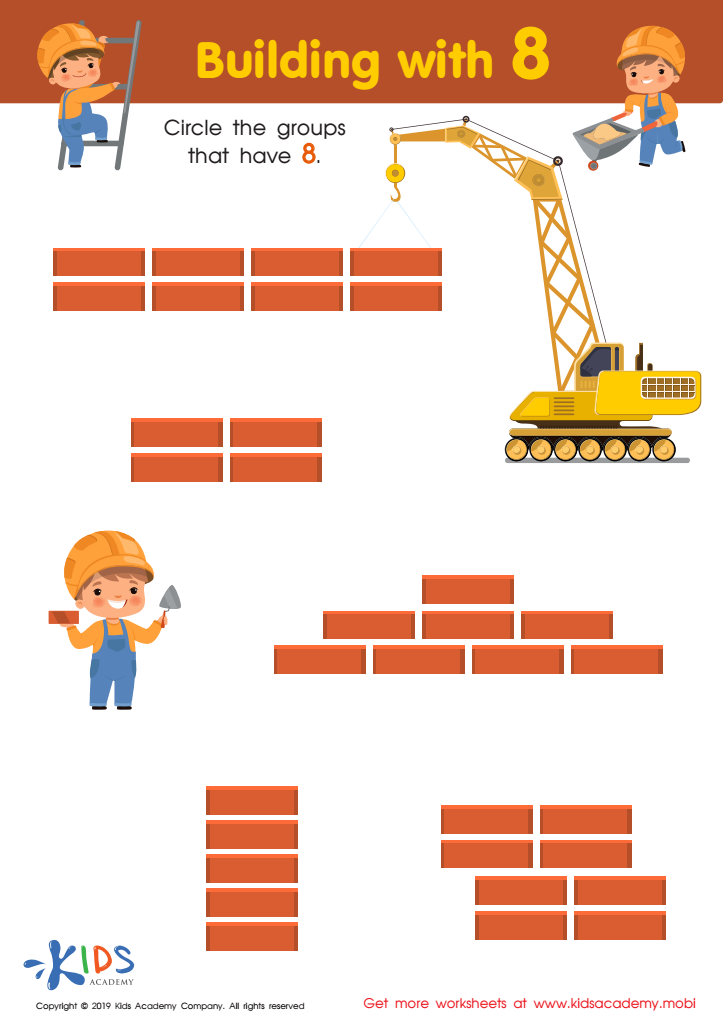
Building with 8 Worksheet
Your child can learn more with this simple exercise! Get them counting and help them circle the groups of 8 bricks. It's a great addition to their post-school lessons, supporting their counting skills. Plus, it's a fun way to learn!
Building with 8 Worksheet
Worksheet
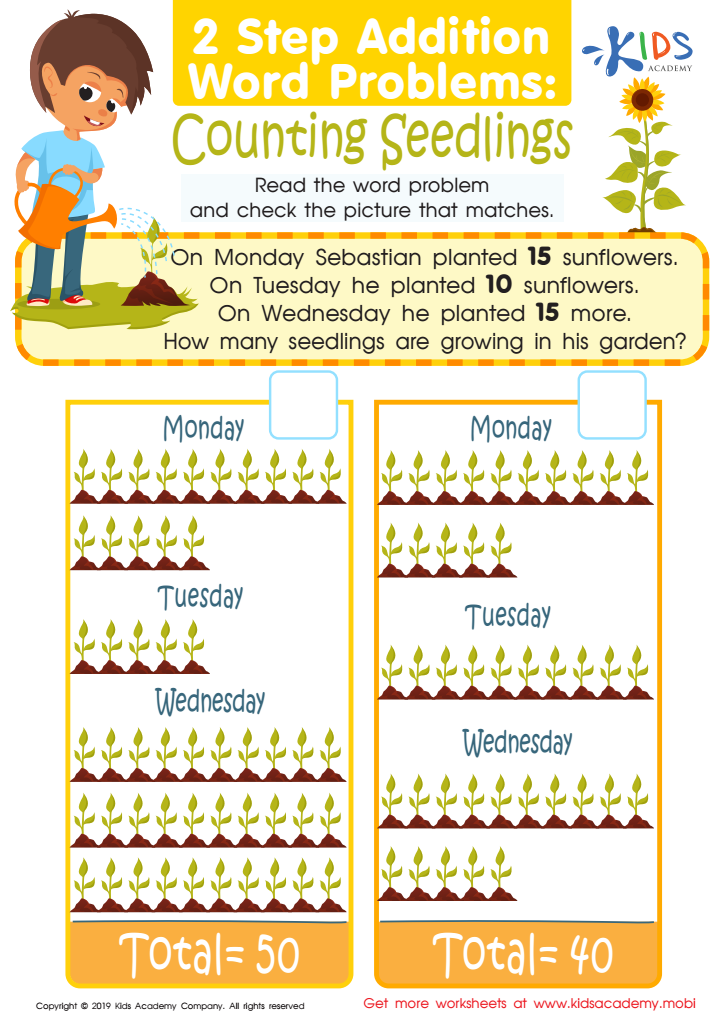
Counting Seedlings Worksheet
Understanding math word problems is key. Multiple steps can prove challenging - this free worksheet provides one-to-one picture representation to help kids solve multi-step addition word problems. Strengthen addition skills by choosing the matching picture to the answer.
Counting Seedlings Worksheet
Worksheet
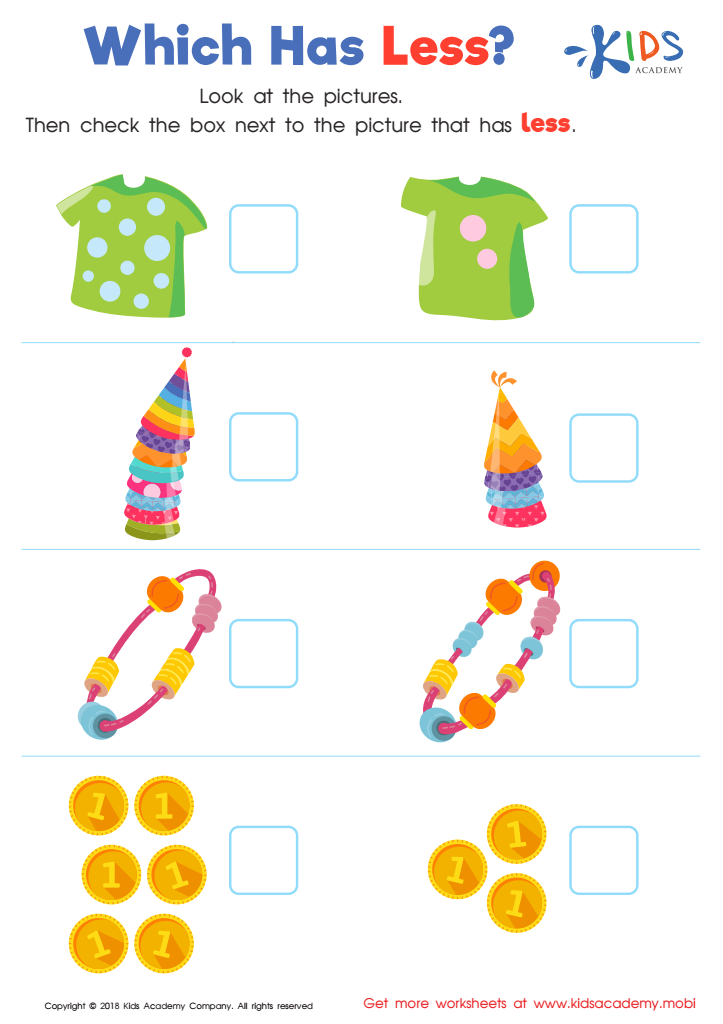
Which Has Less? Worksheet
Kids can develop their number sense by comparing and contrasting objects to identify which has less. This worksheet helps them practice: it's bright and colorful, featuring familiar objects and pictures to count, strengthening basic counting skills. It's the perfect warm-up for comparing and contrasting larger numbers.
Which Has Less? Worksheet
Worksheet
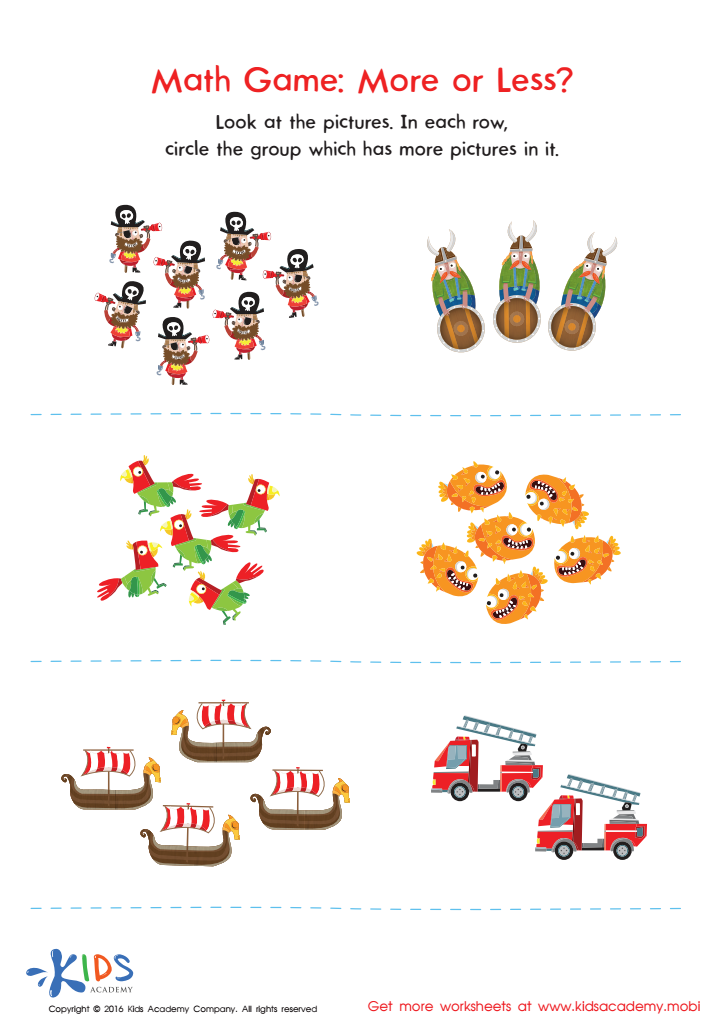
More or Less Worksheet
Counting and understanding quantity are essential skills for kindergarteners. Get your free printable more or less worksheet now!
More or Less Worksheet
Worksheet
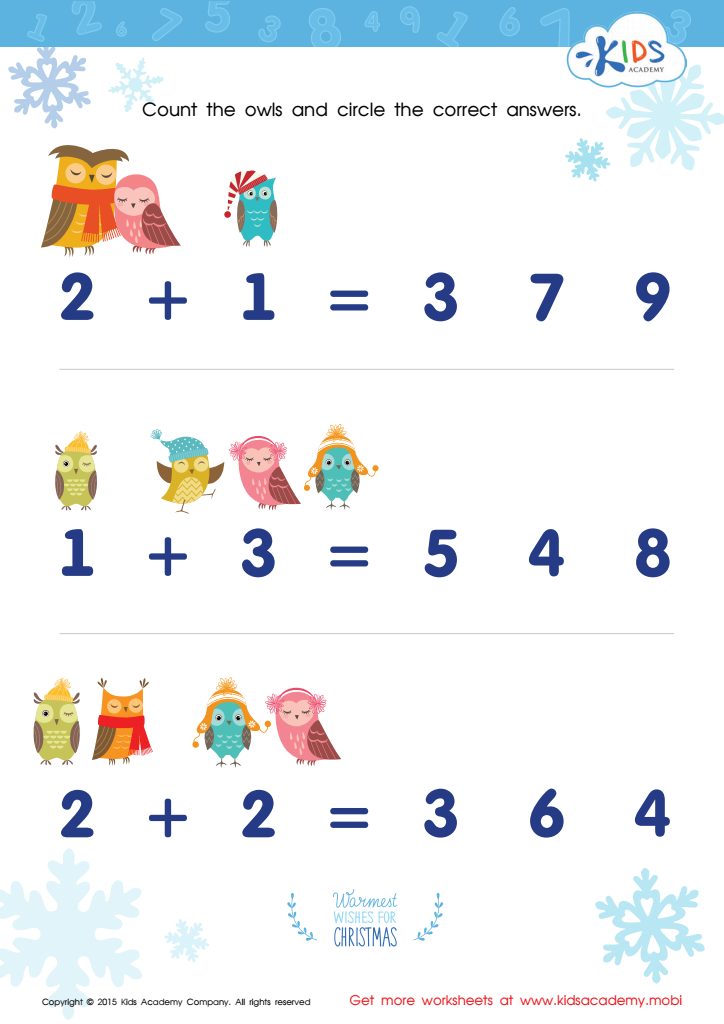
Count Little Owls Worksheet
Math fun awaits! Count the cute little owls and practice adding single digits up to three indoors. Bright pictures help kids solve these simple problems. Get the free worksheets and enjoy the holiday season with Kids Academy!
Count Little Owls Worksheet
Worksheet
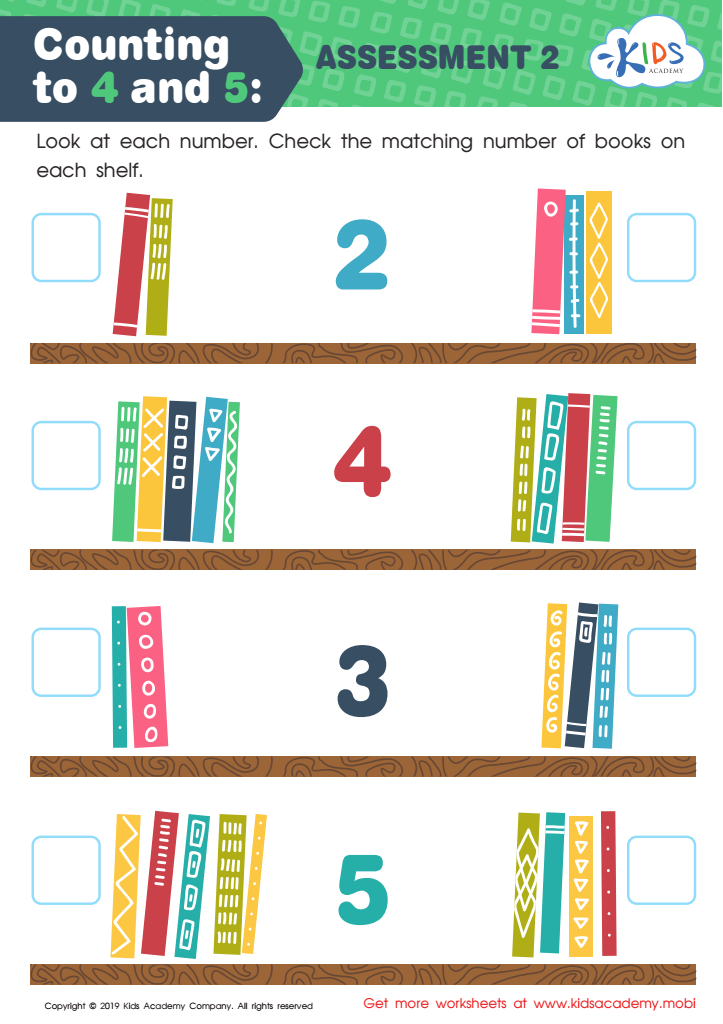
Counting to 4 and 5: Assessment 2 Worksheet
Counting is a key skill for math success. Help your kids get off to a good start by counting the books on each shelf in the pictured printout. Point to each set of books, counting aloud, and then look for the matching number in the centre. With this simple worksheet, your kids can get the practice they need before taking on more advanced math skills.
Counting to 4 and 5: Assessment 2 Worksheet
Worksheet
Join Kids Academy for Free
Who is primarily going to use this learning content?


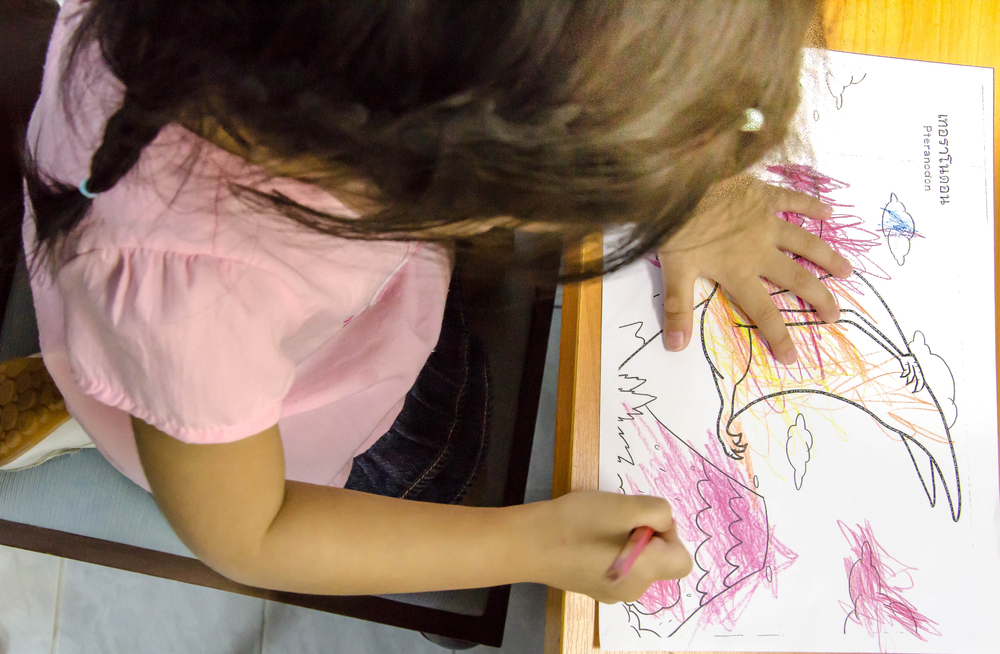




Understanding quantity is a foundational concept for 4-year-olds that significantly shapes their mathematical development and cognitive skills. At this stage, children begin to grasp the basics of numbers and measurements, which provides them with essential tools for daily problem-solving and logical reasoning. When parents and teachers prioritize this understanding, they are fostering critical thinking and analytical skills that will benefit children in their future education.
Moreover, developing an understanding of quantity enhances children's ability to categorize objects, compare items, and make decisions based on numerical concepts. This skill set is not only vital for math but is also applicable in other subjects and everyday situations, such as planning and resource management. By engaging 4-year-olds in activities that promote quantity understanding—through counting games, sorting, and hands-on experiences—adults can create a rich learning environment that caters to various learning styles.
Additionally, a solid foundation in quantity leads to greater confidence and interest in math as children progress in their education. When children comprehend these fundamental concepts from an early age, they set the stage for lifelong learning and academic success. Thus, it is imperative for parents and teachers to actively support and nurture this critical area of early childhood development.








