Uppercase identification Worksheets for 4-Year-Olds
5 filtered results
-
From - To
Discover fun and interactive Uppercase Identification Worksheets designed specifically for 4-year-olds! Our engaging worksheets help young learners recognize and familiarize themselves with uppercase letters through playful activities and vibrant illustrations. Perfect for preschool kids, these printables enhance letter recognition, fine motor skills, and early literacy while keeping little ones entertained. Ideal for both classroom usage and at-home practice, these worksheets support parents and teachers in fostering a love for reading and writing in early learners. Help your child embark on an exciting alphabet adventure with our expertly crafted Uppercase Identification Worksheets today!
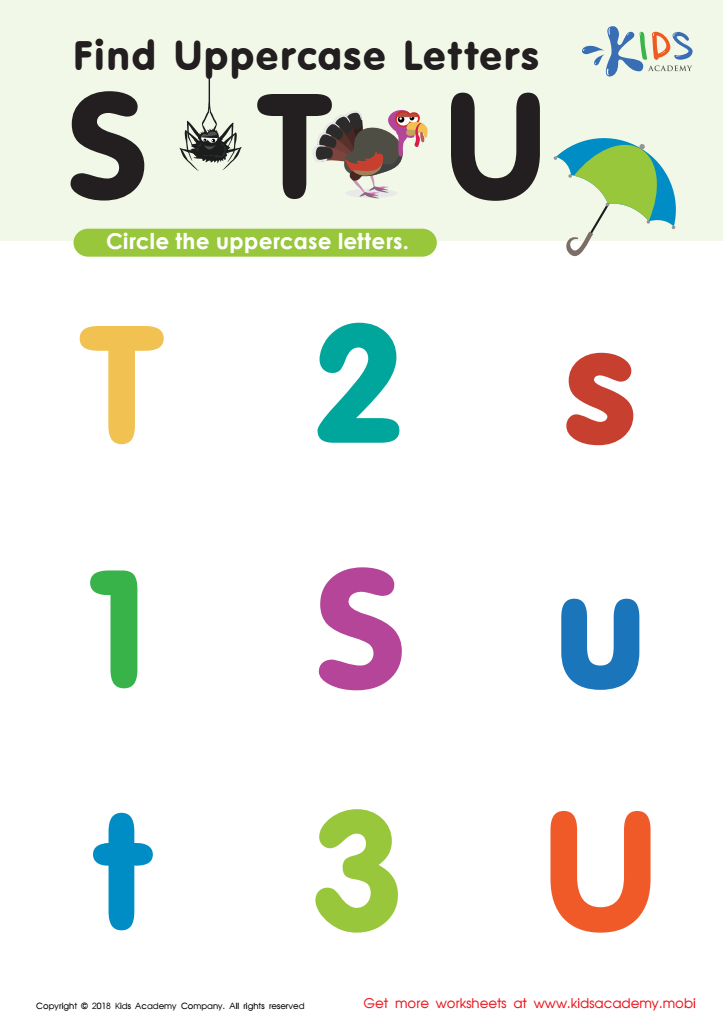
Find Uppercase Letters Worksheet
 Assign to My Students
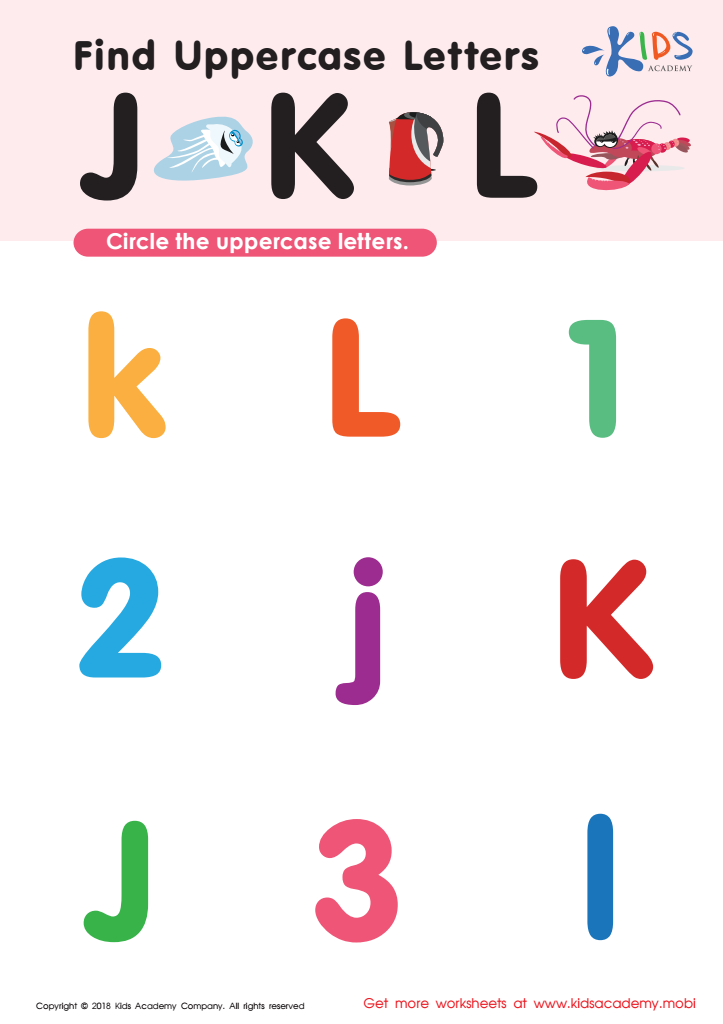
Find Uppercase Letters J, K, and L Worksheet
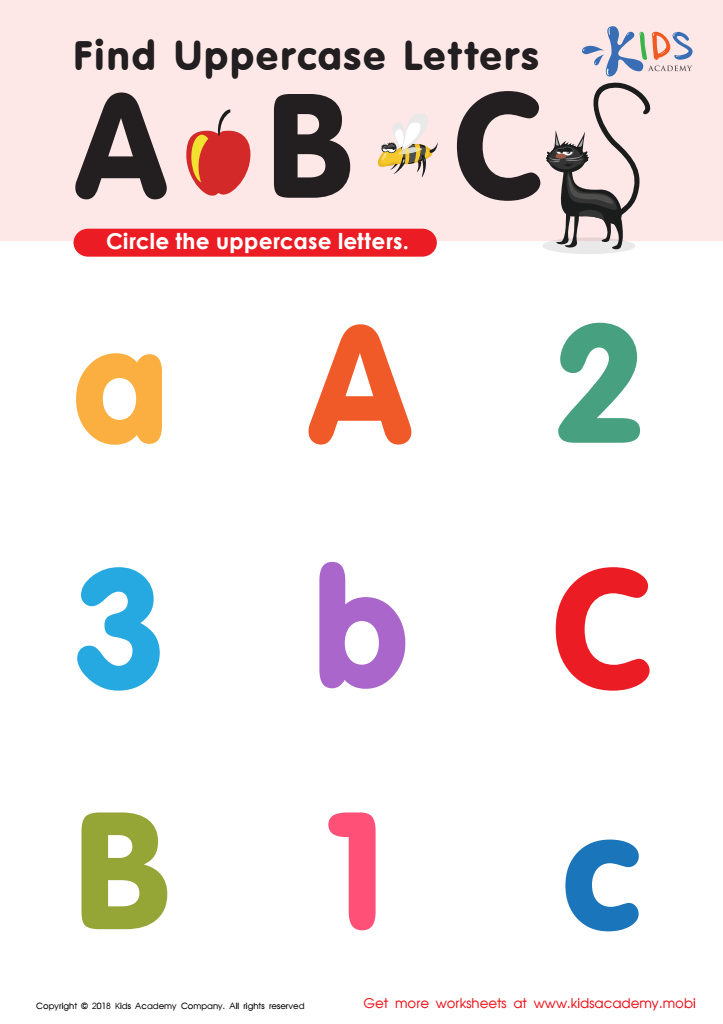
Find Uppercase Letters A, B, and C Worksheet
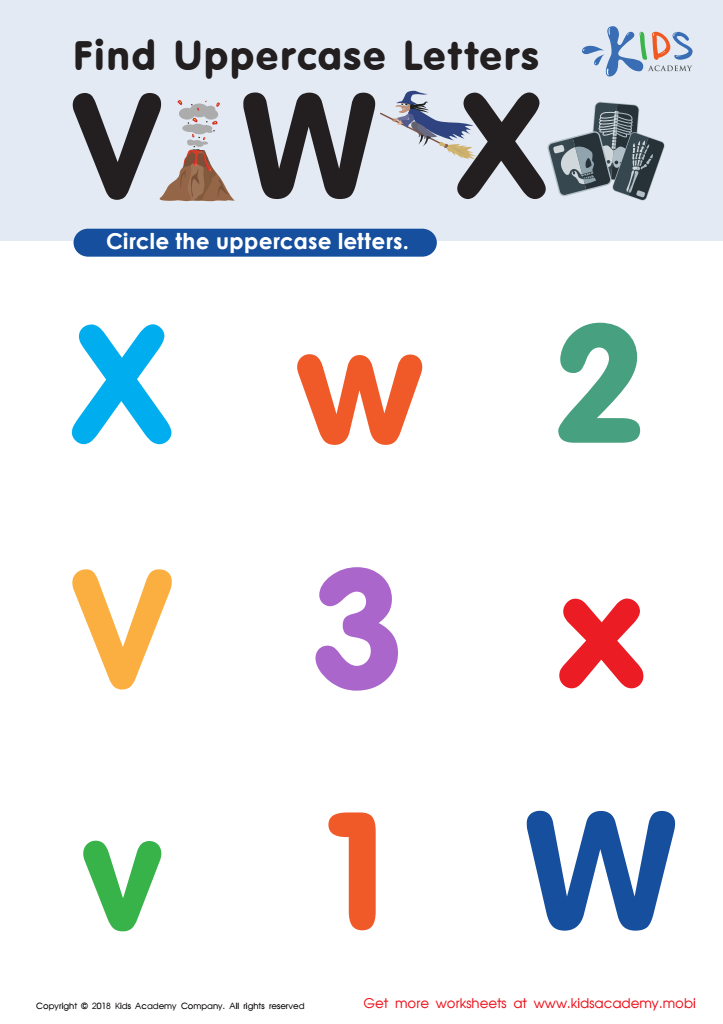
Find Uppercase Letters V, W, X Worksheet
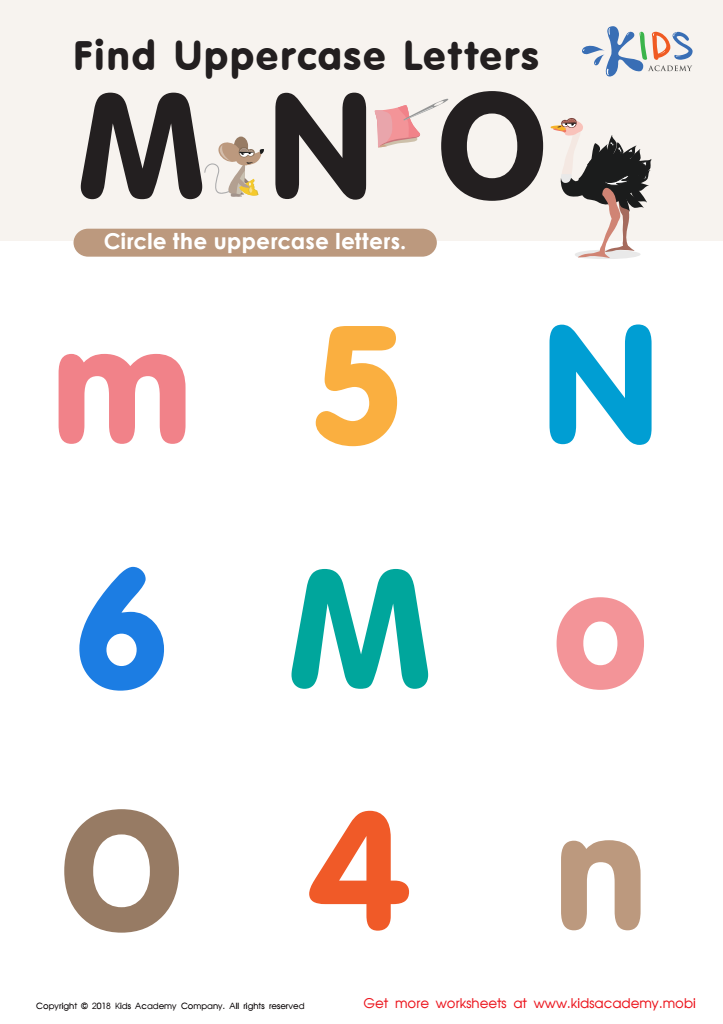
Find Uppercase Letters M, N, and O Worksheet







Understanding uppercase letter identification is essential for 4-year-olds as it forms the foundation for their literacy development. At this developmental stage, children are preparing to enter a more structured learning environment, where they'll need strong pre-reading skills. Mastering uppercase letters is often easier for young children due to their distinct and straightforward shapes, which helps in building confidence before progressing to lowercase letters.
Recognizing uppercase letters aids children in name recognition, which is a key milestone in early literacy. Many children's names begin with uppercase letters, and identifying them can create a personal connection to their learning journey. This skill also supports phonemic awareness, the ability to hear and manipulate sounds, which is crucial for decoding words.
In addition, familiarity with uppercase letters enhances children's readiness for kindergarten. A strong grasp of the alphabet prepares them for the tasks they will encounter, like writing their names or reading simple words. As children recognize letters in their environment—such as on signs, labels, and books—they begin to understand that letters represent sounds, fostering early reading skills.
Thus, parents and teachers should prioritize uppercase letter identification to set the groundwork for academic success, instill confidence, and ignite a lifelong interest in reading and writing.








