Visual learning stimulation Worksheets for 4-Year-Olds
3 filtered results
-
From - To
Unlock the potential of your child's visual learning with our expertly designed worksheets for 4-year-olds. At Kids Academy, our visual learning stimulation worksheets aim to enhance cognitive and perceptual skills through engaging and colorful activities. These printables are expertly crafted to boost critical thinking, improve focus, and foster creativity. Whether identifying patterns, practicing shapes, or solving visual puzzles, our activities ensure that learning is always fun and stimulating. Perfect for parents and educators, these worksheets provide an excellent resource to support early development and educational success. Help your child thrive with Kids Academy's visual learning tools!
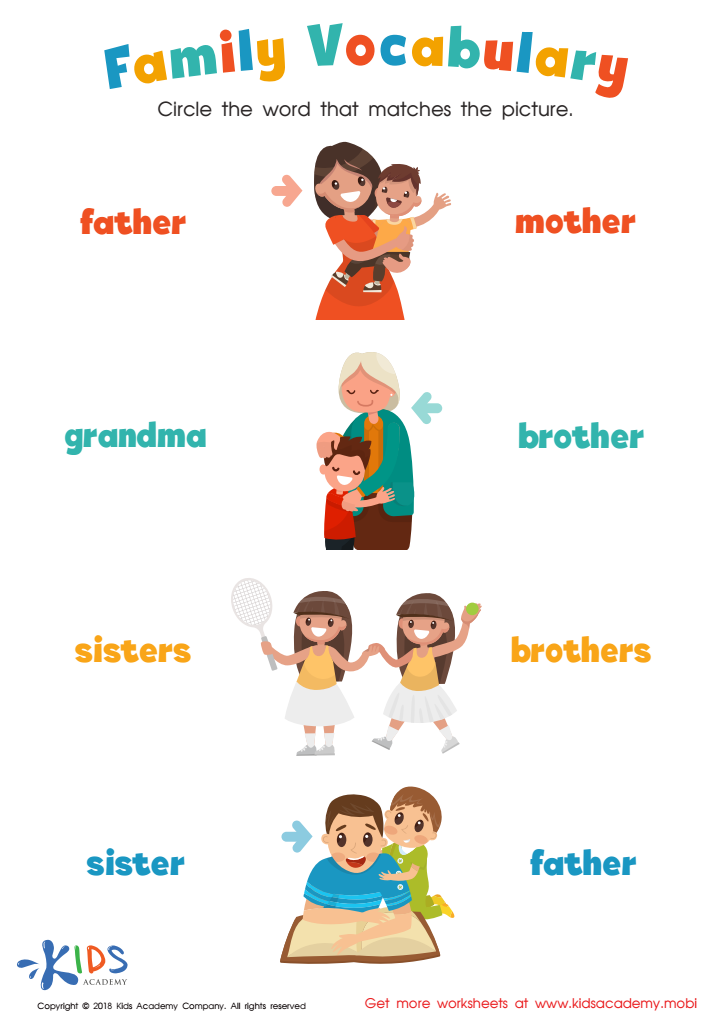
Family Vocabulary Worksheet
 Assign to My Students






.jpg)

Visual learning stimulation is crucial for 4-year-olds as it significantly influences their cognitive, linguistic, motor, and social development. At this age, children are highly receptive to visual information and learn primarily through observation, imitation, and play. Engaging visual materials such as colorful books, puzzles, and educational videos can enhance their comprehension and memory retention. Visual stimuli help in developing critical skills such as shape and color recognition, spatial awareness, and fine motor coordination, which are foundational for later academic success.
Moreover, visual learning aids in language acquisition by linking images with words, which fosters vocabulary growth and early literacy skills. It also encourages curiosity and exploratory behavior, stimulating their natural desire to learn and discover. Classroom activities that incorporate visual elements can also help in grasping complex concepts and ideas, making learning more accessible and enjoyable for young children.
From a social perspective, working in groups using visual tools can help children develop teamwork, communication, and empathy. Since early childhood experiences shape long-term developmental trajectories, parents and teachers who actively engage in providing rich visual learning environments can significantly contribute to a child’s holistic growth and lifelong love for learning. This sets a strong foundation for their future educational endeavors and personal development.








