Basic geometry understanding 2D Shapes Worksheets for 4-Year-Olds
3 filtered results
Difficulty Level
Grade
Age
-
From - To
Subject
Activity
Standards
Introduce your 4-year-old to the exciting world of basic geometry with our 2D Shapes Worksheets! Designed to engage young learners, these fun and educational worksheets help kids recognize, name, and understand simple shapes like circles, squares, triangles, and rectangles. Each activity is crafted to sharpen their visual perception, fine motor skills, and cognitive abilities, making early math exploration enjoyable and effective. Ideal for preschoolers, these printables turn learning into a playful adventure, ensuring your child builds a strong foundation in geometry that will support their future mathematical success. Dive in and watch your child's confidence grow, shape by shape!
Favorites
With answer key
Interactive
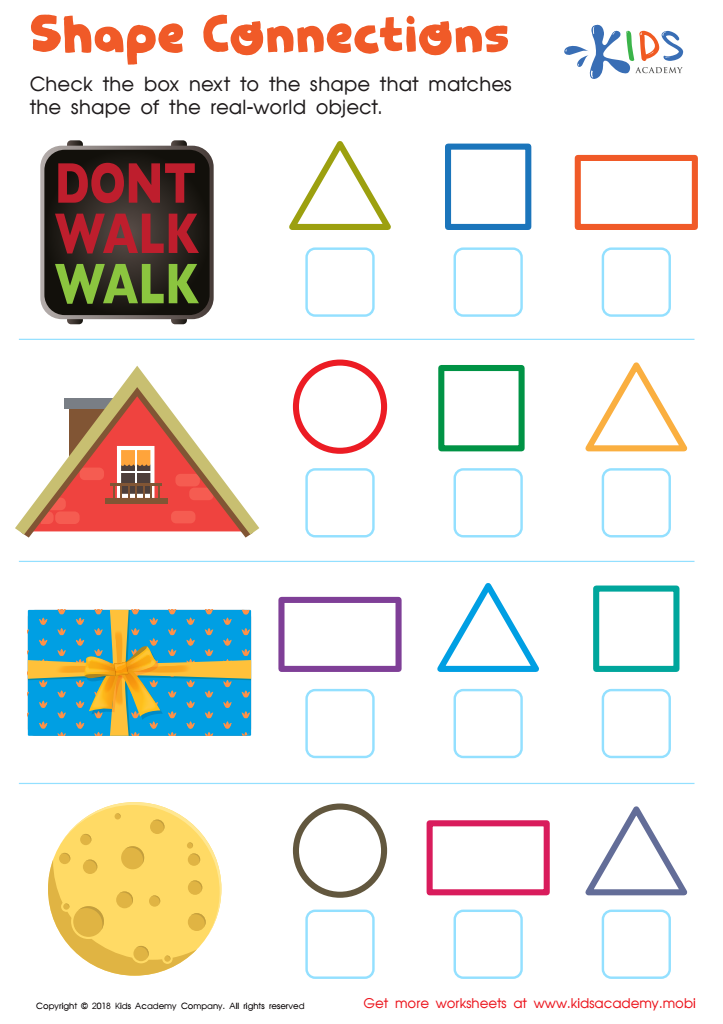
Shape Connections Worksheet
Geometric shapes are all around us and this fun worksheet brings it to life. Kids will match real-world pictures with the corresponding basic shapes, connecting how math is used in various aspects of daily life. A great way to reinforce these concepts!
 Assign to My Students
Shape Connections Worksheet
Worksheet











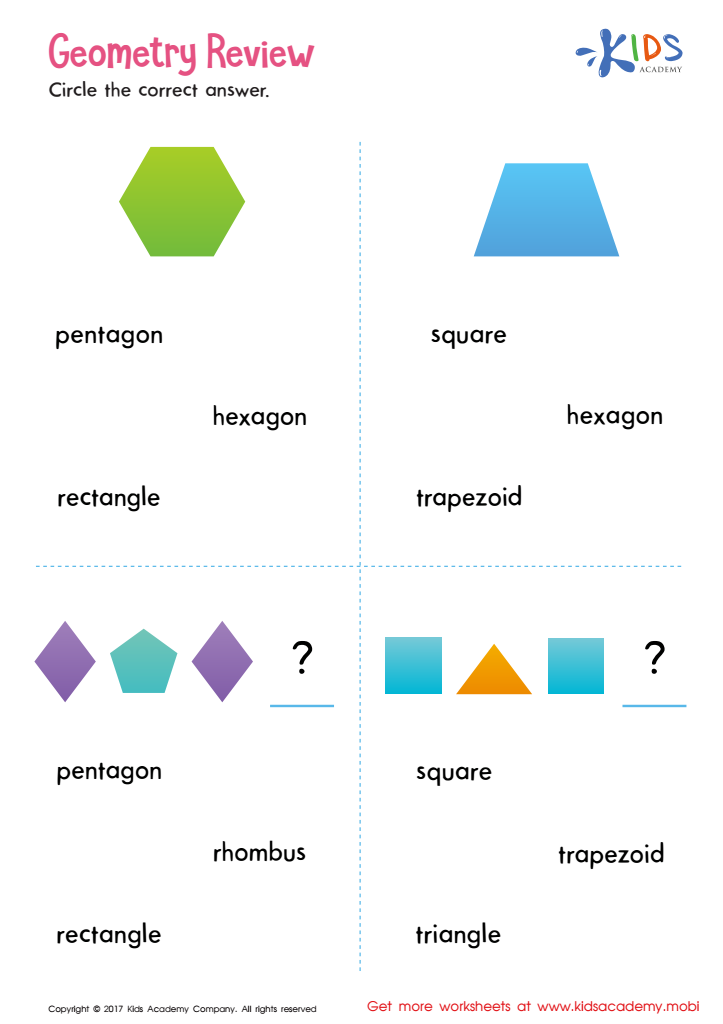
Geometry Review Printable
Repetition is key to success; give your child the practice they need with this geometry worksheet.
Geometry Review Printable
Worksheet
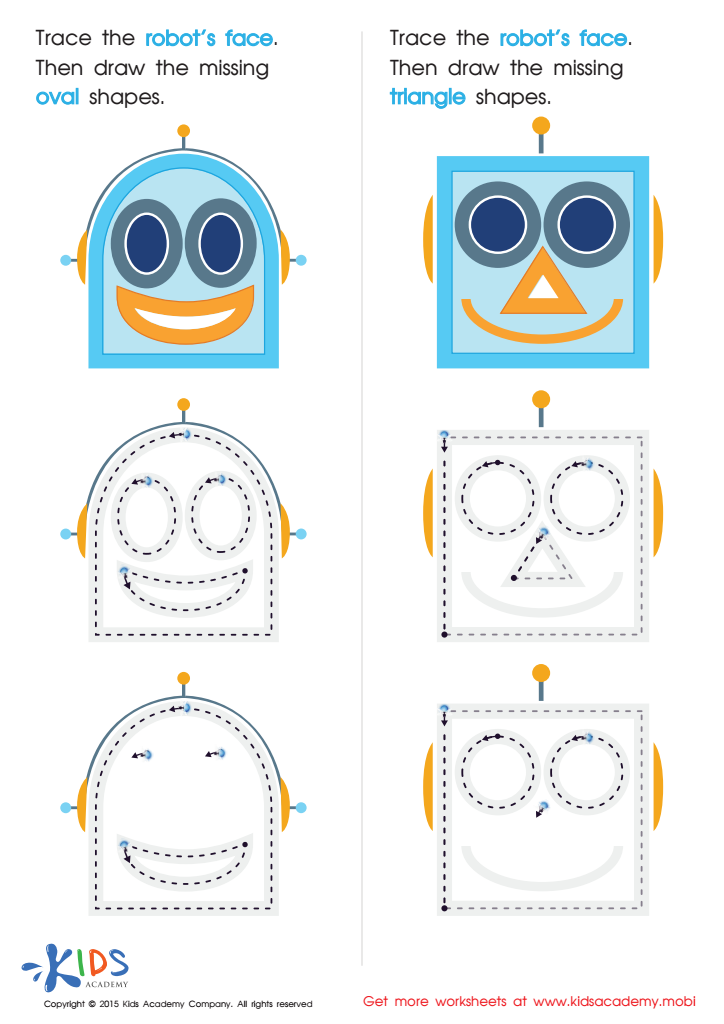
Drawing Ovals And Triangles with Fun Printable
Trace the face and draw missing ovals and triangles. Test your memory and recall shapes' names. Check if you remember how to draw them!
Drawing Ovals And Triangles with Fun Printable
Worksheet
Join Kids Academy for Free
Who is primarily going to use this learning content?








Supporting a 4-year-old’s understanding of basic geometry, particularly 2D shapes, lays a critical foundation for future learning in both math and more advanced spatial reasoning. Familiarity with shapes like circles, squares, and triangles helps children develop visual and spatial awareness, critical components in everyday problem-solving and decision-making.
Understanding 2D shapes aids in fine motor development as children trace, draw, and cut out shapes. This activity enhances their dexterity, a skill uniformly beneficial whether they are writing, playing a musical instrument, or engaging in sports. Recognizing and naming shapes also bolsters vocabulary and language skills. Words like ‘rectangle’ or ‘octagon’ expand their lexicon, encouraging both verbal and cognitive development.
Moreover, early knowledge of shapes serves as a fundamental step toward more complex math skills. Shapes introduce concepts like symmetry, measurement, and proportion, which will later evolve into understanding geometry, fractions, and multiplication. Through playful and informative shape-based activities, children also improve their observational skills and memory, which can improve their ability to classify and analyze information in varied contexts.
In sum, fostering geometric understanding in young children not only supports their math skills but helps them in broad cognitive, motor, and language development, setting a robust groundwork for a wide spectrum of future academic and life skills.