Cognitive Development Adding in the Sea Worksheets for 4-Year-Olds
28 filtered results
-
From - To
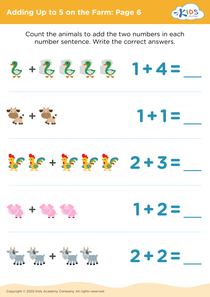
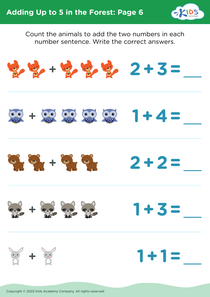
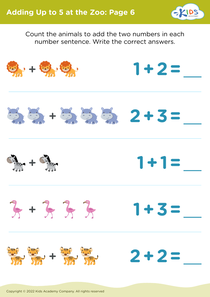
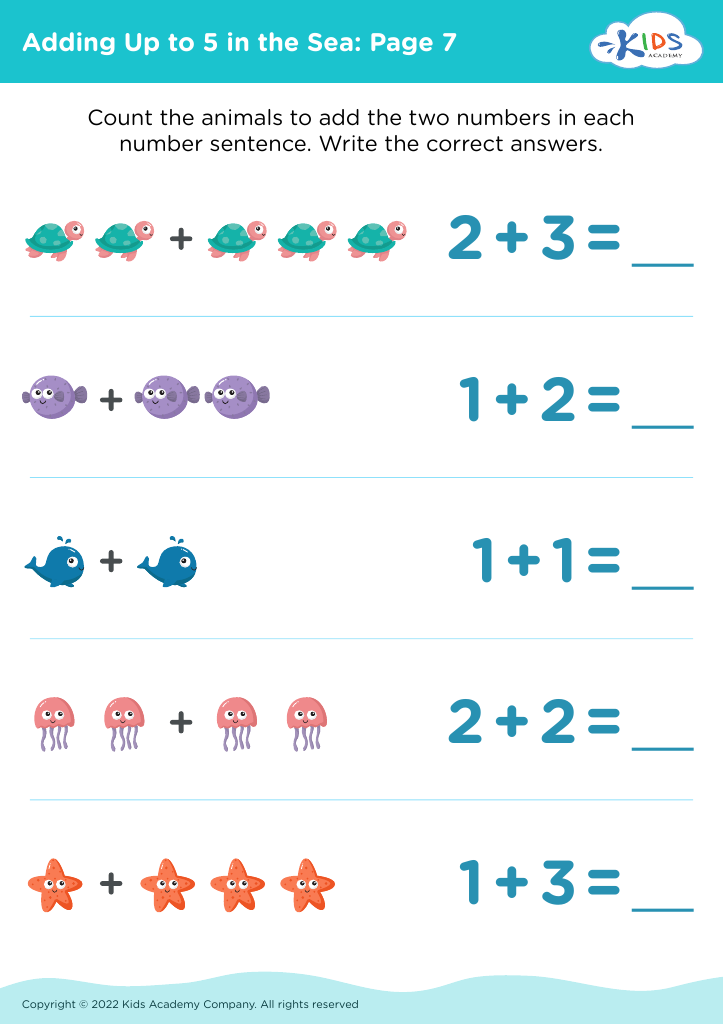
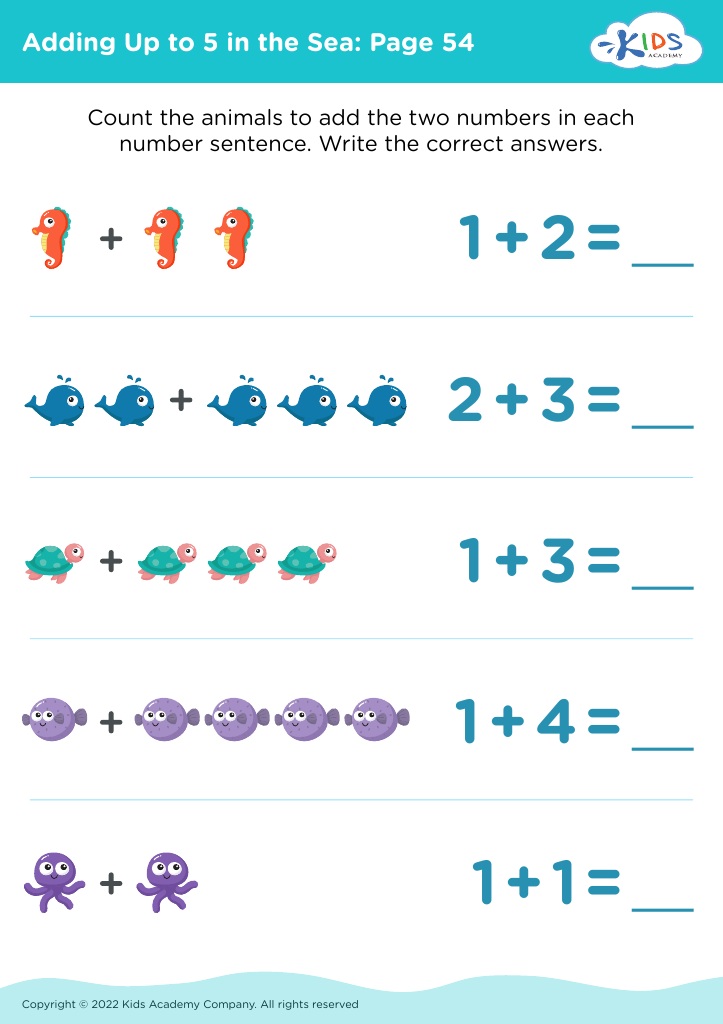
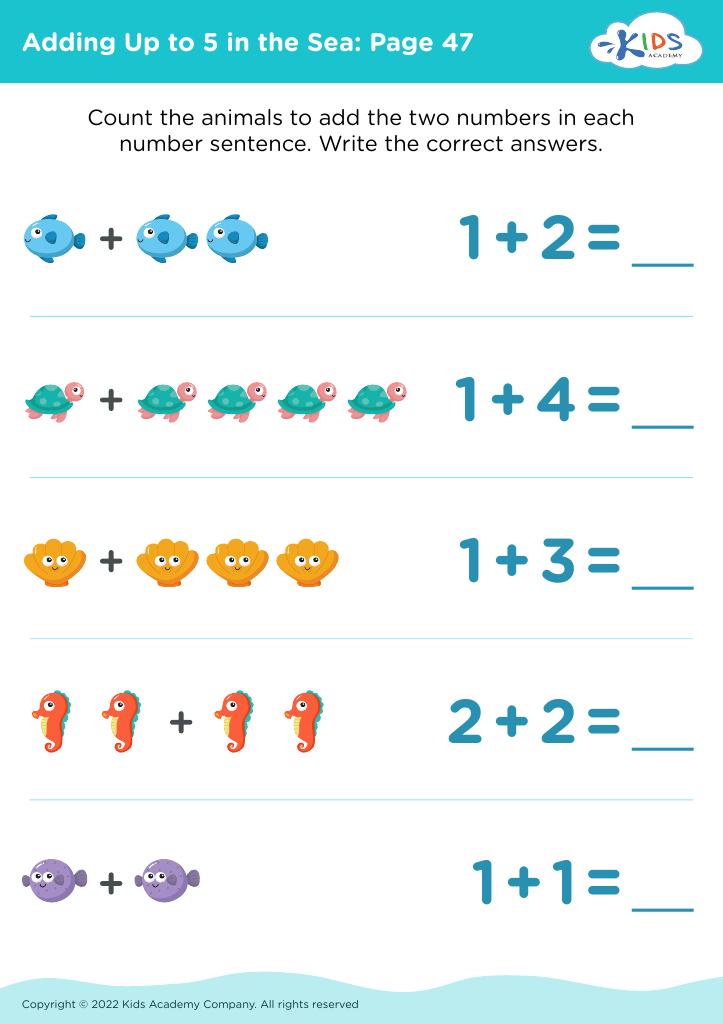
Explore our engaging "Adding in the Sea" worksheets designed specifically for 4-year-olds! These fun printable activities not only capture young learners' imaginations with vibrant underwater themes but also promote essential cognitive development skills. Through interactive counting and addition exercises, children enhance their problem-solving abilities and mathematical understanding in a playful context. Each worksheet is tailored to encourage curiosity, boost essential numeracy skills, and establish a solid foundation for future learning. Dive into the world of numbers and nurture your child's cognitive growth with our delightful sea-inspired activities today, sparking a love for learning that will last a lifetime!
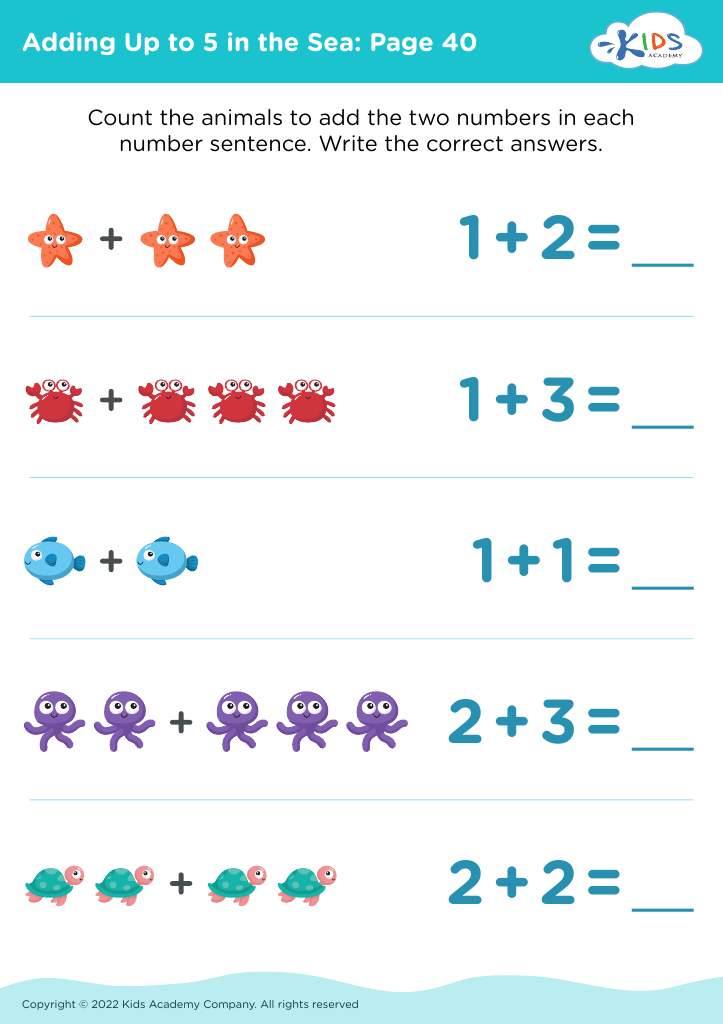
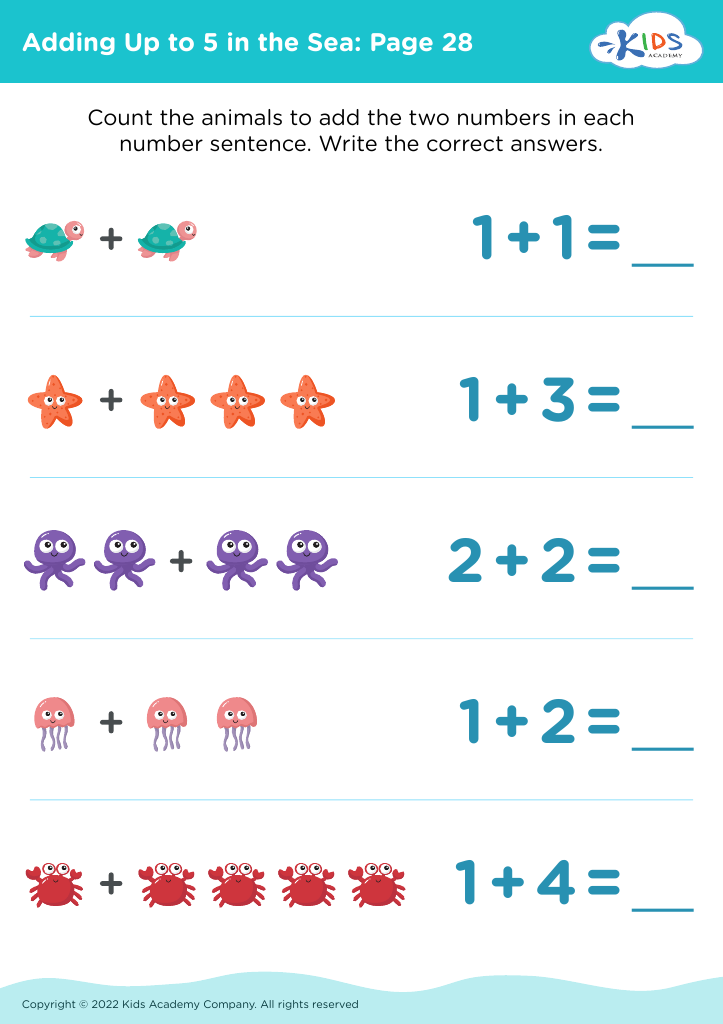
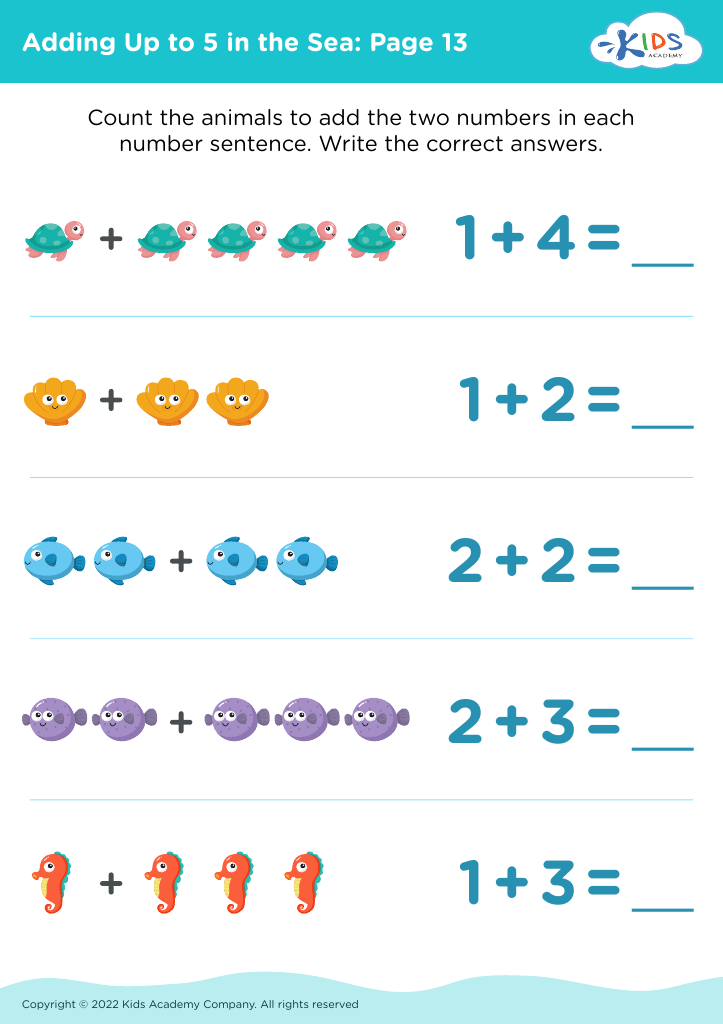
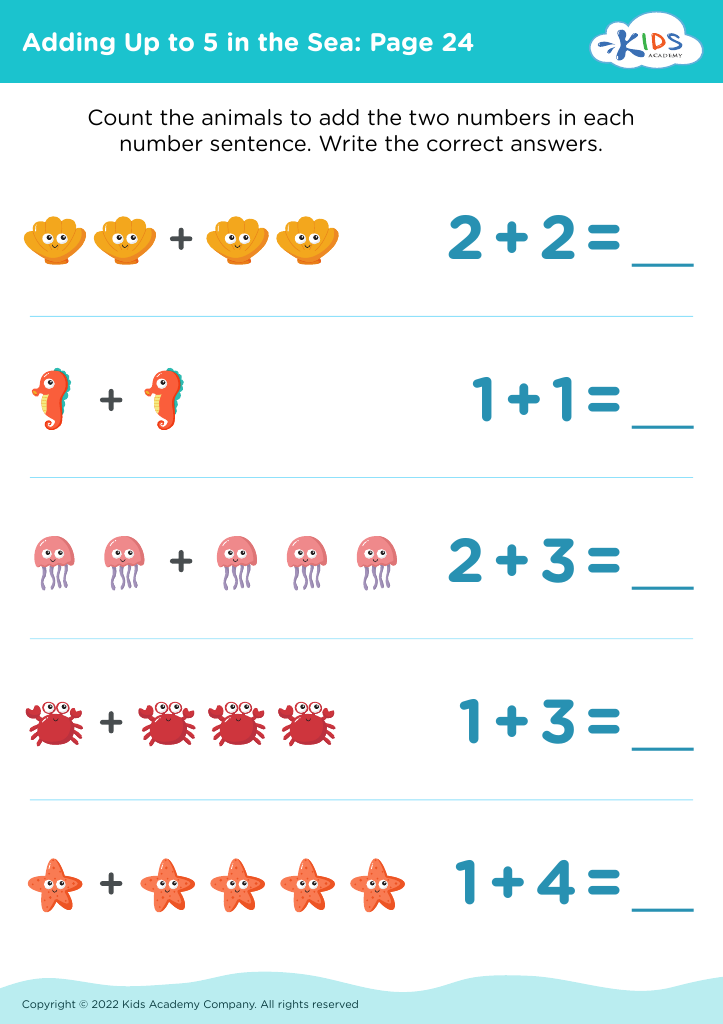
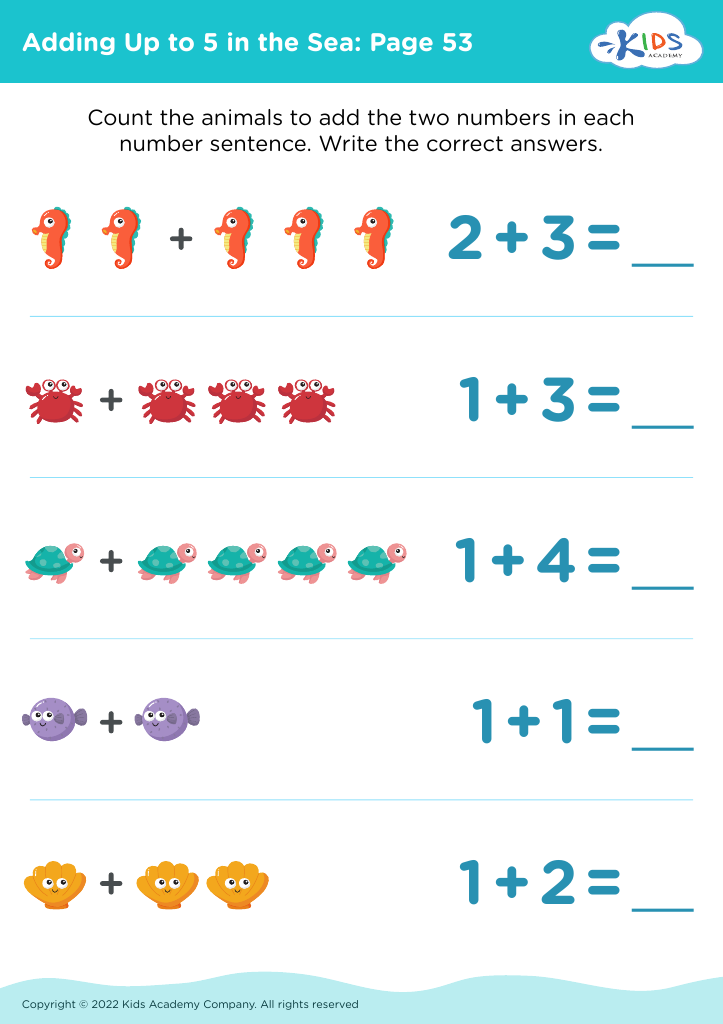
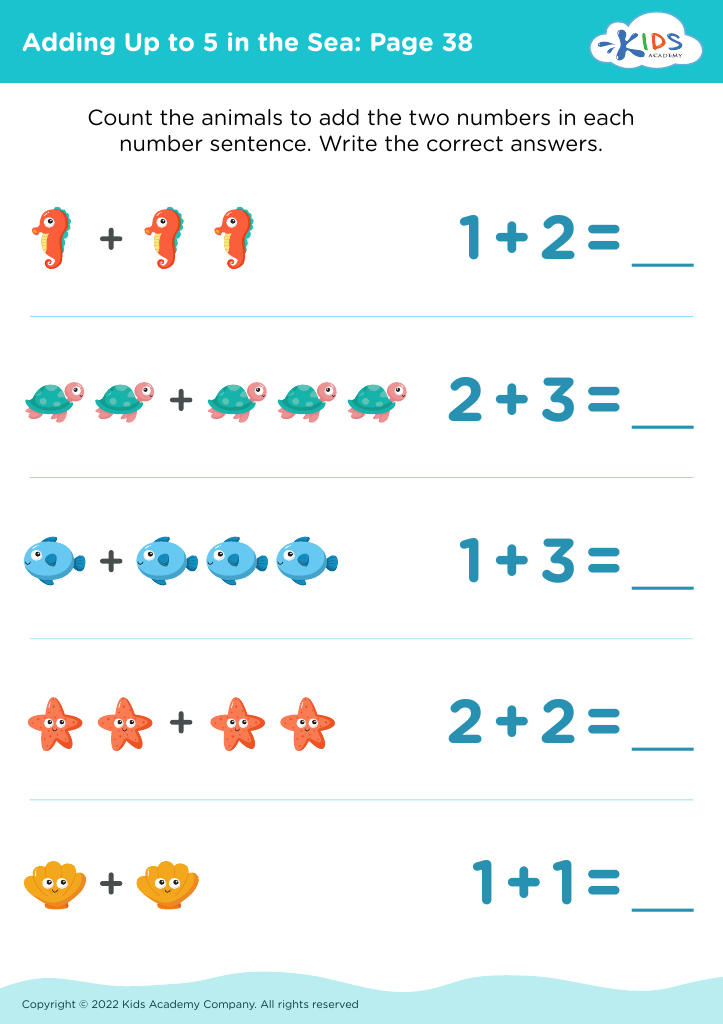
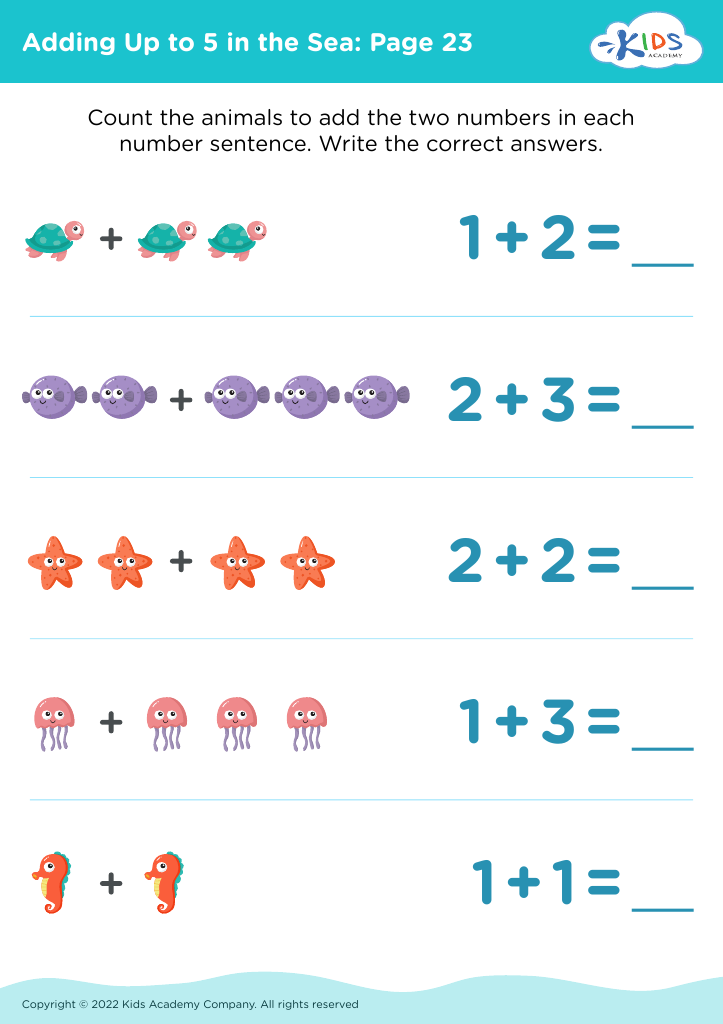
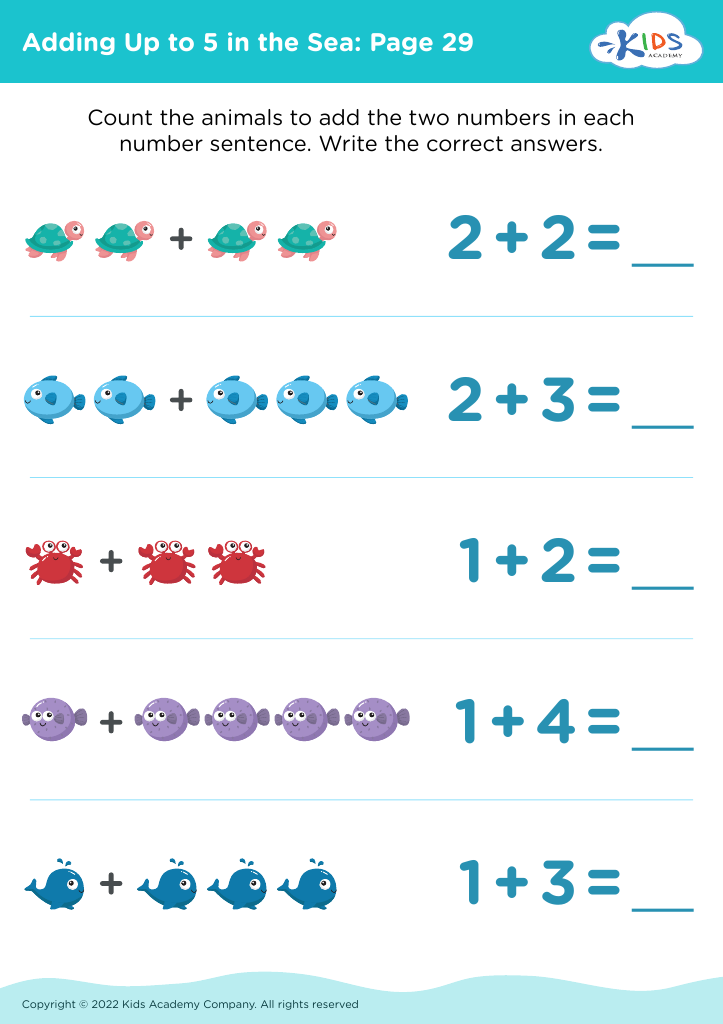
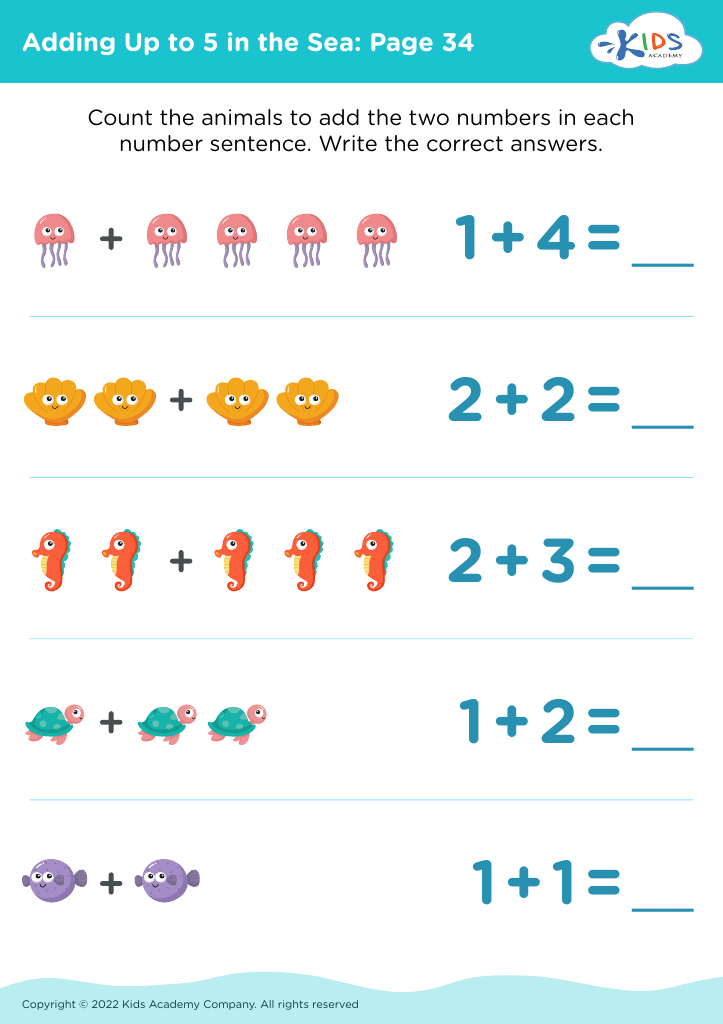
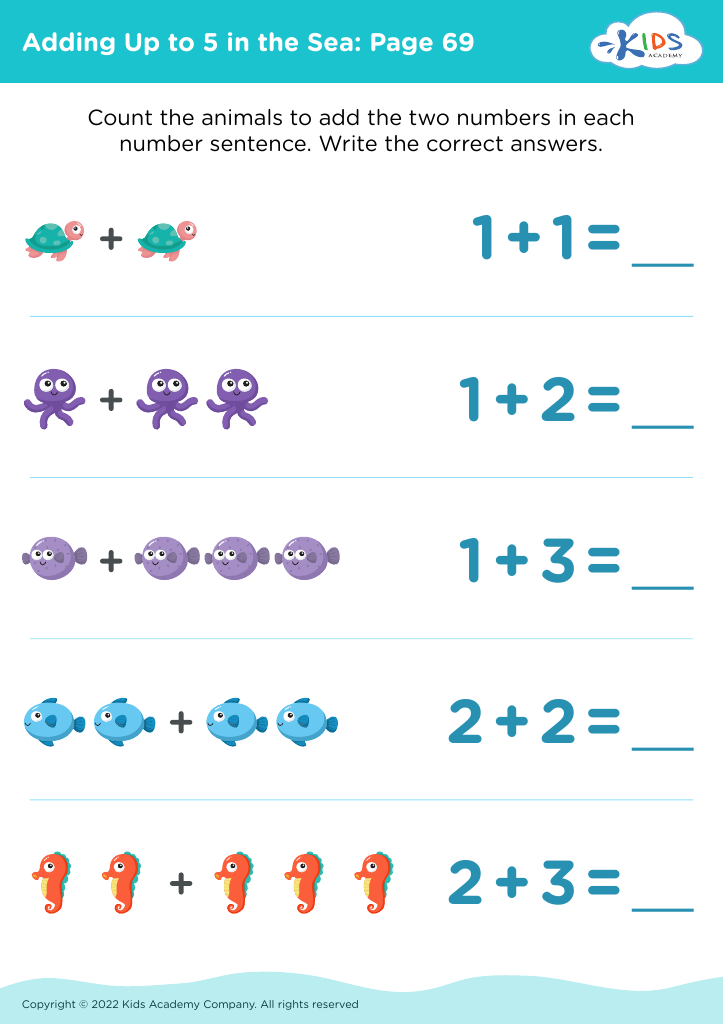
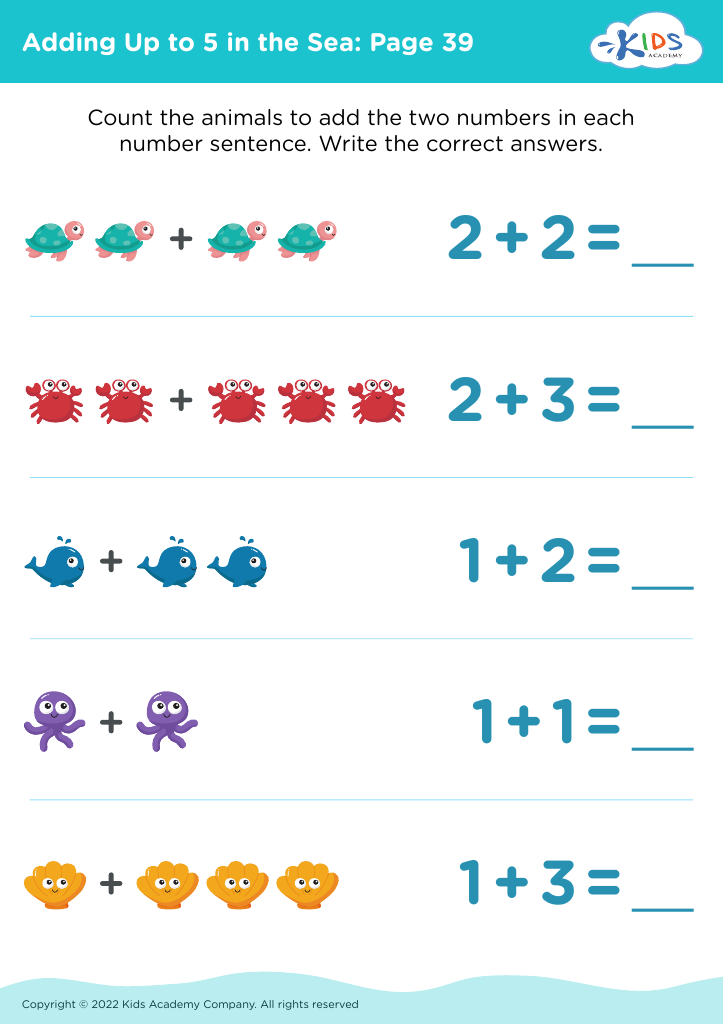
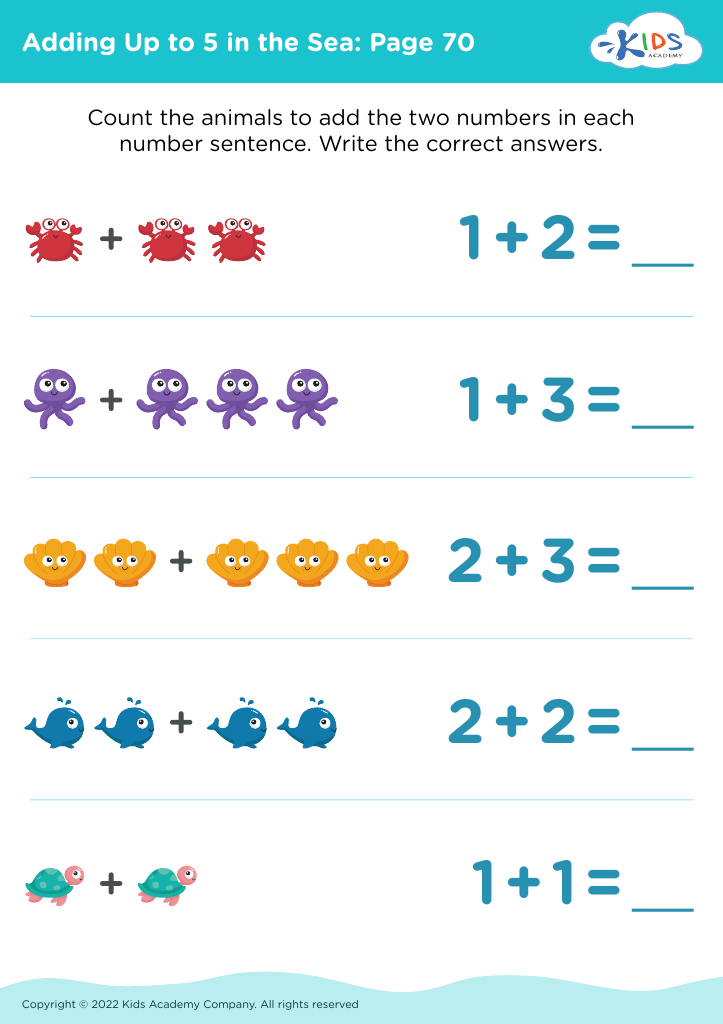
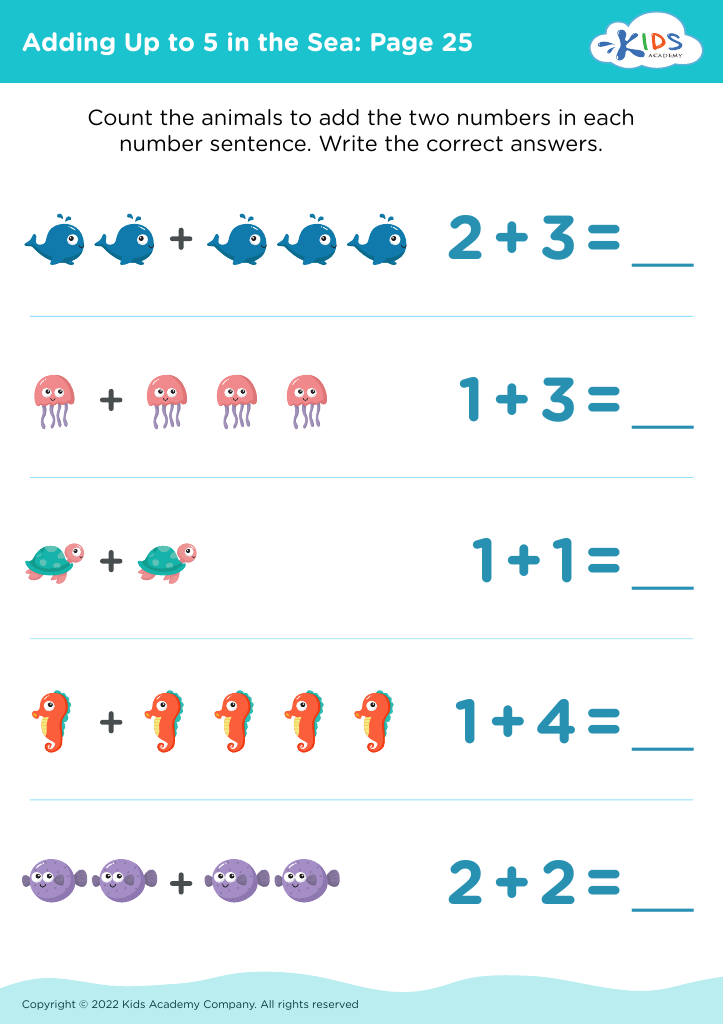
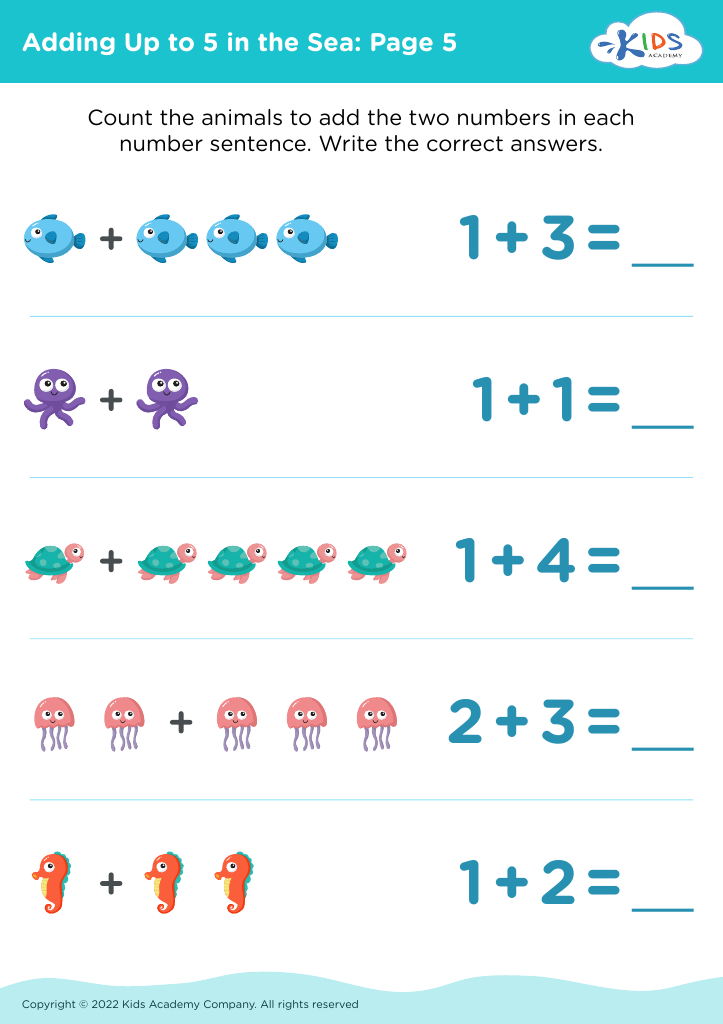
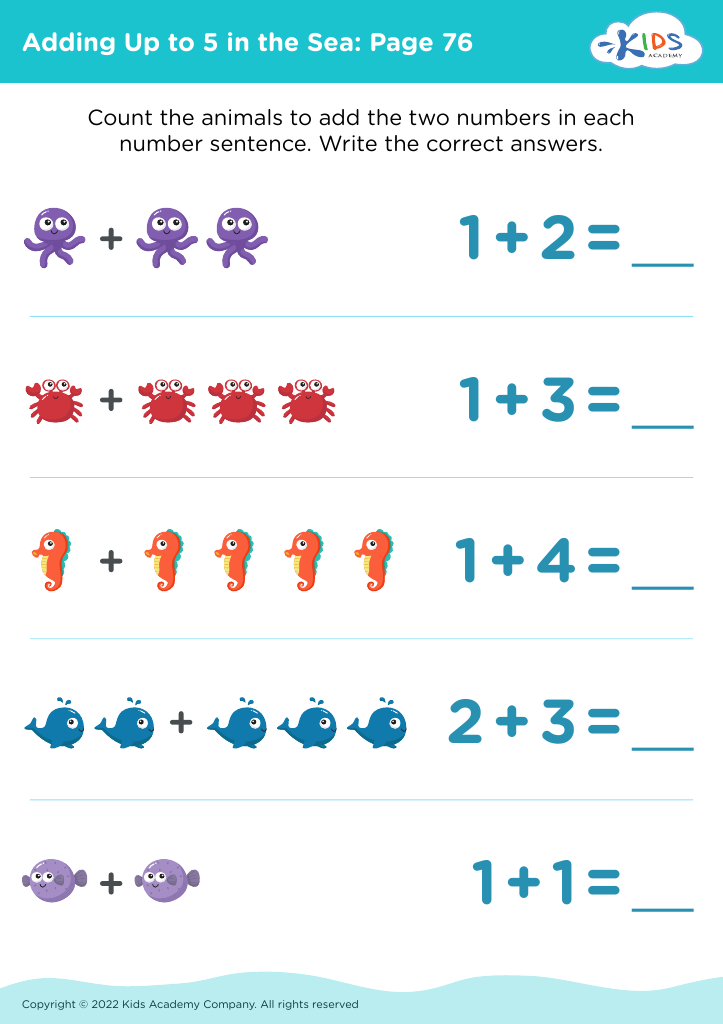
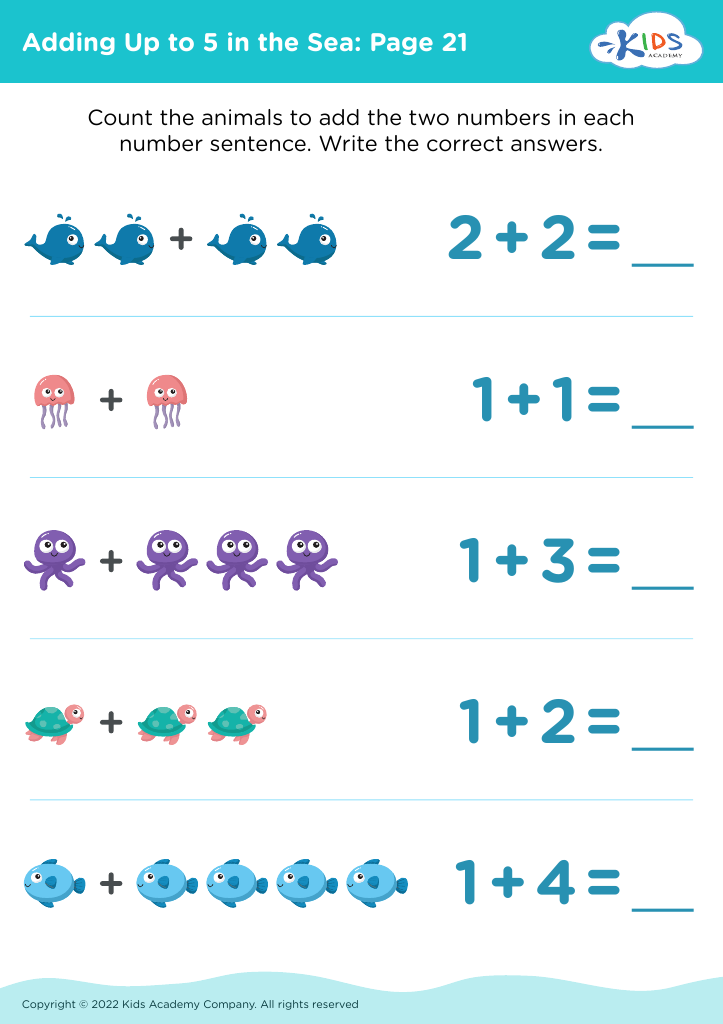
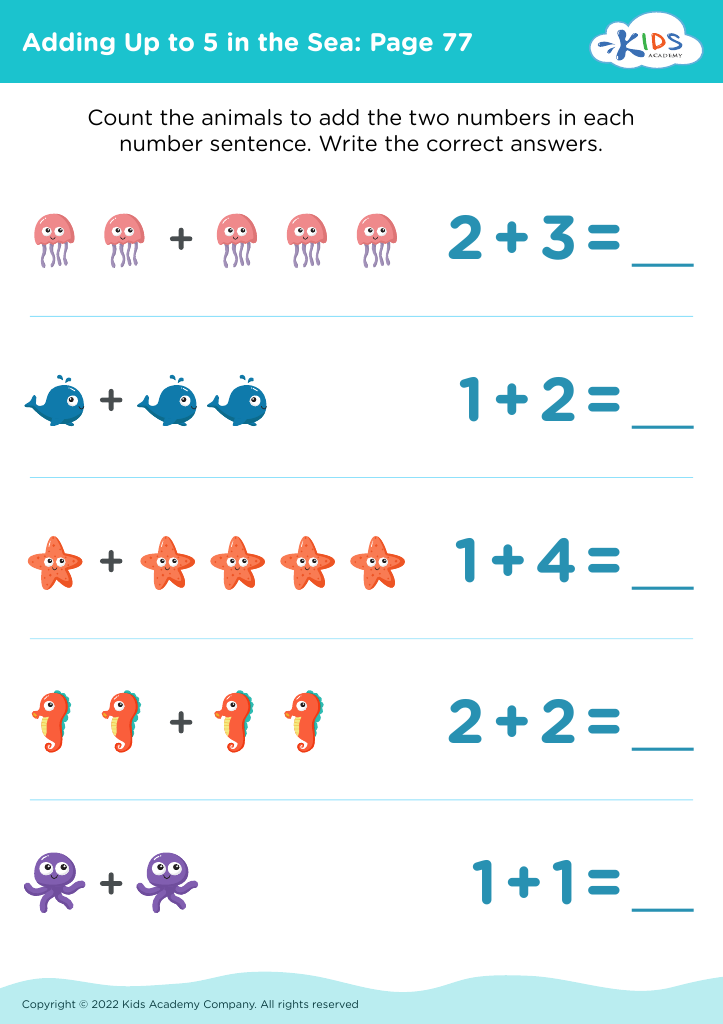
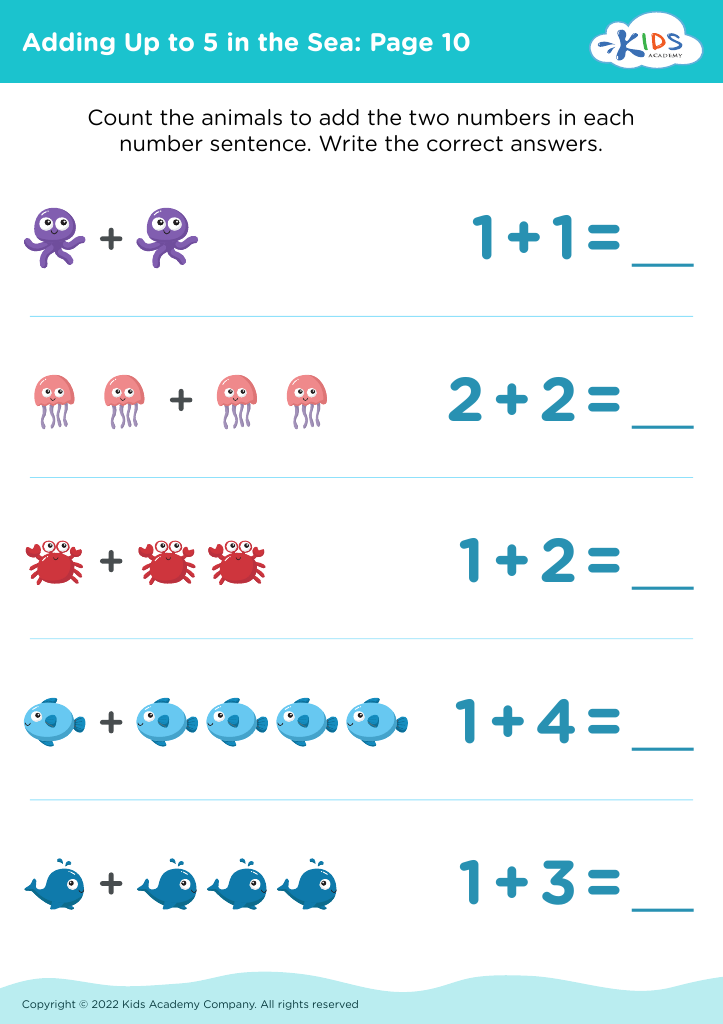
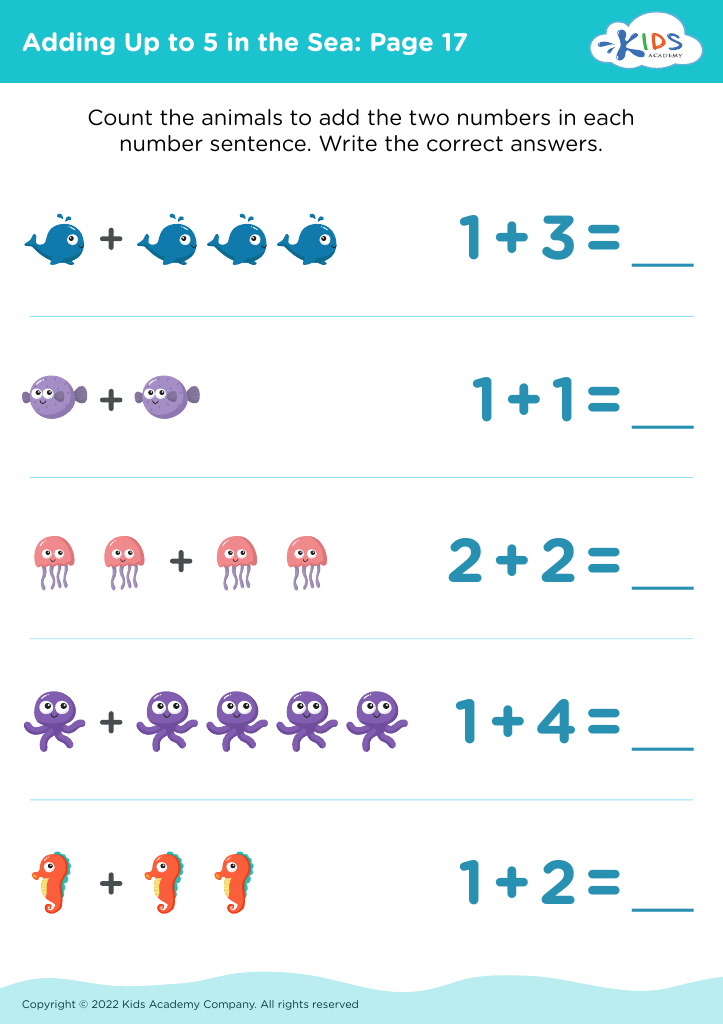
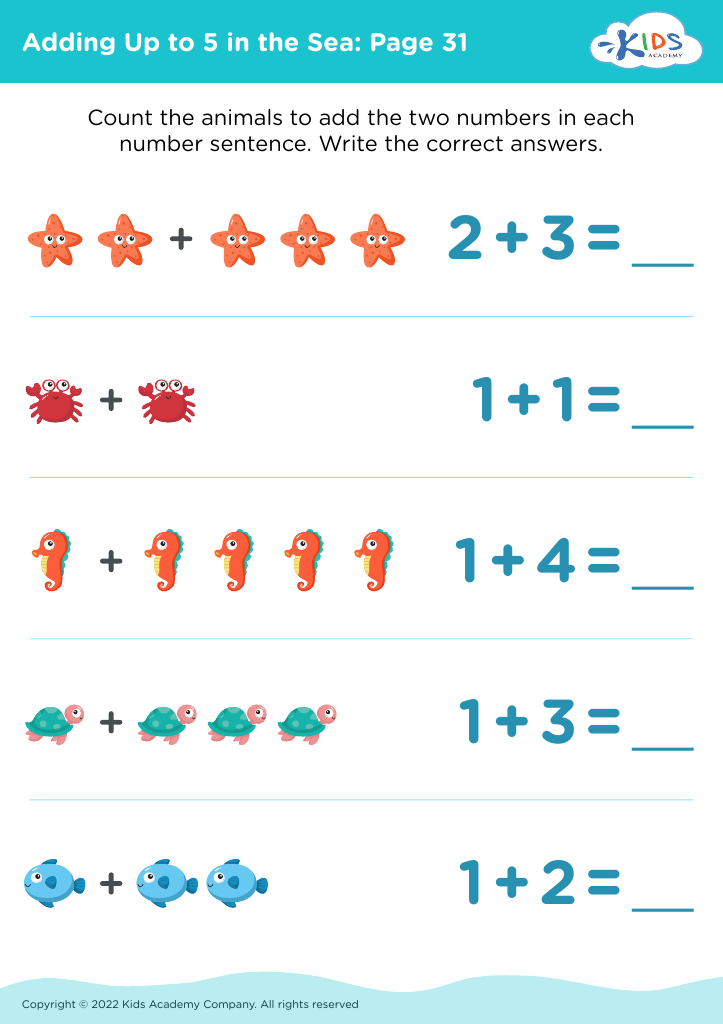
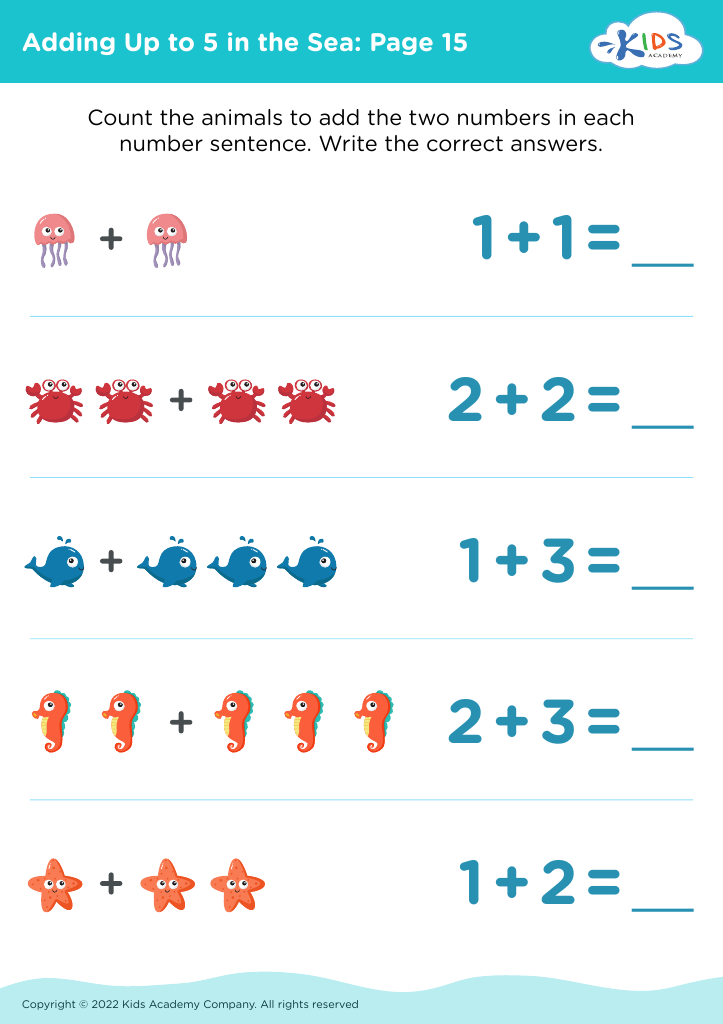



Cognitive development plays a crucial role in a child's overall growth and learning, especially for four-year-olds who are at a pivotal stage of early development. During this age, children's brains are rapidly developing, and they begin to engage more complex thinking, problem-solving, and language skills. It is essential for parents and teachers to prioritize cognitive development as it lays the foundation for future academic success and social interactions.
By introducing concepts such as the sea, educators and parents can ignite curiosity and creativity in children. Learning about the sea can enhance cognitive skills through exploration, such as understanding ecosystems, marine life, and environmental responsibility. Activities like counting fish, learning about different sea creatures, or understanding the ocean's role in our environment can promote critical thinking, reasoning, and communication skills.
Moreover, cognitive development through thematic learning, such as the sea, makes learning fun and engaging. It nurtures a child’s imagination and encourages collaborative play, fostering social skills. Ultimately, prioritizing cognitive development in early childhood sets the stage for lifelong learning, equips children with necessary life skills, and opens pathways for positive experiences in both academic and social settings. Parents and teachers should care about this essential aspect of growth to support each child's full potential.