Filters

50 filtered results

Clear all filters
Favorites
With answer key
Interactive

50 filtered results

Difficulty Level

Grade


Check out this FREE Trial Lesson on Adding Up to 5 for age 4!

Match Objects that Fit Together

Favorites
With answer key
Interactive
  • 4
  • Addition Practice
  • Adding Up to 5
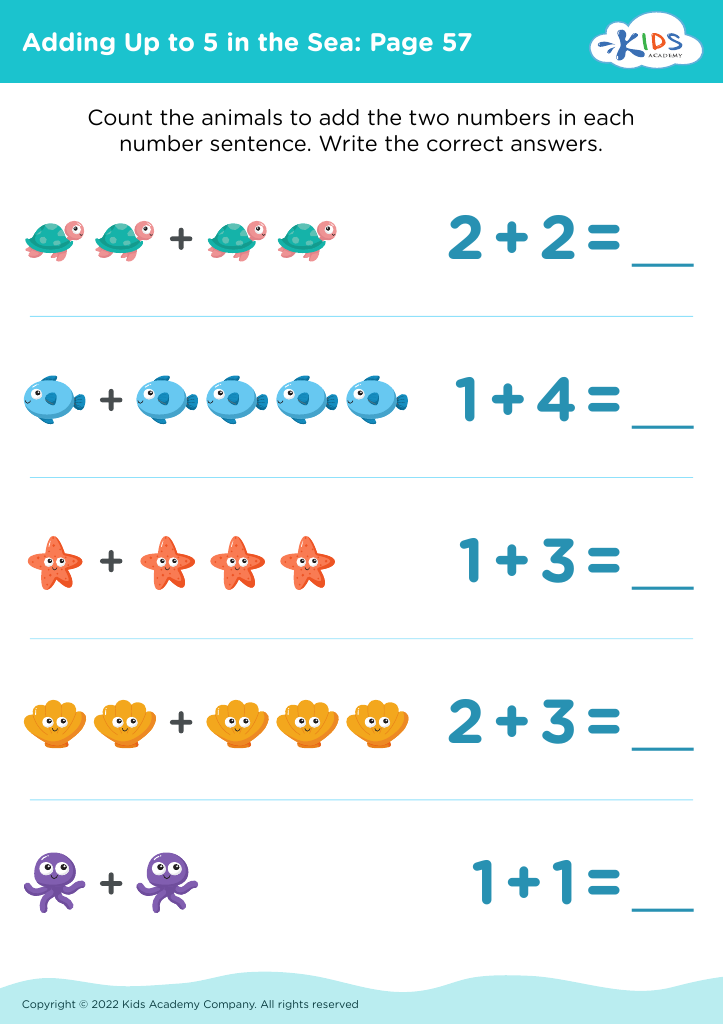
Adding Up to 5 in the Sea: Page 57
Worksheet
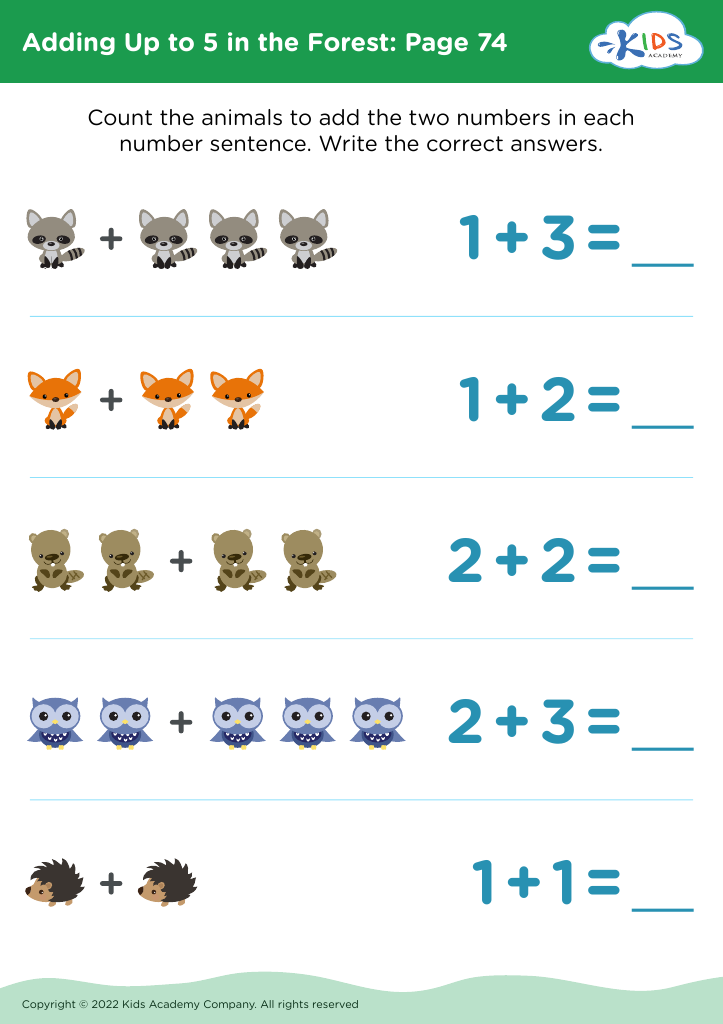
Adding Up to 5 in the Forest: Page 74
Worksheet
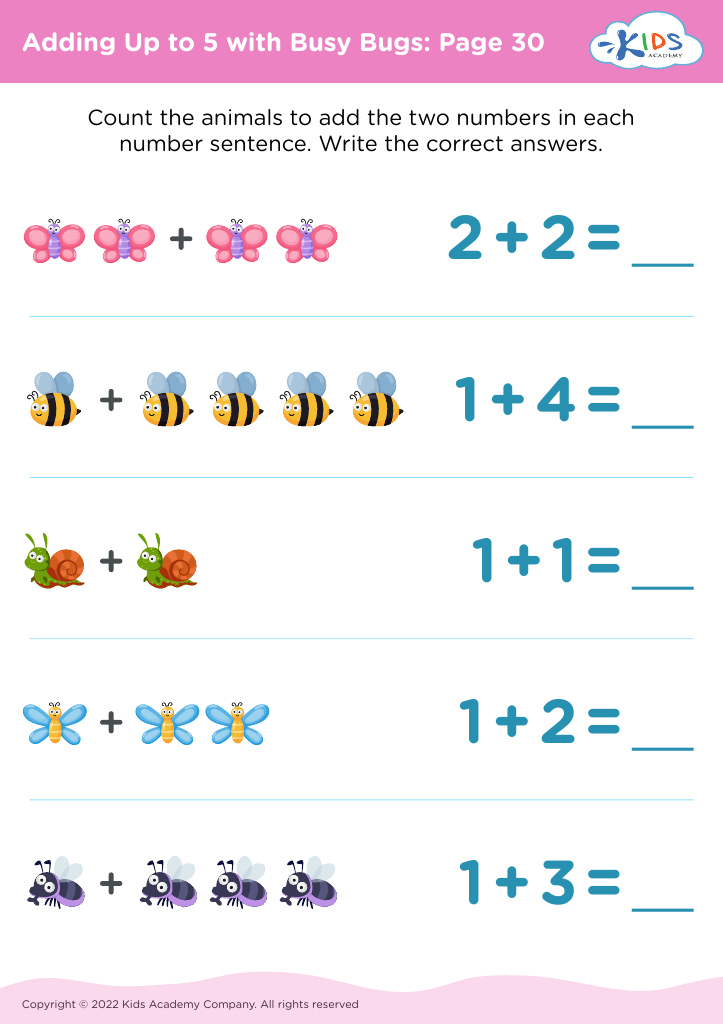
Adding Up to 5 with Busy Bugs: Page 30
Worksheet
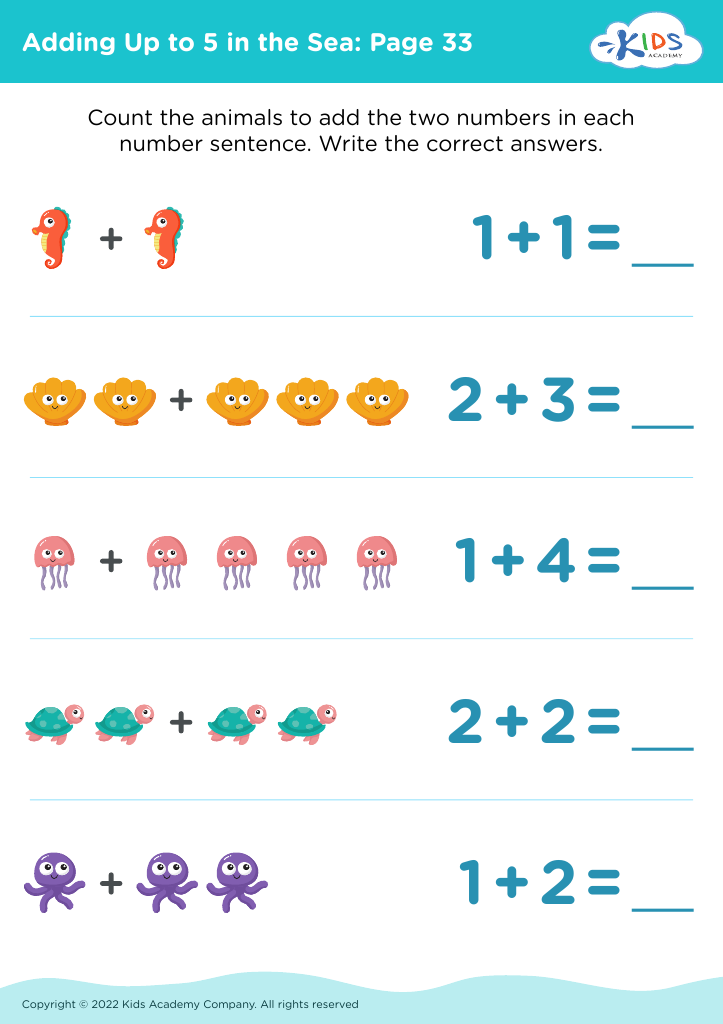
Adding Up to 5 in the Sea: Page 33
Worksheet
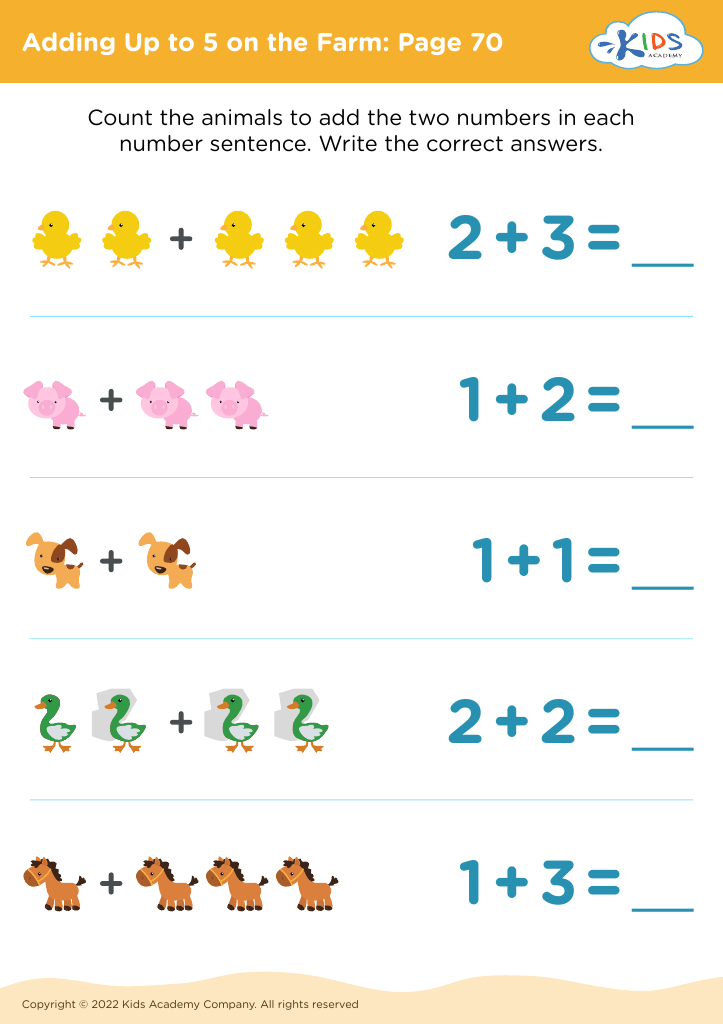
Adding Up to 5 on the Farm: Page 70
Worksheet
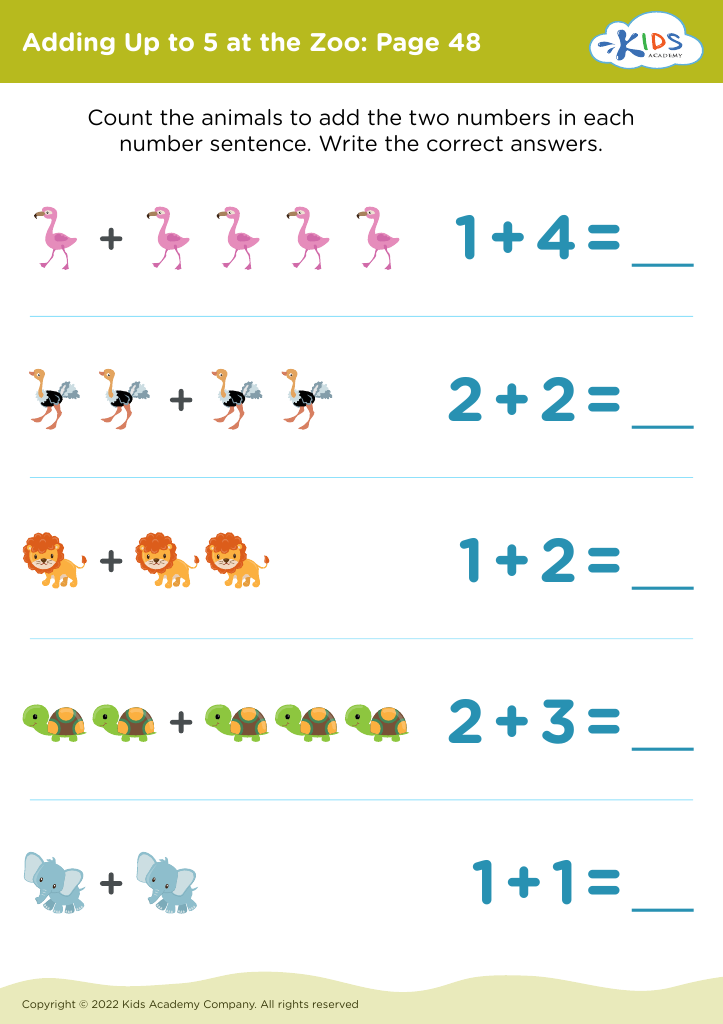
Adding Up to 5 at the Zoo: Page 48
Worksheet
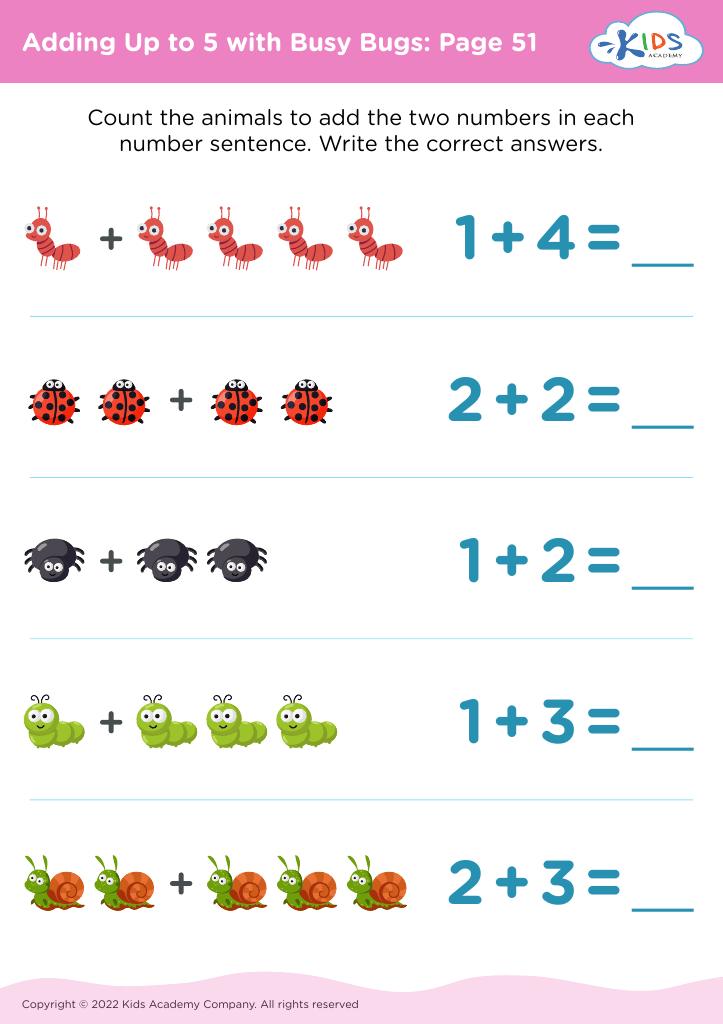
Adding Up to 5 with Busy Bugs: Page 51
Worksheet
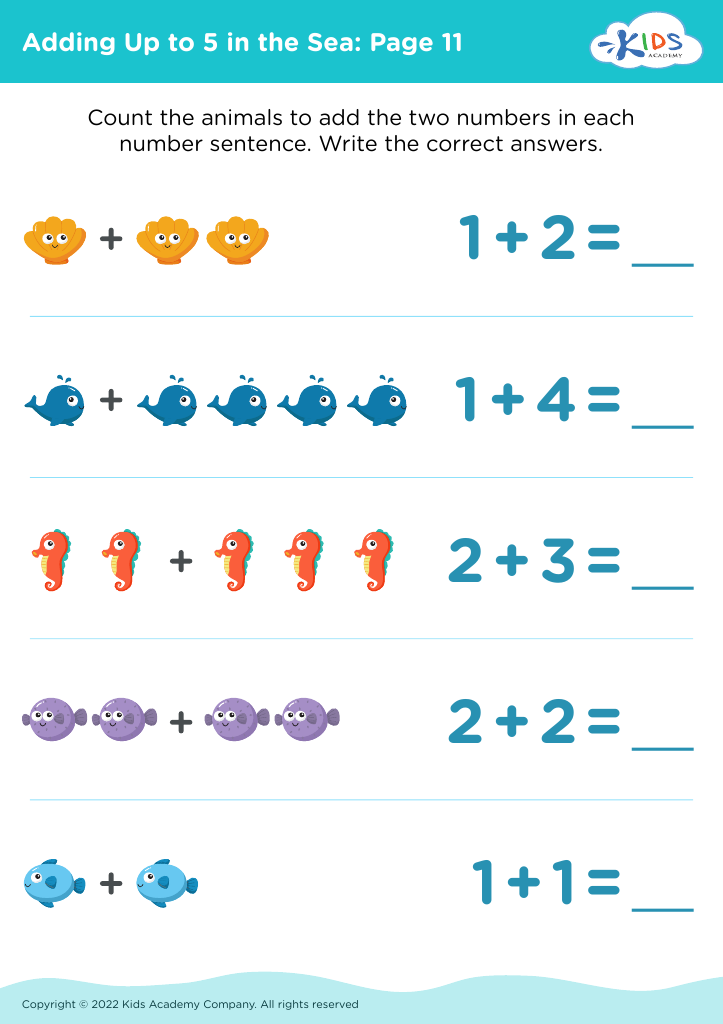
Adding Up to 5 in the Sea: Page 11
Worksheet
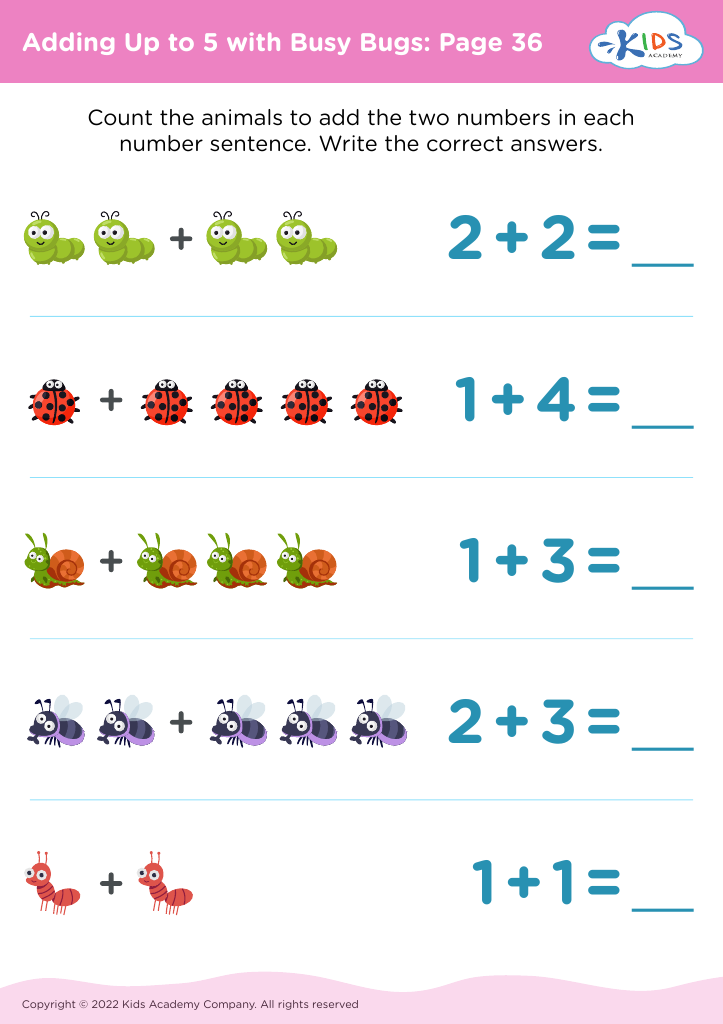
Adding Up to 5 with Busy Bugs: Page 36
Worksheet
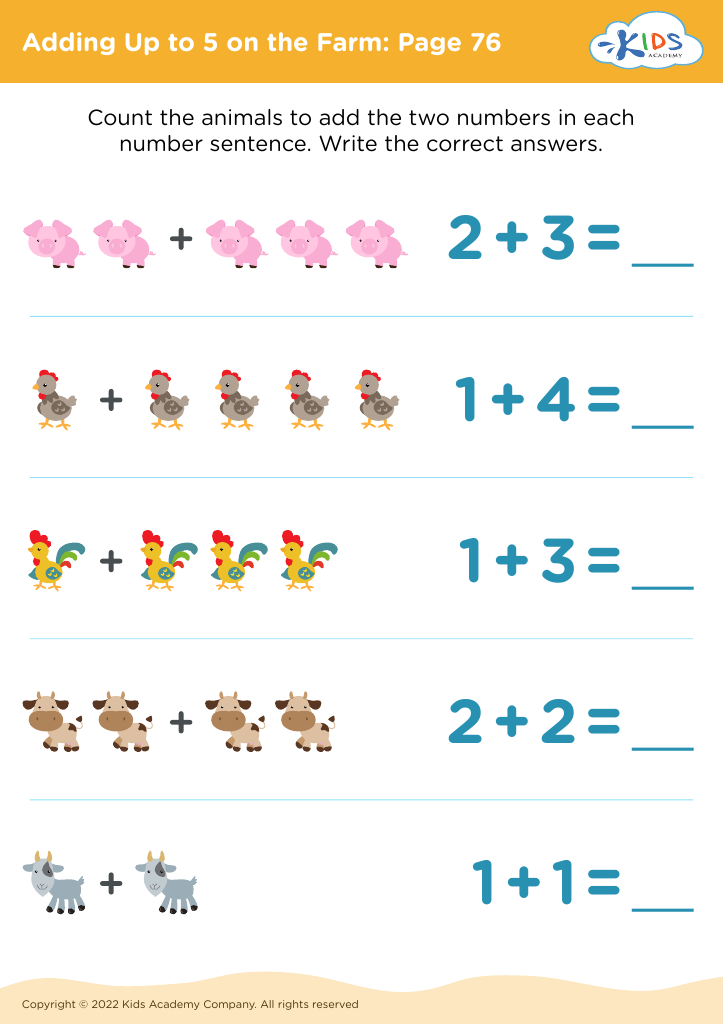
Adding Up to 5 on the Farm: Page 76
Worksheet
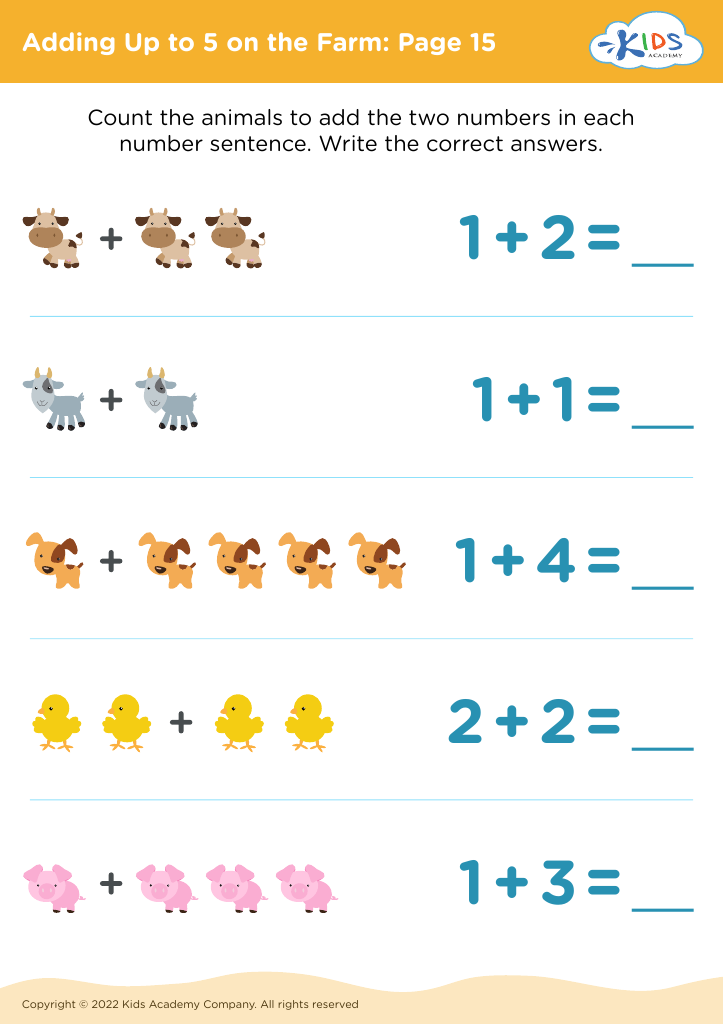
Adding Up to 5 on the Farm: Page 15
Worksheet
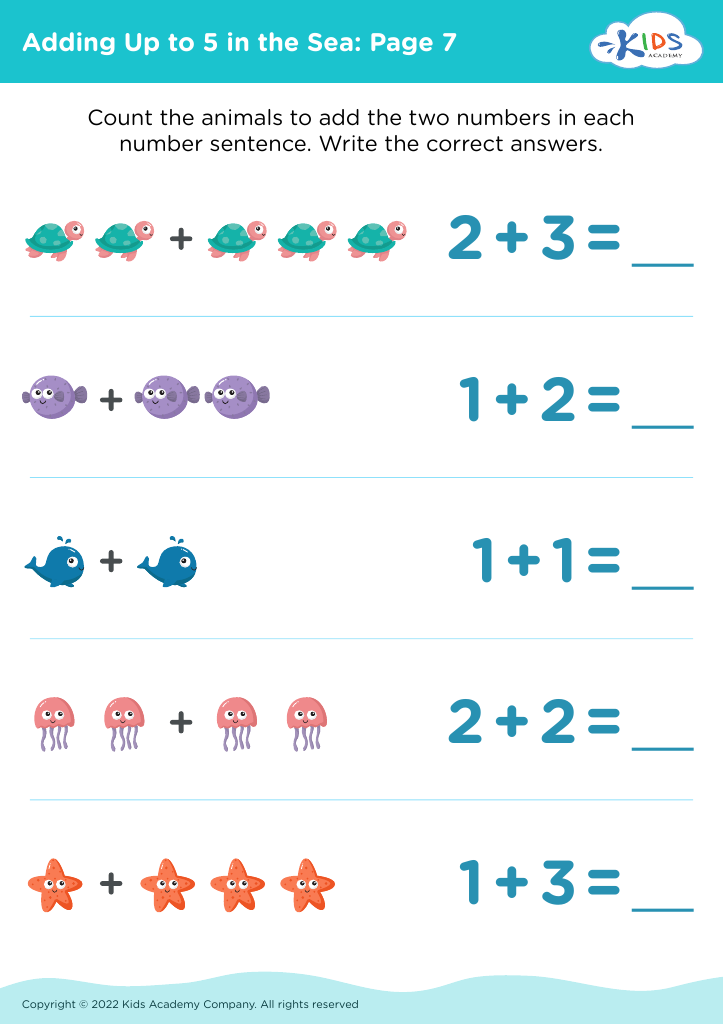
Adding Up to 5 in the Sea: Page 7

Adding Up to 5 in the Sea: Page 7

Adding Up to 5 in the Sea: Page 7
Worksheet
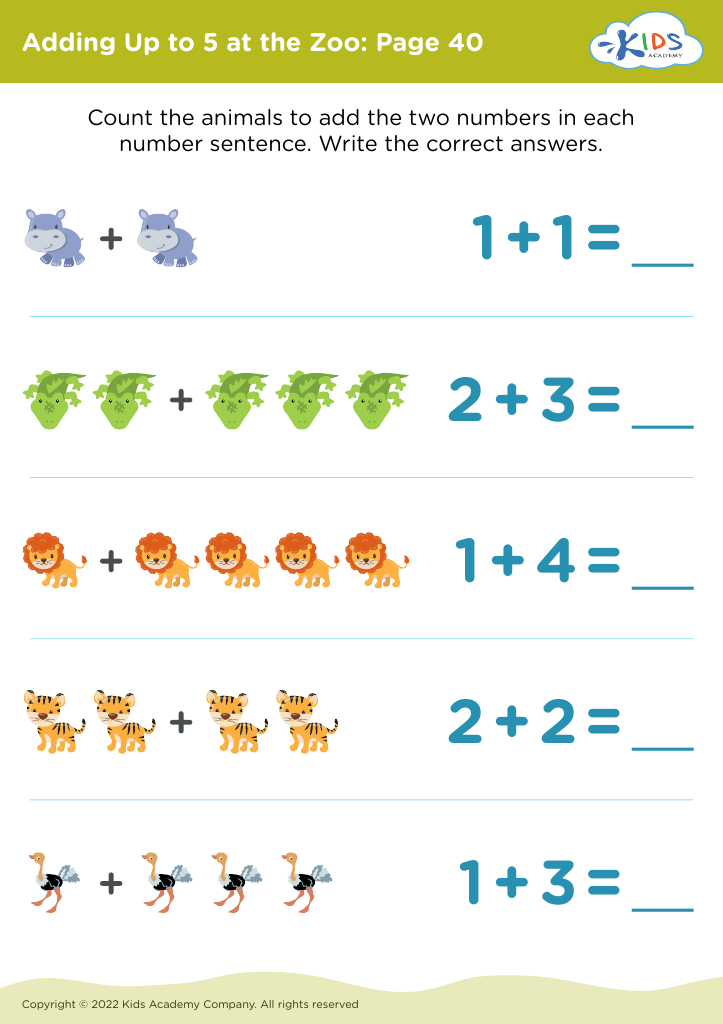
Adding Up to 5 at the Zoo: Page 40
Worksheet
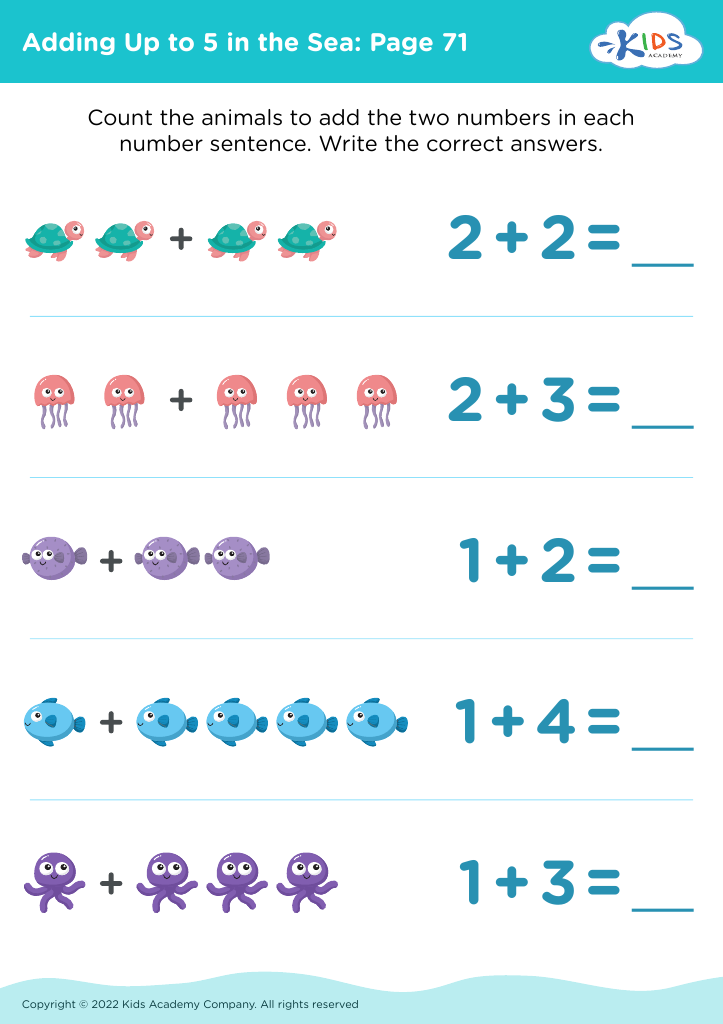
Adding Up to 5 in the Sea: Page 71
Worksheet
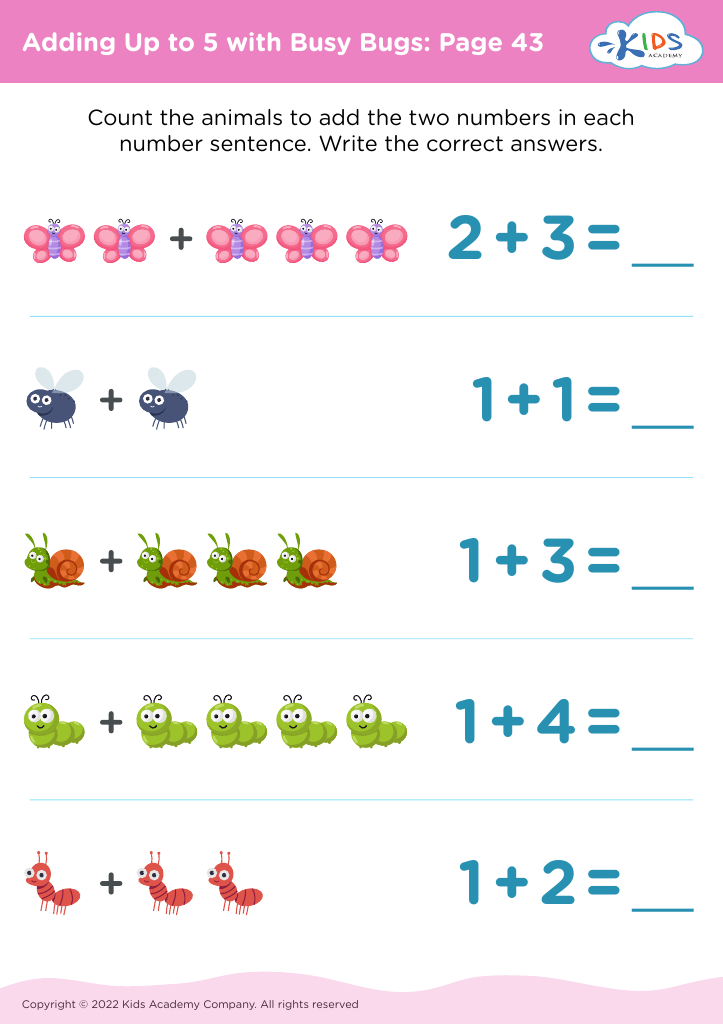
Adding Up to 5 with Busy Bugs: Page 43
Worksheet
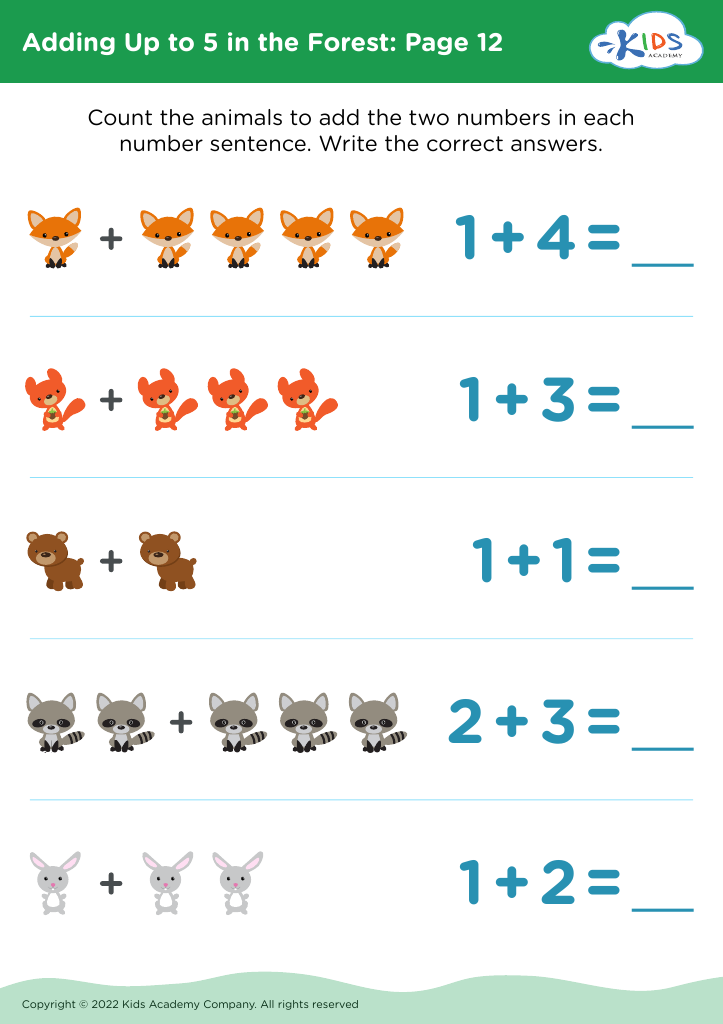
Adding Up to 5 in the Forest: Page 12
Worksheet
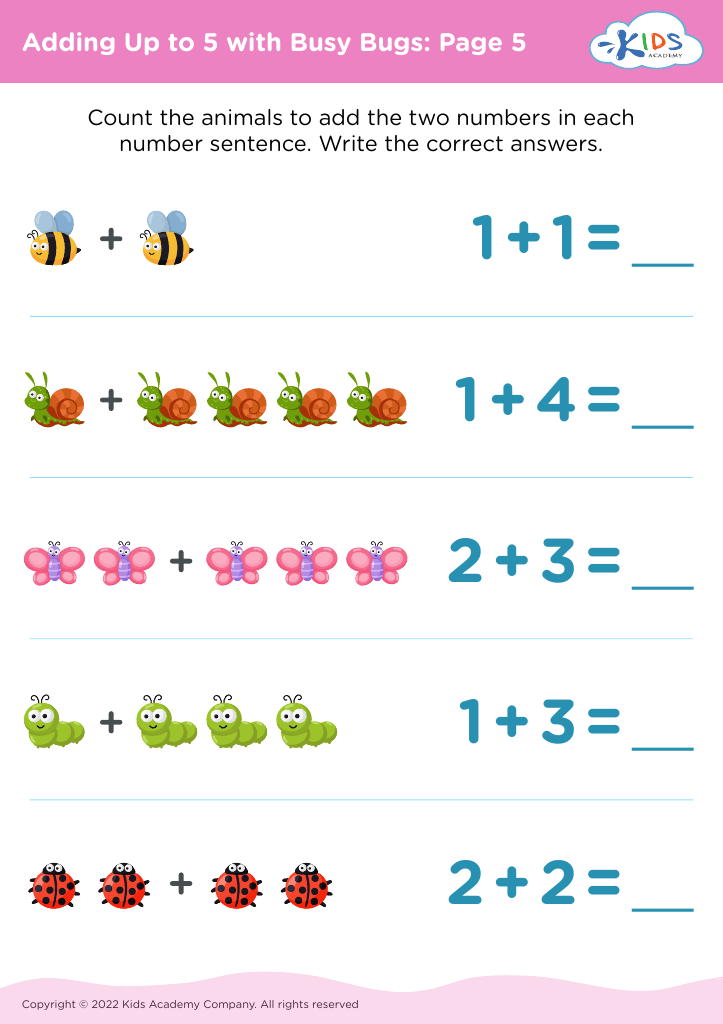
Adding Up to 5 with Busy Bugs: Page 5
Worksheet
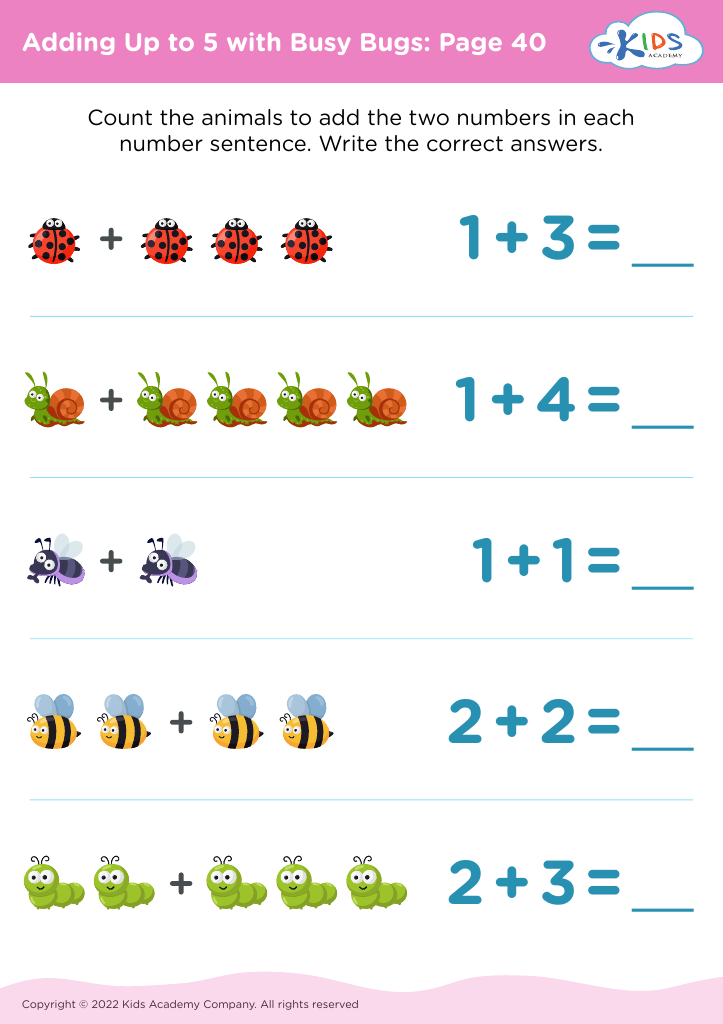
Adding Up to 5 with Busy Bugs: Page 40
Worksheet
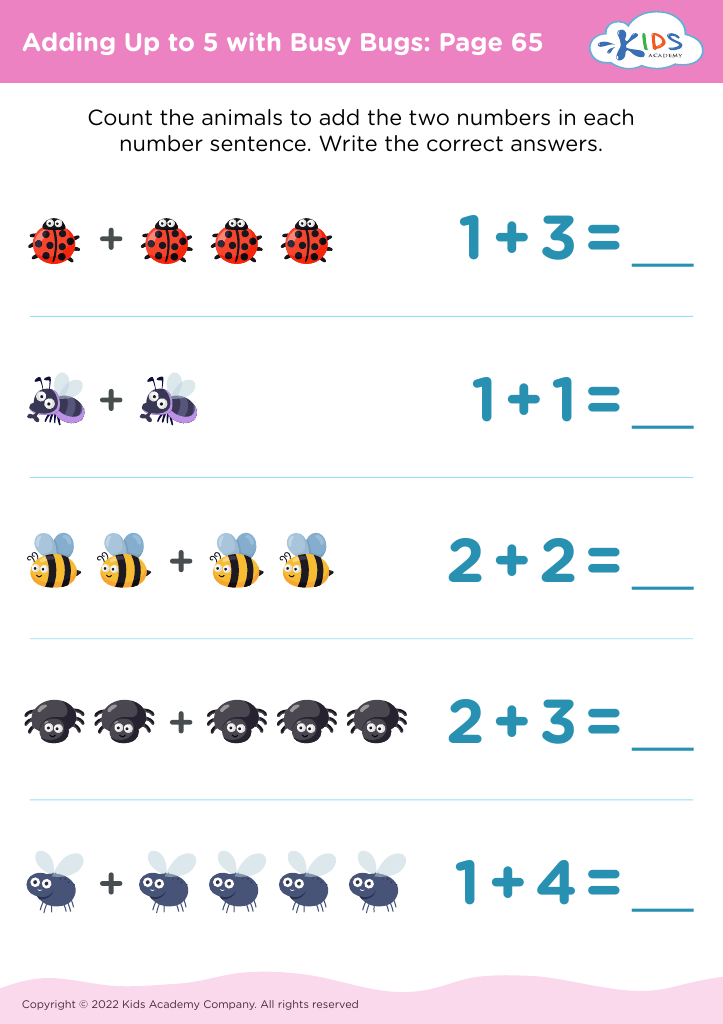
Adding Up to 5 with Busy Bugs: Page 65
Worksheet
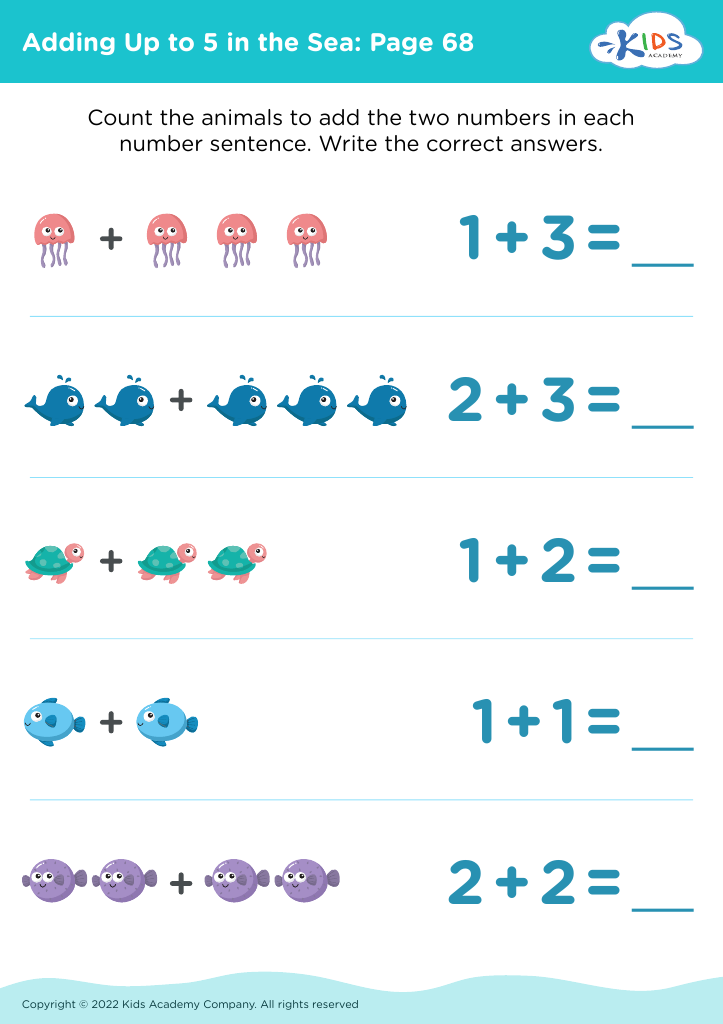
Adding Up to 5 in the Sea: Page 68
Worksheet
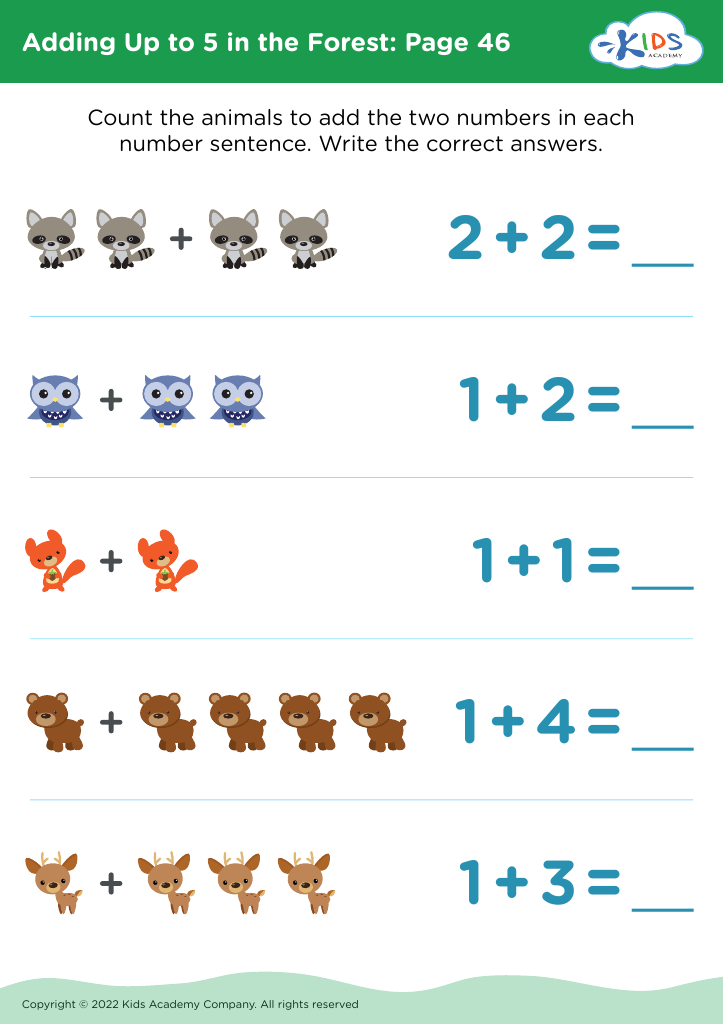
Adding Up to 5 in the Forest: Page 46
Worksheet
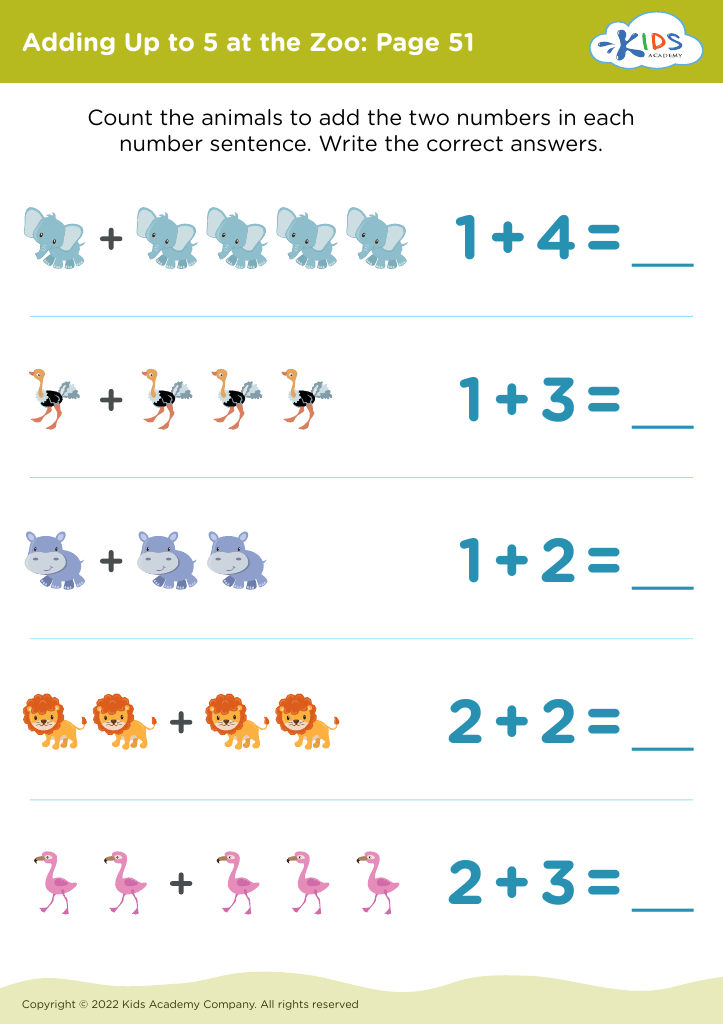
Adding Up to 5 at the Zoo: Page 51
Worksheet
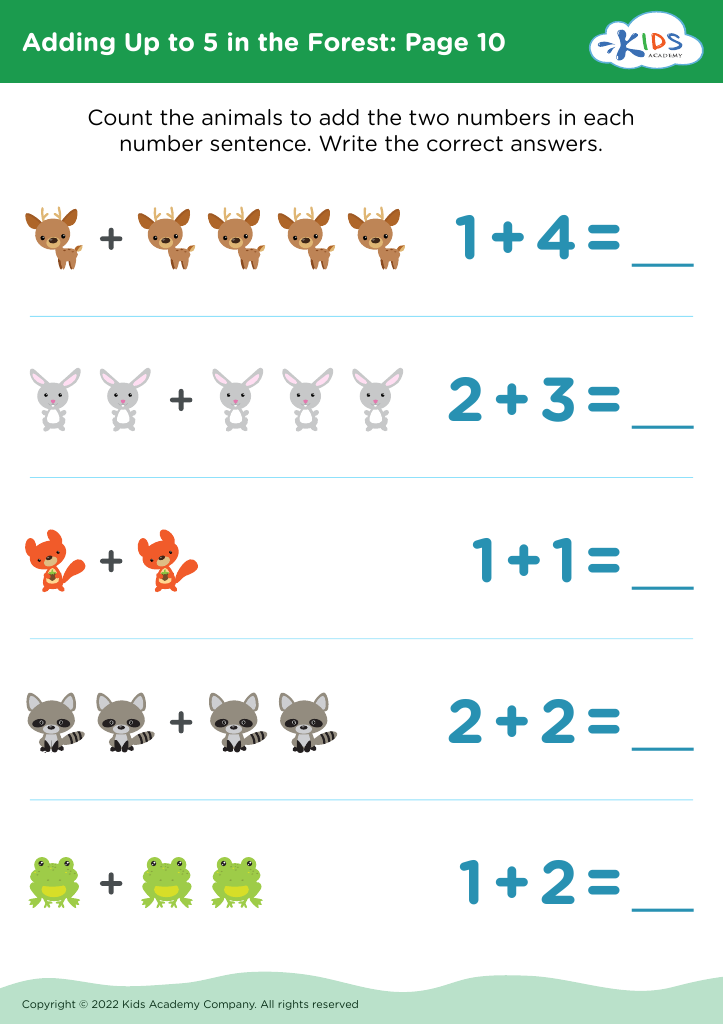
Adding Up to 5 in the Forest: Page 10
Worksheet
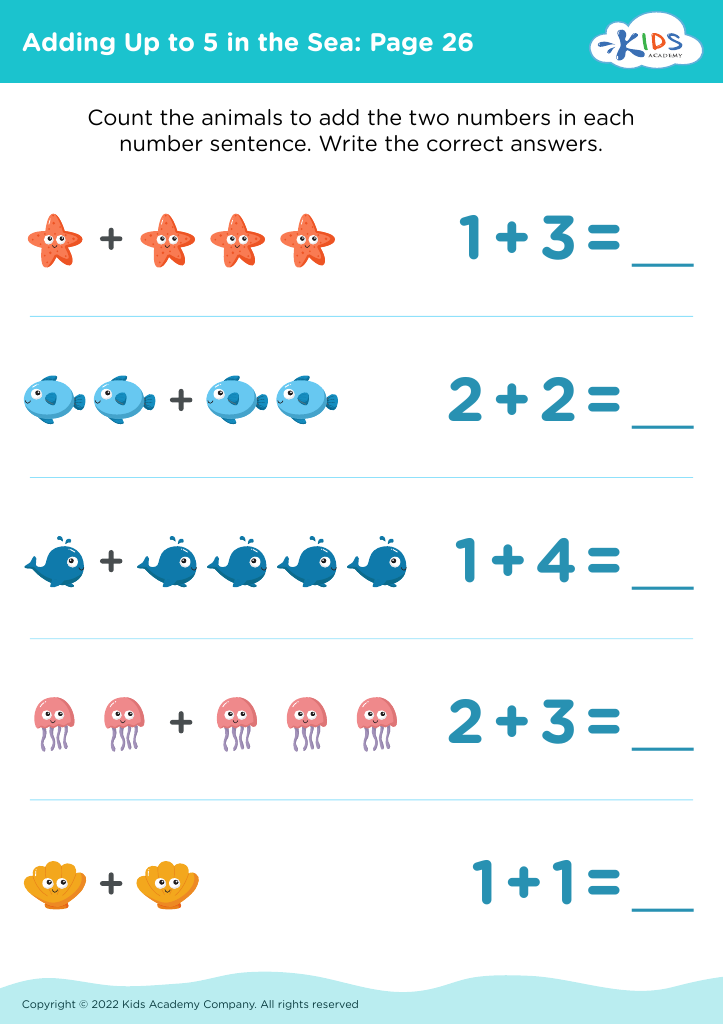
Adding Up to 5 in the Sea: Page 26
Worksheet


Addition practice for 4-year-olds, particularly focusing on adding up to 5, is crucial for several reasons. First, it lays the foundation for early mathematical understanding. Developing basic addition skills helps children recognize numbers and understand their relationships, fostering number sense—a key component of later math proficiency.

Second, this early practice promotes cognitive development by enhancing critical thinking and problem-solving skills. As children learn to combine quantities, they also strengthen their ability to recognize patterns and relationships in other areas of learning, giving them a more rounded educational experience.

Third, addition practice can boost a child's confidence and self-esteem. Mastery of basic math concepts helps young learners feel more accomplished, encouraging a positive attitude toward learning and preparing them for more complex mathematical concepts in the future.

Finally, engaging in these activities promotes essential social skills, particularly when done in a group setting. Children learn to collaborate, communicate, and negotiate as they work together to solve math problems.

In summary, addition practice is more than just numbers; it is a fundamental step in building a child’s overall cognitive and emotional development, paving the way for lifelong learning and success in math and beyond.