Check out this FREE Trial Lesson on Adding Up to 5 for age 4!

A

Favorites
With answer key
Interactive
  • 4
  • Basic Addition Skills
  • Adding Up to 5
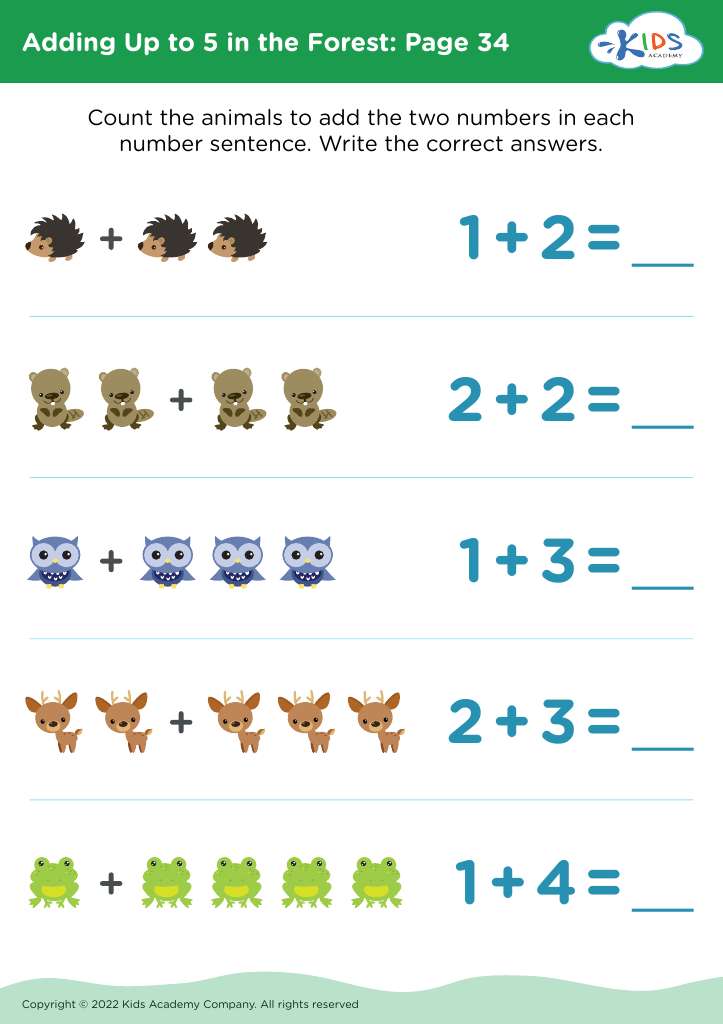
Adding Up to 5 in the Forest: Page 34
Worksheet
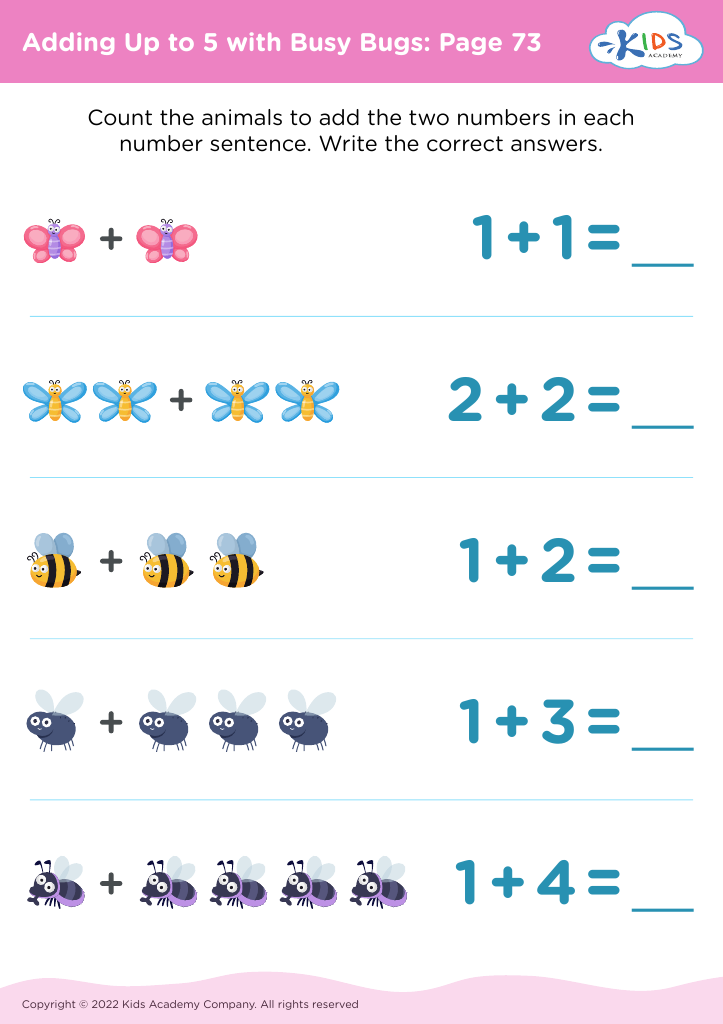
Adding Up to 5 with Busy Bugs: Page 73
Worksheet
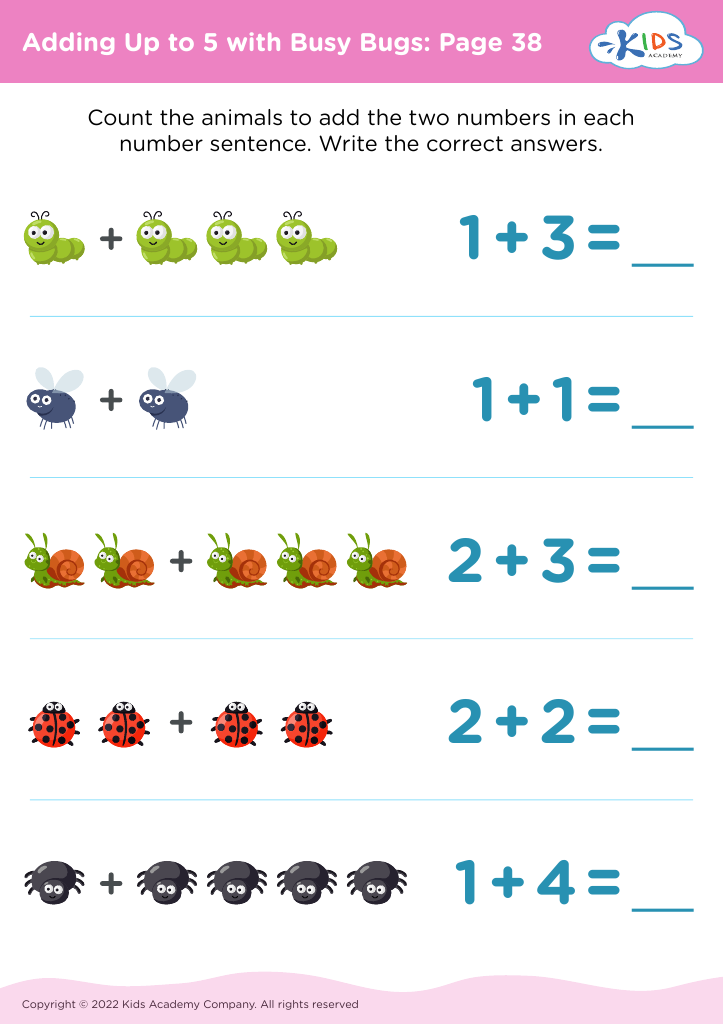
Adding Up to 5 with Busy Bugs: Page 38
Worksheet
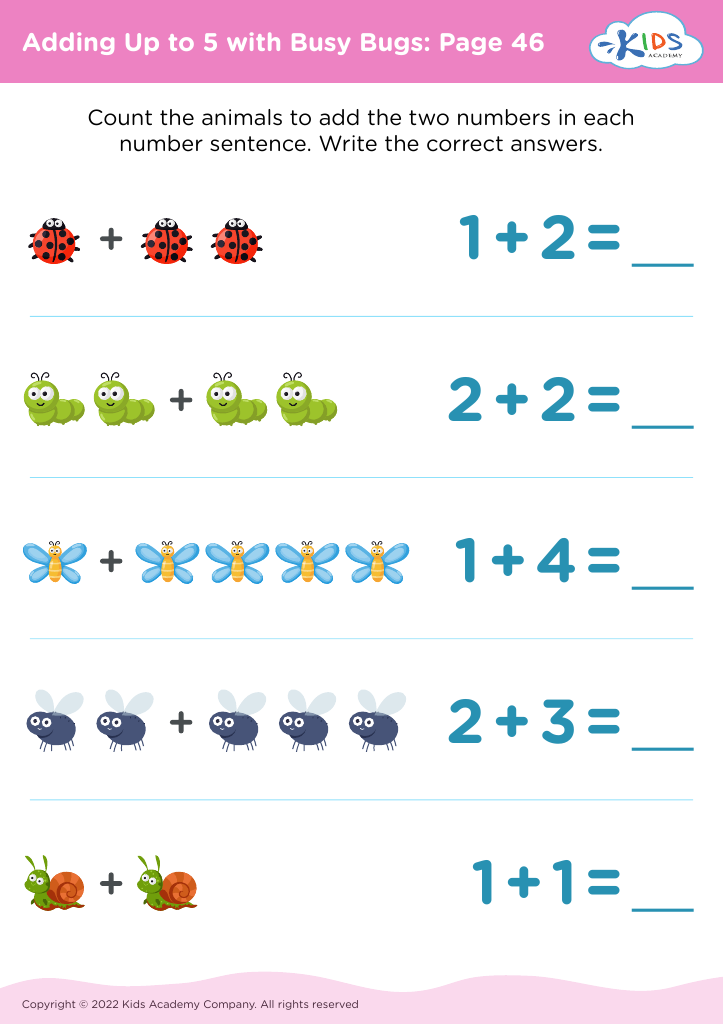
Adding Up to 5 with Busy Bugs: Page 46
Worksheet
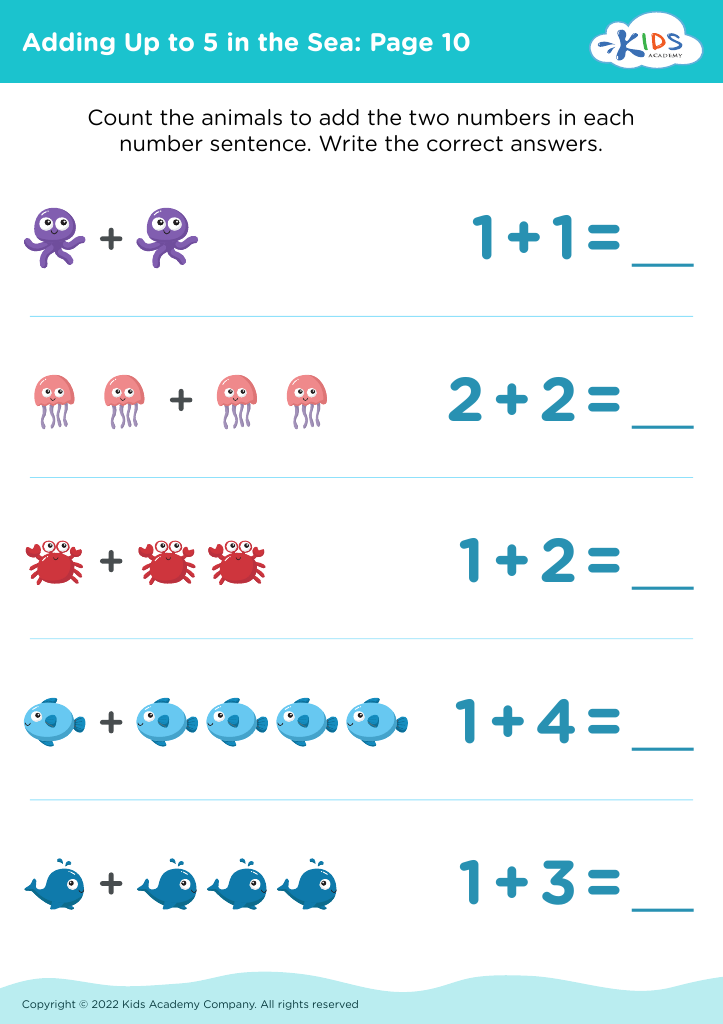
Adding Up to 5 in the Sea: Page 10
Worksheet
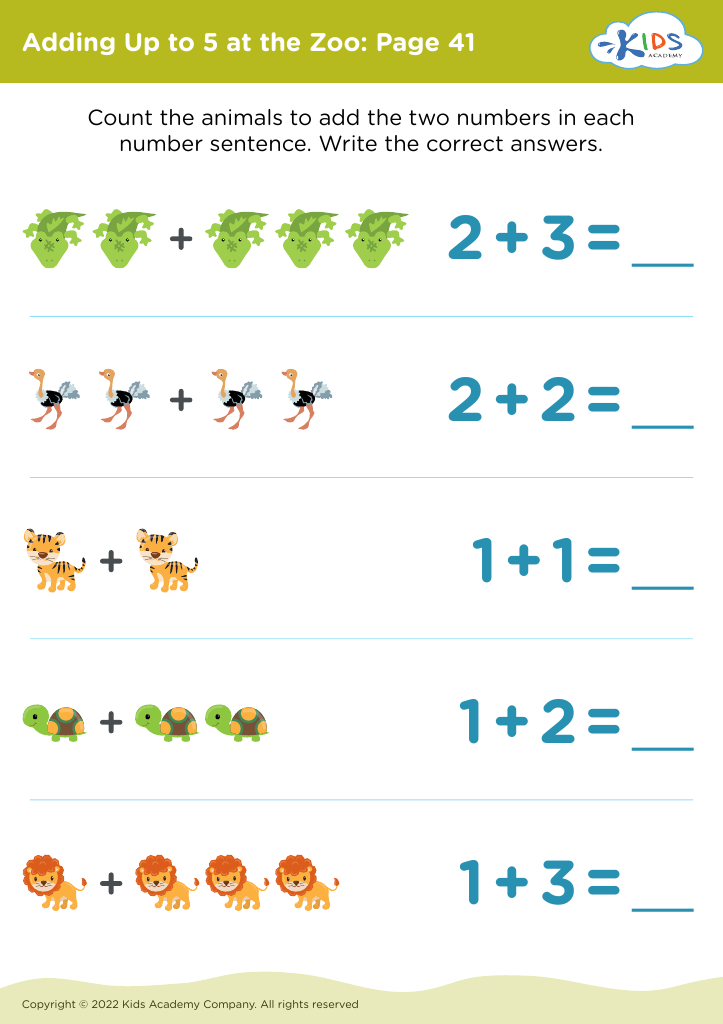
Adding Up to 5 at the Zoo: Page 41
Worksheet
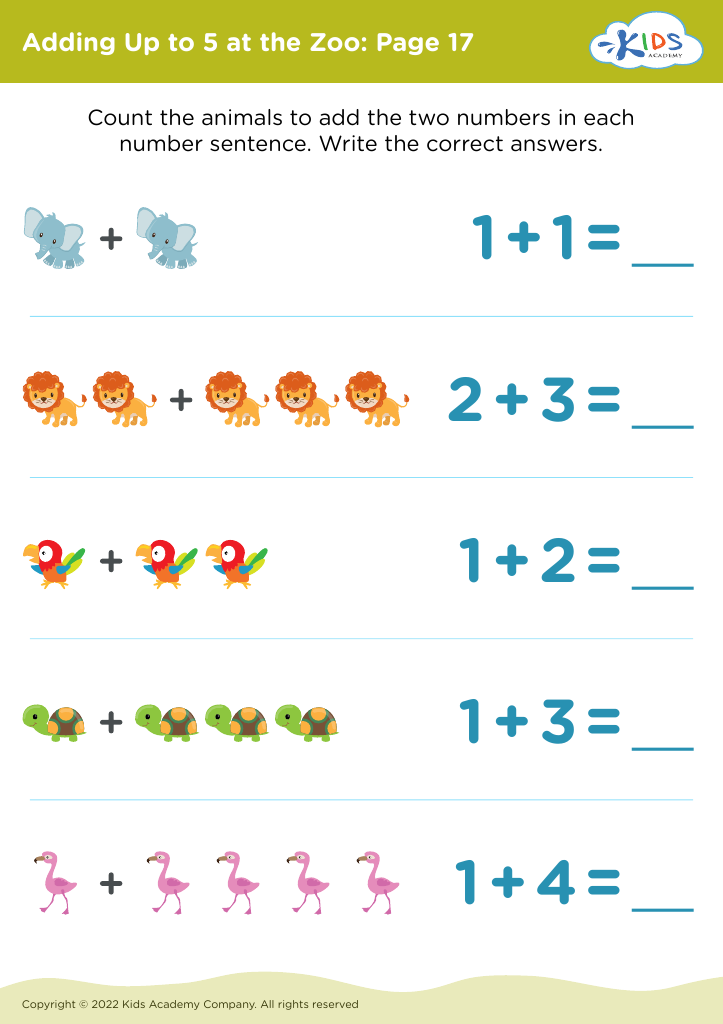
Adding Up to 5 at the Zoo: Page 17
Worksheet
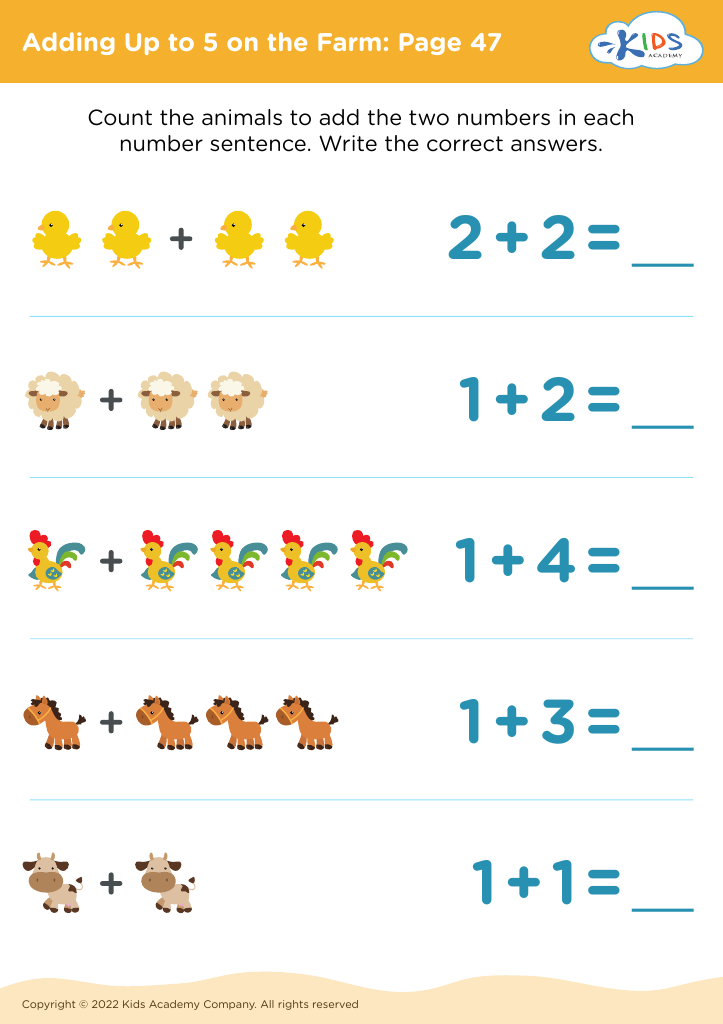
Adding Up to 5 on the Farm: Page 47
Worksheet
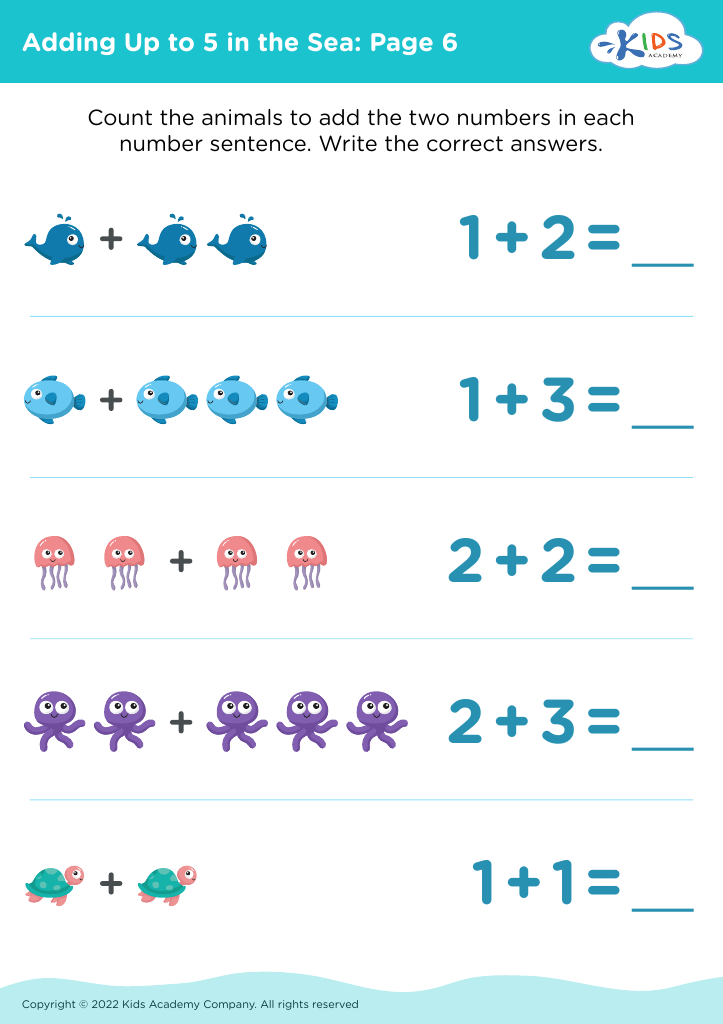
Adding Up to 5 in the Sea: Page 6

Adding Up to 5 in the Sea: Page 6

Adding Up to 5 in the Sea: Page 6
Worksheet
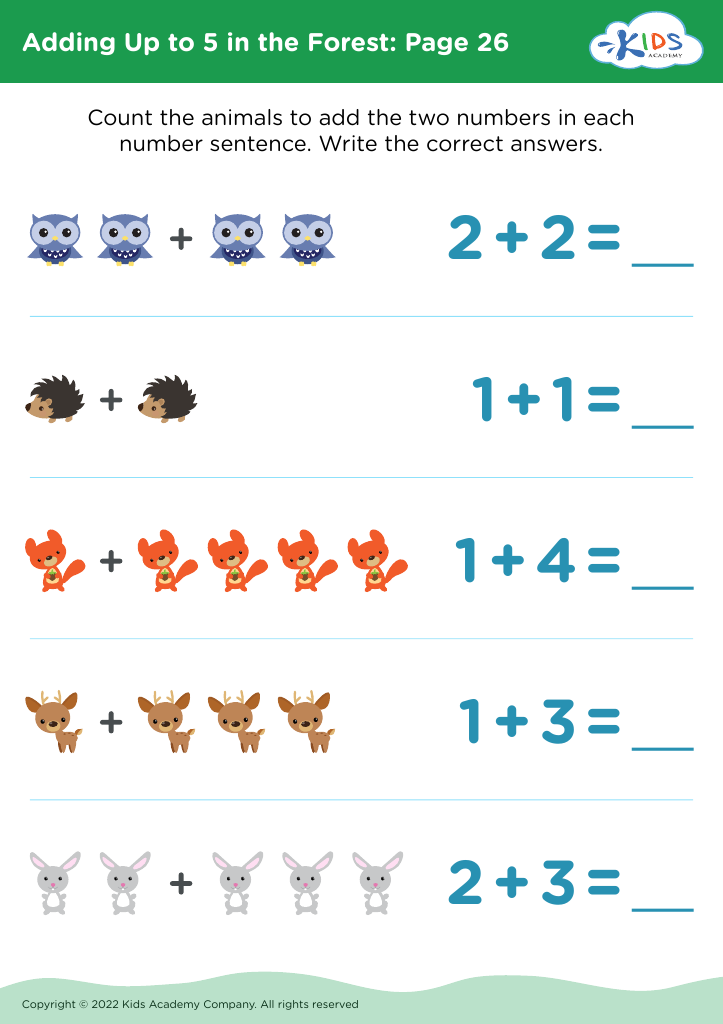
Adding Up to 5 in the Forest: Page 26
Worksheet
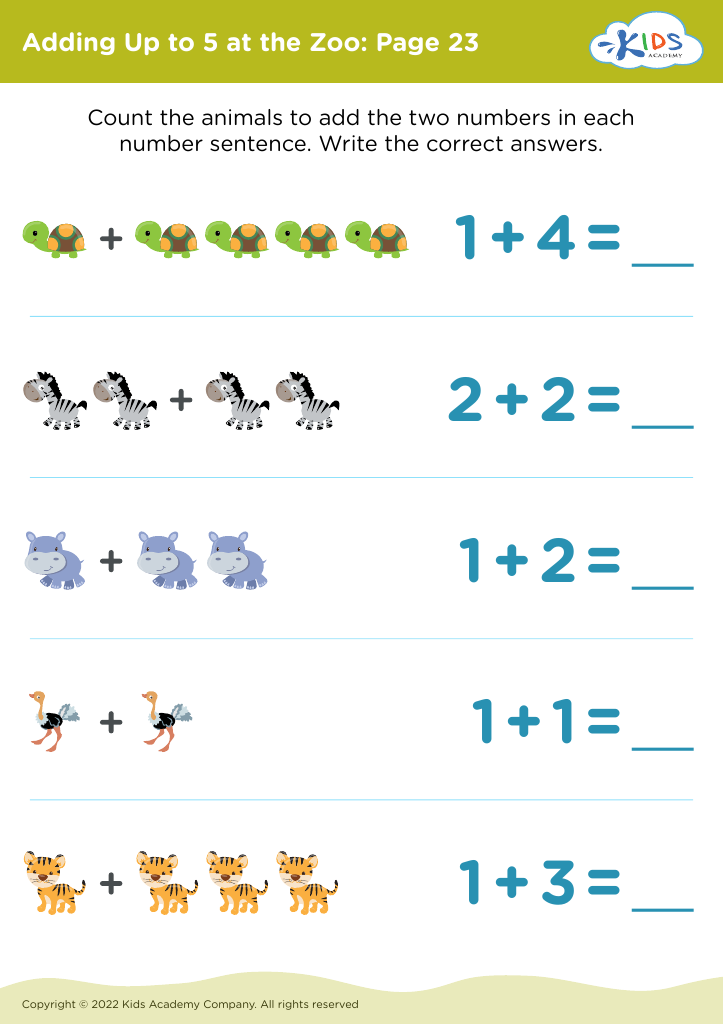
Adding Up to 5 at the Zoo: Page 23
Worksheet
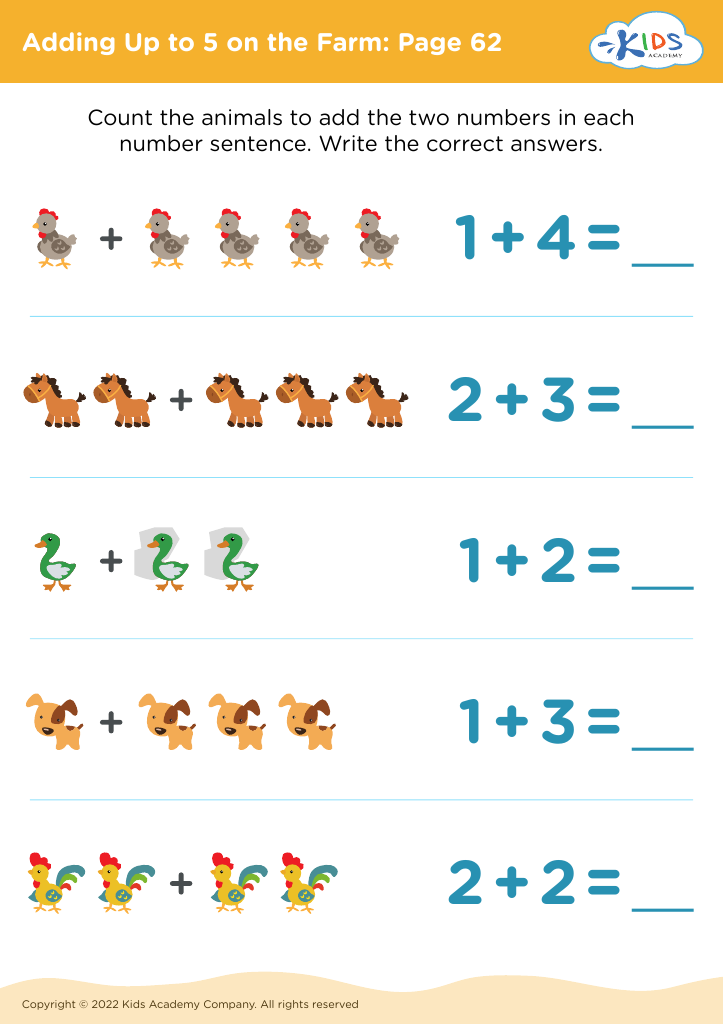
Adding Up to 5 on the Farm: Page 62
Worksheet
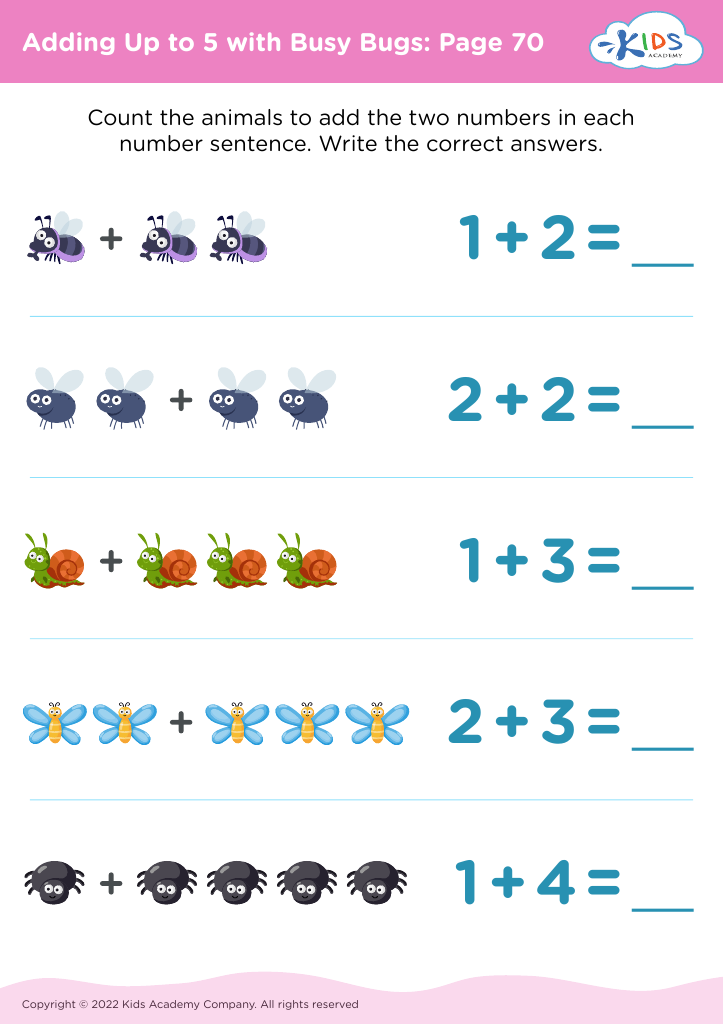
Adding Up to 5 with Busy Bugs: Page 70
Worksheet
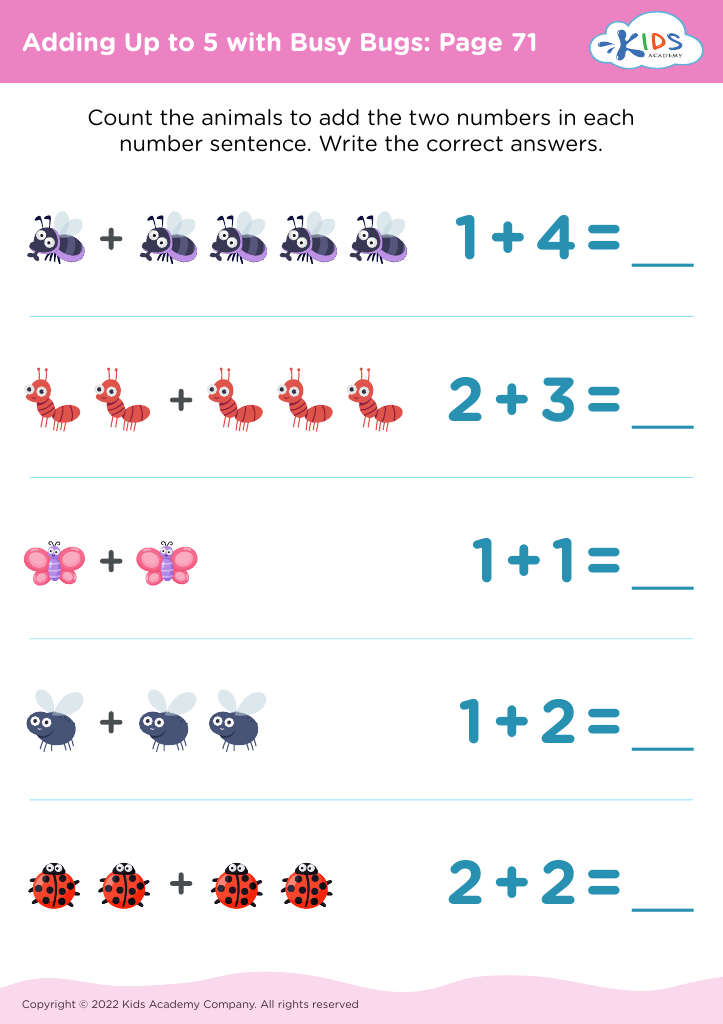
Adding Up to 5 with Busy Bugs: Page 71
Worksheet
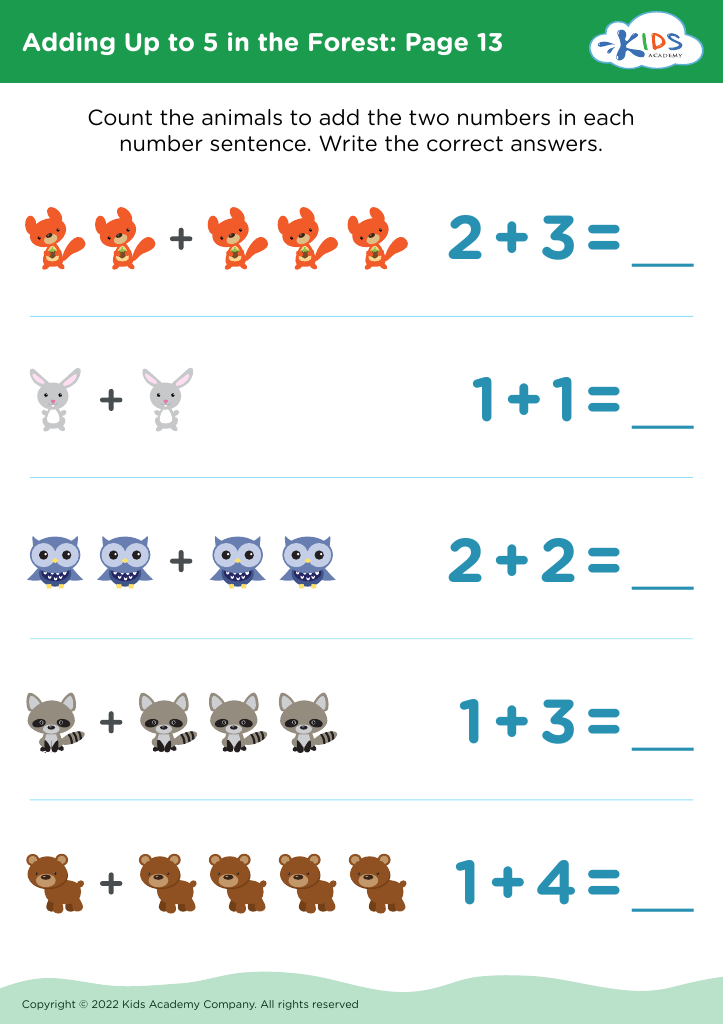
Adding Up to 5 in the Forest: Page 13
Worksheet
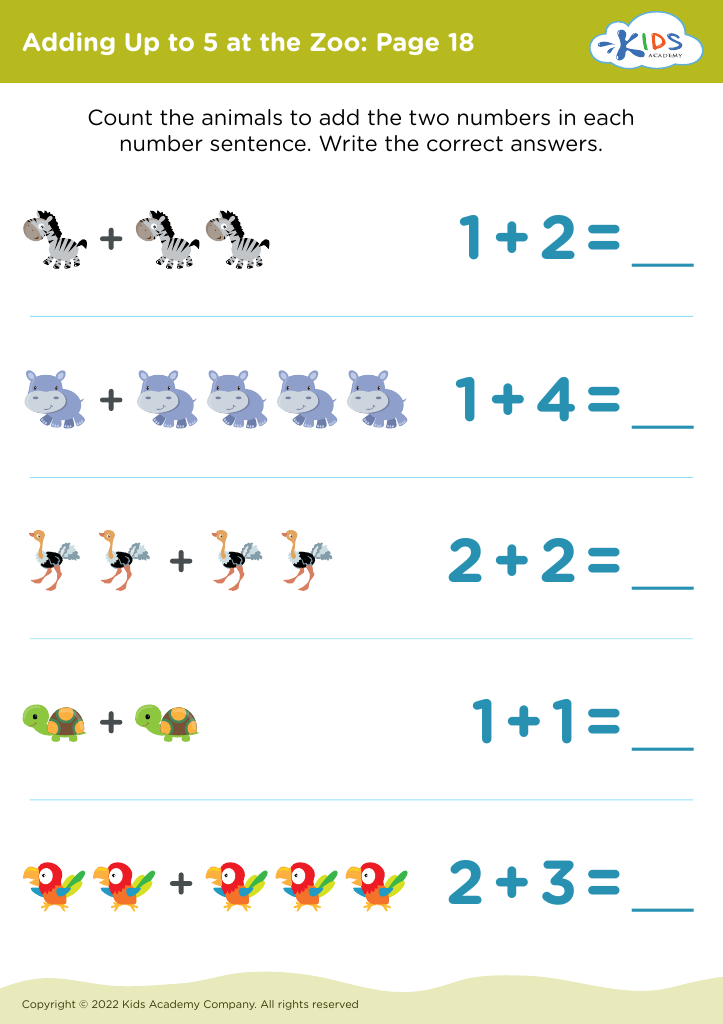
Adding Up to 5 at the Zoo: Page 18
Worksheet
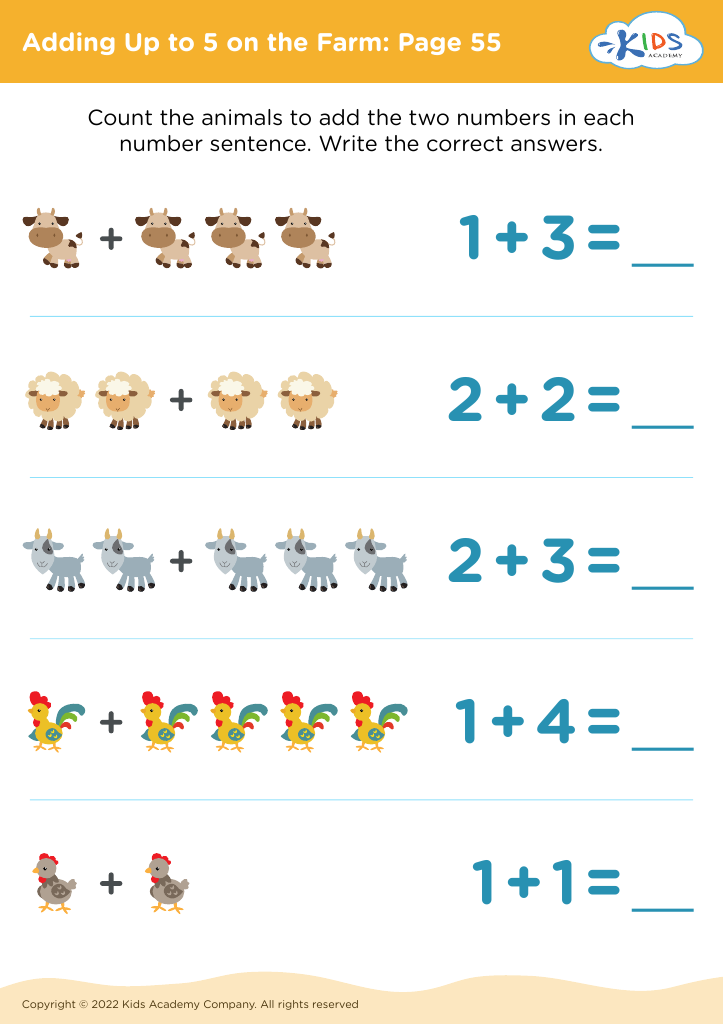
Adding Up to 5 on the Farm: Page 55
Worksheet
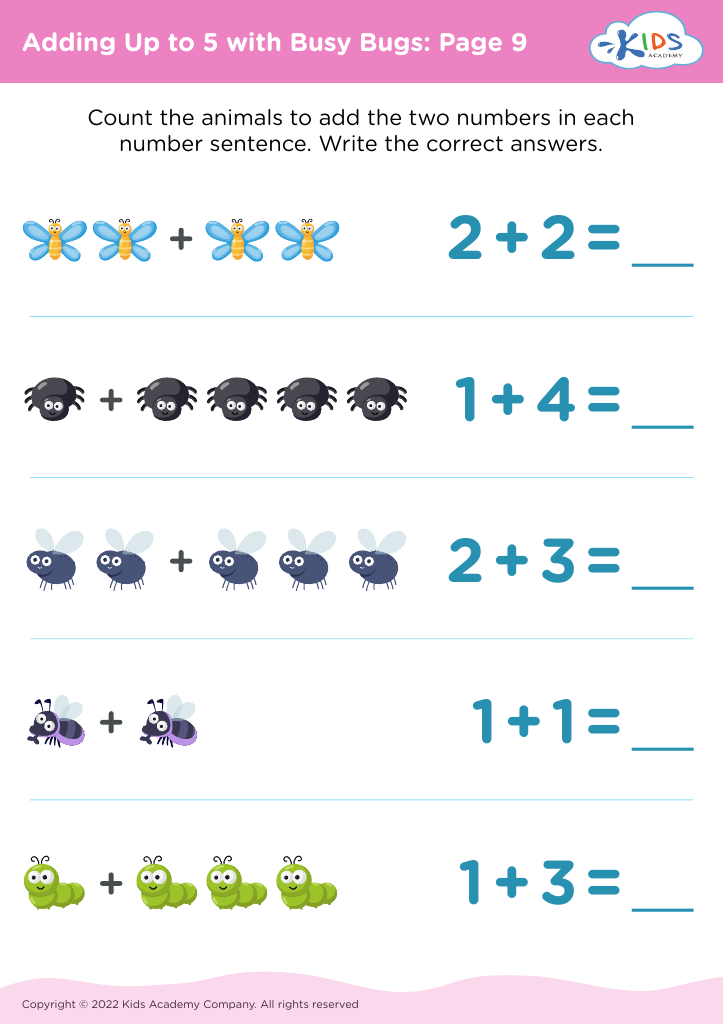
Adding Up to 5 with Busy Bugs: Page 9
Worksheet
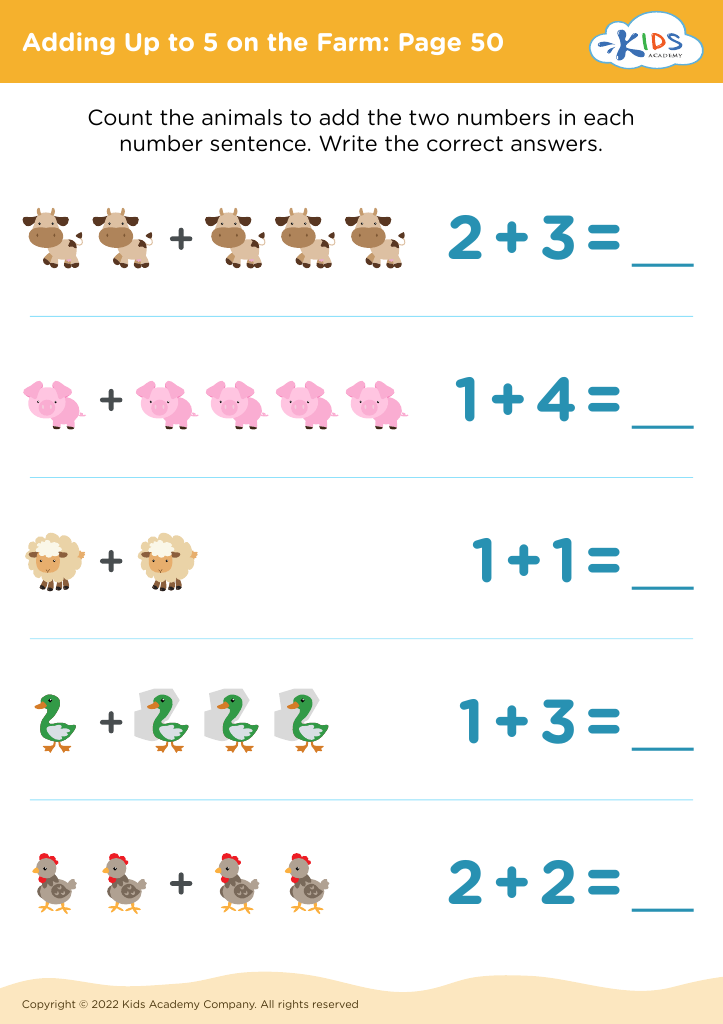
Adding Up to 5 on the Farm: Page 50
Worksheet
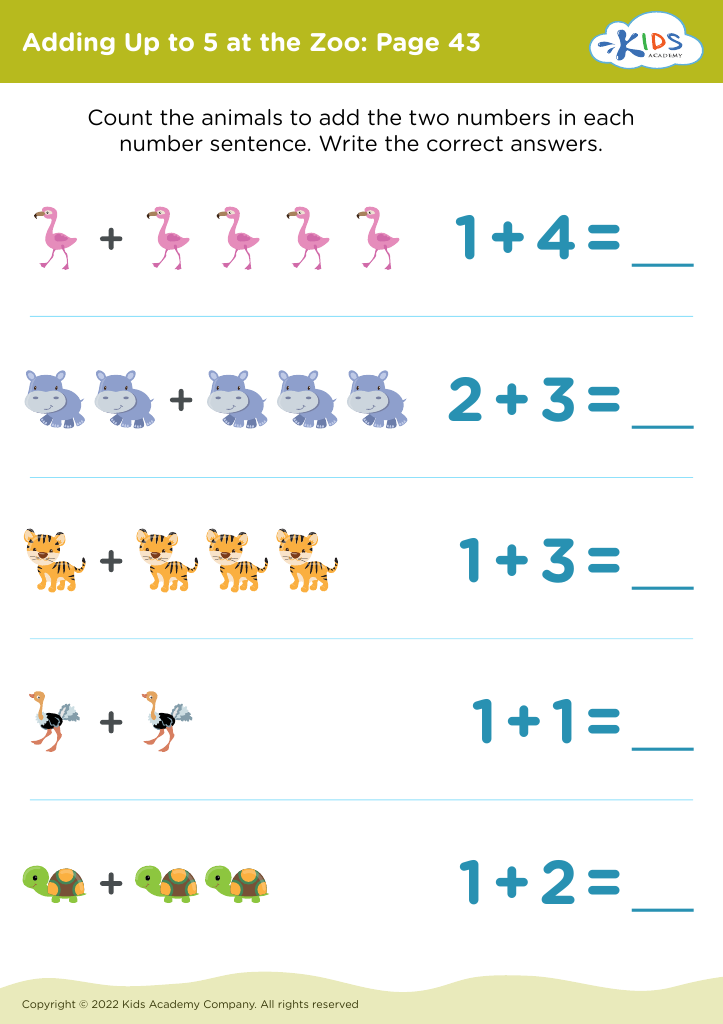
Adding Up to 5 at the Zoo: Page 43
Worksheet
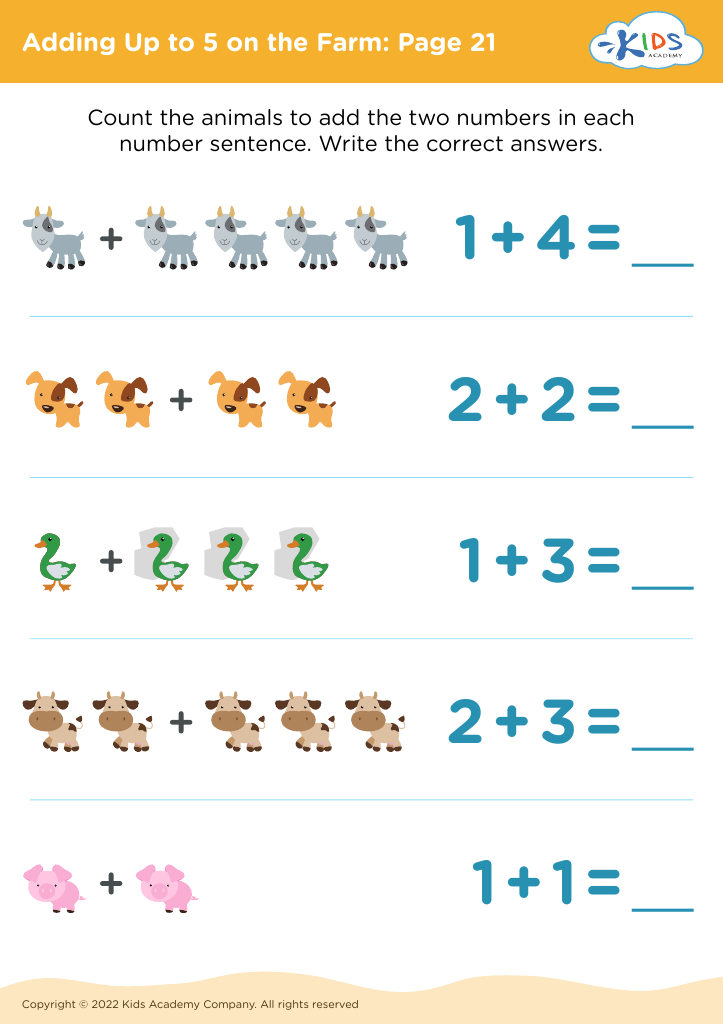
Adding Up to 5 on the Farm: Page 21
Worksheet
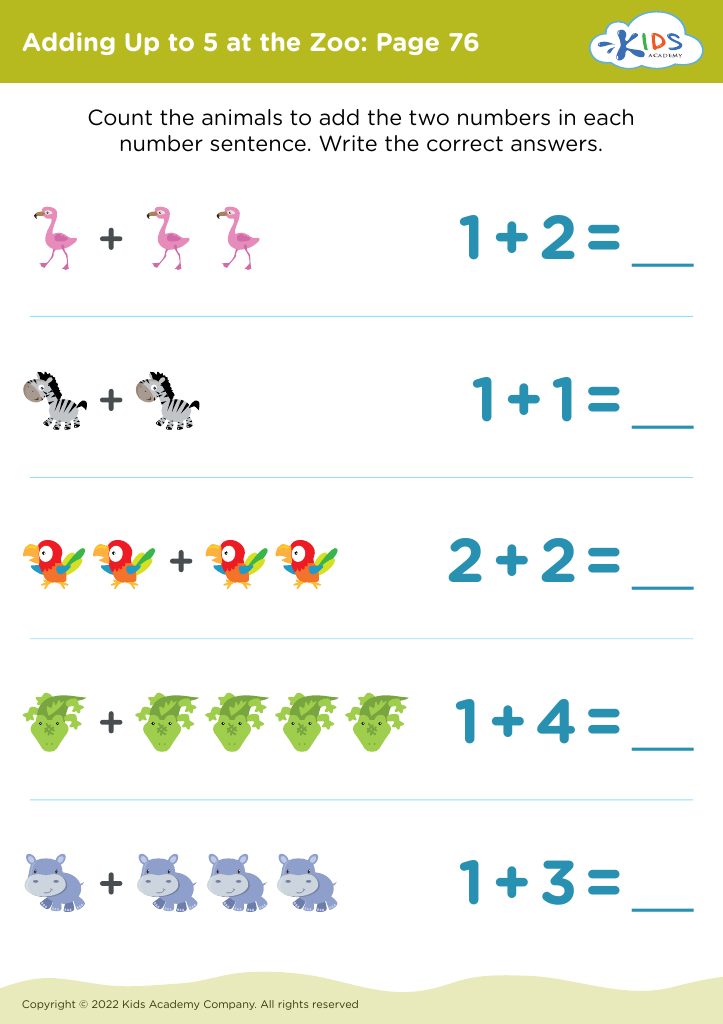
Adding Up to 5 at the Zoo: Page 76
Worksheet
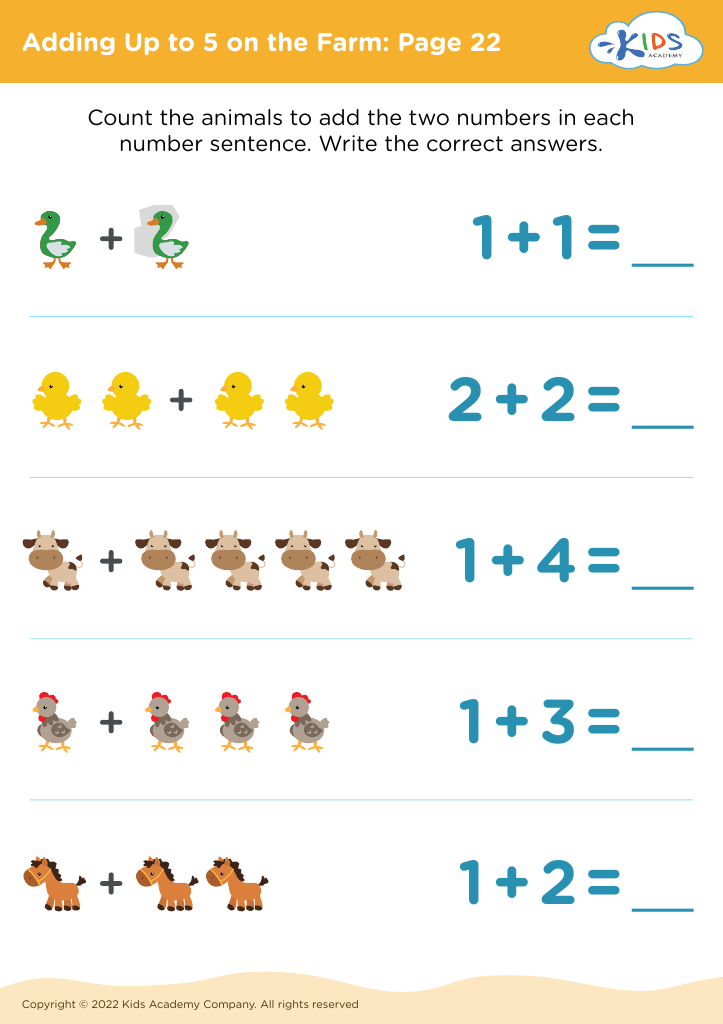
Adding Up to 5 on the Farm: Page 22
Worksheet
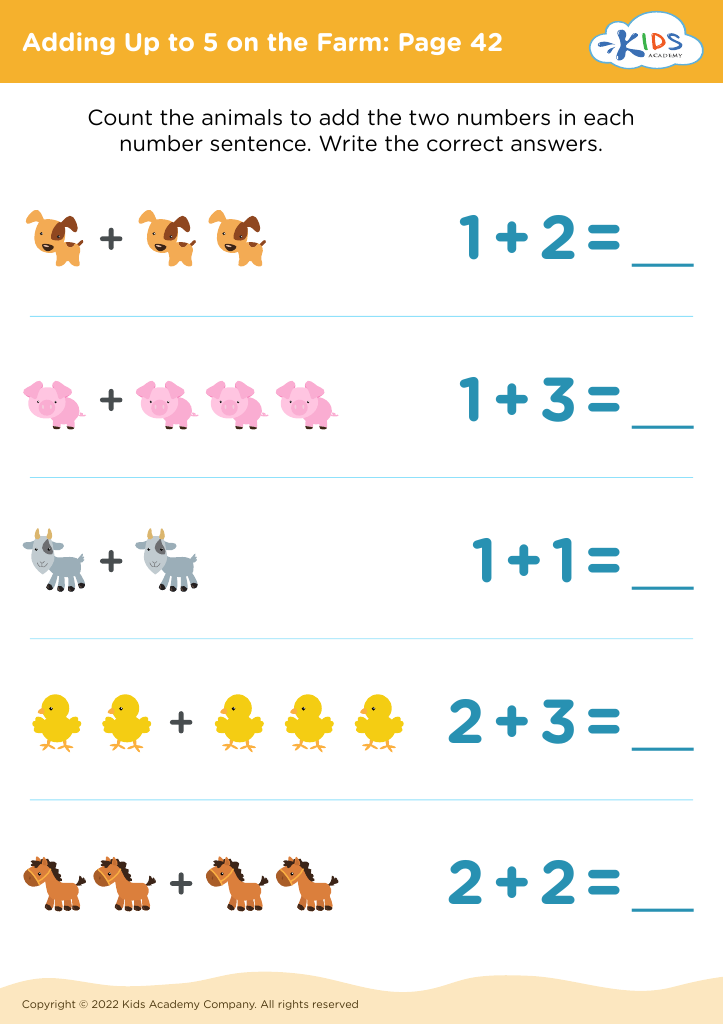
Adding Up to 5 on the Farm: Page 42
Worksheet


Parents and teachers should prioritize basic addition skills, specifically adding up to 5 for 4-year-olds, because these foundational math abilities serve as the cornerstone for future learning. At this stage, young children are naturally curious and eager to explore numbers, making it an ideal time to instill mathematical concepts. Understanding addition helps solidify their number recognition, counting skills, and promotes logical thinking.

Furthermore, early grasp of addition lays the groundwork for more complex math skills in later grades, enabling smoother transitions into subjects that rely heavily on addition, such as subtraction and basic problem-solving. Engaging children in fun, age-appropriate activities, like using manipulatives or games, makes learning enjoyable and interactive, fostering a positive attitude toward mathematics.

Additionally, these skills support cognitive development. As children practice combining groups of objects, they enhance their critical thinking, pattern recognition, and even fine motor skills. Knowing that a number of combinations exist within a total helps children develop an understanding of the world around them, building not just academic skills but also confidence. By nurturing these foundational abilities, parents and teachers aid in shaping motivated, numerically literate individuals ready to tackle future challenges.